Aggressive dog threshold management guide for owners

Aggressive dog threshold management is the practice of identifying and respecting the exact point at which your dog shifts from calm to reactive, so that training remains safe and effective. The threshold is an invisible boundary in your dog’s emotional state. Cross it, and your dog enters fight-or-flight mode where learning stops entirely. Stay below it, and you can reshape the emotional response from fear to confidence. Desensitisation and Counter-Conditioning (DS/CC) is the gold standard method for achieving this change, and it forms the backbone of every evidence-based aggression programme, including those used by Happy-dogtraining in Singapore.
What is a dog’s threshold and how do you recognise it?
The threshold is the line between coping and reactive states. Below it, your dog can think, learn, and respond to you. Above it, survival instincts take over and no amount of treats or commands will reach them. Understanding this boundary is the single most useful skill you can develop as an owner.
Your dog communicates threshold proximity through body language, and the early signals are easy to miss. Many owners misinterpret stress signals as calmness, missing crucial early intervention opportunities before aggression escalates. The Merck Veterinary Manual identifies freezing, stiffening, and avoidance as fear-driven stress indicators that often precede a full aggressive response. Recognising these signs early gives you time to act before the situation worsens.
Watch for these indicators that your dog is approaching their threshold:
Alertness and scanning: ears forward, head raised, scanning the environment for the trigger
Body stiffening: muscles tense, movement becomes rigid or stilted
Lip licking and yawning: displacement behaviours that signal internal stress
Growling or low vocalisation: a clear warning that the dog is uncomfortable
Freezing: a sudden stillness that often precedes a snap or lunge
Whale eye: showing the whites of the eyes, indicating anxiety
The threshold is not fixed. Stress, illness, fatigue, and a busy environment all lower it. A dog who copes well on a quiet Tuesday morning may react to the same trigger on a noisy Saturday afternoon. This dynamic quality is why daily observation matters so much.
Pro Tip: Keep a simple log for one week. Note the trigger, the distance, and the first sign of stress you observed. Patterns will emerge quickly, and you will know exactly where your dog’s threshold sits on different days.
How does desensitisation and counter-conditioning raise the threshold?
DS/CC is the evidence-based method for changing your dog’s emotional response to a trigger. Desensitisation means exposing your dog to the trigger at an intensity so low that it produces no reaction at all. Counter-conditioning means pairing that low-level exposure with something your dog loves, typically high-value food. Together, they teach the dog that the trigger predicts good things rather than danger.
Working distances can exceed 200 feet on the first day of training, and the programme typically runs over several months. That distance figure surprises most owners, but it reflects the reality of working genuinely below threshold. Starting too close is the most common mistake in DS/CC, and it sets the programme back significantly.
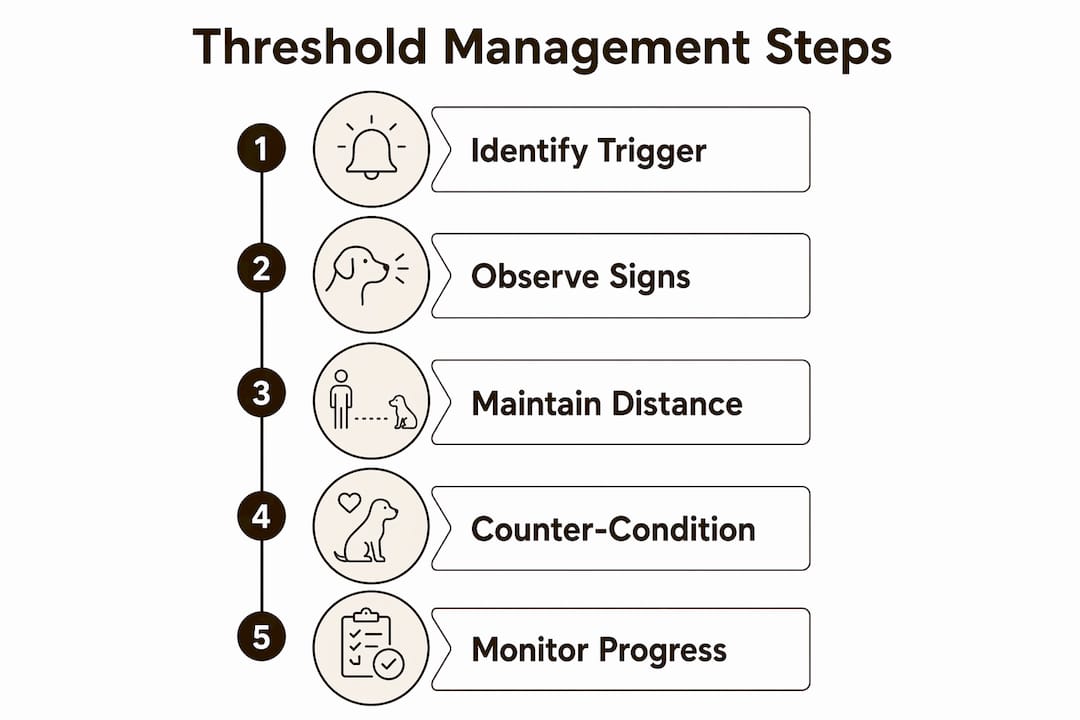
The table below outlines the three core phases of a DS/CC programme:
Phase | What happens | Key rule |
Sub-threshold exposure | Dog sees trigger at a safe distance with no reaction | Stop immediately if any stress signal appears |
Positive pairing | High-value reward is delivered the moment the trigger appears | Reward must come before the dog reacts |
Gradual approach | Distance reduces slowly over weeks as the dog relaxes | Progress only when the dog is consistently calm |
Once the dog crosses threshold, counter-conditioning stops being effective. Continuing to push at that point risks pairing the trigger with panic, which worsens the aggression over time. The rule is simple: if your dog reacts, you are too close. Increase the distance and start again.
Aggression is a symptom of deeper fear, anxiety, or pain rather than a simple behavioural problem. DS/CC works because it targets the emotional root, shifting the dog’s prediction from threat to reward. This is why punishment-based methods fail. They address the symptom without changing the underlying emotional state.
Pro Tip: Use a long line (5–10 metres) during DS/CC sessions. It gives your dog freedom to move away from the trigger naturally, which itself reduces stress and keeps the session sub-threshold.
What management techniques keep an aggressive dog below threshold daily?
Management is not training. It is the set of practical steps you take every day to prevent your dog from crossing threshold while the training programme does its slower work. Think of management as the safety net that stops setbacks from happening.
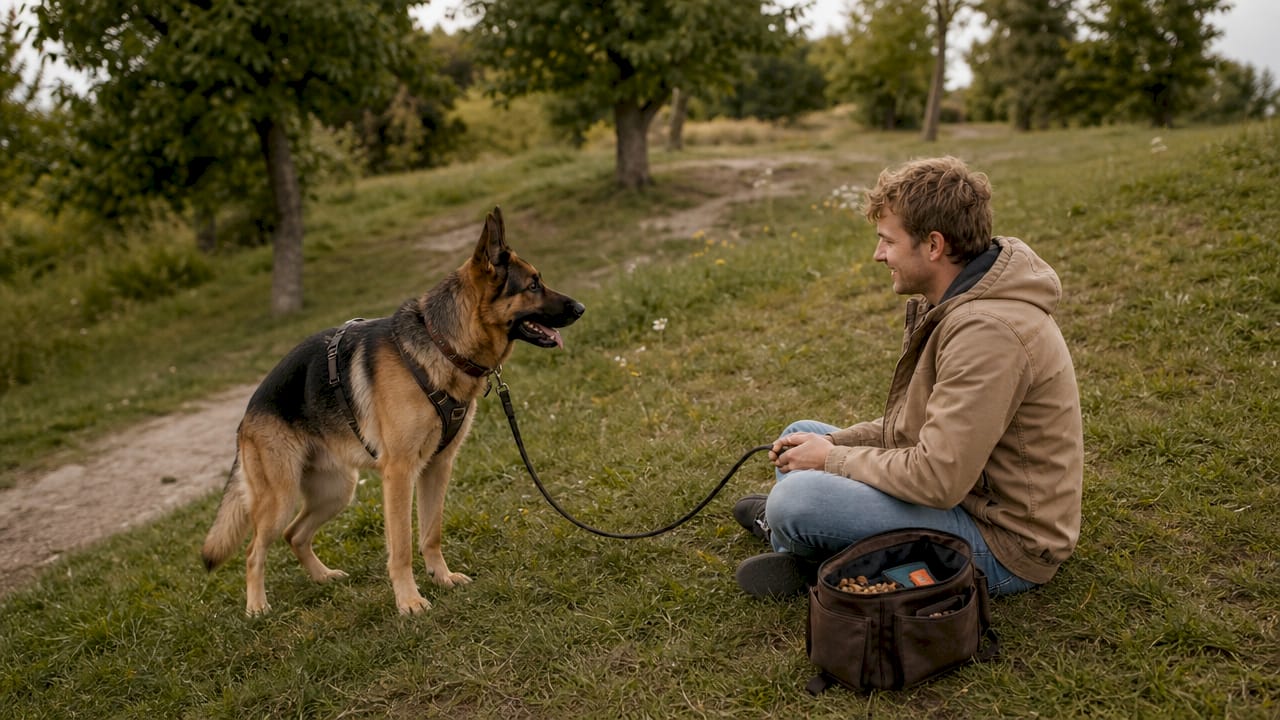
Distance is your most powerful management tool. Crossing the street, turning around, or simply waiting behind a parked car can keep your dog below threshold in situations you cannot fully control. Barriers such as baby gates, crates, and window film on lower panes reduce exposure to triggers inside the home. Consistent use of a well-fitted lead and, where appropriate, a basket muzzle gives you and your dog confidence in public.
The 3-3-3 rule provides a useful framework for stabilising a dog’s anxiety baseline, particularly after rehoming or a significant change. Three days to decompress, three weeks to establish routine, and three months to feel genuinely safe. During this period, avoiding known triggers is not avoidance in a negative sense. It is deliberate stress reduction that lowers the physiological baseline and makes training more effective.
Keeping your dog below threshold is not about hiding from the world. It is about giving your dog the emotional space to learn. Every calm experience below threshold builds resilience. Every over-threshold incident sets the programme back. Management is what makes the difference between progress and stagnation.
Additional daily management habits that support threshold control:
Predictable routines: consistent feeding, walking, and rest times reduce background anxiety
Calm owner behaviour: dogs read your body language; tension in your grip or voice raises their arousal
Settling cues: teach a specific mat or place behaviour so your dog has a clear signal to relax
Avoid ‘testing’ situations: deliberately exposing your dog to triggers to see how they react forces fight-or-flight mode and disables learning
Your own behaviour matters more than most owners realise. A tight lead, a sharp intake of breath, or a tense posture all communicate danger to your dog before the trigger even comes into view. Practise loose-lead walking and controlled breathing as part of your own preparation.
How do you troubleshoot setbacks in threshold management?
Setbacks are part of the process. Your dog will go over threshold at some point, and knowing exactly what to do in that moment prevents the situation from becoming a crisis.
Increase distance immediately and calmly. Do not shout, correct, or restrain forcefully. Move your dog away from the trigger without drama.
Give your dog time to recover. The stress hormones released during an over-threshold event can take 20–30 minutes to clear. Do not attempt training during this window.
Review what happened. Was the trigger closer than usual? Was your dog already tired or unwell? Identifying the cause prevents repetition.
Reduce the next session’s intensity. Go back to a greater distance or lower trigger intensity at the next training opportunity.
Record the incident. A brief note about the trigger, distance, and your dog’s response helps you spot patterns and adjust the programme.
Trigger stacking is one of the most common causes of seemingly unpredictable aggression. Stressors accumulate over the course of a day. A dog who encountered a loud noise in the morning, was handled by a stranger at lunchtime, and then met another dog in the afternoon may react explosively to a minor trigger by evening. Balancing training days with genuine rest days is not optional. It is a clinical requirement for progress.
When progress stalls despite consistent management and training, a veterinary assessment is the right next step. Medication can modify neurochemistry to allow learning in highly stressed dogs, and it typically takes 4–8 weeks to reach full effect. Medication is not a substitute for training. It is a tool that lowers the physiological barrier so that DS/CC can work. A qualified behaviourist or vet behaviourist can assess whether this is appropriate for your dog.
Pro Tip: Schedule one full rest day between every two training sessions. Use that day for calm, low-stimulation activities like sniffing games in the garden. Sniffing actively lowers cortisol and accelerates recovery.
Avoid the common mistake of rushing exposure because you feel the programme is moving too slowly. Slow, consistent progress below threshold produces lasting change. Fast progress above threshold produces worsening aggression and a dog who no longer trusts the training environment.
Key takeaways
Threshold management is the foundation of every effective aggression programme: staying below the threshold is what makes learning possible and keeps both dog and owner safe.
Point | Details |
Threshold is dynamic | Stress, illness, and environment all lower the threshold, so assess your dog daily rather than assuming a fixed limit. |
DS/CC is the gold standard | Work at distances exceeding 200 feet initially and pair every trigger exposure with high-value rewards below threshold. |
Management prevents setbacks | Use distance, barriers, and routine to stop over-threshold incidents while the training programme builds resilience. |
Trigger stacking causes surprises | Balance training days with rest days to prevent cumulative stress from producing unexpected aggressive reactions. |
Seek professional help early | A behaviourist or vet behaviourist can assess whether medication or specialist intervention is needed to support progress. |
What I have learned from years of threshold work
The most common thing I see owners get wrong is confusing management with failure. They feel embarrassed crossing the street to avoid another dog, as though it signals defeat. It does not. It signals that they understand their dog and are protecting the training process. That shift in perspective changes everything.
The second thing I see regularly is owners waiting too long before seeking help. By the time many dogs arrive at a specialist programme, the aggression has been practised hundreds of times and the emotional associations are deeply embedded. The inter-dog aggression cases that respond fastest are always the ones where the owner acted early, kept detailed records, and came in with realistic expectations about timelines.
Patience is not passive. It is the active choice to stay below threshold one more time, to reward one more calm moment, and to trust that the emotional change is happening even when you cannot see it yet. Every dog I have worked with who made meaningful progress did so because their owner committed to consistency over speed. The wagging tail at the end of a calm walk past a former trigger is worth every slow, careful session it took to get there.
Seek professional guidance early. The troubleshooting guidance you can apply at home is valuable, but a qualified eye on your dog’s specific signals and triggers will accelerate progress in ways that no article can replicate.
— Mark
How Happy-dogtraining supports reactive and aggressive dogs
Happy-dogtraining offers specialist support for owners managing aggressive and reactive dogs in Singapore, built on over 20 years of science-based, humane training experience.
The reactive dog class is designed specifically around threshold management principles, giving your dog controlled, sub-threshold exposure in a structured group setting. Every programme is personalised to your dog’s triggers, history, and current threshold level. The AVS-accredited trainer uses reward-based methods throughout, with free lifetime support after training so that progress continues long after the class ends. If you are ready to take the first step, an aggressive behaviour consult gives you a clear, personalised plan from day one.
FAQ
What is a dog’s threshold in training?
A dog’s threshold is the boundary between a calm, thinking state and a reactive, fight-or-flight state. Successful training happens only when the dog remains below this boundary.
How far away should I start DS/CC with an aggressive dog?
Start at whatever distance produces zero reaction in your dog. Working distances can exceed 200 feet on the first day, and reducing that distance too quickly is the most common reason programmes stall.
What should I do if my dog goes over threshold during training?
Calmly increase distance from the trigger immediately and allow 20–30 minutes for stress hormones to clear before resuming any training activity. Do not use punishment, as it worsens the emotional association.
What is trigger stacking and why does it matter?
Trigger stacking is the accumulation of multiple stressors over a single day, which lowers the threshold and causes apparently unpredictable reactions. Scheduling rest days between training sessions prevents this build-up.
When should I consider medication for an aggressive dog?
Medication is worth discussing with a vet behaviourist when consistent training and management produce little progress. It modifies neurochemistry to support learning and typically takes 4–8 weeks to reach full effect, always alongside a structured training programme.
Recommended
Comments