Avoid a 15 Minute Handover: Board and Train Checks Owners Need
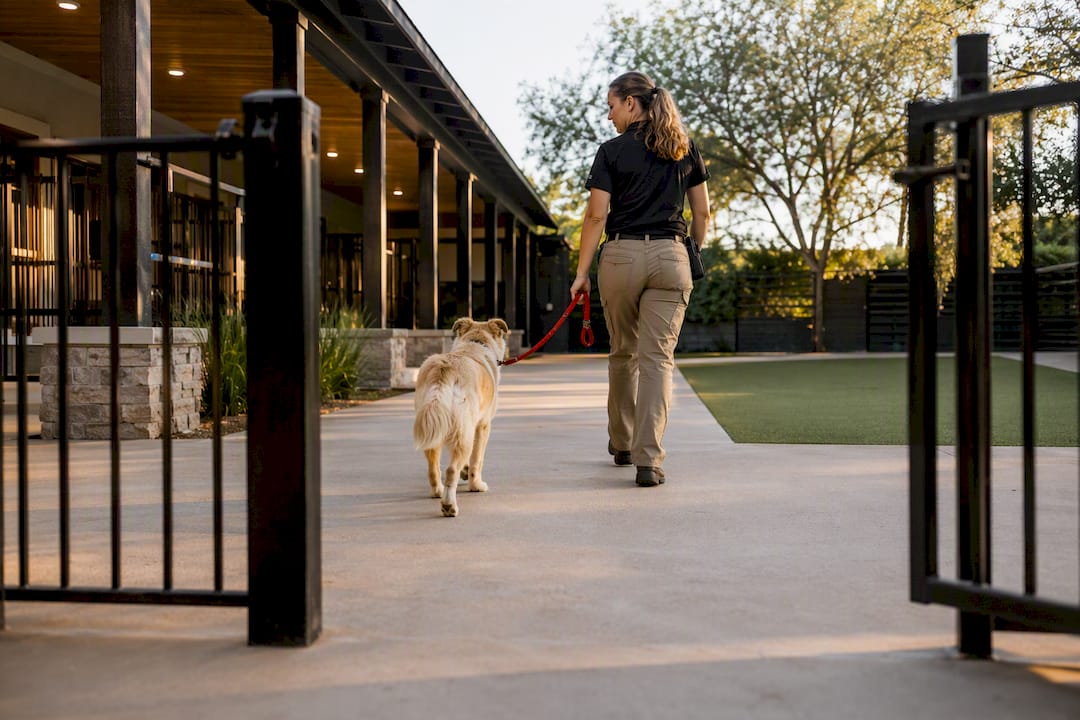
Board and train is genuinely worth considering for many dogs, especially when you need fast, focused progress on foundational skills. It is not a magic cure, though: without a solid transfer session and your own daily follow through, gains from even the best programme can fade fast. Before you book anything, use a proper checklist and choose a trainer who welcomes visits and questions.
TL;DR:
Effective board and train programs rely heavily on a proper transfer session to ensure owners can maintain and generalize their dog’s new skills at home.
Most dogs need an acclimation period of several days to over a week before visible progress from residential training becomes apparent.
Trainers using aversive tools without clear consent or refusing owner visits are red flags that should lead owners to walk away.
A detailed, hands-on transfer session lasting enough for owners to practice cues under supervision is crucial for lasting behavior change.
Combining a short residential stay with private in-home coaching can produce more durable results and better generalization than long stays alone.
Table of Contents
Board and train pros and cons start by understanding the format
Board and train means your dog lives with a trainer or at a training facility for a set period, usually somewhere between one and four weeks, and receives structured daily instruction away from home. It sits alongside two other common options: day training, where your dog goes to a facility or trainer’s home during the day and returns to you each evening, and private lessons, where a trainer comes to you or you travel to them for scheduled sessions while your dog stays home throughout.
The format matters more than most owners realise when they start comparing board and train vs home training. A residential programme removes your dog from the environment where problem behaviours usually happen, which gives a trainer room to build new habits without your sofa, your doorbell, or your neighbour’s cat interrupting every attempt. Day training offers a middle path: your dog gets professional attention during the day but still sleeps in familiar surroundings each night, which can ease the emotional load for anxious dogs while still giving you consistent daily practice.
A typical training day inside a residential programme usually blends short, focused training sessions with rest, play, and enrichment. Good trainers structure the day around your dog’s attention span rather than cramming in hours of drilling, because dogs learn better in short, frequent bursts than in marathon sessions. Expect something like this in a well run programme:
Morning obedience work covering cues such as sit, stay, and recall.
Structured walks that practise leash manners in real-world conditions.
Rest and enrichment periods, including puzzle toys or calm downtime.
Socialisation exposure appropriate to the dog’s temperament and goals.
An evening session reinforcing the day’s lessons before settling for the night.
Where the trainer houses your dog also shapes the outcome. A trainer who works from a home-based setting, with normal household distractions like kitchens, stairs, and other pets, tends to produce behaviours that transfer more smoothly than training conducted purely in a commercial kennel environment. Good programmes try to replicate home-like conditions wherever they can, precisely because a dog that only ever practises “sit” in a sterile training room may struggle to generalise that same cue to your noisy kitchen at dinner time.
The real benefits of board and train worth knowing
The pros of board and train show up most clearly when you need consistent, structured progress in a short window, and a quality programme reliably delivers on a specific set of outcomes.
Accelerated learning through daily repetition. Foundational cues such as sit, stay, recall, and loose-leash walking build faster when a trained professional practises them multiple times a day, every day, rather than squeezing in ten minutes here and there around work and family life.
Removal of home triggers that reinforce bad habits. If your dog rehearses jumping on guests, raiding the bin, or bolting through the front door every single day at home, that rehearsal strengthens the behaviour. Taking your dog out of that environment stops the cycle long enough for a trainer to install a better pattern before your dog ever gets the chance to practise the old one again.
A genuine advantage for owners short on time. Not every household can commit to twenty minutes of consistent daily training. Board and train hands that daily consistency over to someone whose entire job is to deliver it, which matters most when you are working long hours, travelling, or simply overwhelmed by a new puppy or a recently adopted rescue.
In-depth behavioural assessment over an extended period. A trainer who has your dog for two or three weeks straight sees patterns you might miss at home. They notice what triggers reactivity at 7am versus 7pm, how your dog responds to being left alone briefly, and which reward types actually motivate lasting change.
Board and train can rapidly build foundational skills including sit, stay, recall, and leash manners through daily repetition, according to Preventive Vet’s analysis of residential programmes. That same source is careful to note the skill acquisition is only half the equation. It does not replace your own long-term commitment to maintaining and generalising those behaviours once your dog comes home, which is exactly why the transfer session matters so much (more on that shortly).
Pro Tip: Ask any prospective trainer how they specifically build in “real world” practice, such as training in a car park, at a front door, or around other dogs, rather than only in a controlled training room. The dogs who generalise best are the ones who practised in messy, realistic conditions from day one.
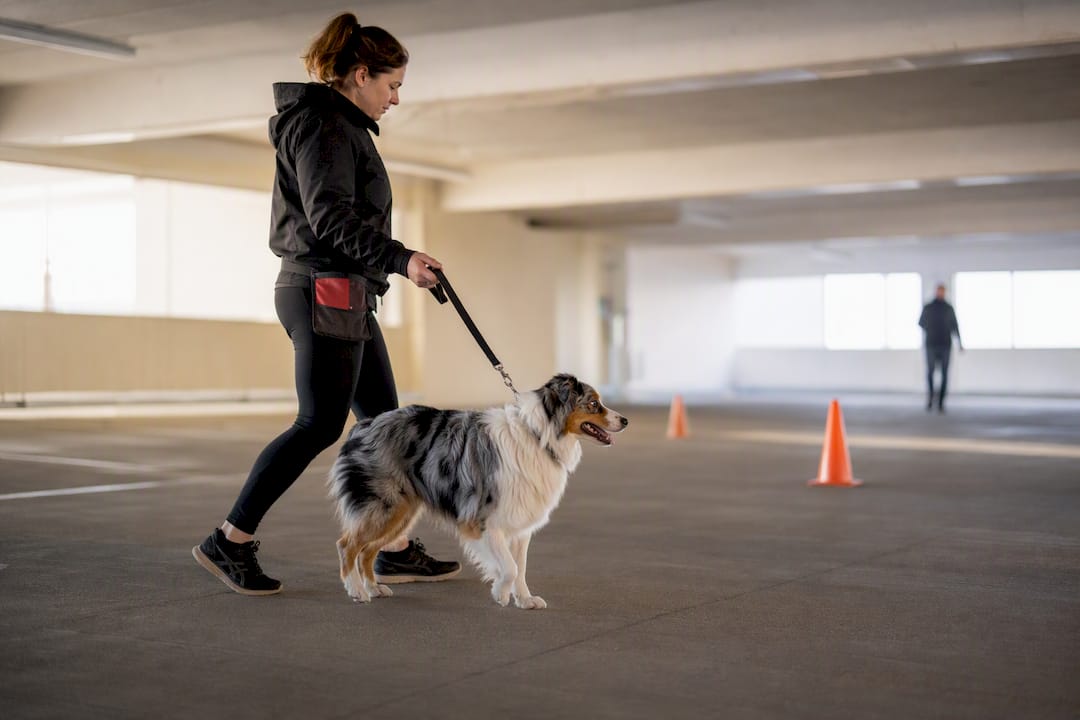
The behavioural assessment point deserves a little more attention because owners often undervalue it. A trainer watching your dog for three weeks straight, across different times of day, different energy levels, and different social situations, builds a far more complete behavioural picture than most owners can gather in months of scattered observation. That assessment quality alone justifies the investment for dogs with confusing or inconsistent behaviour patterns that owners have struggled to pin down.
The cons and risks of board and train you should not ignore
Every board and train pros and cons discussion has to reckon honestly with the downsides, because ignoring them is exactly how owners end up disappointed after spending real money.
The first hurdle is acclimation. Dogs commonly need an acclimation period of a few days to over a week before they settle into a new environment and are ready for intensive training, according to Dogster’s reporting on residential programmes. That means a chunk of any short programme, particularly anything under two weeks, may show little visible progress simply because your dog is still adjusting to new smells, new routines, and being away from you. If a trainer promises dramatic transformation in five days flat, treat that claim with real scepticism.
The second risk is poor generalisation. A dog can learn a flawless “stay” inside a trainer’s home and still ignore the same cue in your living room if nobody actively practises it there afterwards. Training that stays locked inside the facility, without deliberate work to transfer it home, tends to fade within weeks. This is the single biggest driver of buyer’s remorse in the entire industry.
Third, and arguably most important: quality varies enormously across the sector. Board and train sits in a largely unregulated space, and some providers use aversive tools such as shock or prong collars, or make guarantees no honest trainer should make, according to the American Kennel Club’s guidance on choosing a programme. A handful of red flags tend to cluster together:
Refusal to let you visit or observe any part of the training.
Guarantees of a “fixed” or “perfect” dog by a specific date.
Vague or evasive answers when you ask exactly what methods they use.
Marketing that promises eight or more hours of active training daily, which often signals poor practice rather than good value, since dogs need proper rest and enrichment built into a healthy schedule.
Pressure to sign and pay before you have had a real conversation about your dog’s specific needs.
Cost versus long-term value is the final piece. A programme that costs several thousand dollars but sends your dog home with no structured homework plan, no follow-up calls, and no clear maintenance schedule is a poor deal even if the training itself was technically sound. Relapse is common, and practitioners report that owners who skip daily practice after pickup see behaviours slip within weeks, sometimes returning almost entirely to where they started. Structured homework and scheduled check-ins after graduation cut that relapse risk substantially, which is why the quality of the handover matters as much as the quality of the training itself.
Who benefits most from board and train, and who should look elsewhere
Matching the programme to the dog, rather than the dog to the programme, is where most owners get this decision right or wrong.
Board and train tends to suit these situations well:
Busy households where nobody can realistically deliver twenty consistent training minutes a day for several weeks.
Working breeds or high-energy dogs who benefit from structured, immersive routines that a stretched household struggles to provide.
Owners who have already tried group classes or occasional private sessions without seeing traction, and need a concentrated reset.
Dogs with specific, well-defined behavioural goals such as leash reactivity or basic obedience gaps, where a trainer’s full attention accelerates progress meaningfully.
It is a poorer fit in a few specific circumstances. Very young puppies still inside their critical socialisation window, typically before around 16 weeks, generally benefit more from supervised exposure to your own household, family, and neighbourhood than from time away from it, because socialisation research shows dogs do not automatically generalise experiences from one environment to another. Separation anxiety is another case where sending your dog away can actively worsen the underlying problem rather than solve it, since cases involving separation anxiety often require owner involvement from the very start, according to Dances With Dogs’ guidance on assessing fit. Some aggression cases fall into this same category, particularly when the aggression is directed at you or your family specifically, because the behaviour needs to be addressed in the context where it actually happens.
Your own capacity matters just as much as your dog’s profile. If you cannot commit to daily practice after pickup, cannot attend a transfer session, or you are hoping a programme will fix a problem so you never have to think about training again, board and train will likely disappoint you regardless of how skilled the trainer is.
How to vet a board and train programme before you book
Choosing well comes down to asking the right questions and refusing to book with anyone who dodges them. Bring a proper list to every consultation call and treat vague answers as your cue to walk away.
Cover these areas on your first call:
What specific methods and tools do they use, and will they explain their reasoning rather than just naming a brand of equipment?
What does a typical daily schedule look like, including rest, enrichment, and downtime, not just training blocks?
What is the staff-to-dog ratio, and who supervises your dog overnight?
What is their vaccination policy, and what is their plan for emergency veterinary care?
Can you visit the facility or home before booking, and can you check in during the stay?
What exactly happens during the transfer session, and how long is it scheduled for?
What support do you get after pickup if something isn’t sticking?
Ethical programmes document their methods clearly, allow visits, and prioritise force-free techniques. The absence of any of those three things is a practical signal to walk away, no matter how polished the marketing looks.
Certain red flags should end the conversation immediately, not just raise an eyebrow:
No willingness to let you see where your dog will actually stay.
A guarantee that your dog will be “fixed” or behave perfectly by a specific date.
Default use of shock, prong, or choke tools without a clear, dog-specific reason and your informed consent.
Reluctance to answer direct questions about training philosophy.
Credentials are worth checking, though they need context to mean anything. A trainer holding a Certified Professional Dog Trainer (CPDT) credential has passed an independent exam covering learning theory and humane practice, while International Association of Animal Behavior Consultants (IAABC) membership signals additional specialisation, often in more complex behavioural cases such as aggression or anxiety. In Singapore, look for trainers who meet AVS (Animal & Veterinary Service) expectations around welfare and training standards, since that regulatory framework governs how licensed professionals are expected to operate locally. None of these credentials guarantee a perfect fit for your specific dog, but their absence, combined with evasiveness about methods, should worry you far more than their presence should reassure you.
The transfer session deserves its own line of questioning because professionals widely regard it as the most critical part of any successful programme, according to Patricia McConnell’s analysis of board and train outcomes. A good transfer session runs long enough for you to physically practise every cue yourself, under the trainer’s supervision, with real-time feedback on your handling, tone, and timing. Anything rushed through in fifteen minutes at pickup is not a transfer session; it is a formality.
What to check | Good sign | Warning sign |
Facility access | Open invitation to visit anytime | No visits permitted, ever |
Methods explained | Clear, specific answers about tools and technique | Vague or defensive responses |
Transfer session | Scheduled, hands-on, owner practises cues | Brief handover with no coaching |
Daily schedule | Mix of training, rest, and enrichment | Marketed as intense daily training sessions |
Follow-up support | Structured check-ins after pickup | Nothing offered once you collect your dog |
Programmes built on this kind of transparency tend to score well against a broader evaluation checklist that covers everything from initial assessment through to post-graduation support.
What to expect timeline wise, cost wise, and at pickup
Most residential programmes run somewhere between two and four weeks, though basic obedience packages can be shorter and intensive behaviour modification for reactivity or aggression often runs longer. Expect the first few days, sometimes stretching past a week, to be largely an acclimation period where your dog settles into a new environment before intensive training genuinely begins, per Dogster’s reporting. If a programme’s total length is only a week, a meaningful chunk of that time may simply be your dog adjusting rather than actively learning.
Pricing varies enormously by region and scope. Reporting on the sector notes that basic one to two week programmes can start under $1,000 in some markets, while intensive behaviour modification packages covering aggression or complex anxiety can run into several thousand dollars, according to PetAutumn’s cost breakdown. Length of stay, the complexity of the behavioural issue, staff-to-dog ratios, and whether lifetime follow-up support is included all push the price in one direction or another. Treat any quote that seems dramatically cheaper than the local going rate with caution. It usually means shorter daily attention, lower staff ratios, or corners cut somewhere you cannot see.
The transfer session is where all of this either pays off or falls flat. It should cover every cue your dog has learned, give you hands-on practice with real-time correction from the trainer, and leave you with a written or verbal plan for the weeks ahead. A rushed fifteen-minute handover is a warning sign regardless of how good the training itself was.
Once home, a simple structure helps gains stick:
Practise each learned cue for five to ten minutes, at least twice daily, for the first two weeks.
Reintroduce your dog gradually to the specific triggers or situations the programme addressed.
Keep a short log of wins and setbacks so you can spot patterns early.
Book a follow-up call or session with the trainer around the two to three week mark if anything feels shaky.
Owners who prepare properly before drop-off, and who plan this post-pickup routine before their dog even leaves for training, consistently report smoother transitions. A dedicated preparation guide can help you get the logistics sorted well ahead of the actual stay.
Board and train alternatives worth considering first
Board and train vs in-home training isn’t always an either-or choice, and plenty of owners get better results by mixing approaches rather than picking one lane exclusively.
Private in-home lessons work well when generalisation is your main concern, since training happens exactly where the problem behaviour occurs. A trainer working in your kitchen, on your street, past your neighbour’s dog, teaches your dog to respond in the actual conditions that matter, rather than in a training room your dog will never see again. This tends to suit dogs whose issues are heavily tied to specific home triggers, like guests at the door or resource guarding around family members.
Day training splits the difference nicely. Your dog gets structured, professional daily sessions but returns home each night, which reduces the separation stress that makes board and train unsuitable for some anxious dogs while still delivering the consistency that busy owners struggle to provide alone.
A hybrid approach often produces the most durable results of all: a shorter board and train stay, focused purely on foundational skills, followed by several private coaching sessions at home to generalise and reinforce what your dog learned. This combination costs less than a long residential stay, involves you from an earlier point in the process, and directly tackles the generalisation problem that trips up so many board and train graduates.
Group classes remain valuable too, particularly for basic obedience and socialisation, though they generally move slower than one-to-one formats since the trainer’s attention is divided across multiple dogs. They work best as a maintenance tool after more intensive training, or as a starting point for puppies who need supervised social exposure rather than the immersion of a residential stay.
Why the transfer session decides everything
The conventional wisdom around board and train frames it as a binary bet: either it works or it doesn’t, depending on the trainer’s skill inside the facility. That framing misses the actual decision point almost entirely. The training itself, done by a competent professional, is rarely the failure point. The failure point is almost always what happens in the fifteen minutes at pickup and the six weeks after.
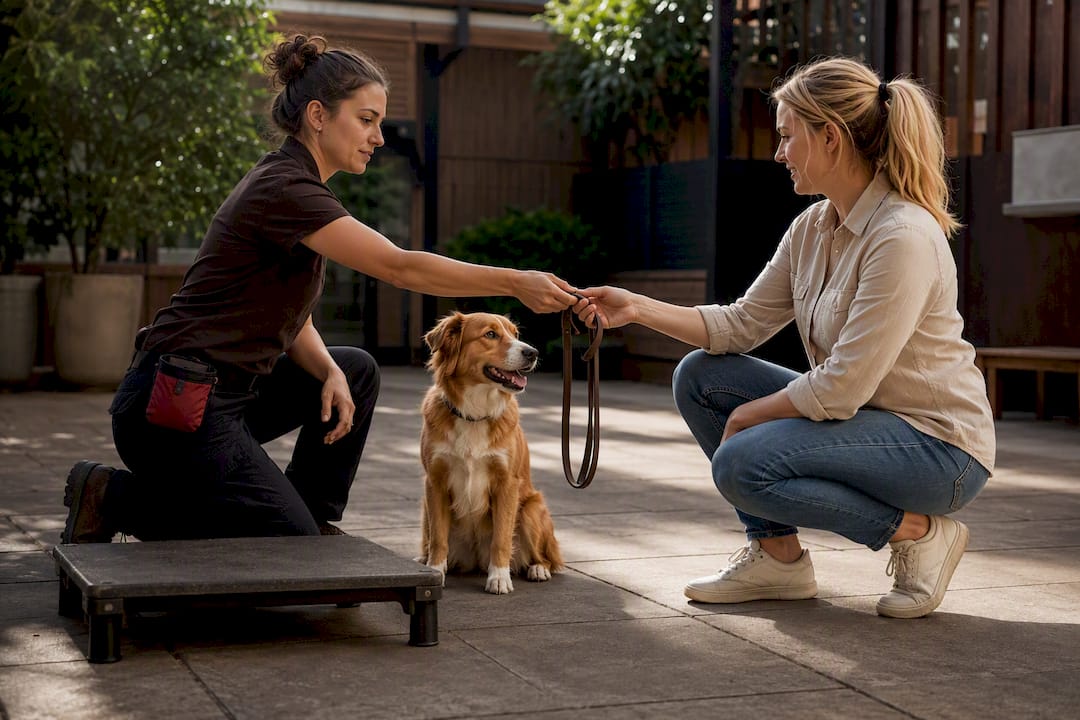
Most owners walk into this decision asking “will the trainer fix my dog?” when the better question is “will I be taught how to maintain what the trainer builds?” Those are different problems requiring different due diligence. A trainer can be technically excellent, humane, and patient, and the programme can still fail an owner who was never properly handed the tools to continue the work at home. That is not the trainer’s failure exactly, but it is a predictable outcome of a rushed or absent transfer process, and it is entirely preventable if you screen for it before you pay a deposit.
The industry’s lack of regulation makes this worse than it needs to be, because nothing stops a provider from skipping the transfer session altogether and calling the job done. Ethical operators build it in as a non-negotiable part of the programme, not an afterthought squeezed in while you’re loading the car. If you take one thing from this entire comparison, let it be this: judge a programme far more by how it hands your dog back to you than by how impressively it trains your dog while you’re not there to see it.
— Mark
Book a consultation with Happy-dogtraining’s 4-week intensive
This approach gives you the structured progress of board and train without the guesswork of vetting an unfamiliar provider from scratch. Programmes are built around humane, reward-based methods and a genuine daily commitment to your dog’s wellbeing, not just obedience drills.
The 4-week intensive programme includes a full pre-boarding assessment, daily training built around your dog’s specific issues (whether that’s obedience gaps, fearfulness, or aggression), and a proper transfer session where you learn every technique hands-on before your dog comes home. Support afterwards means you are never left guessing if something needs reinforcing weeks later. During your initial consultation, ask to see the training environment, ask about daily schedules, and ask exactly how the transfer session will run. Bring your dog’s medical history and a list of the specific behaviours you want addressed. Visit the Happy-dogtraining site to book a consultation and start the conversation about whether this fits your dog.
Where to read more before you decide
A handful of sources are worth reading in full if you want to go deeper on any single point raised here. The American Kennel Club’s board and train guidance covers red flags and industry regulation in more detail than fits in any single article. Preventive Vet’s analysis is the strongest resource on skill acquisition versus long-term maintenance. Patricia McConnell’s piece on the transfer session remains one of the clearest explanations of why that handover matters so much.
For practical preparation, Happy-dogtraining’s own guide on preparing your dog for board and train walks through the logistics before drop-off, while the reinforcement guide for after pickup covers the daily practice that keeps gains from fading. If you’re setting up a home training space, a durable, well-fitted collar and leash makes daily reinforcement sessions considerably easier to manage.
Sources
Recommended
Comments