Dog aggression toward other dogs: causes, signs, and solutions
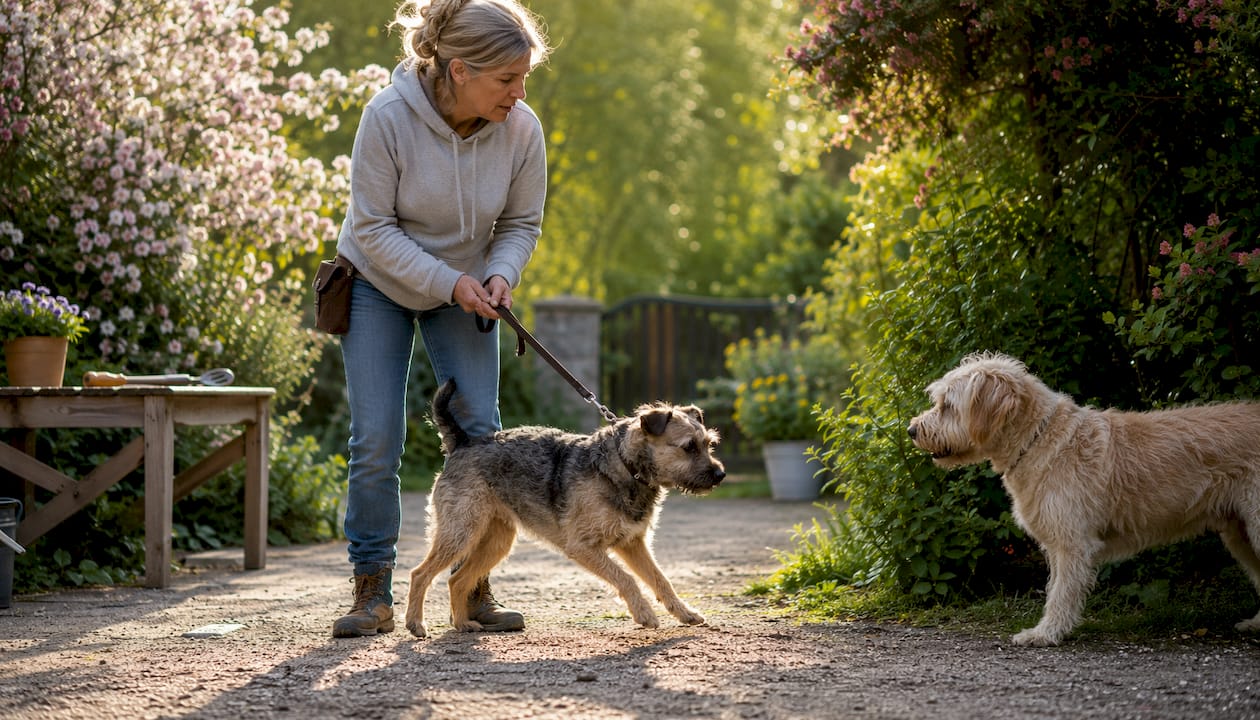
Dog aggression toward other dogs is one of the most common and distressing challenges owners face, and it affects between 22% and 47% of dogs in clinical studies. The good news is that this behaviour rarely reflects your dog’s overall character. It is almost always a response to fear, frustration, or resource guarding, and with the right approach, it is genuinely manageable.
If your dog lunges, growls, or snaps at other dogs, the first priority is preventing the situation from escalating. That means creating distance from the trigger immediately, using a secure lead and well-fitted harness, and avoiding environments where unexpected encounters are likely. Understanding what is driving the behaviour comes next, and that understanding shapes everything that follows.
Dos and don’ts during an aggressive episode:
Do increase distance from the other dog calmly and quickly.
Do use a barrier (car, fence, parked vehicle) to block your dog’s line of sight.
Do keep your voice calm and neutral. Panicking transfers anxiety to your dog.
Do reward your dog for disengaging, even slightly.
Don’t yank the lead sharply or shout at your dog.
Don’t force your dog closer to the other dog to “sort it out.”
Don’t punish growling. A growl is communication, not defiance.
Don’t allow the dogs to “work it out” unsupervised when aggression is present.
Pro Tip: If a fight breaks out, never grab collars or put your hands between the dogs. Use a loud noise, spray water, or slide a physical barrier between them. Redirected bites are a real risk, and your safety matters too.
Aggression toward other dogs does not make your dog bad or broken. It means your dog is struggling with something specific, and with patience and the right guidance, you can help them feel safer.
Why do dogs become aggressive toward other dogs?
Fear is the principal driver of aggressive behaviour in dogs, but it is rarely the only factor. Frustration, particularly the kind that builds on a tight lead when a dog cannot reach or move away from another dog, is another major cause. Resource guarding, where a dog protects food, toys, space, or even a person, can also trigger reactive or aggressive responses when another dog comes near.
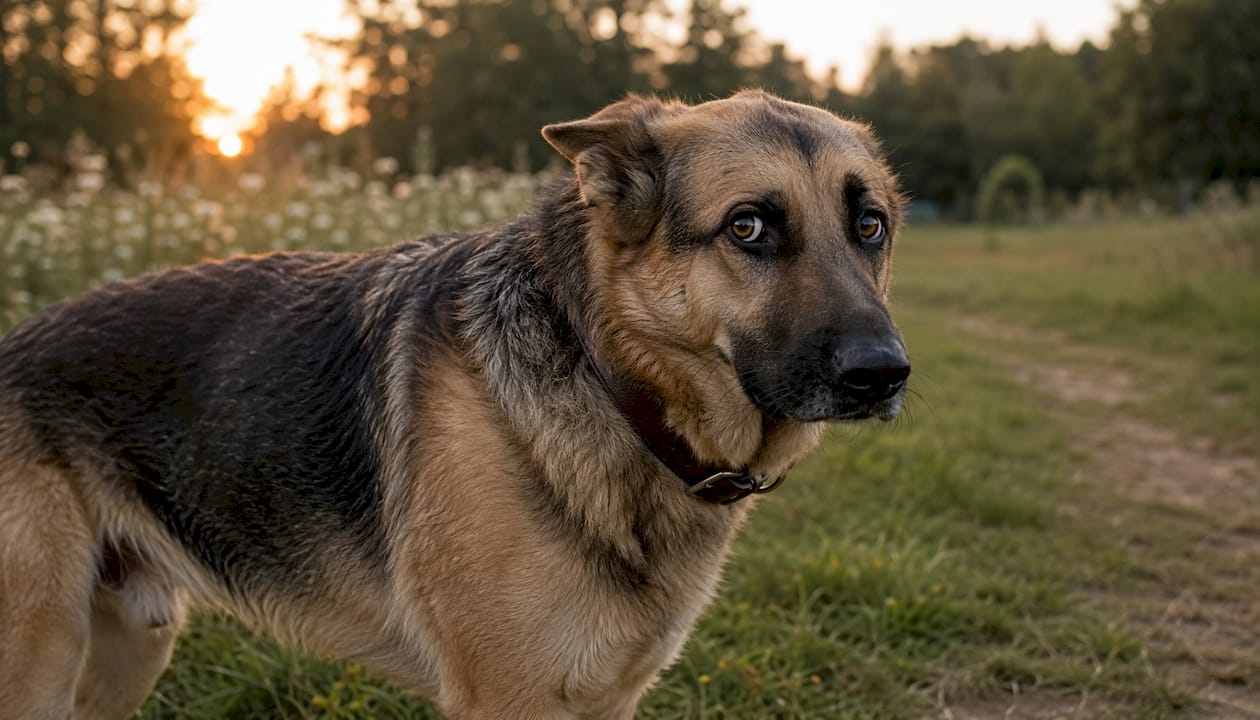
Genetics and early life experiences play a significant role too. Dogs that missed out on positive socialisation during the critical window of 3–12 weeks are more likely to find unfamiliar dogs threatening later in life. A single frightening encounter with another dog can also leave a lasting impression, particularly in dogs already prone to anxiety.
Common causes and their typical behavioural signs:
Fear: Cowering, tucked tail, whale eye, then sudden lunging or snapping when the dog feels cornered.
Leash frustration: Pulling hard toward other dogs, whining, barking, and spinning on the lead.
Resource guarding: Stiffening, hard stare, and growling when another dog approaches food, toys, or a favoured person.
Pain-related irritability: Sudden onset of aggression in a previously calm dog, especially when touched or approached unexpectedly.
Lack of socialisation: Generalised wariness or reactivity toward all unfamiliar dogs, not just specific ones.
Past negative experiences: Selective aggression toward dogs of a similar size, colour, or breed to a previous attacker.
Why does this matter for training? Because a dog reacting out of fear needs a completely different approach from one guarding a resource. Applying a one-size-fits-all correction to either situation tends to make things worse, not better. Identifying the motivation behind the behaviour is the foundation of any effective dog behaviour modification plan.
How to recognise the signs of dog aggression early
Catching aggression early gives you the best chance of intervening before a situation escalates. Dogs rarely go from calm to biting without warning. They communicate their discomfort through a clear progression of signals, and learning to read those signals is one of the most useful skills you can develop as an owner.
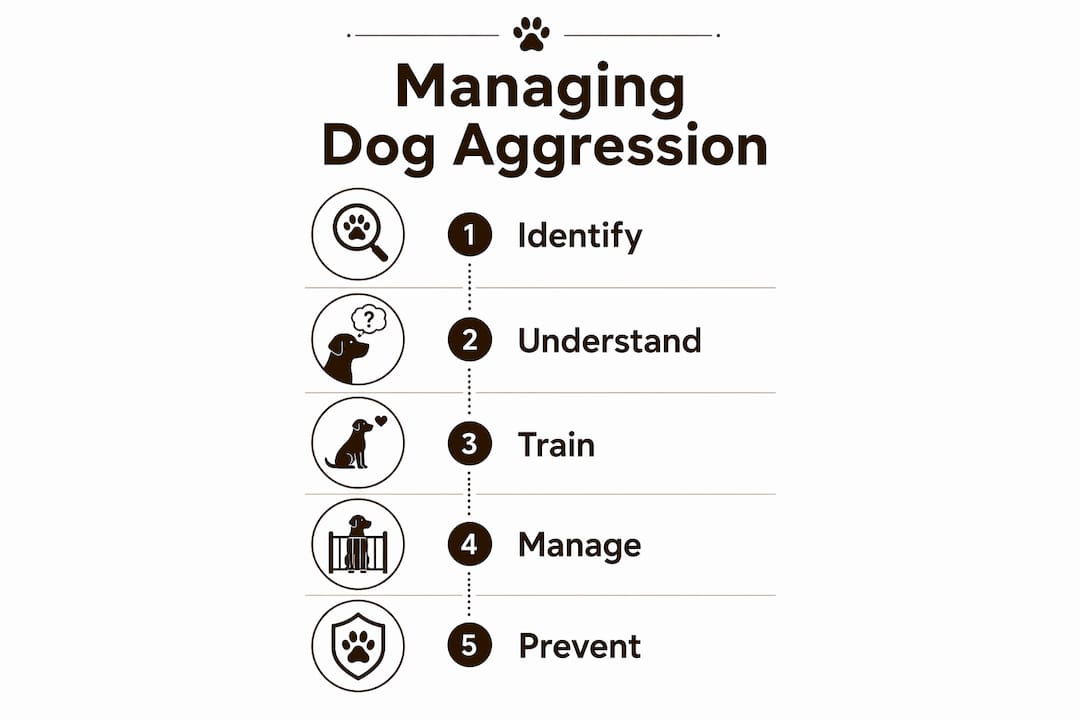
The body language of a dog building toward aggression tends to move from subtle to overt. A hard, unblinking stare is often the first sign. The body stiffens, the tail rises and becomes rigid, and the hackles along the spine may lift. Lips pull back to expose teeth, and a low growl follows. If nothing changes, the dog may snap or lunge.
Gradual aggression signals, from mild warning to severe threat:
Turning away or yawning (displacement behaviour, early stress signal)
Whale eye (whites of the eyes visible)
Lip licking or nose licking without food present
Stiff, slow movement toward or away from another dog
Hard stare with a tense, still body
Raised hackles along the back
Low growl or rumble
Lip lift or snarl
Snapping in the air (a warning bite)
Full lunge with contact
Play looks very different. Playful dogs have loose, wiggly bodies, bouncy movement, and take turns chasing and being chased. A play bow (front end down, back end up) is a clear invitation. Aggression, by contrast, involves a rigid body, direct approach, and no reciprocal looseness from either dog.
Respecting these warning signals is not permissiveness. Growling and stiffening are your dog telling you they are struggling. Punishing those signals does not remove the underlying discomfort; it removes the warning, which makes a bite more likely to come without notice.
Safe and effective training strategies for managing aggression
Safety management must come before training. Every time your dog practises aggression and it works, whether the other dog moves away or you retreat, the behaviour is reinforced. Your dog learns that lunging and barking solves the problem, so they will try it again next time. Stopping that cycle of rehearsal is the first practical step.
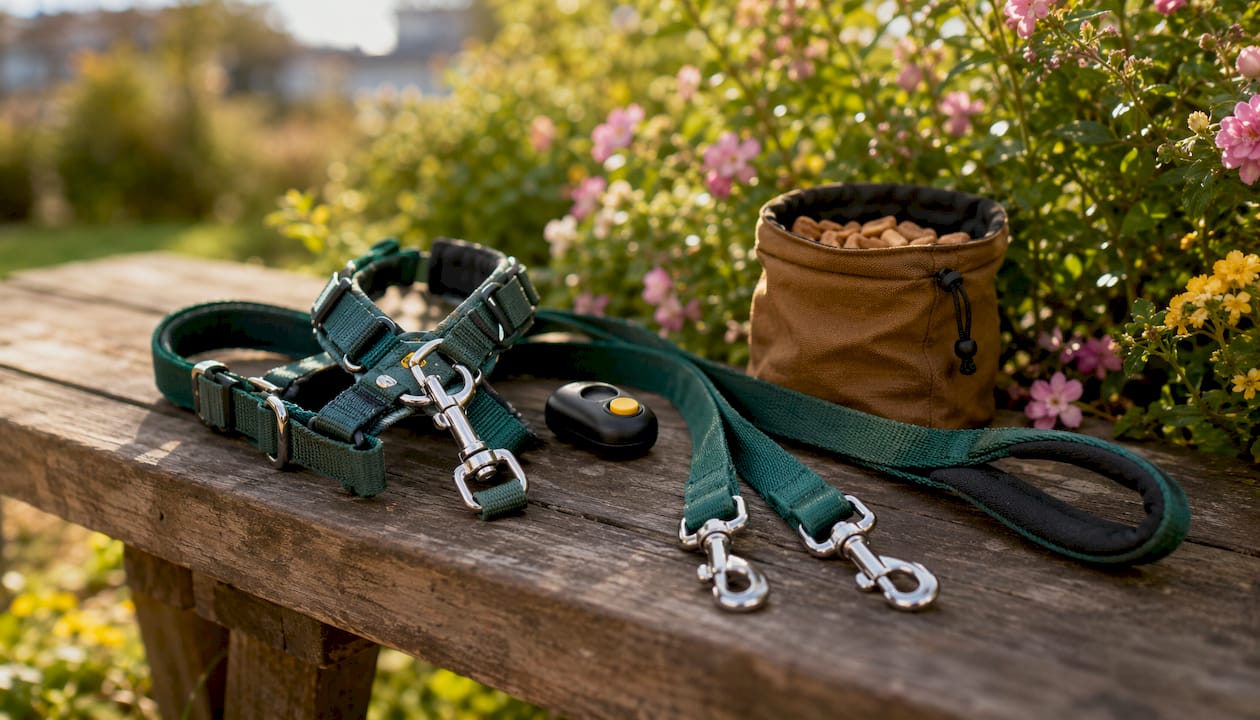
Practical management tools include a well-fitted front-clip harness, a double-ended lead for better control, and a basket muzzle when needed. A muzzle is not a punishment; it is a safety measure that allows you to continue working with your dog in the world without risk of injury. Choosing quieter walking routes, timing walks to avoid peak dog-walking hours, and keeping a consistent distance from other dogs all reduce the number of times your dog is pushed over threshold.
Once management is in place, behaviour modification can begin. The two techniques with the strongest evidence base are desensitisation and counterconditioning. Desensitisation means exposing your dog to another dog at a distance far enough that they notice but do not react, then very gradually closing that gap over many sessions. Counterconditioning pairs the sight of another dog with something your dog loves, typically high-value food, so the emotional association shifts from threat to reward. The AAHA guidelines confirm that reward-based, force-free training is the recommended approach, and that aversive tools like prong, choke, or shock collars increase fear and escalate aggression.
Dos and don’ts in training an aggressive dog:
Do start every session below your dog’s reaction threshold.
Do use high-value rewards (real meat, cheese) that your dog genuinely works for.
Do end sessions before your dog becomes stressed.
Do keep sessions short and consistent rather than long and infrequent.
Don’t use prong, choke, or shock collars. They suppress warning signals and increase fear.
Don’t flood your dog by forcing them to stay near the trigger.
Don’t punish growling or other warning signals.
Don’t progress too quickly. If your dog is reacting, you are too close.
Pro Tip: Watch your own response during training. If you tighten the lead the moment you see another dog, your dog feels that tension and reads it as confirmation that something threatening is nearby. Practise keeping a loose lead and a relaxed posture, even when you are nervous. Your body language is part of the training.
For owners looking for structured support, evidence-based methods for reactive dogs offer practical, step-by-step guidance grounded in the same principles.
When should you get professional help for your dog’s aggression?
Some situations call for professional support from the start. If your dog has made contact and caused injury, if the behaviour is worsening despite your efforts, or if you feel unsafe on walks, those are clear signals that you need expert guidance rather than more self-directed trial and error.
A veterinary check should always be the first appointment you make. Physical pain can trigger irritability and aggression, and conditions like arthritis, dental pain, or an undiagnosed injury can make a previously calm dog reactive. Treating the underlying medical issue sometimes resolves or significantly reduces the aggression without any formal behaviour work.
Beyond the vet, the professionals best placed to help with canine aggression include veterinary behaviourists (vets with specialist postgraduate training in behaviour), certified clinical animal behaviourists, and certified dog trainers who specialise in aggression and use force-free methods. Always ask about qualifications and methods before committing. A good professional will never recommend prong collars, alpha rolls, or dominance-based corrections.
Benefits of professional assessment:
Accurate identification of the type and motivation behind the aggression.
A customised behaviour modification plan tailored to your dog’s specific triggers.
Objective risk assessment to keep you, your dog, and others safe.
Consideration of medication where anxiety or fear is severe enough to prevent learning.
Ongoing support and plan adjustments as your dog progresses.
Increased owner confidence, which directly benefits the dog.
Early consultation prevents escalation. The longer aggressive behaviour is rehearsed without intervention, the more ingrained it becomes. Getting help at the first signs of a problem is always easier than addressing a well-established pattern months or years later.
How to prevent dog aggression toward other dogs long-term
Prevention starts early, but it is never too late to make a positive difference. Puppies that experience a wide variety of calm, positive encounters with other dogs during the socialisation window are far less likely to develop fear-based reactivity as adults. Those encounters need to be genuinely positive, not just frequent. A puppy that is repeatedly overwhelmed by boisterous dogs learns that other dogs are stressful, which is the opposite of the intended outcome.
For adult dogs, ongoing controlled exposure matters just as much. This does not mean dog parks, which are often chaotic and unpredictable. It means structured, calm meetings with known, well-matched dogs in low-pressure environments. Parallel walking, where two dogs walk side by side at a comfortable distance without direct interaction, is a particularly effective way to build positive associations without the pressure of face-to-face contact.
Prevention tips for owners:
Socialise puppies early with a variety of calm, friendly dogs in positive settings.
Avoid dog parks if your dog is already showing signs of reactivity.
Use parallel walking with familiar, calm dogs to build positive associations gradually.
Maintain a consistent exercise routine to reduce overall arousal and frustration.
Practise muzzle training proactively, before it is urgently needed.
Avoid inadvertently rewarding fearful or tense behaviour with excessive reassurance.
Keep training consistent. Inconsistency confuses dogs and slows progress.
Seek help at the first signs of reactivity rather than waiting for a serious incident.
Some dogs have a genetic predisposition toward lower tolerance of other dogs, and for those individuals, prevention means ongoing management rather than a cure. That is not a failure. It is an honest, caring approach that keeps everyone safe and allows your dog to live a full, happy life within their comfort zone.
What experts say about humane training methods
The professional consensus on managing canine aggression is clear and consistent. Punishment of fearful or aggressive dogs suppresses warning signals without addressing the underlying emotional state, making a dog more dangerous, not less. A dog that has been punished for growling may stop growling, but the fear that caused the growl remains. The result is a dog that bites without warning.
Desensitisation and counterconditioning work because they change the emotional response at its root. Veterinary behaviour experts confirm that behaviour modification changes underlying emotional responses rather than simply suppressing symptoms. A dog that once tensed at the sight of another dog across the street can, through careful and consistent work, learn to associate that sight with something genuinely good. That shift in feeling produces a shift in behaviour.
Key professional recommendations for managing aggression safely:
Use desensitisation and counterconditioning as the primary behaviour modification tools.
Always work below the dog’s reaction threshold during training sessions.
Pair the trigger with high-value reinforcers consistently and predictably.
Avoid flooding, which exposes the dog to the full trigger without the ability to escape and worsens anxiety.
Consider medication in consultation with a vet when fear or anxiety is severe.
Maintain management protocols throughout the training process to prevent rehearsal.
Prioritise the dog’s emotional welfare alongside behavioural outcomes.
Pro Tip: Learn to spot the subtle early stress signals before your dog reaches the point of reacting. A dog that starts yawning, licking their lips, or looking away when another dog appears is already communicating discomfort. Catching those signals and creating distance at that point, rather than waiting for a lunge, keeps training sessions productive and your dog’s stress levels low.
Happy-dogtraining brings over 20 years of certified, science-based experience to exactly this kind of work. The approach is always force-free, always tailored to the individual dog, and always focused on building genuine confidence rather than suppressing behaviour through fear. For owners who want structured, compassionate support, the reactive dog class is designed specifically for dogs struggling with aggression or reactivity toward other dogs.
Reading your dog’s body language around other dogs
Body language is your dog’s primary language, and becoming fluent in it changes everything about how you manage and prevent aggressive encounters. The signals dogs use are consistent and readable once you know what to look for, and they appear well before any overt aggression.
The key is to watch the whole dog, not just the obvious parts. A wagging tail does not always mean a relaxed dog. A high, stiff wag combined with a rigid body and direct stare is a sign of arousal and potential aggression, not friendliness. Contrast that with a loose, low wag paired with a soft, wiggly body, which signals genuine ease.
Specific signals to watch for when your dog encounters another dog:
Piloerection (raised hackles): The fur along the spine stands up, indicating arousal. This can accompany excitement or fear, so read it alongside other signals.
Weight shifting forward: The dog leans toward the other dog with a stiff, purposeful posture. This is different from a playful bounce forward.
Freezing: The dog goes completely still. This is often a precursor to a snap or lunge and should be taken seriously.
Hard, unblinking stare: Direct eye contact held without blinking is a challenge signal in dogs.
Tail carriage: A tail held high and rigid signals high arousal. A tail tucked under the body signals fear.
Ear position: Ears pinned flat against the head indicate fear. Ears pricked sharply forward indicate intense focus or challenge.
Understanding these signals also helps you read the other dog in an encounter. If the approaching dog is stiff, staring, and moving in a direct line, that is a dog communicating challenge, and creating distance quickly is the right call regardless of how your own dog is behaving.
Safety protocols for walking and dog interactions
Walking a dog that reacts to other dogs requires a consistent set of protocols that reduce risk and build your confidence over time. The goal is not to avoid the world entirely but to manage encounters so that your dog stays below their reaction threshold and you stay in control.
Before you leave the house, preparation matters. Use a secure, well-fitted harness with a front-clip attachment, which gives you better steering without putting pressure on the throat. A double-ended lead clipped to both the front ring and a back ring gives you additional control. If your dog has a history of biting, a basket muzzle fitted correctly allows them to pant, drink, and take treats while preventing injury.
On the walk itself, keep these protocols in mind:
Scout ahead. Look around corners and down the street before committing to a route. Give yourself time to change direction before your dog spots another dog.
Use the “find it” cue. Scatter treats on the ground to redirect your dog’s attention downward and away from the trigger. This works particularly well at the moment another dog appears at a distance.
Create distance proactively. Cross the road, duck behind a parked car, or turn and walk the other way before your dog reaches their threshold. Reacting after the lunge has already started is too late.
Avoid on-lead greetings. Two dogs meeting face-to-face on tight leads is one of the most common triggers for reactive behaviour. The leads restrict natural greeting behaviour and create tension.
Communicate with other owners. A simple “my dog needs space, please” is enough. Most owners are understanding when asked politely and clearly.
Debrief after a difficult walk. If your dog had a hard moment, give them quiet time to decompress before asking anything else of them. A calm sniff walk in a low-stimulus environment helps reset their stress levels.
Consistency across every walk builds a reliable pattern your dog can predict. When your dog learns that you will always create space and always reward calm behaviour, their trust in you grows, and that trust is the foundation of every successful training outcome.
Ready to help your dog feel calmer around other dogs?
If your dog is struggling with aggression or reactivity toward other dogs, you do not have to figure it out alone. Happy-dogtraining offers personalised, force-free support built around your dog’s specific needs, whether that is a structured class or a one-to-one behaviour consultation.
The aggressive behaviour consult is a great starting point if your dog’s aggression is causing real concern. A certified, experienced behaviourist will assess your dog’s triggers, motivations, and stress levels, then build a practical plan you can actually follow. For dogs that are reactive but not yet at the point of serious aggression, the reactive dog class offers a supportive group environment designed specifically for dogs like yours.
Every dog deserves to feel safe. With the right guidance, most dogs make real, lasting progress.
Key takeaways
Dog aggression toward other dogs is almost always rooted in fear, frustration, or resource guarding, and it responds well to force-free behaviour modification when management and training work together.
Point | Details |
Prevalence is high | Aggression toward unfamiliar dogs is common among dogs, so you are far from alone. |
Fear drives most cases | Fear is the principal cause; identifying the motivation determines which training approach will work. |
Management comes first | Preventing rehearsal of aggression by avoiding triggers is the immediate cornerstone of any behaviour plan. |
Punitive methods backfire | Punishment suppresses warning signals without resolving fear, making unpredictable biting more likely. |
Professional help works | A vet check rules out pain, and a certified force-free trainer builds a plan tailored to your dog. |
Recommended
Comments