Clinically Backed Owner Plan to Reduce Dog Aggression in 8–12 Weeks
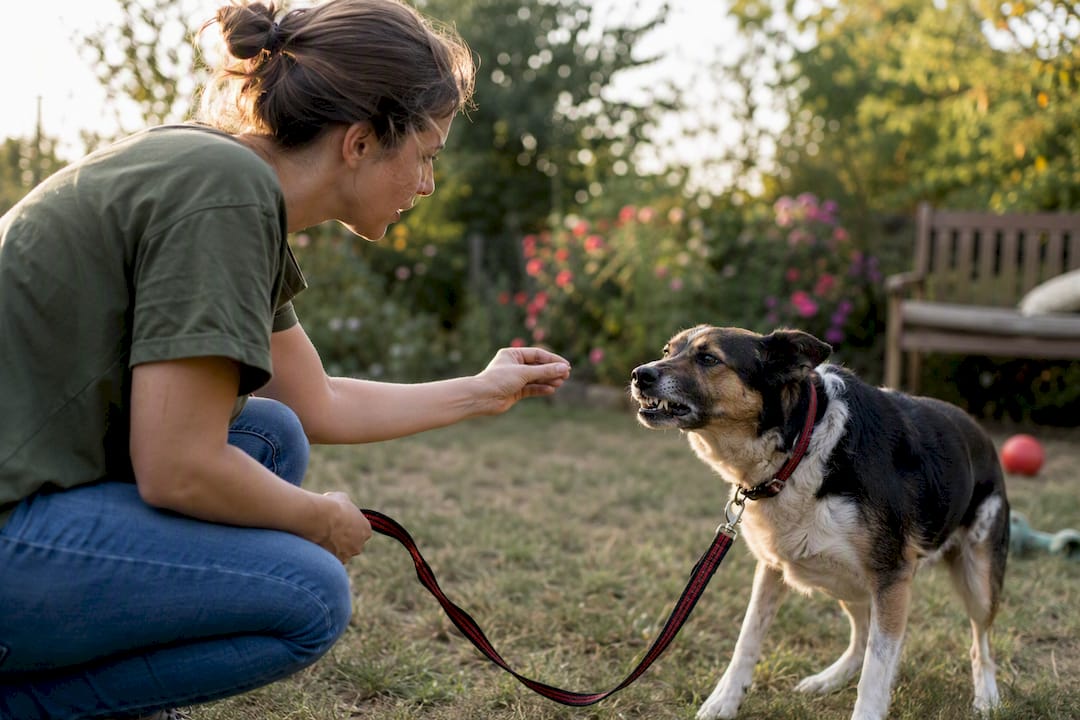
If your dog is aggressive towards you, safety comes first: calmly separate people from the dog, never punish the behaviour, and book a veterinary check to rule out pain before arranging a professional behaviour assessment. Rehabilitation is realistic for most dogs, but it takes patience, consistency, and the right support.
TL;DR:
Aggressive behavior caused by fear, frustration, resource guarding, redirected arousal, or pain requires tailored management and should not be mistaken for dominance.
Immediate steps after an incident include calm separation, injury treatment, safety management tools, detailed note-taking, and avoiding punishment or forced reconciliation.
Veterinary examination is essential to rule out medical causes before behavior therapy, with prognosis depending on bite severity, incident frequency, and household risks.
Long-term treatment involves environmental control, gradual desensitization, counterconditioning, and positive reinforcement, often taking four to six months for full rehabilitation.
Professional support must involve qualified, force-free vets, behaviorists, or trainers, with careful safety planning and ongoing, structured follow-up to ensure progress.
Table of Contents
What causes a dog to become aggressive towards its owner?
Owner-directed aggression rarely comes from one single cause, and lumping it all together as “bad behaviour” gets you nowhere. Vets and behaviourists generally group it into a handful of recognisable patterns, each with its own logic and its own fix.
Fear-based aggression shows up when your dog feels cornered or threatened, often by handling, reaching over the head, or being approached while startled. Conflict aggression develops when a dog is genuinely unsure what’s expected or what will happen next. It tends to appear in households where responses to the dog vary from one day to the next, which is exactly why predictable, reward-based interactions matter so much in recovery. Resource guarding targets food, toys, resting spots or stolen items, and it’s one of the more predictable and treatable forms once you know it’s happening. Redirected aggression occurs when a dog is aroused by something it can’t reach, such as another dog outside a window, and turns on the nearest person instead. Pain-related aggression is often the most overlooked. A dog with arthritis, an ear infection, or dental disease can snap the moment a sore spot is touched, even if it has never reacted that way before.
Certain situations trigger these patterns again and again:
Being touched or moved while resting or sleeping
Having a food bowl approached or handled during a meal
Having a stolen or treasured item taken away
Being grabbed by the collar or interrupted mid-play
Warning signals almost always come before a bite, and they matter enormously. A growl, a stiff body, a lip lift, or a sudden freeze are your dog’s way of saying “I’m uncomfortable” before things escalate. Treating growling as useful communication rather than defiance is one of the single most protective habits an owner can build.
You may have heard that aggression is about a dog trying to “dominate” the household. Modern behavioural science has largely dropped that framing. Most owner-directed aggression is rooted in fear, anxiety or frustration, not a power struggle, and treating it as one leads owners toward confrontation, which almost always makes things worse.
What should you do immediately after a growl, snap or bite?
The first hour after an incident sets the tone for everything that follows, so work through it methodically rather than reacting on instinct.
Separate calmly. Use a door, gate, or another room to put distance between the dog and everyone involved. Keep your voice low and avoid shouting, which raises everyone’s arousal, including the dog’s.
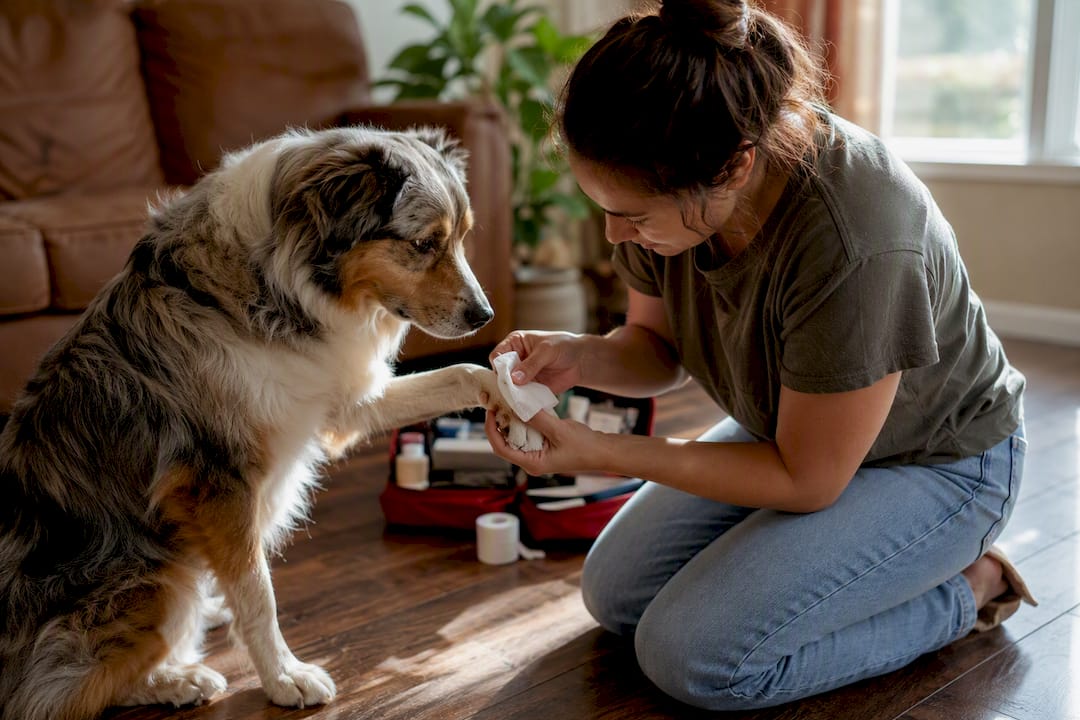
Treat any injuries. Clean bite wounds thoroughly with soap and water. Seek emergency medical care for deep punctures, heavy bleeding, or bites near the face, hands, or joints.
Set up short-term management. If your dog will tolerate one, a well-fitted basket muzzle allows safe handling. A secure room, a leash indoors, or a head collar can all reduce risk while you plan next steps.
Write it down. Note the time, what happened right before the incident, your dog’s body language, the severity of any injury, and who witnessed it. This record becomes invaluable for a vet or behaviourist.
Do not punish or force reconciliation. No scolding, no forcing the dog to “make up” with the person it bit. This is the point where recovery either starts on the right foot or gets derailed.
Pro Tip: Photograph any injury and jot down your notes on your phone within the hour. Memory fades fast under stress, and precise details about what happened right before the bite are often the single most useful clue for a behaviourist.
Getting the immediate priorities right, safety, first aid, no punishment, and a veterinary check, gives everything that follows a far better chance of working.
How do professionals assess owner-directed aggression?
A proper assessment starts at the vet, not with a trainer. A full physical exam rules out pain, infection, or neurological causes that can turn a normally easy-going dog into one that snaps without warning. Sudden-onset aggression in an older dog, in particular, deserves a thorough medical workup before anyone touches behaviour modification.
Once medical causes are addressed or excluded, a behaviourist builds a detailed incident history: how often aggression occurs, how severe each episode was, whether it’s escalating, and what context triggers it. This picture usually resolves into one of several diagnostic categories, including conflict aggression, redirected aggression, and, occasionally, rare neurogenic syndromes that mimic behavioural aggression but stem from a physical cause.
Several factors shape the prognosis:
Bite severity. An inhibited bite that leaves a bruise carries a very different outlook than an uninhibited bite that causes deep puncture wounds.
Frequency and recurrence. A single incident under unusual stress is far more manageable than a repeating pattern.
Household risk. Children, elderly residents, or other vulnerable people in the home raise the safety stakes considerably.
Size and impulse control. A large, strong dog with poor bite inhibition presents more risk than a small dog with the same trigger.
In a minority of cases, where risk genuinely can’t be managed safely, professionals may recommend rehoming to a lower-risk household or, in the most serious cases, euthanasia. That’s rare, but it’s honest to say it happens, and it’s precisely why an early, accurate assessment matters so much.
What does long-term treatment for aggressive behaviour actually look like?
Recovery is a process, not an event, and it usually runs on two tracks at once: managing the environment so incidents can’t happen, and gradually reshaping how your dog feels about the trigger.
Environmental control comes first and stays in place throughout treatment. Baby gates, supervised access to trigger situations, removing obvious flashpoints like a guarded chew toy, and keeping routines consistent all reduce the chance of another incident while the real work happens underneath.
The real work is desensitisation and counterconditioning: exposing your dog to a milder version of the trigger, at a distance or intensity it can cope with, while pairing it with something genuinely good. Over weeks, the distance closes and the intensity rises, always staying below the threshold that provokes a reaction. Alongside this, teaching solid alternative behaviours, a settle on a mat, a reliable “leave it,” gives your dog something constructive to do instead of reacting.
Tools help when they’re introduced properly:
Basket muzzles allow safe handling and public outings; introduce them slowly with treats so your dog associates the muzzle with good things, not restraint.
Head collars give gentle steering control without pressure on the throat.
Long lines allow supervised freedom in safe spaces without losing control entirely.
Fit and a positive introduction matter more than the tool itself. A muzzle forced on a frightened dog teaches it to fear the muzzle, not to feel safe wearing one.
For some dogs, particularly those with high baseline anxiety, medication such as an anxiolytic or an SSRI helps take the emotional edge off enough that behaviour modification can actually land. Vets prescribe these as part of an integrated programme, never as a standalone fix, and always alongside training.
Pro Tip: Expect months, not weeks. Most owners see meaningful change within eight to twelve weeks of consistent practice, but full rehabilitation for a well-established pattern of aggression often takes four to six months of steady work.
It’s worth saying plainly: punitive corrections and dominance-based methods don’t just fail here, they actively make aggression worse. Suppressing a growl with punishment doesn’t remove the underlying fear or discomfort. It just removes the warning signal, which means the next reaction can come without any notice at all.
How do you choose the right vet, behaviourist or trainer?
Not every professional labelled a “dog trainer” is equipped to handle aggression, and getting this choice right matters as much as any individual technique.
Your general vet is the right first stop for the medical check. From there, a veterinary behaviourist (a vet with additional qualifications in behavioural medicine) or a certified applied behaviourist handles complex cases, particularly where medication might help. An experienced, force-free trainer can support day-to-day training work once a diagnosis and management plan are in place.
Before hiring anyone, ask:
What are your qualifications, and have you handled cases like mine before?
Can you describe your safety plan for sessions involving an aggressive dog?
What does long-term support look like after the initial programme ends?
How do you track and review progress over time?
Walk away from anyone who relies on pain, intimidation, or physical corrections, promises a “quick fix” in one session, or skips the medical check entirely. Reputable professionals discuss realistic costs upfront, run structured sessions with homework between visits, and schedule staged reviews to track whether the plan is actually working.
Why this needs both clinical evidence and hands-on experience
Over two decades of working with aggressive dogs teaches you something the textbooks only hint at: every case looks unique up close, even when it fits a familiar diagnostic category. A resource guarder who freezes over a chew toy and a fear-aggressive rescue who snaps at sudden movement need completely different handling, even though both get labelled “aggressive” by a stressed owner.
What consistently works is the boring, unglamorous combination of safety-first management and patient, reward-based behaviour change. I’ve seen dogs written off as “dangerous” settle into calm, predictable companions within months, simply because the household stopped guessing and started following a structured plan with proper follow-up. AVS-accredited practice exists precisely because this work needs rigour, not shortcuts, and lifetime support matters because behaviour change needs maintenance long after the formal sessions end.
— Mark
Get direct support for owner-directed aggression
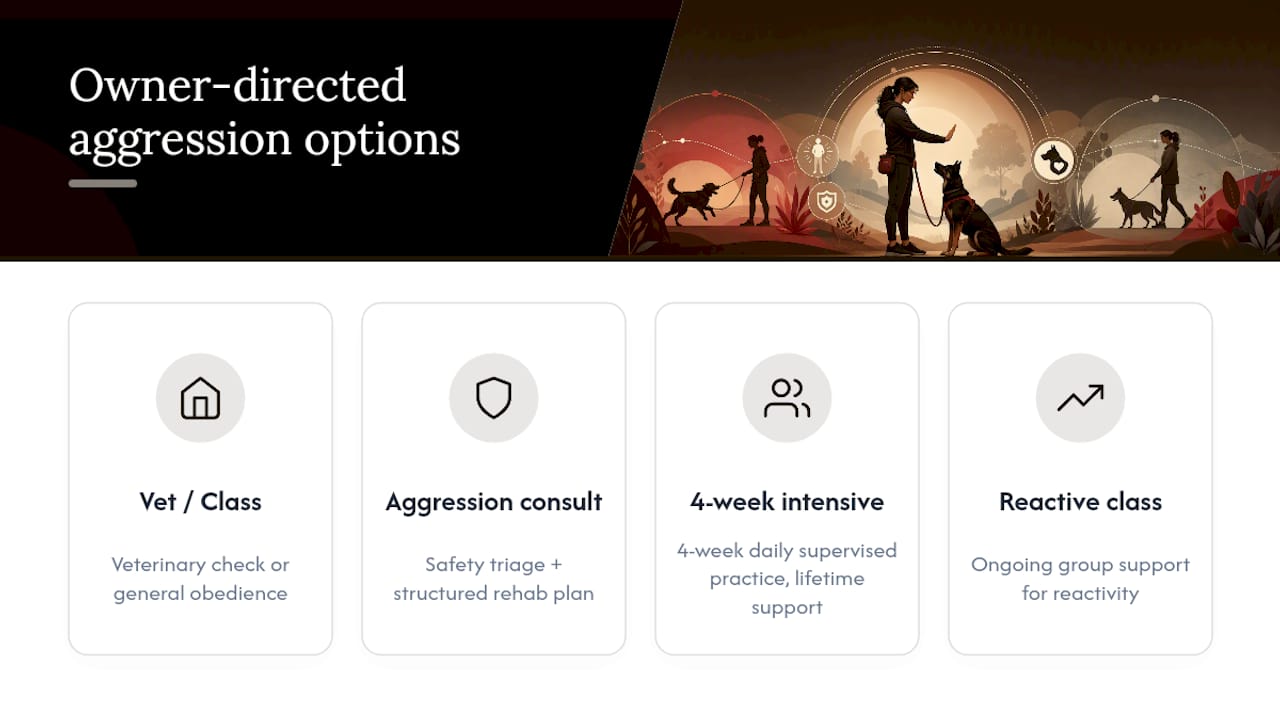
There are other paths to explore first, like your vet or a general obedience class, but neither is built specifically for aggression cases where safety planning has to come before anything else. Happy-dogtraining runs dedicated aggressive behaviour consults that start with a safety triage and a recommendation for a veterinary check, then move into a structured management and rehabilitation plan built around your dog’s specific triggers.
For dogs needing more intensive, supervised work, the AVS-approved four-week intensive programme provides structured daily practice under professional guidance, backed by free lifetime support once training ends. If your dog reacts to other dogs as well as people, the reactive dog class offers ongoing, structured group support. If you’re dealing with an urgent situation right now, visit the Happy-dogtraining website to get in touch and talk through immediate safety steps before your first session.
Sources
For deeper background, see the VCA Animal Hospitals guide to aggression toward family members, Whole Dog Journal’s advice on dogs that bite their owners, and Dogs Trust’s guidance on aggressive behaviour.
Recommended
Comments