Dog board and train success factors: what really works
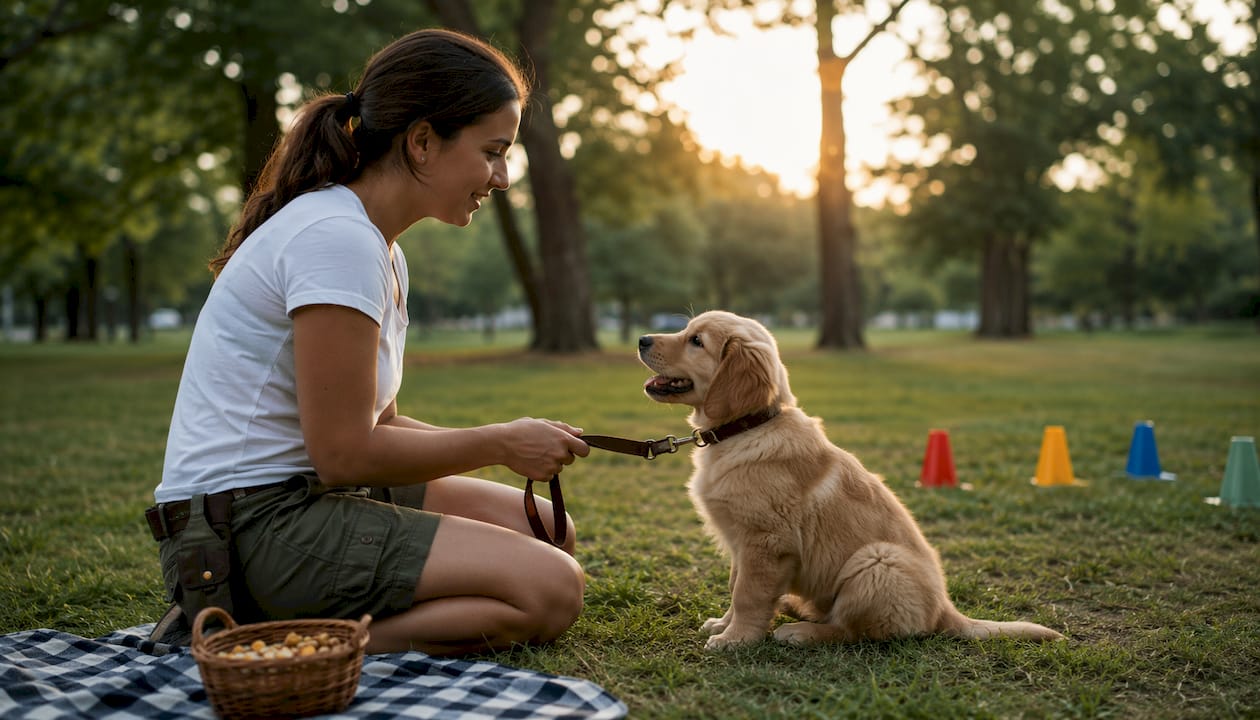
The most important dog board and train success factors are not what most owners expect. Research from the University of Nebraska-Lincoln shows that training success depends on a combination of dog temperament, owner cognitive ability, and time invested in training together. It is not simply about the dog’s breed, age, or whether they have been neutered. The good news is that several of these factors are within your control.
Here is a quick overview of what the evidence points to:
Dog characteristics that matter: Low levels of disobedience predict better outcomes. Age, sex, and neuter status show little predictive power.
Owner characteristics: Higher cognitive ability and lower stress levels in owners correlate strongly with programme completion.
Training methods: Reward-based, positive reinforcement approaches consistently outperform punishment-based methods for both obedience and long-term welfare.
Time and consistency: The amount of time you spend training with your dog before, during, and after a programme is one of the strongest predictors of success.
Environment and interaction quality: Immersive, realistic training environments and frequent, structured sessions throughout the day accelerate learning.
Follow-up and transfer: Gains made during boarding often fade without consistent owner reinforcement at home. The transfer phase is where lasting change is actually built.
Success in a board and train programme is never down to one factor alone. It is a combination of who your dog is, how you show up as an owner, and the quality of the programme you choose.
How your dog’s traits and your own affect training outcomes
Not all dogs enter a board and train programme on equal footing, and that is perfectly normal. Research published by Stevens et al. found that owner-rated disobedience was the strongest dog-level predictor of training success, while age, sex, and neuter status showed no meaningful predictive power. A dog who already shows some responsiveness, even if imperfect, tends to progress more quickly than one with deeply entrenched non-compliance.
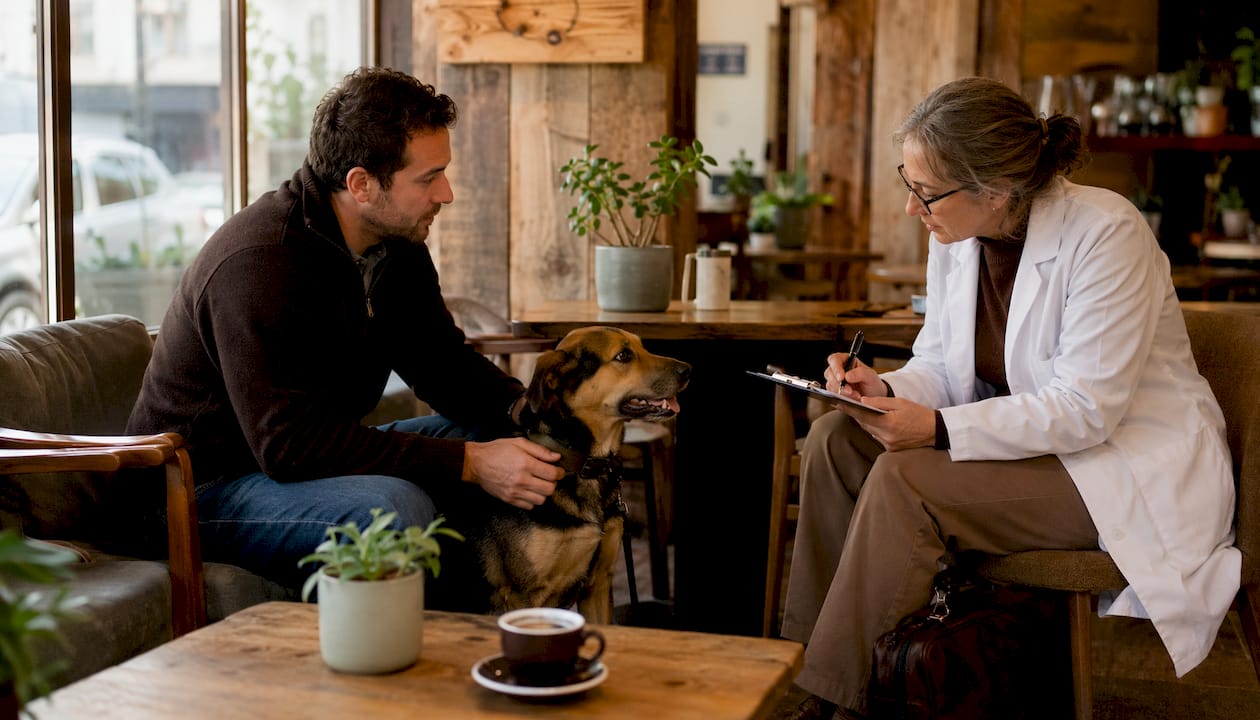
Temperament plays a role too. Dogs prone to fearfulness or high excitability may need a longer runway, particularly when the training environment introduces new people, sounds, and routines. That does not mean fearful or excitable dogs cannot succeed. It means the programme needs to account for their starting point, with a pace that keeps them feeling safe rather than overwhelmed.
On the owner side, the same research found that owner cognitive ability was the single most important predictor of training success across multiple machine-learning models, outranking all dog-level variables. Owners who could absorb and apply training concepts quickly were far more likely to see their dogs complete the programme successfully. Owner stress also emerged as a factor, with higher stress levels linked to poorer outcomes.
Factor | Predictive strength | Notes |
Dog disobedience level | Strong | Lower disobedience predicts better outcomes |
Owner cognitive ability | Strongest overall | Most important predictor across all models |
Time spent training | Moderate | More training time correlates with success |
Owner stress | Moderate | Higher stress linked to poorer outcomes |
Dog age | Weak | Not a reliable predictor |
Dog sex / neuter status | Weak | No meaningful predictive power |
The practical takeaway here is encouraging. You do not need a perfectly behaved dog to start. What you do need is a genuine commitment to learning alongside your dog and the willingness to practise consistently. Machine-learning models using these combined predictors achieved 82.6% accuracy in predicting programme completion, which tells you just how reliably these factors shape outcomes.
Understanding your dog’s temperament and training needs before enrolling helps you choose a programme that fits, rather than one that sets you both up to struggle.
Which training methods and time commitments give you the best results
The method a programme uses matters enormously. The American Veterinary Society of Animal Behavior (AVSAB) is unambiguous on this point: based on current scientific evidence, only reward-based training methods should be used for all dog training, including the treatment of behaviour problems. Aversive methods, including choke chains, prong collars, and electronic shock collars, have been shown to increase anxiety, fear-related aggression, and avoidance, with no evidence they outperform reward-based approaches in any context.
Reward-based training works by reinforcing the behaviours you want to see more of and removing reinforcement for those you want to see less of. In practical terms during a board and train programme, this looks like:
Frequent, short training sessions spread throughout the day rather than one long block, allowing the dog to absorb and consolidate learning.
Marker training (using a clicker or a verbal marker like “yes”) to pinpoint the exact moment a dog offers the right behaviour, making learning faster and clearer.
Downtime and decompression built into the daily schedule, giving the dog time to process new experiences and regulate emotionally.
Gradual exposure to real-world environments, such as busy streets, parks, and public spaces, so that learned behaviours generalise beyond the training facility.
Impulse control exercises woven into daily routines, not just formal sessions, so the dog practises self-regulation throughout the day.
Owner education sessions during the transfer phase, where the trainer walks you through exactly how to maintain and build on what your dog has learned.
Humane training methods consistently produce higher obedience scores and fewer stress-related behaviours than punishment-based approaches. A survey study by Hiby et al. found that obedience levels were highest for dogs trained exclusively with reward-based methods and lowest for those trained exclusively with aversive methods. Dogs trained with punishment also showed more problematic behaviours overall.
The quality of daily interaction inside the programme is just as important as the method. A well-structured daily schedule that balances structured learning, free exploration, and rest produces better results than one that simply drills commands repeatedly. Dogs learn through experience, not just repetition.
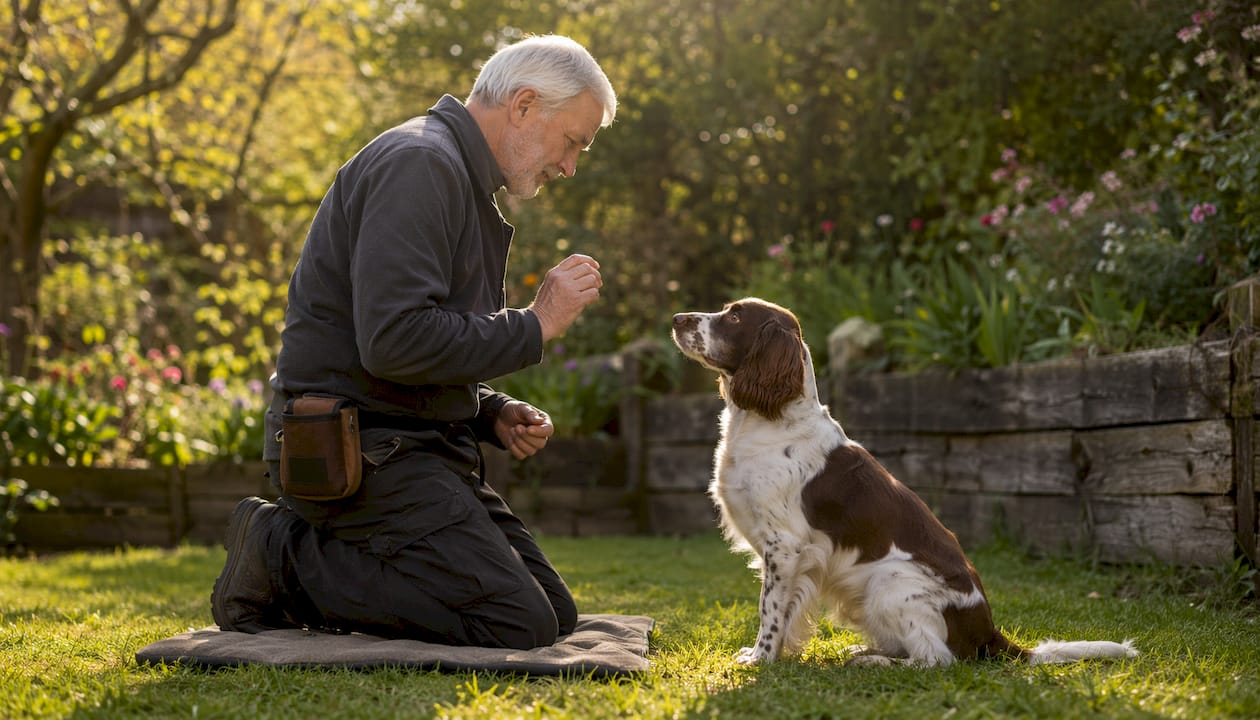
Pro Tip: Ask any facility you are considering to walk you through a typical training day. If the answer is vague, or if they are reluctant to let you observe a session, treat that as a warning sign.
How to make training gains last once your dog comes home
Board and train is best understood as a professional accelerator, not a permanent fix. The transfer phase is where the real work begins for you as an owner. Dogs trained well in a boarding environment can and do regress at home when the environmental cues and consistent reinforcement they experienced during training are absent.
The reason for this comes down to how dogs learn. Behaviour is context-specific. A dog who sits reliably on command in a training facility may not generalise that behaviour to your living room, your garden, or a busy park without deliberate practice in each of those settings. Gradual generalisation, practising known behaviours in progressively more distracting environments, is what bridges the gap between “trained in a facility” and “reliably behaved at home.”
Here are the strategies that make the biggest difference during and after the transition:
Attend the transfer session fully engaged. This is not a handover. It is your first lesson. Ask questions, take notes, and practise the cues yourself with the trainer present.
Keep routines consistent. Dogs thrive on predictability. Feeding, walking, and training at the same times each day reinforces the structure they experienced during boarding.
Practise in short, positive bursts. Ten minutes of focused, reward-based practice twice a day beats an hour of frustrated repetition once a week.
Manage the environment. If your dog is still working on impulse control around guests, manage the situation rather than testing it. Set your dog up to succeed, not to fail.
Use follow-up support. A reputable programme will offer scheduled check-ins or refresher sessions. Use them, especially in the first few weeks at home.
Long-standing behavioural issues require longer modification periods, and family adaptation of interaction styles post-training is critical to maintaining success. If everyone in the household uses different cues or inconsistent rules, the dog receives conflicting information and progress stalls.
Understanding your dog’s energy levels and daily needs also helps you build a home routine that supports continued learning rather than working against it.
Pro Tip: Shift your mindset from “my dog has been trained” to “my dog and I are learning together.” The programme gives your dog the skills. Your consistency gives those skills somewhere to live.
What Happy-dogtraining’s approach tells us about lasting success
The most effective board and train programmes share a common thread: they treat the dog as an individual and the owner as an essential part of the process. Happy-dogtraining, with over 20 years of experience in science-based, humane training, builds this philosophy into every programme it offers.
This perspective aligns directly with what the behavioural science literature supports. Programmes that prioritise calmness and emotional regulation alongside cue training produce higher long-term satisfaction than those focused solely on command execution. A dog who is calm and confident generalises their training far more readily than one who has simply memorised a sequence of responses.
Happy-dogtraining’s commitment to free lifetime support after training reflects a genuine understanding of how behaviour works. The transfer phase is not the end of the process. It is the beginning of the owner-led chapter, and having a knowledgeable trainer available for questions, refreshers, and adjustments makes a measurable difference to long-term outcomes.
For dogs with specific challenges such as fearfulness or aggression, specialist support tailored to those needs is far more effective than a generic programme. Dogs with severe anxiety or aggression require individualised evaluation and, in some cases, a behaviourist-led treatment plan that goes beyond standard board and train options.
How to choose a board and train facility you can trust
Choosing the right facility is one of the most consequential decisions you will make for your dog’s training. The wrong programme can undo trust, create new anxieties, and leave you with a dog who has learned to comply out of fear rather than genuine understanding. Here is what to look for.
Transparency about methods. A reputable facility will tell you clearly and confidently that they use reward-based, positive reinforcement methods. If a trainer describes their approach as “balanced” without explaining what that means, ask directly whether they use aversive tools such as prong collars, choke chains, or electronic collars. Programmes claiming to fix behaviour without owner follow-up, or those that refuse to let owners observe training sessions, are red flags.
Qualified, certified trainers. Look for trainers who hold recognised certifications from credible bodies. In the UK, the Animal Behaviour and Training Council (ABTC) maintains a register of accredited practitioners. Certifications from organisations such as the Association of Professional Dog Trainers (APDT UK) or the Institute of Modern Dog Trainers (IMDT) indicate a commitment to evidence-based practice.
Individual assessment before enrolment. A good programme will want to assess your dog before accepting them. This tells you the trainer is thinking about fit, not just filling spaces. Dogs with severe anxiety or aggression need individualised evaluation before any boarding programme begins.
Clear communication throughout. You should receive regular updates on your dog’s progress during the programme. Video updates, written reports, or scheduled calls are all reasonable to expect. If a facility goes quiet for weeks at a time, that is a concern.
A structured transfer process. The handover session should be a proper lesson, not a five-minute chat at the door. Ask in advance how long the transfer session lasts and what it covers.
Realistic expectations. Honest trainers tell you what a programme can and cannot achieve. Be cautious of any facility that guarantees specific results or promises to “fix” your dog in a set number of days without first assessing them.
Exploring the different types of board and train programmes available helps you match the right format to your dog’s needs and your own goals.
How to measure and track your dog’s progress during and after training
Tracking progress gives you something concrete to work with and helps you spot early signs of regression before they become entrenched. The most useful measures are behavioural, not abstract.
During the programme, ask the facility to share specific examples of what your dog can now do that they could not do at the start. Vague reassurances like “they’re doing really well” are less useful than “they can now hold a sit-stay for 30 seconds with a stranger walking past.” Concrete behavioural benchmarks, such as reliable recall, loose-lead walking, impulse control at doorways, and calm greetings with visitors, give you a clear picture of where your dog is.
At the transfer session, ask the trainer to demonstrate each behaviour and then guide you through it yourself. Note which cues your dog responds to reliably and which need more work. This becomes your baseline for the weeks ahead.
At home, keep a simple log. A notebook or a notes app works perfectly. Record which behaviours you practised, how your dog responded, and any situations that proved challenging. Reviewing this weekly helps you see genuine progress and identify patterns, such as a particular trigger or time of day when your dog struggles most.
Scheduled refresher sessions with your trainer, ideally at four weeks and again at three months post-programme, give you an external perspective on progress. A trainer can spot drift in your technique or your dog’s responses that you might not notice yourself because you are too close to it.
Progress is rarely linear. There will be days when your dog seems to have forgotten everything, and that is normal. What matters is the trend over weeks and months, not the wobbles on any given Tuesday. Knowing how to prepare your dog before a programme also sets a clearer baseline, making it easier to measure genuine gains once training is underway.
Key takeaways
Board and train success depends on dog temperament, owner engagement, reward-based methods, and consistent follow-through at home, with owner cognitive ability being the strongest single predictor of programme completion.
Point | Details |
Owner ability predicts success | Owner cognitive ability is the strongest predictor of training success, outranking all dog-level variables. |
Disobedience level matters most in dogs | Low owner-rated disobedience is the key dog characteristic linked to better training outcomes. |
Reward-based methods are non-negotiable | AVSAB recommends only reward-based training; aversive methods increase anxiety and reduce long-term obedience. |
Transfer phase is where gains are kept | Dogs can regress at home without consistent owner reinforcement; the handover session is the start, not the end. |
Track concrete behaviours, not feelings | Measure specific benchmarks like recall and loose-lead walking to monitor real progress after training ends. |
Ready to give your dog the best possible start?

If you are looking for a programme built on science, kindness, and genuine long-term support, Happy-dogtraining offers exactly that. With over 20 years of experience and a fully AVS-accredited intensive programme, every dog receives a personalised approach grounded in reward-based methods and real behavioural expertise.
Whether your dog needs foundational obedience, help with fearfulness, or support with reactive behaviour, Happy-dogtraining’s certified trainers are here to guide both of you, not just your dog, every step of the way. Free lifetime support is included after training, because lasting results need lasting partnership.
Explore Happy-dogtraining’s programmes and take the first step towards a calmer, happier dog and a more confident you.
Recommended
Comments