Dog car anxiety: practical steps for UK owners
If your dog is distressed in the car, start here. Do these three things before anything else:
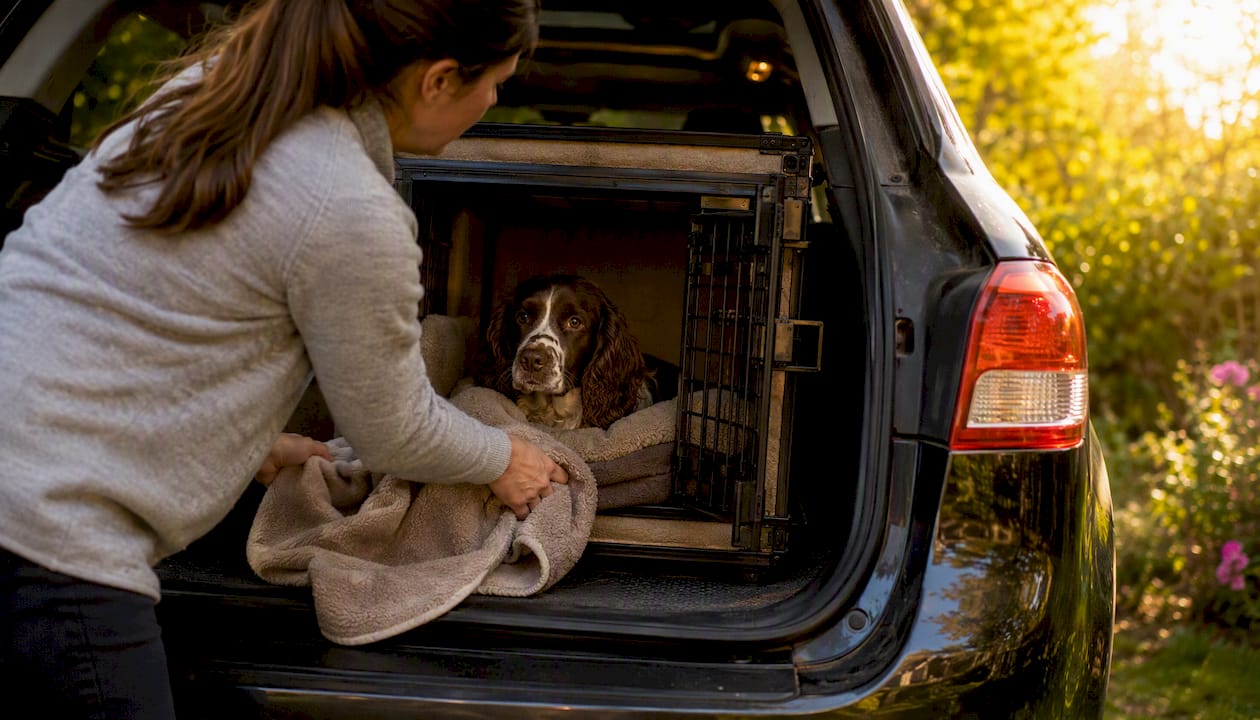
Secure your dog safely. Use a crash-tested harness or a secured crate in the back seat or boot. An anxious dog loose in a moving car is a danger to everyone.
Skip the next long trip. Replace it with a five-minute session of sitting in the parked car with the engine off, feeding high-value treats the whole time.
Book a desensitisation session today. Even one short, calm, positive session in a stationary car begins to shift the association from dread to reward.
If your dog panics, injures themselves, or vomits repeatedly regardless of where you are going, contact your vet before attempting any training.
Key takeaways
Desensitisation and counter-conditioning, combined with the right safety measures and veterinary support where needed, give dogs the best chance of becoming calm, confident travellers.
Point | Details |
Secure your dog first | Use a CPS-tested harness or anchored crate before any journey, regardless of anxiety level. |
Start desensitisation today | Begin with five minutes in a parked car with treats; progress only when the dog is fully relaxed at each step. |
Distinguish anxiety from motion sickness | A Cerenia trial helps separate the two; fear behaviours need behavioural work even if vomiting resolves. |
Use calming aids as support, not a cure | Adaptil, Zylkene, and Thundershirt can lower baseline anxiety; trazodone requires vet prescription and supervision. |
Seek professional help early | If training shows no progress after four to six weeks, consult a vet or certified behaviourist promptly. |
Table of Contents
What causes dog car anxiety, and how is it different from motion sickness?
How to spot the signs of car anxiety, including the red flags
What the research says about treating travel anxiety in dogs
Recognising stress behaviours before your dog even reaches the car
Positive reinforcement techniques to use during the journey itself
Keeping your dog and passengers safe during an anxiety episode
What causes dog car anxiety, and how is it different from motion sickness?
Car-related anxiety in dogs is a state of fear or stress triggered by the car itself, the journey, or what the dog associates with the destination. It is not simply bad behaviour. The dog’s nervous system has learned that the car predicts something unpleasant, and it responds accordingly.
The main causes fall into a few clear categories. Some dogs were never properly introduced to car travel as puppies, so the experience remains novel and threatening. Others have built a strong negative association because every car trip ends at the vet or the grooming salon. Confinement in a small, moving space can feel claustrophobic, particularly for dogs who already struggle with confinement anxiety. Noise, vibration, and the visual sensation of the world rushing past add further layers of stress. Pain from an underlying condition can also make the physical experience of travel acutely uncomfortable.
Motion sickness is a separate but often overlapping problem. According to VCA Animal Hospitals, it is particularly common in puppies and tends to resolve naturally by around one year of age as the vestibular system matures. The signs, drooling, lip-licking, and vomiting, look similar to anxiety but have a different cause and a different first-line treatment.
Feature | Car anxiety (fear-based) | Motion sickness |
When signs start | Often before the engine starts | After the car begins moving |
Link to destination | Yes — worse for vet/groomer trips | No — happens on all journeys |
Vomiting pattern | May or may not vomit | Frequent, often predictable |
Key physical signs | Trembling, panting, pacing, escape attempts | Drooling, lip-licking, vomiting, lethargy |
Best first-line response | Desensitisation and counter-conditioning | Anti-emetic (e.g. Cerenia), then habituation |
A useful clinical triage: trial Cerenia (maropitant) for a suspected motion-sickness dog. If vomiting stops but fear behaviours continue, a behavioural problem is also present and needs its own plan.
How to spot the signs of car anxiety, including the red flags
Dogs rarely go from calm to full panic in one step. The earliest signals are easy to miss.
Subtle signs (these mean your dog is already uncomfortable):
Lip licking or repeated yawning outside of tiredness
Turning the head away or refusing to make eye contact
Freezing near the car or slowing their walk as you approach
Ears pinned back, tail tucked, or low body posture
Obvious signs (the dog is past threshold):
Panting heavily when the temperature does not explain it
Trembling, pacing, or unable to settle
Whining, barking, or howling throughout the journey
Vomiting or drooling excessively
Scratching at windows, doors, or the crate in an attempt to escape
One useful distinction: if the signs begin before you even open the car door, that is anticipatory anxiety, rooted in learned association. If they begin only once the car moves, motion sickness or vestibular discomfort is more likely. Knowing which pattern you are dealing with shapes everything that follows. You can read more about how dogs signal anxiety before departure to sharpen your eye for the early cues.
Red flags that need immediate professional attention: self-injury during travel (biting at paws, head-banging), repeated vomiting on every journey regardless of destination, total refusal to approach the car even for treats, or aggression directed at passengers or the driver during travel. These situations go beyond standard training and require a veterinary assessment before you attempt any behaviour work.
Immediate safety and comfort measures for today’s journey
Before training produces results, you still need to travel safely. These measures reduce risk and lower stress right now.
Safety first:
Use a harness tested to the Centre for Pet Safety (CPS) standard, or a secured crate anchored to the boot floor. An unrestrained dog becomes a projectile in a collision.
Place your dog in the back seat or boot area, never in the front passenger seat where airbag deployment is a serious risk.
Attach the harness to the car’s seatbelt anchor rather than leaving the lead clipped to a door handle.
Comfort steps:
Keep the car cool and well-ventilated. Heat amplifies stress and worsens nausea.
Put a familiar blanket or worn item of your clothing in the travel space. Familiar scent is genuinely calming.
Use a waterproof liner under the dog’s bedding if vomiting or drooling is likely.
Offer a lick mat loaded with peanut butter or wet food for the first few minutes of a journey.
Dogs Trust guidance recommends pairing journeys with positive destinations wherever possible, even a short detour to a favourite park.
Short-term behavioural steps:
Withhold a large meal for two to three hours before travel if motion sickness is suspected.
Plan rest stops on longer journeys so your dog can stretch, sniff, and settle.
Never scold anxious behaviour. Punishment increases fear and makes the association with the car worse.
Pro Tip: Try facing a crate or travel cage forward rather than sideways. Dogs in forward-facing positions often show fewer signs of nausea because the visual field matches the direction of movement. A low-visibility cover over three sides of the crate can also reduce the overwhelming visual stimulus of passing scenery.
A step-by-step desensitisation plan you can start today
Behaviour experts are clear: a slow, systematic desensitisation and counter-conditioning programme is the most reliable long-term solution for car anxiety in dogs. The principle is straightforward. You expose your dog to the car at a level that does not trigger fear, pair that exposure with something wonderful, and very gradually increase the challenge only when the dog is genuinely relaxed at the current level.
Approach the car (parked, engine off). Walk your dog to within a few metres of the car. Feed treats. Walk away. Repeat five to ten times per session, two or three sessions per day. Move on only when your dog approaches the car with a loose body and a relaxed tail.
Touch the car door. Let your dog sniff the door handle and the car body. Reward every calm investigation. Do not open the door yet.
Open the door, dog stays outside. Open the car door and feed treats at the threshold. The dog does not need to get in. Close the door. Repeat until the dog is relaxed and even leaning towards the opening.
Dog puts front paws in. Lure or wait for the dog to place front paws on the car floor. Reward immediately. Let them step back out. Never push or lift a reluctant dog in.
Dog gets fully in, engine still off. Feed treats generously while the dog is inside. Keep sessions under two minutes. End before any sign of stress appears.
Engine on, car stationary. Start the engine while your dog is settled inside. Feed treats continuously. Turn the engine off. Repeat until the dog shows no reaction to the engine sound.
Move the car to the end of the driveway and back. The AKC’s staged approach recommends this as the first movement step. Keep it very short, reward heavily on return.
Gradually extend journey length. Add one to two minutes of driving at a time. Always end at a positive destination, a park, a friend’s garden, anywhere the dog enjoys.
Pacing rule: if your dog shows any stress signal at any step, go back to the previous step and spend several more sessions there before progressing. Many successful programmes spend two to three weeks at the parked-car-with-engine-off phase alone. Rushing is the most common reason training stalls. For more on behaviour modification for fearful dogs, the principles apply directly here.
Pro Tip: For dogs who are not food-motivated when anxious, swap treats for a favourite toy, a short game of tug, or a sniff of a beloved scent item. The reward must be something the dog genuinely wants in that moment, not something they tolerate.
Calming aids available in the UK and how to use them safely
Calming products can take the edge off anxiety enough to make training possible. They work best alongside a desensitisation plan, not instead of one. Combining an anti-emetic with an anxiolytic and a training programme is often the most practical approach for dogs with moderate to severe distress.
Adaptil (Dog Appeasing Pheromone): Available as a spray, collar, or plug-in diffuser. The spray can be applied to bedding or the inside of a crate 15 minutes before travel. The collar provides continuous low-level pheromone exposure. Widely available in UK pet shops and online. No known drug interactions, but consult your vet if your dog is on other medications.
Zylkene: An oral supplement derived from a casein protein found in milk. Given daily for several days before a stressful event, or as a short course. Available over the counter in UK pharmacies and pet retailers. Suitable for most dogs but check with your vet if your dog has a dairy sensitivity or is on other supplements.
Thundershirt: A pressure wrap that applies gentle, constant pressure across the dog’s torso. Put it on 20–30 minutes before travel so the dog associates it with calm rather than the car itself. Widely available in the UK. No contraindications, though it is not suitable as a substitute for restraint.
Cerenia (maropitant): A prescription antiemetic that prevents vomiting caused by motion sickness. It does not treat anxiety. Available from UK vets only. Typically given one to two hours before travel. Your vet will advise on dose and frequency based on your dog’s weight and health status. Do not use without veterinary guidance.
Always consult your vet before combining any of these products, particularly if your dog is elderly, pregnant, or on existing medication.
When to involve your vet or a certified behaviourist
Some situations go beyond what owner-led training can safely address. Seek veterinary input when:
Your dog vomits on every journey regardless of destination or duration.
Stress signs are severe (self-injury, prolonged inability to settle, physiological distress).
You suspect an underlying health issue such as vestibular disease or pain.
Consistent training over four to six weeks has produced no measurable improvement.
A veterinary behaviourist (a vet with specialist qualifications in animal behaviour) is the right referral when fear is entrenched, when anxiety co-occurs with aggression, or when welfare is at risk. A certified dog trainer with a behaviour background can support mild to moderate cases where the dog is not in acute distress.
What to bring to your appointment:
A short video of your dog’s behaviour in and around the car.
A written timeline: when the problem started, what has changed, and what you have already tried.
A list of any supplements, calming aids, or medications already in use.
Specific questions about medication options, including trazodone and gabapentin, and their side effects.
What to expect: your vet or behaviourist will assess the dog’s physical health, review the history, and propose a modification plan. They may suggest a short medication trial to reduce baseline anxiety enough for training to take hold. For owners considering a more intensive route, a board and train programme with a qualified trainer can accelerate progress significantly.
What the research says about treating travel anxiety in dogs
Systematic desensitisation and counter-conditioning have the strongest support from behaviour specialists as the long-term solution. Medication is increasingly recognised as a useful adjunct, particularly for dogs whose anxiety is too high to learn during exposure sessions.
The most robust controlled evidence comes from a blinded road travel study in which a single oral dose of trazodone, given around two hours before travel, significantly reduced serum cortisol and multiple behavioural stress indicators during road travel. Gabapentin did not show measurable effects under the same conditions. This matters clinically: it suggests trazodone may be a more reliable pre-travel anxiolytic than gabapentin for some dogs, though dosing and suitability remain a decision for your vet.
The same research pool reports that a substantial proportion of dogs show negative responses to car transport, with measurable rises in cortisol and heart rate during travel. That is a substantial proportion of the pet population, which means this is a common welfare issue, not an edge case.
Preventive Vet’s clinical guidance is consistent with the research: medication can enable desensitisation by lowering the dog’s baseline arousal, but it rarely produces lasting behavioural change on its own. The training must still happen.
Realistic timelines and typical UK costs
Progress timelines vary considerably:
Puppies with no established fear: habituation through positive exposure can take as little as one to two weeks of daily short sessions.
Adult dogs with mild anxiety: consistent counter-conditioning typically produces clear improvement within four to eight weeks.
Adult dogs with moderate to severe anxiety: expect three to six months of structured work, sometimes longer if the fear is deeply conditioned.
Checkpoints to judge progress: by week two, the dog should approach the car without avoidance. By week four, they should enter voluntarily. By week eight, short journeys should produce noticeably less distress than at the start.
Typical UK cost ranges (approximate, not guaranteed):
Single veterinary consultation: £50–£90
Prescription medication trial (e.g. trazodone, Cerenia): £20–£60 per course, depending on dog size and duration
OTC calming aids (Adaptil collar, Zylkene course, Thundershirt): £20–£50 each
Private dog trainer (per session): £40–£80
Veterinary behaviourist consultation: £150–£300 for an initial appointment
Paying for a specialist early, when the problem is still moderate, almost always shortens the overall timeline and prevents escalation to a more entrenched fear response.
Recognising stress behaviours before your dog even reaches the car
Many dogs begin showing anxiety long before they are near the vehicle. You might notice pacing around the house, vocalising, or an inability to settle in the hour before a known trip. These are signs that the dog has learned to read your pre-departure cues, your keys, your coat, your bag, and is already anticipating the car before you have left the front door.
Managing this starts with breaking those cue chains. Pick up your keys and then sit back down. Put on your coat and stay indoors. Repeat these actions at random times with no car trip following, so the cues lose their predictive power. For a deeper look at this pattern, pre-departure anxiety in dogs covers the full picture of how dogs learn to anticipate stressful events and what to do about it.
Positive reinforcement techniques to use during the journey itself
Reward-based training does not stop once the car moves. Keeping your dog engaged and rewarded during travel reinforces the idea that being in the car is a good place to be.
Offer a stuffed Kong or lick mat at the start of every journey. The act of licking is naturally calming and keeps the dog occupied during the most stressful phase, the first few minutes. Speak to your dog in a calm, low voice rather than an anxious or overly soothing tone. Dogs read emotional cues from their owners, and an anxious owner voice can amplify rather than reduce stress.
Short, frequent rewards during the journey work better than one large reward at the end. If your dog settles and lies down, mark that moment with a quiet “good” and offer a small treat without making a fuss. The goal is to build a history of calm, rewarded moments in the car so that the vehicle itself becomes a predictor of good things.
Building positive associations starting outside the car
The most effective desensitisation begins well before your dog is anywhere near the car door. Start by feeding your dog their meals near the car, initially at a distance where they remain relaxed, then gradually closer over several days. Play short games in the driveway. Scatter treats around the tyres and the bumper so the dog investigates the car on their own terms.
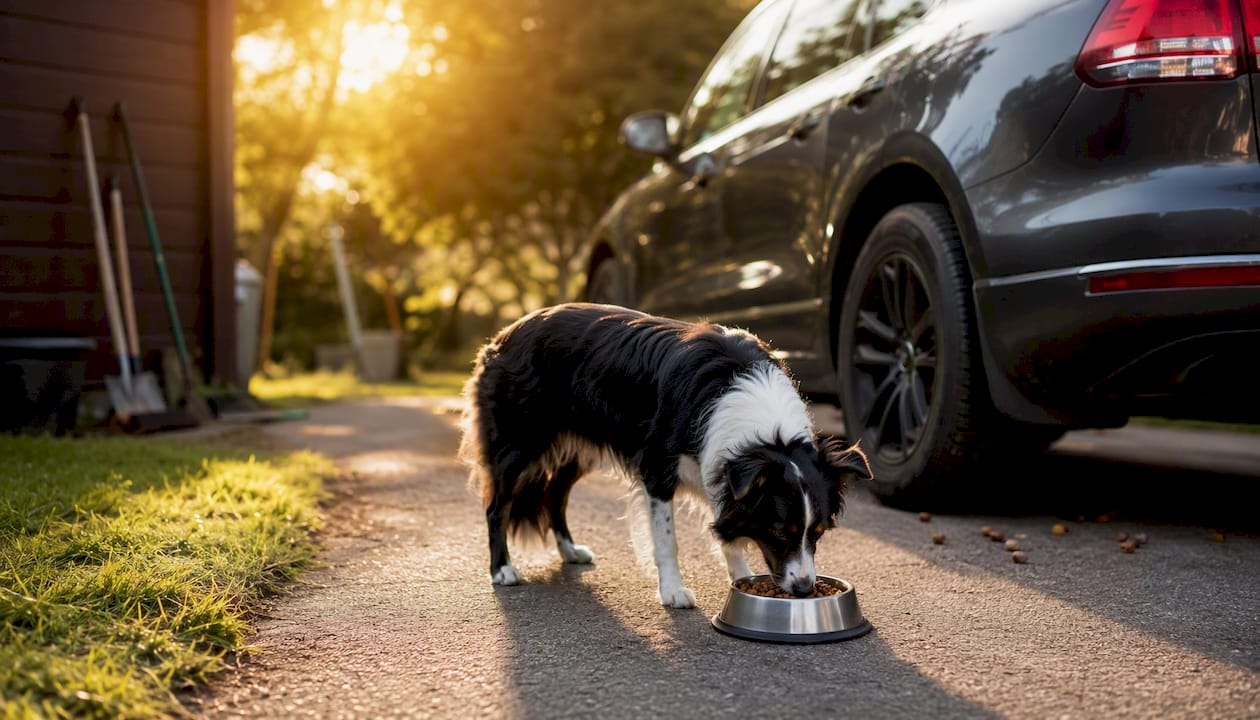
This outside-the-car phase is where many owners skip ahead too quickly. Trainer and behaviourist guidance is consistent: if a dog shows any stress signal during a step, regress to the prior step and spend additional sessions there. Spending a full week simply feeding meals within sight of the car, with no pressure to approach, can transform a dog’s emotional response before a single door is opened.
Managing severe anxiety when a car trip is unavoidable
Sometimes you cannot wait for training to work. A vet emergency, a house move, or an urgent appointment means the car trip is happening today. Here is how to manage it as safely as possible.
Contact your vet in advance if at all possible. A single dose of a short-acting anxiolytic, prescribed and dosed by your vet, can reduce acute distress significantly. Do not attempt to medicate your dog with human medications or over-the-counter products not designed for dogs.
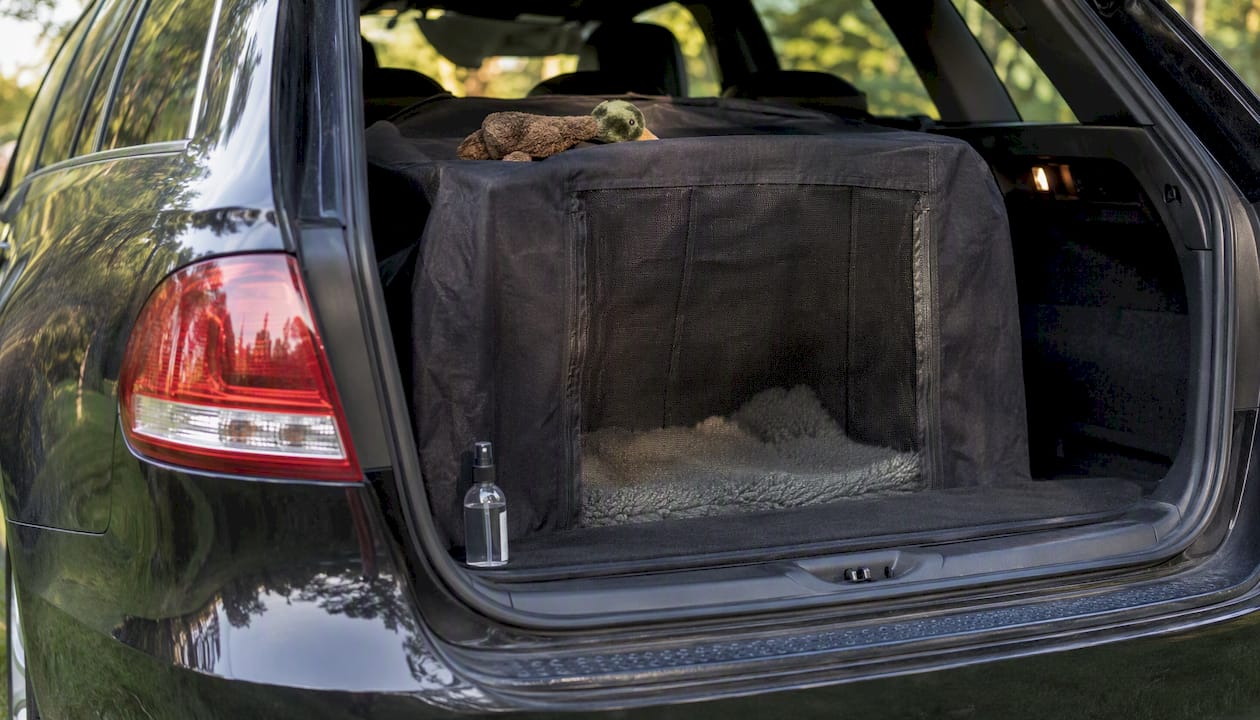
On the day, keep the environment as calm as you can. Spray Adaptil in the crate or on bedding 15 minutes before loading. Use a covered crate to reduce visual stimulation. Drive smoothly, avoid sudden braking, and keep the radio low. If the journey is long, plan a stop every 45–60 minutes where the dog can get out, sniff, and drink water.
After the unavoidable trip, begin a proper desensitisation programme as soon as possible. One stressful journey does not undo months of training, but repeated unavoidable trips without any positive work in between will deepen the fear.
Keeping your dog and passengers safe during an anxiety episode
An anxious dog in a moving car is a genuine safety risk. A dog who panics, lunges at the driver, or attempts to escape can cause a serious accident. Restraint is not optional.
A properly fitted, crash-tested harness attached to the seatbelt anchor keeps the dog in place even if they thrash or lunge. A secured crate in the boot is equally effective and has the added benefit of giving the dog a defined, enclosed space that some find calming. Never attach a lead to a door handle or headrest as the only restraint. In a sudden stop, the dog will be thrown forward with significant force.
If a dog becomes acutely panicked mid-journey, pull over safely as soon as you can. Do not reach into the back to restrain the dog with your hands while driving. Once stopped, give the dog a moment to settle before attempting to handle them. If the dog is showing signs of extreme distress or aggression, wait for them to calm before opening any door, as a panicked dog may bolt into traffic.
A trainer’s perspective: why patience pays off every time
Most owners who come to me with a dog who hates car rides share one thing in common: they have been trying to push through the fear rather than work around it. The instinct is understandable. You need to get somewhere, the dog needs to come, and waiting feels like giving in. But fear does not respond to persistence. It responds to safety and repetition.
The stepwise approach works because it never asks the dog to cope with more than they can handle. Each session ends before stress appears, which means the dog’s last memory of the car is always a positive one. Over time, those positive memories accumulate and the fearful association fades. A dog I worked with recently, a three-year-old Spaniel who had refused to enter a car for over a year, was voluntarily jumping into the boot within six weeks of consistent, patient counter-conditioning. No punishment, no flooding, no forcing. Just small steps, high-value rewards, and the owner’s willingness to go slowly.
If your dog’s anxiety is severe, do not try to manage it alone. A qualified behaviourist can assess what is driving the fear and build a plan that fits your dog specifically. The sooner you start, the faster the progress.
Sources
This article is general information, not a substitute for advice from a qualified doctor. Consult a qualified healthcare professional about your own circumstances before acting on anything here.
Recommended
Comments