Dog Owners Paying for Help: Behaviour-First Care, Not Daycare, for Anxious Dogs
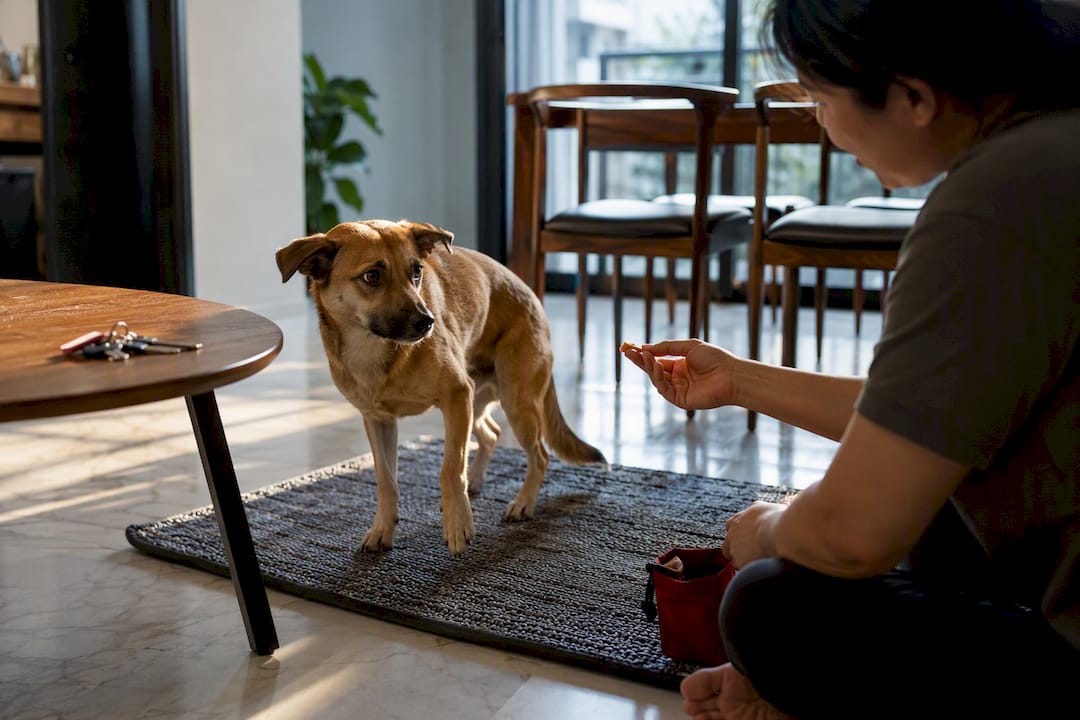
In this context, “dog daycare for anxious dogs” means a behaviour-focused, evidence-based training or behaviour consultation, not play-based day care. If your dog struggles with fear, separation distress, or noise phobias, your next step should be a professional behaviour consultation or a structured training programme, ideally alongside a veterinary check to rule out medical causes.
TL;DR:
Professional behaviour consultation lasts one to two hours, involves a detailed history, and results in a tailored behavior plan, homework, and follow-up schedule.
Desensitisation and counterconditioning are core techniques that gradually expose dogs to triggers below their fear threshold and pair triggers with positive reinforcement.
Training should be owner-led with consistent practice at home; medication can support progress but is never a replacement for behavioural work.
Signs of over threshold include trembling, growling, or refusing treats, indicating the need to focus on individual work before group settings.
Trainers should have AVS accreditation and experience with fear-based cases, and training success depends on owner engagement and ongoing follow-up.
Table of Contents
What “dog daycare for anxious dogs” actually means for treatment
Search results for this phrase often show commercial daycare centres, places where dogs play together while you’re at work. That’s not what most anxious dogs need, and it’s not what this guide covers.
When owners type “dog daycare for anxious dogs” into a search bar, they’re usually looking for paid, professional help with a dog who panics at the front door, shakes during thunderstorms, or can’t cope with strangers. What they need is behaviour modification, not supervised play. This distinction matters because dropping an anxious dog into a group daycare setting can worsen fear rather than fix it.
Separation anxiety, noise phobias, and social fear are the three problems that send most owners looking for structured help. Each responds well to targeted training, but none of them improve through exposure to a busy daycare floor alone. If your dog is signalling anxiety before you even leave the house, that’s a training conversation, not a boarding decision.
What happens during a professional behaviour consultation?
A proper consultation looks nothing like a quick chat at pickup time. Most run for one to two hours, whether conducted in person or virtually, and cover far more ground than a first-time owner might expect.
During that window, the trainer or behaviourist will work through a detailed history of your dog, a written questionnaire about triggers and daily routine, and a calm, non-stressful observation period. Many professionals also ask for a recent veterinary check before starting work, since pain, thyroid issues, and other medical conditions can mimic or worsen anxious behaviour.
By the end of the session, you should walk away with more than reassurance. Expect:
A written behaviour plan naming specific triggers and target outcomes
Homework exercises to practise daily between sessions
A follow-up schedule, whether weekly calls, video reviews, or in-person check-ins
Clear guidance on what to film or record for progress tracking
Your role doesn’t end when the consultation does. Owner-led practice, done consistently, drives most of the actual change, and the initial consultation sets the template you’ll be repeating at home for weeks. If your dog shows anxious body language during that first meeting, documenting it (panting, pacing, whale eye) helps the trainer calibrate the starting point accurately.
How does desensitisation and counterconditioning treat anxiety?
Two techniques sit at the core of nearly every evidence-based anxiety programme: desensitisation and counterconditioning. They’re almost always used together, and for good reason.
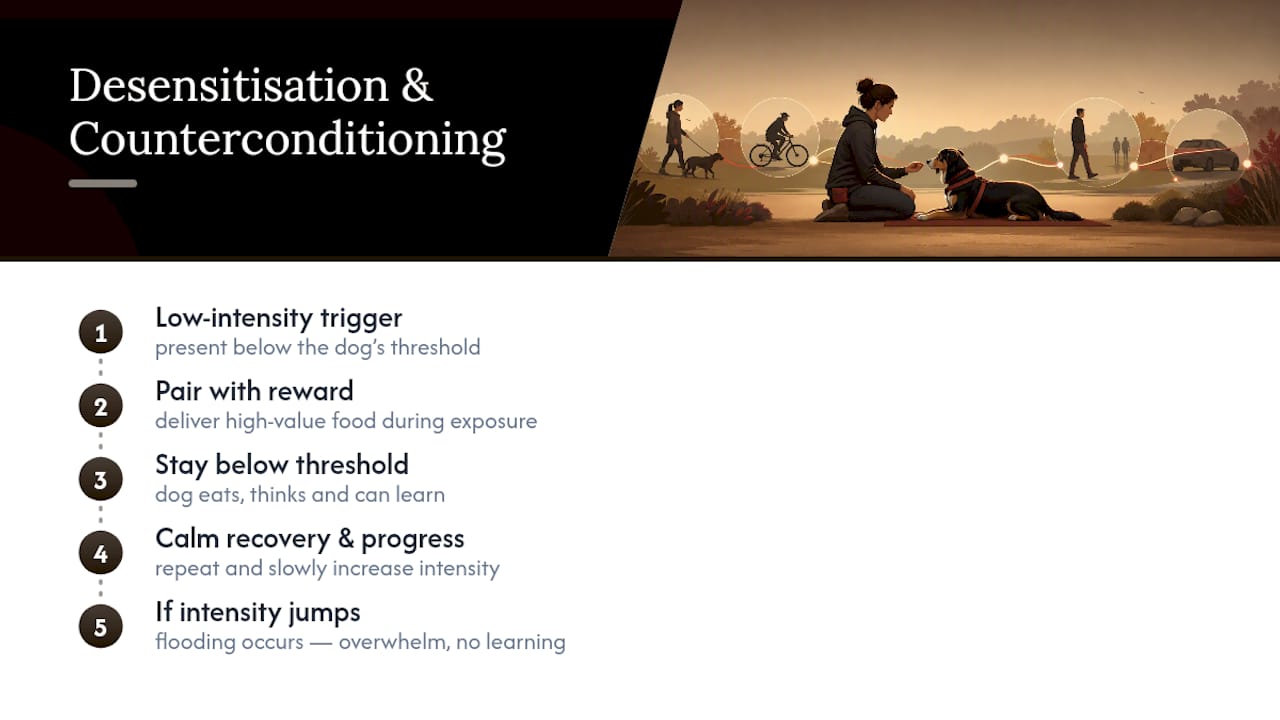
Desensitisation means exposing your dog to a feared trigger, a doorbell, a stranger, the sound of your keys, at an intensity so low it doesn’t provoke a fear response. Counterconditioning pairs that low-level exposure with something genuinely good, usually high-value food, to shift the dog’s emotional association from dread to anticipation. Used together, they don’t just suppress a behaviour; they change how the dog feels about the trigger in the first place, a distinction supported by multiple controlled studies on separation-related and fear-based behaviours.
The concept of “threshold” is what separates skilled practice from well-meaning mistakes. Working below threshold means your dog notices the trigger but stays calm enough to eat, think, and learn. Push past that line and you risk flooding, overwhelming the dog until the fear response takes over and no learning happens at all.
Genuine progress looks different from simple silence. A dog that turns to the handler for food before the click, or chooses the handler over the trigger unprompted, is showing real emotional change, not just suppressed barking.
Pro Tip: Film every session from week one. Reviewing footage side by side, early sessions against recent ones, reveals subtle threshold improvements that are easy to miss in the moment.
Predictable daily routines around meals, walks, and rest lower a dog’s baseline stress, which makes every desensitisation session more productive. When training alone isn’t enough to get a dog functioning below threshold, medication can be introduced as an adjunct, never a replacement, to support the learning process.
Which treatment option suits your dog: lessons, board-and-train, or a programme?
Owners are typically offered three delivery models, and the right one depends on your dog’s specific fear, your schedule, and how much hands-on coaching you want.
Private lessons at home. These work well for anxiety tied to a specific environment, a dog that panics only when you leave the house, for instance, because training happens in the exact context where the fear occurs. You stay closely involved throughout, which builds skills you’ll keep using long after sessions end.
Board-and-train. A residential stay can accelerate certain foundational skills, but it comes with a real caveat: progress made in one environment doesn’t always transfer automatically to your home. A good provider builds in transition sessions specifically to bridge that gap, and packing familiar bedding or toys for the stay can ease the adjustment, as covered in guidance on preparing for a board-and-train stay.
Short intensive programmes versus ongoing weekly sessions. Intensive formats compress a lot of groundwork into a few weeks, which suits owners who want faster momentum, while ongoing sessions suit dogs whose anxiety needs slower, incremental exposure over months.
Whichever model you choose, the training only sticks if you keep practising at home afterwards. No format replaces daily repetition.
How do you choose the right behaviour programme or trainer?
Not every trainer who advertises anxiety work is equipped to handle it well, so a short round of questions before booking saves you time, money, and your dog’s trust.
Ask directly: What does the first consultation cover? Which specific methods will you use, and are they evidence-based? Do you coordinate with a vet when needed? How often is follow-up, and what does it look like?
Watch for these red flags:
Punishment-based corrections framed as “quick fixes”
Promises of guaranteed results within days
No explanation of what you, the owner, will need to do at home
Reluctance to discuss veterinary collaboration for tougher cases
Trust signals worth prioritising include AVS accreditation, documented case outcomes rather than vague testimonials, and a clear commitment to follow-up support after the formal sessions end. Roughly 15–17% of dogs referred to behaviour specialists present with separation-related distress, which is why a provider’s experience with this specific presentation matters more than generalist obedience credentials.
Copy this checklist before your first call: evidence-based methods confirmed, vet collaboration in place, written plan promised, follow-up schedule defined, and owner homework clearly explained.
Signs your dog isn’t ready for daycare or group settings
Some dogs simply aren’t candidates for any group environment yet, and pushing ahead anyway tends to backfire.
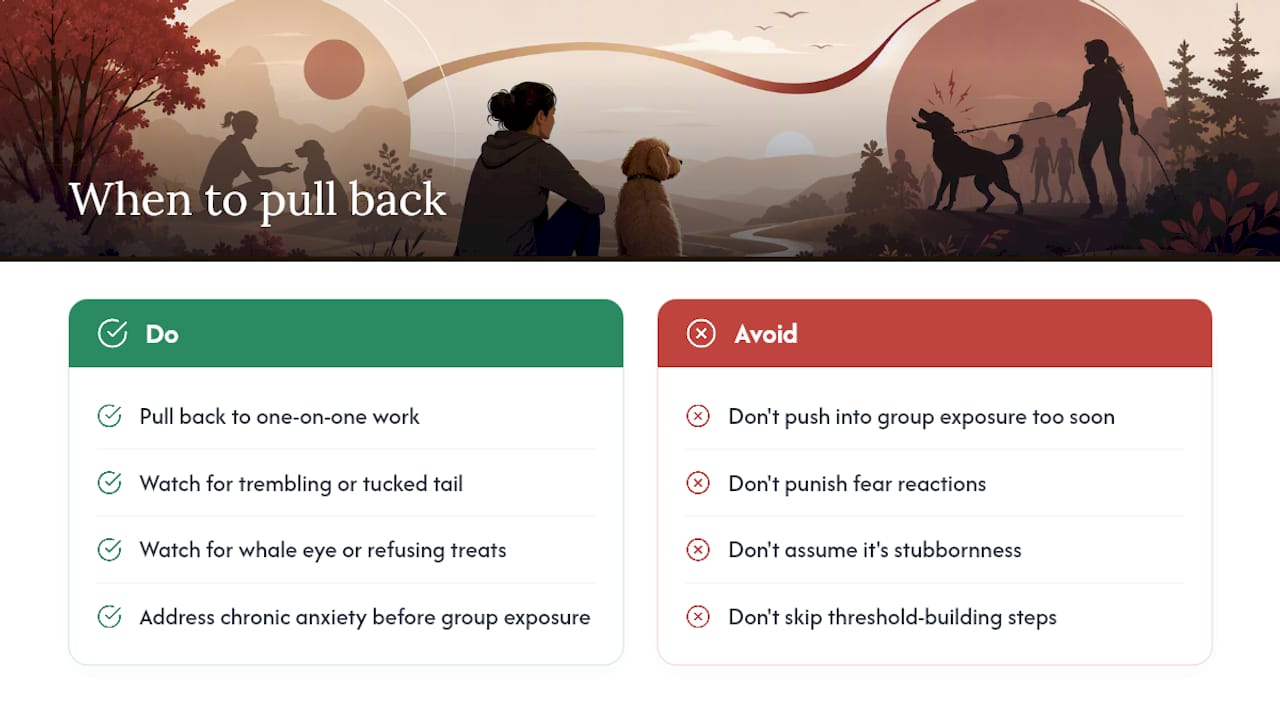
Watch for persistent trembling, tucked tail, whale eye, or refusal to eat treats in a new setting; these are signs the dog is over threshold, not merely shy. A dog that growls, snaps, or tries repeatedly to escape a room isn’t being difficult. It’s telling you the environment is too much, too soon.
Chronic anxiety carries physical costs too. Reduced appetite, disrupted sleep, and a drop in normal play behaviour are markers that stress has become the dog’s baseline state rather than an occasional reaction, and that pattern increases medical vulnerability over time if left unaddressed.
Owners frequently misread these signals as stubbornness or bad manners. A dog that soils the house or growls when approached in a certain spot isn’t being disobedient; it’s communicating fear, and punishing that reaction tends to make things worse, not better.
If your dog shows any of these signs in a new environment, the right move is pulling back to one-on-one work first. Group exposure, even calm, well-supervised exposure, should come later in the plan, once the dog can stay below threshold around unfamiliar dogs and people. Trying to skip that step rarely ends well, and it can set a behaviour plan back by weeks.
How should you prepare your dog before any new environment?
Preparation starts well before the first appointment, and it makes a measurable difference to how smoothly training goes.
Begin by documenting your dog’s specific triggers on video: the moment you pick up your keys, a knock at the door, a particular street corner. These clips give a trainer far more to work with than a verbal description alone, and they help pinpoint exactly where the threshold sits.
Build a stable daily routine in the weeks leading up to your consultation. Consistent meal times, walk times, and rest periods lower a dog’s baseline anxiety before formal training even begins, which gives every subsequent session a better starting point.
Gather your dog’s medical history and recent vet notes, and book that veterinary check if you haven’t already. Ruling out pain or thyroid dysfunction early avoids wasted training sessions addressing a problem that’s actually medical.
Finally, practise short separations or low-level trigger exposure yourself, staying well below the point of panic, so your dog has some baseline tolerance before formal desensitisation begins. If neediness or shadowing is part of the picture, understanding why anxious dogs follow owners everywhere helps you set realistic first-week goals rather than expecting instant independence.
How do you track anxiety progress accurately?
Feelings about progress are notoriously unreliable; owners either underestimate small wins or miss subtle regressions. Objective tracking fixes that.
Video review is the single most useful tool here. Recording sessions weekly and comparing footage side by side reveals threshold shifts that are nearly invisible in real time, and practitioners increasingly coach owners to use this method to calibrate when it’s safe to raise difficulty.
Look for concrete markers rather than vague impressions: does your dog eat treats faster near the trigger than they did last month? Do they recover from a startle in seconds instead of minutes? Are the physical signs of improving separation anxiety, settled breathing, relaxed body posture, choosing rest over pacing, appearing more often?
Keep a simple log alongside the video: date, trigger intensity, duration of exposure, and the dog’s recovery time. Share it with your trainer at every follow-up so adjustments are based on data, not guesswork about how the week “felt.”
What makes a calm environment right for an anxious dog?
Environment shapes behaviour more than most owners expect, particularly for dogs already living close to their threshold.
Quiet, separated spaces away from constant noise and movement give anxious dogs somewhere to decompress rather than staying in a permanent state of alertness. A low ratio of dogs to supervising staff matters just as much, since fewer unpredictable interactions mean fewer chances for a fearful dog to be pushed over threshold without warning.
Predictable daily structure inside any facility, fixed rest periods, consistent handling routines, mirrors the same principle that works at home: dogs relax when they can predict what happens next. A clean, well-managed physical space also reduces incidental stressors that owners rarely think about; even basic sanitation and odour management in outdoor areas can influence how settled a dog feels in a shared environment.
None of this replaces individual behaviour work. A calm setting supports progress made in training sessions; it doesn’t generate that progress on its own. Think of environment as the backdrop that either helps a treatment plan stick or quietly undermines it.
What qualifications should staff have for anxious dogs?
Handling a fearful or reactive dog safely takes different skills than handling a confident, sociable one, and not every handler has been trained for that distinction.
Look for staff who understand body language well enough to spot early stress signals, lip licking, freezing, a stiff tail, before they escalate into a bigger reaction. AVS accreditation and documented experience with fear-based cases, rather than general obedience work alone, are the credentials worth asking about directly.
Staff should also know how to keep a dog below threshold in real time: recognising when to withdraw a dog from a situation rather than pushing through it. That judgment call, made correctly and consistently, is often the difference between a setback and steady progress.
Trainer perspective: how experienced providers structure success
Every successful anxiety programme runs on three working parts: trainer, owner, and dog. Miss one, and progress stalls, no matter how skilled the trainer is.
Experienced providers often spend many years refining collaborative training models built on humane, science-based methods rather than quick-fix corrections. Follow-up is important; it is where much of the real change occurs, as owners apply homework between sessions and adjust based on what the dog actually shows them, not what the plan assumed.
The dogs that improve fastest tend to have owners who stay engaged past the first breakthrough, not just through it.
— Mark
How Happy-Dog Training helps anxious dogs learn to cope
If your dog’s anxiety needs structured, professional attention rather than trial-and-error advice from forums, Happy-Dog Training’s 4-week AVS-approved intensive programme gives you a compressed, guided path forward, backed by AVS-accredited, science-based methods rather than punishment-based shortcuts.
Before your first behaviour consultation, gather a few videos of your dog’s specific triggers and any recent veterinary notes; this gives the trainer a genuine starting point rather than guesswork. Consultations cover history, observation, and a written plan you’ll work from at home, with follow-up built in rather than a single session and a goodbye. Training packages commonly include follow-up support after completion, so questions that come up months later can still be addressed.
Ready to move past managing symptoms and start actually treating the anxiety? Get in touch through Happy-Dog Training to book a consultation and take the first concrete step.
Sources
Recommended
Comments