Evidence Based Dog Noise Phobia Care: Urgent Vet Checks, Trainer Plans
- Mark McDade
- 2 days ago
- 13 min read
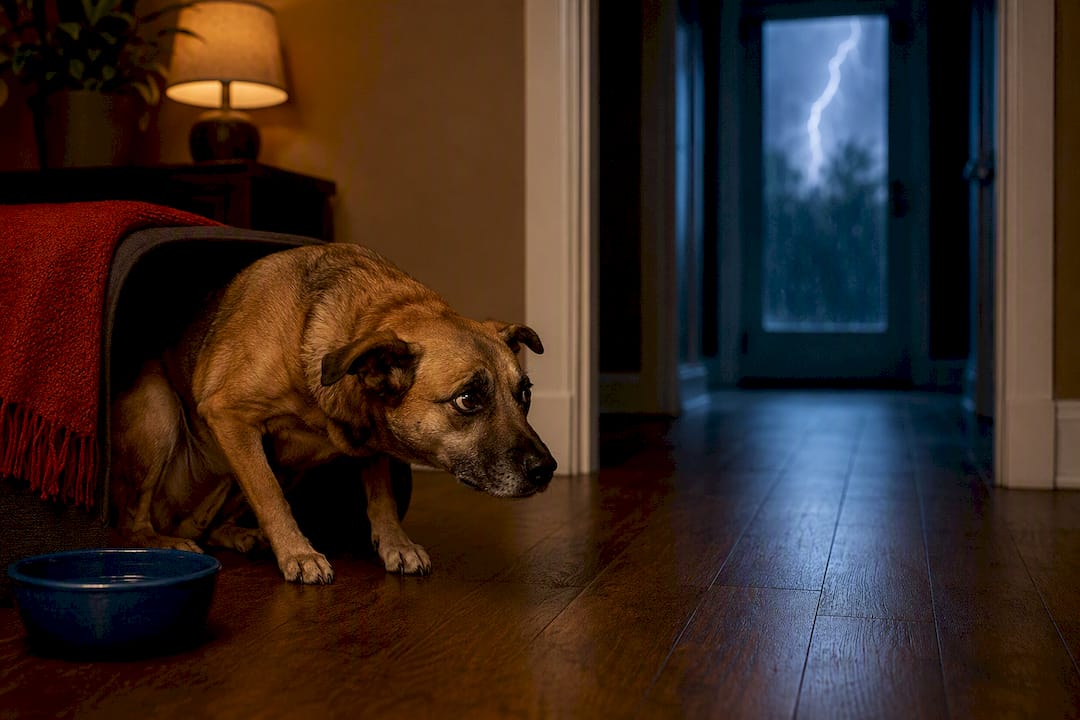
The most effective approach to dog noise phobia combines immediate welfare-focused management, a veterinary check for medical contributors, and long-term counterconditioning and desensitisation, often supported by veterinary-prescribed medication when the fear is severe. Waiting rarely helps; early, structured intervention does. If your dog shows panic, self-injury, or repeated escape attempts during loud noises, treat it as urgent and get a vet involved before you try anything else.
TL;DR:
Early, structured desensitisation paired with counterconditioning is the most reliable long-term treatment for noise phobia, but progress can take weeks to months.
Severe cases often require medication, such as situational fast-acting drugs or baseline anxiolytics, to enable effective behaviour modification.
Identifying signs of noise fear early, including lip-licking and pacing, and recording reactions can improve diagnosis and treatment outcomes.
Preventative measures in puppies, like gradual exposure to household noises paired with positive rewards, significantly reduce the risk of future noise fears.
Consistent application of behaviour plans, coordinated with veterinary support, delivers the best chance of lasting improvement in dogs with severe noise phobia.
Table of Contents
What are the signs of dog noise phobia, and how severe is it?
Noise phobia doesn’t announce itself with a single dramatic moment. It usually builds through a spectrum of behaviour, from mild discomfort you might miss entirely to full-blown panic that’s impossible to ignore.
At the mild end, you’ll see lip-licking, yawning outside of tiredness, pacing, or a sudden interest in hiding under furniture. These are calming signals, and dogs use them long before they escalate to anything dramatic. Research from UC Davis points out that owners routinely miss these early cues, which means the dog has been quietly stressed for months, sometimes years, before anyone notices a pattern.
At the severe end, you’re dealing with trembling, excessive salivation, destructive chewing or scratching, and attempts to flee the house entirely. According to a review of noise fear treatment evidence, true phobias are maladaptive and disproportionate compared with a dog’s normal fear response. A dog that’s simply startled by a car backfiring will recover within seconds. A phobic dog won’t. That poor recovery, the inability to settle even long after the noise has stopped, is one of the clearest signals you’re dealing with a phobia rather than ordinary caution.
Watch for these signs, roughly in order of severity:
Lip-licking, yawning, or freezing when a noise starts
Pacing, restlessness, or seeking out a hiding spot
Panting or trembling that continues after the noise ends
Destructive behaviour aimed at doors, windows, or crates
Attempts to escape the house or garden, sometimes causing injury
Toileting accidents linked specifically to noise events, not routine
Pro Tip: Film your dog during the next noisy event, even just thirty seconds on your phone. Vets and trainers can read far more from footage than from a verbal description, and it gives you a baseline to compare against as treatment progresses.
Keep a simple log alongside any video: what the noise was, how long the reaction lasted, and how long it took your dog to properly settle afterwards. That recovery time is often more diagnostically useful than the intensity of the initial reaction.
Why do dogs develop fear of loud noises?
Several things converge to create noise phobia, and it’s rarely just one cause. Some dogs are simply more biologically sensitive to sound. Dogs hear a far wider frequency range than we do, and some breeds, particularly herding and working types, seem predisposed to heightened noise reactivity.
Storms bring an added complication. Dogs pick up on barometric pressure changes, static electricity building in the air, and low-frequency rumble well before the first crack of thunder reaches human ears, according to veterinary commentary on storm phobia. That’s part of why a dog can seem anxious a full hour before you’ve noticed anything at all, and why a recorded thunderstorm playing through a speaker never quite replicates the real thing.
Common triggers include:
Thunderstorms and the atmospheric changes that precede them
Fireworks, particularly the unpredictable, staggered bursts around festivals and New Year
Household alarms, smoke detectors, and doorbells
Vacuum cleaners and other sudden mechanical noise
Sirens from passing emergency vehicles
Experience shapes sensitivity too. A puppy that never encountered vacuum cleaners, traffic, or fireworks during its early socialisation window is more likely to react fearfully as an adult. A single traumatic event, a firework going off close by, or being caught outside during a violent storm, can also imprint a lasting fear after just one exposure.
Medical factors deserve just as much attention as behavioural ones. Ear infections, dental pain, and arthritis can all make a dog more reactive to sound, sometimes because pain heightens general anxiety, sometimes because sound genuinely hurts more when there’s inflammation involved. VCA’s guidance on noise fear notes that older dogs who suddenly develop noise fear, having never shown it before, often turn out to have an underlying pain condition rather than a purely behavioural one.

How do vets and behaviourists diagnose noise phobia?
A proper diagnosis starts with ruling out anything medical before assuming the problem is purely behavioural. This matters because treating a pain-driven reaction as if it were pure fear wastes time and leaves the dog uncomfortable.
History-taking. Your vet will ask when the fear started, whether it came on gradually or overnight, and whether it’s linked to specific sounds or generalised to loud noise in general.
Video review. Footage you’ve captured during an actual episode helps the vet distinguish a startle response from genuine phobic behaviour, and helps spot subtle signs you might describe inaccurately from memory.
Physical examination. This checks for ear infections, dental disease, arthritis, or sensory decline, any of which can produce sudden-onset noise reactivity, particularly in older dogs.
Ruling out cognitive decline. In senior dogs, noise reactivity sometimes appears alongside disorientation or altered sleep patterns, pointing towards canine cognitive dysfunction rather than a standalone phobia.
Referral decision. Straightforward cases with mild to moderate fear often do well with an accredited trainer running a structured desensitisation plan. Severe, complex, or medication-involved cases usually warrant referral to a veterinary behaviourist who can prescribe and monitor treatment directly.
Bring a short video of an actual episode, a written timeline of when the fear started and how it’s progressed, a list of any noises that trigger a reaction, and details of anything you’ve already tried. That context saves time and stops the appointment starting from zero.
What should you do during a noise event right now?
Your job during an active noise event isn’t to fix the phobia. It’s to keep your dog physically safe and avoid making the fear worse.
Set up a safe spot well before you need it, ideally weeks in advance, so your dog already associates it with calm rather than crisis. A covered crate, a cupboard under the stairs, or an interior room without windows all work. Add familiar bedding, and practise letting your dog spend relaxed time there on ordinary days with treats and a chew, so the space carries positive associations rather than being introduced for the first time mid-panic.
During the event itself:
Close curtains and turn on background noise, a television or a fan, to mask some of the sharper sound
Let your dog choose where to go rather than forcing them into the safe spot
Stay calm yourself; dogs read tension in your voice and body language, and an anxious owner can escalate an anxious dog
Offer high-value treats if your dog will take them, feeding calmly through the noise rather than making a fuss over the noise itself
Never punish fearful behaviour; it does nothing to reduce the fear and often adds a layer of anxiety about your reaction on top
Practical guidance from AAHA recommends exactly this combination: a secure space, sound buffering, and calm owner behaviour, alongside longer-term behaviour work rather than relying on management alone forever.
Pro Tip: If your dog will eat treats during a noisy event, that’s actually useful information; it suggests the fear hasn’t tipped into full panic yet, and ad hoc counterconditioning, quietly rewarding calm behaviour as the noise happens, can still work in the moment.
For dogs with a known history of severe panic, injury during escape attempts, or destructive episodes that could hurt them, talk to your vet in advance about fast-acting, prescription-only medication that can be given at the first sign of an oncoming storm or before a fireworks display you know is coming. Secure exits, garden fencing, and collar identification matter here too. Dogs that bolt during panic can travel a surprising distance in a short time, and many go missing during firework season specifically because of this.
How does counterconditioning and desensitisation actually work?
Desensitisation and counterconditioning, often shortened to DSCC, is the behaviour-modification approach with the strongest evidence behind it for treating noise phobia. A review of the current evidence for practitioners identifies this combined approach, alongside environmental management, as the most reliable route to long-term improvement.
Desensitisation means exposing your dog to the feared sound at an intensity so low it doesn’t trigger a fear response, then very gradually increasing that intensity over many sessions. Counterconditioning runs alongside it, pairing that low-level sound with something your dog genuinely loves, usually food, so the noise starts to predict something good rather than something threatening.
A basic protocol looks roughly like this:
Establish a baseline. Play a recording of the trigger sound (fireworks and thunderstorm tracks are widely available) at a volume so low your dog barely registers it. If there’s any sign of stress, you’ve started too loud.
Pair sound with reward. At that low volume, feed a steady stream of small, high-value treats. The sound plays, the treats appear; the sound stops, the treats stop.
Hold each level for several sessions. Don’t rush. Most dogs need multiple short sessions, five to ten minutes, at each volume step before moving up.
Increase volume gradually. Raise it in small increments only once your dog shows relaxed body language at the current level: loose posture, willingness to eat, no pacing.
Add relaxation cues. Some trainers layer in a settle or mat cue, teaching the dog an alternative behaviour to perform when it hears the trigger, which gives it something constructive to do instead of reacting.
Generalise gradually. Once your dog copes with recordings, introduce more realistic contexts, varying rooms, times of day, and background activity, so the learning transfers beyond the exact training setup.
Pro Tip: Progress in DSCC isn’t linear. A dog that coped fine with recorded fireworks last week might struggle again this week if it’s tired, unwell, or stressed about something unrelated. Treat setbacks as information, not failure, and drop back a level rather than pushing through.
Timelines vary enormously. Some dogs show meaningful improvement within a few weeks of consistent work; others need several months, particularly for storm phobia, where progress tends to be slower than for fireworks. Realistic expectations matter here, because owners who expect fast results often give up just before the approach starts working.
There’s an important limitation worth knowing before you start. Guidance from the University of Pennsylvania’s veterinary school notes that recorded-sound desensitisation works reasonably well for fireworks but is far less reliable for thunderstorms, because storms involve barometric pressure shifts, static electricity, and infrasound that no speaker can reproduce. This is one reason severe storm phobia often needs medication support rather than behaviour work alone.
Rushing this process can backfire badly. The same review of noise fear evidence warns that poor-quality recordings or progressing too fast can actually sensitise a dog further rather than reduce its fear, meaning careful pacing and reward timing matter more than how many sessions you cram in. If you’d like a structured version of this laid out for your specific dog, a behaviour modification plan for fearful dogs walks through the staging in more detail.
What role does medication play, and do supplements actually help?
Medication isn’t a last resort reserved for hopeless cases. For many dogs with moderate to severe noise phobia, it’s what makes behaviour modification possible at all, because a dog in a state of full panic simply cannot learn.
Vets generally work with two distinct categories of medication. Situational medications are fast-acting drugs given shortly before or during a known noise event, useful for predictable triggers like a forecast storm or a scheduled fireworks display. Guidance on storm phobia treatment describes a multimodal approach combining these situational drugs with longer-term baseline medication and desensitisation work outside of storm season. One option gaining attention is a fast-acting transmucosal gel that can be dosed even after a fear response has already started, which matters given how unpredictable storm timing can be.
Baseline medications, typically antidepressants or anxiolytics taken daily, address the dog’s overall anxiety level rather than a single event. These are prescribed and monitored by a vet, usually alongside a structured DSCC programme, and they tend to take several weeks to reach full effect.
Supplements and pheromone products occupy a much shakier evidence position. The same evidence review found that most alternative remedies, herbal supplements and pheromone diffusers among them, aren’t well supported as standalone treatments. That doesn’t mean they’re worthless; it means they belong alongside proper behaviour work and veterinary input, not instead of it.
Adjuncts worth considering as part of a broader plan:
Pressure-wrap anxiety vests, which some dogs find calming, though response varies individually
White noise or calming background audio, used consistently rather than only during crises
Enrichment activities like scent work, which can lower a dog’s general anxiety baseline over time
A predictable daily routine, which several trainers, including our own team, find reduces overall reactivity; our guide to the role of routine in dog anxiety covers this in more depth
Talk to your vet before starting anything, even seemingly harmless supplements, particularly if your dog is already on another medication.
How can you prevent noise phobia before it starts?
Prevention is genuinely one of the best investments you can make, and it’s far easier during puppyhood than after fear has already taken hold. Evidence on noise fear prevention shows that structured exposure during a puppy’s sensitive socialisation window substantially cuts the risk of later noise fears, though adult dogs can still benefit from preventative work, it just takes more sustained effort.
For puppies, aim to introduce a wide variety of everyday sounds calmly and gradually between roughly eight and sixteen weeks: vacuum cleaners, doorbells, traffic, thunder recordings played quietly, and household appliances. Pair each new sound with something pleasant, a treat, play, or simply a relaxed atmosphere, so the sound builds a positive rather than neutral or negative association.
For dogs of any age, small daily habits help normalise the noises they’ll encounter throughout life:
Run the vacuum during calm, low-pressure moments rather than only when you’re rushing to clean before guests arrive
Play low-volume recordings of common triggers occasionally, pairing them with dinner or a favourite chew
Avoid making a fuss, positive or negative, around sudden sounds; matter-of-fact reactions teach a dog the sound isn’t significant
Introduce fireworks-season noise gradually in the weeks beforehand rather than letting the first exposure be the real thing
Household changes matter too. Don’t let a dog spend firework season shut in a garden or on a balcony unsupervised, and avoid leaving a puppy alone during its first experience of a loud storm if you can help it; a calm, present owner during early exposures does more preventative work than almost anything else you can do. If your household includes children, our partner guide on managing children’s interactions with fearful dogs is worth reading, since kids often react to a nervous dog in ways that unintentionally heighten its stress.
When do you need professional help, and what does treatment look like?
Get professional help immediately if your dog has ever injured itself trying to escape, repeatedly attempts to flee during noise events, or shows destructive panic severe enough to damage doors, crates, or its own teeth and paws. These aren’t situations to manage alone with training videos and patience.
The typical treatment pathway runs in stages:
Veterinary health check to rule out pain, hearing changes, or cognitive decline as contributing factors.
Situational medication, if the vet judges it necessary, to manage immediate risk during known noise events.
Baseline medication, where indicated, to lower overall anxiety and support the learning process.
Structured DSCC with a qualified trainer or behaviourist, tailored to your dog’s specific triggers and pace.
Ongoing monitoring, adjusting the plan as your dog progresses or as new triggers emerge.
Bring video evidence, a timeline of episodes, and a record of anything you’ve already tried, including medications, to your first appointment. Our practical guide to evidence-based methods for reactive dogs covers how this staged approach plays out in real training plans.
A trainer’s view on treating noise phobia in practice
Over more than two decades of working with fearful dogs, the pattern that stands out isn’t which specific protocol a family uses. It’s how consistently they apply it. Dogs with genuinely severe noise phobia rarely improve through sporadic effort; they improve through daily, unglamorous repetition delivered by an owner who understands what “progress” actually looks like at each stage.
As an AVS-accredited trainer working within science-based, reward-focused methods, Happy-dogtraining’s approach typically starts with a full behavioural consultation, examining triggers, history, and any medical flags that warrant a vet visit first. Where a dog is already on medication, we coordinate timing of training sessions with the vet, since a dog whose fear state has been lowered pharmacologically often learns far faster than one working through DSCC unmedicated. Staging matters more than speed. Clients who see the most lasting change are usually the ones willing to hold a difficult level for an extra week rather than pushing forward before their dog is ready.
— Mark
How Happy-dogtraining supports dogs with noise phobia
Happy-dogtraining gives owners something a generic training video can’t: a trainer who adjusts the desensitisation plan in real time as your dog actually responds, rather than following a fixed script that assumes every dog progresses at the same pace.

If your dog is in obvious distress right now, injury, repeated escape attempts, or destructive panic, contact your vet first for an urgent health check and, if needed, situational medication. From there, Happy-dogtraining’s behaviour consultations and fearful-dog programmes pick up the training side, building a staged DSCC plan around your dog’s specific triggers and coordinating directly with your vet on medication timing where relevant. Owners working through an AVS-mandated obedience requirement alongside a fear issue can combine both in the 4-week AVS-approved intensive programme, which folds behaviour work into structured obedience training rather than treating them as separate problems.
Every client also receives free lifetime support after their programme ends, so if your dog’s fear resurfaces during a bad storm season two years from now, you’re not starting from scratch alone. Book a behavioural consultation to get a plan built around your dog’s actual history rather than a generic checklist.
Sources
Recommended
Comments