Stepwise Doorbell Protocol Singapore Owners Can Use Tonight
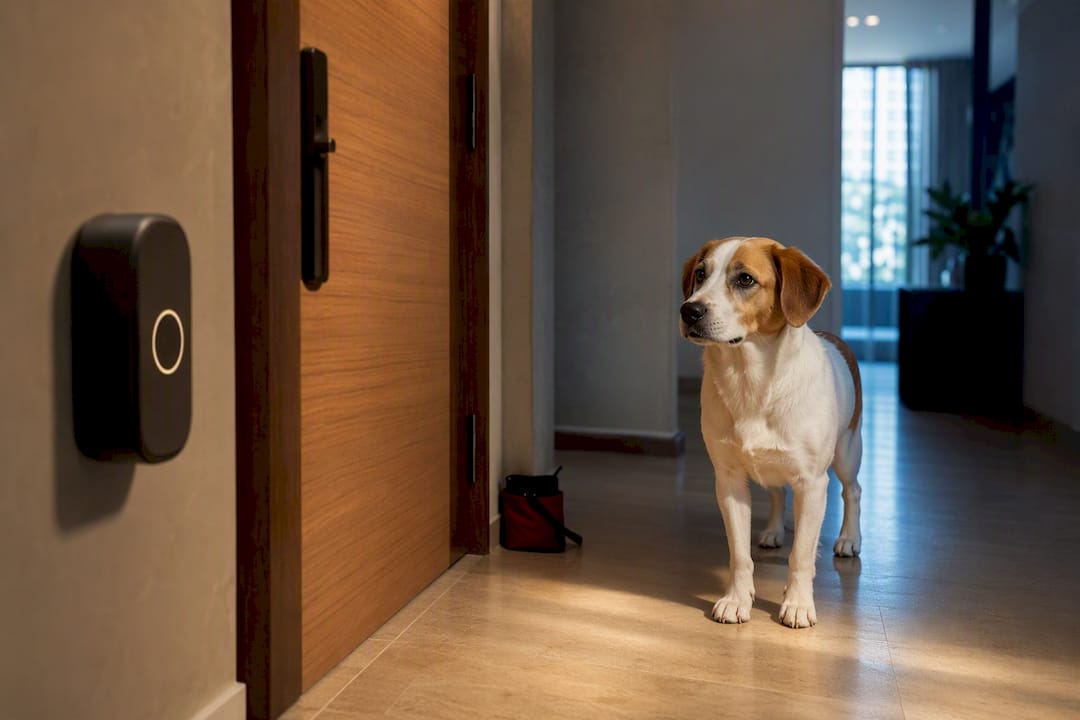
The most reliable fix for doorbell barking combines three things at once: desensitising your dog to the sound, counter-conditioning that sound with treats, and managing the environment with gates or a leash until the new habit sticks. Most dogs show real change within two to four weeks of short daily sessions, according to guidance from the Royal Kennel Club and the American Kennel Club. Start today by fitting a baby gate or grabbing a lead near your door.
TL;DR:
Dogs that bark at the doorbell often do so out of territoriality or excitement, reinforced by owner reactions and should be retrained using gradual desensitization.
Effective training involves playing the doorbell sound at low volume, rewarding any calm behavior, and gradually increasing volume while introducing a ‘go to place’ cue.
Managing the doorway with gates, leads, or crates during training prevents old habits from reestablishing and helps control the environment for consistent progress.
Most dogs respond positively within two to four weeks of daily short sessions, but dogs with fear-based reactions or behavioral challenges may need professional assessment.
For quick, personalized results, professional guidance offers real-time adjustments to pacing, volume, and environment, especially in cases of aggression or overwhelming household situations.
Table of Contents
Step-by-step training for doorbell barking
Your dog isn’t being naughty when the bell rings. Barking at the door is one of the most natural things a dog can do, and the Royal Kennel Club points out it’s usually territorial or excitement-driven, and gets reinforced every time you rush to answer it. The good news? You can retrain that response with a clear, repeatable protocol.
Here’s the sequence to follow, in order:
Prepare your setup. Record your actual doorbell sound on your phone, or find a similar chime online. Choose treats your dog goes properly wild for, chicken, cheese, or freeze-dried liver work well, and pick a quiet space away from the front door to practise.
Desensitise at low volume. Play the recording as quietly as possible, so quiet your dog barely notices. The moment the sound plays, feed a treat. You’re not asking for any behaviour yet, just building a new association between “bell noise” and “good things happen.”
Add a ‘go to place’ cue. Once your dog links the sound to treats, start rewarding them for moving to a bed, mat, or crate when the sound plays. This gives your dog something to do instead of rushing the door, and it’s the behaviour that eventually replaces barking altogether.
Raise the volume and add a helper. Gradually turn the sound up over several sessions. When your dog is solid at higher volumes, ask a friend to text you before they arrive, so you control exactly when the sound happens and can time your rewards properly rather than scrambling to react.
Move to real visitors. Once the recorded version is reliable, progress to live arrivals. Keep your dog on a lead or behind a gate during this phase, and brief guests to ignore your dog completely until they’re settled on their bed or mat.
Keep sessions short: three to five minutes, several times a day, with proper rest between them. Long sessions tire out the dog’s attention span far faster than they build new habits. Chewy’s training guidance backs this up, recommending brief, frequent repetitions rather than marathon drills. Track progress by counting how many seconds of quiet you get after the chime, not by whether the barking has vanished completely on day three.
One detail trips up almost every owner: what to do when the dog barks during a session. Keep going. Lower the volume slightly if needed, but still deliver the treat. Whole Dog Journal explains that this preserves the classical conditioning process that’s slowly rewiring how your dog feels about the sound, even when the response isn’t perfect yet. Punishing the bark at this stage undoes the emotional work you’re trying to build.
Pro Tip: Never ring your actual doorbell at full volume over and over hoping your dog will “get used to it.” Full-volume repetition tends to spike arousal rather than calm it, which is why the AKC recommends starting well under your dog’s threshold and building up slowly, not diving straight in.
Managing the doorway while training is underway
Training takes weeks. Until the new habit is solid, your job is to stop your dog rehearsing the old one every time the bell rings, because every unmanaged repetition undoes a little of your progress.
Baby gates or an exercise pen across the hallway keep your dog back from the door without needing you to physically hold them; for a safe and calming environment, check out these dog safe candles that won’t disturb your pup during training.
A lead clipped on before visitors arrive gives you instant control if your dog lunges or tries to bolt outside.
A crate is worth using if your dog is a determined door-darter or genuinely can’t settle near the entrance yet.
Position the bed or mat for your ‘go to place’ cue somewhere with a clear view of the door, so your dog can watch visitors arrive without needing to charge over.
Brief every visitor to skip eye contact, petting, and greetings until your dog is calm on their mat, and hand them a few treats to reward that calm the moment it happens.
If your dog has ever bitten, lunged seriously, or shows signs of panic rather than simple excitement, pause the home programme and get a professional assessment before continuing.
Why doorbell training stalls, and how to fix it
Not every dog responds the same way, and figuring out why your dog is barking matters more than the barking itself.
Fear rather than excitement. Watch the body language: a tucked tail, flattened ears, or a dog trying to retreat rather than charge forward suggests anxiety, not territorial alarm. Separate the dog from visitors entirely rather than forcing an introduction, and slow the whole process down.
Multi-dog households. Train each dog separately. The AKC notes that dogs, especially puppies, learn by watching other dogs react, so a calm dog can pick up a housemate’s barking habit fast if they practise together too soon.
Boredom or excess energy. A dog that’s under-exercised will struggle to settle for anything. Add a proper walk or a puzzle feeder before your session, not after.
Stalled progress. If quiet seconds aren’t increasing after a week or two, you’ve probably moved too fast. Drop the volume back down, use higher-value treats, and slow your progression through the steps.
Pro Tip: If your dog snarls, lunges, or attempts to bite during any part of this process, stop the home programme immediately and book a session with a qualified behaviourist rather than pushing further on your own.
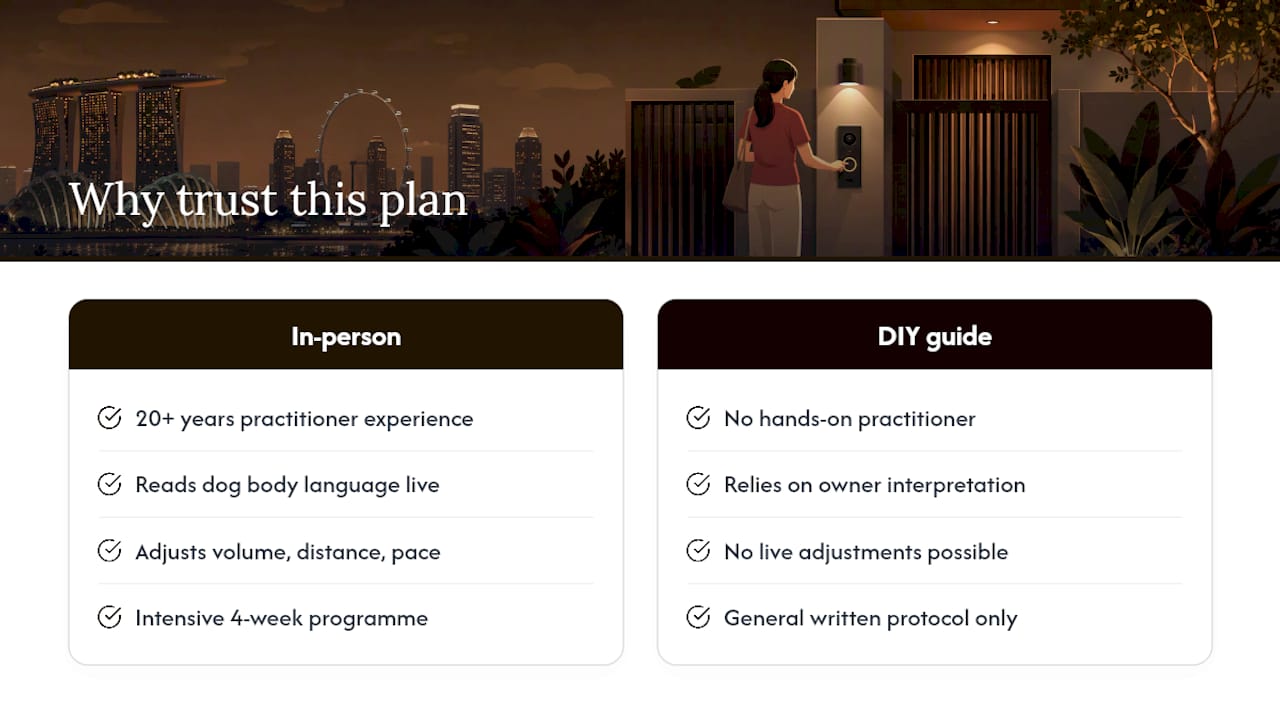
Why trust this training plan
This protocol reflects over 20 years of hands-on behaviour work from an experienced trainer who has worked through exactly this problem with families across countless households…
A tailored, in-person programme differs from a DIY approach because a trainer can read your specific dog’s body language in real time, adjusting volume, distance, and pace on the spot rather than guessing from a written guide. An intensive 4-week programme builds this exact protocol around your dog and your doorway, with support available afterwards for owners who hit new challenges down the line.
A trainer’s honest take on getting this right
Consistency beats intensity every time. Owners who commit to five quiet minutes daily see steadier progress than those cramming long sessions on weekends, and most dogs shift noticeably within two to four weeks. Start tonight: play that recording at barely-there volume and reward the silence.
— Mark
Ready for hands-on help with doorbell barking?
If your dog bolts for the door, growls at visitors, or your household is too rattled to manage sessions consistently on your own, a guided programme gets you there faster than working alone. Happy-dogtraining’s 4-week AVS-approved intensive programme builds this exact desensitisation and counter-conditioning sequence around your dog’s specific triggers, with a trainer adjusting pace and volume in real time rather than leaving you to guess from a screen.

This route suits dogs that jump on guests, dogs showing early aggression at the door, or owners who simply feel overwhelmed trying to run sessions solo alongside work and family life. Support is available after the training ends, so questions that come up months later don’t go unanswered. If your situation involves fear-based reactions rather than straightforward excitement, our guide on beating stranger fear is worth reading alongside a consultation. Book a session through the 4-week intensive programme page to get started.
Sources
The Royal Kennel Club and AKC both offer detailed desensitisation frameworks, while Whole Dog Journal explains the conditioning science behind why it works, and Chewy covers practical session pacing.
FAQ
How do I stop my dog barking at the doorbell?
Pair a low-volume recording of the sound with treats, add a ‘go to place’ cue, then gradually raise the volume and progress to real visitors while managing the door with a gate or lead.
Why do dogs bark when the doorbell rings?
Most doorbell barking is territorial or excitement-driven, and owners often reinforce it unintentionally by rushing to answer the door, according to the Royal Kennel Club.
How does my dog feel when the doorbell rings?
It depends on the dog: some feel genuine excitement or territorial alertness, while others feel real anxiety, which shows up as a tucked tail, flattened ears, or attempts to retreat rather than charge forward.
What noise cancels out dog barking?
No noise reliably “cancels” barking, but playing your own doorbell sound at a very low, controlled volume during training sessions lets you build a calm association before your dog ever hears it at full volume.
How long does it take to stop doorbell barking?
Most dogs show noticeable improvement within two to four weeks of consistent, short daily sessions, though dogs with fear-based reactions or long-standing habits can take longer and may benefit from professional guidance.
Recommended
Comments