Mistakes prolonging separation anxiety: what to fix now
- Mark McDade
- Aug 18
- 7 min read
Updated: Aug 21

Six habits keep separation anxiety alive far longer than it needs to: rushing the pace of alone-time practice, using a KONG as a departure distraction rather than a confidence tool, punishing panic-driven damage, dramatic goodbyes and hellos, skipping baseline video checks, and letting full-day absences continue during active treatment. If any of these sound familiar, the first move isn’t another training hack. It’s stopping full-length absences while retraining is underway and booking an assessment with a certified trainer, ideally one with AVS accreditation, such as the team at Happy-dogtraining.
Key Takeaways
Separation anxiety worsens when owners rush progress, use distractions or punishment instead of desensitisation, and let full-length absences continue during treatment.
Point | Details |
Stop full-day absences now | Arrange dog care during active treatment rather than continuing to rehearse panic daily. |
Film before you fix | Record the first fifteen minutes alone to confirm true separation anxiety versus boredom. |
Never flood the dog | Keep every absence sub-threshold; one full panic episode can undo weeks of progress. |
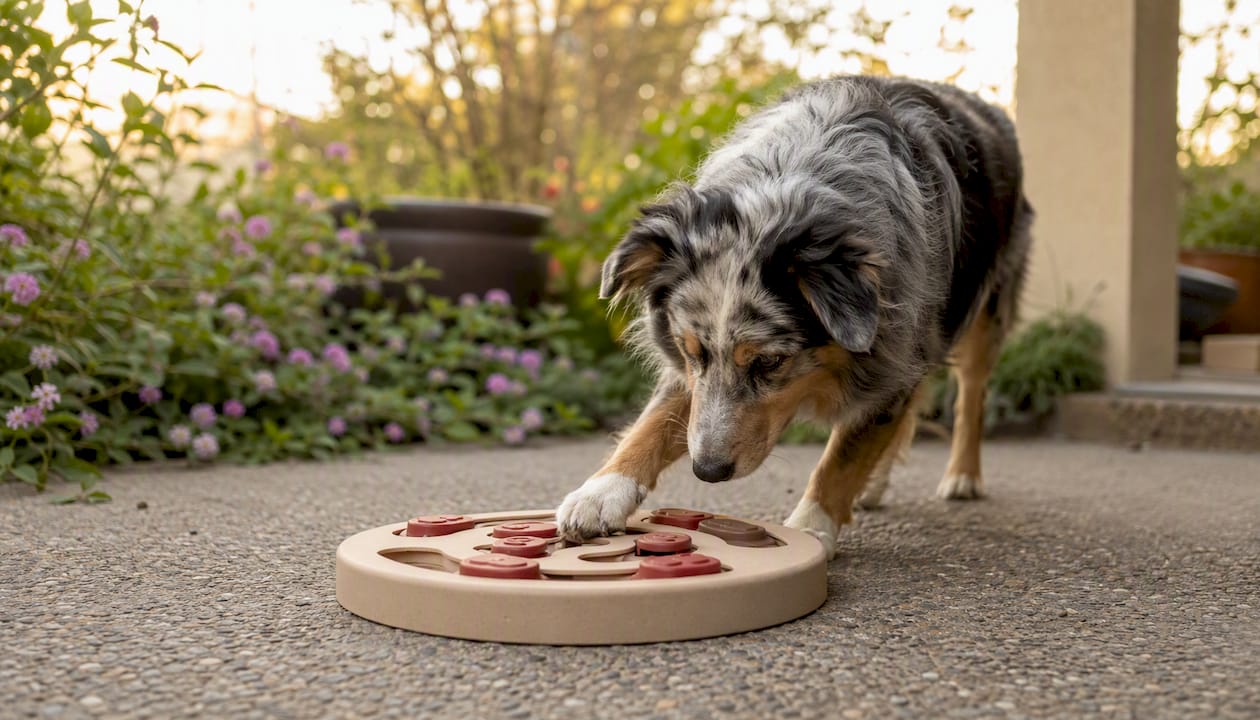
Use puzzle toys for enrichment, not distraction | Reserve KONGs for calm, non-departure moments to avoid them becoming a warning cue. |
Book certified, AVS-accredited help | Happy-dogtraining offers threshold-based programmes with video monitoring and free lifetime support. |
Table of Contents
The eight owner mistakes that prolong separation anxiety
Run through this list honestly. Most owners tick at least two or three boxes without realising it.
Rushing duration increases before the dog is calm at the current length.
Using a KONG or chew toy only at the moment of departure, turning it into a warning sign.
Punishing chewed doorframes or accidents that happened from panic, not defiance.
Making departures and reunions emotional, loud events.
Never recording what actually happens in the first ten minutes alone.
Assuming boredom and separation anxiety are the same problem.
Using a crate for a dog that panics in confinement.
Continuing full working-day absences while trying to retrain from scratch.
Self-audit: answer yes or no to each item above. Three or more “yes” answers means your dog’s pre-departure anxiety is likely being reinforced rather than resolved. If your dog has ever hurt itself trying to escape, or shows full panic on every departure regardless of what you try, that’s not a self-help situation. It’s a professional one.
Pro Tip: Film the first fifteen minutes after you leave, twice this week, before changing anything. You cannot fix a pattern you have not actually seen.
Rushing increments and using departures as a distraction sit among the most common owner mistakes that actively worsen the condition rather than simply failing to improve it.
Why each mistake makes separation anxiety worse
Separation anxiety is a phobic response, not a bad habit. That distinction changes everything about what actually helps.
Rushing duration pushes a dog over its threshold before its nervous system has adapted. Once a dog crosses into panic, that repetition doesn’t teach tolerance. It rehearses fear. Flooding a dog with full-intensity absences during active treatment commonly undoes weeks of progress in a single session.
Departure-only KONGs train the dog to associate the toy with your leaving, so the toy itself becomes a stress cue rather than a comfort. Behaviour consultants increasingly reserve food puzzles for enrichment and confidence-building sessions instead of relying on them as a distraction at the door.
Punishment for chewed skirting boards or house-soiling adds fear of you on top of fear of being alone, which erodes the trust that treatment depends on.
Dramatic goodbyes and reunions teach the dog that your departure is a significant event worth reacting to, exactly the opposite of the calm, unremarkable exits that desensitisation aims for.
Skipping baseline video means you’re guessing. Genuine separation anxiety typically starts within the first few minutes with pacing, panting, and vocalising, whereas boredom-driven destruction tends to emerge later, once the dog has run out of things to do.
Confusing boredom with panic leads owners to buy more toys when what’s needed is a structured desensitisation plan.
Crating a dog that panics in confinement can trigger self-injury.
Continuing full-day absences while attempting to retrain guarantees the dog keeps rehearsing panic daily, no matter how good your weekend sessions are.
Mistake | Better approach |
Rushing duration | Increase absence length in seconds, not minutes |
Departure-only KONG | Use puzzle toys during calm, non-departure enrichment |
Punishing distress | Address the emotion, not the mess |
Pro Tip: Video monitoring isn’t optional extra credit. It’s how you catch pacing or drooling at second forty rather than discovering a chewed door frame at hour three.
How proper treatment actually works
Two terms get used loosely, but they mean different things. Counterconditioning pairs alone time with something the dog loves, changing the emotional association. Systematic desensitisation gradually increases exposure to the trigger, in this case, being alone, in doses too small to provoke fear. Mild cases sometimes respond to counterconditioning alone; moderate to severe cases require systematic desensitisation with many short, sub-threshold absences.
A typical professional sequence looks like this:
Baseline video recording to confirm true separation anxiety and its severity.
Predeparture cue desensitisation, rehearsing keys, shoes, and coats without leaving.
Micro-departures starting at seconds, not minutes.
Graduated increases, mixing short and slightly longer absences to prevent the dog anticipating a pattern.
Ongoing reassessment based on the dog’s actual stress signals, not the calendar.
Progress is measured in the dog’s response, seconds extending to minutes over many weeks, not a fixed timetable. This is exactly why quick fixes fail. A dog’s nervous system doesn’t negotiate with a training plan; it responds to whether it felt safe or not on each single repetition.
Pro Tip: If your dog has ever gone from calm to visibly stressed within a session, that session went too far, too fast. Dial back to the last comfortable duration and rebuild from there.
Working with a certified trainer: what to expect
A certified separation-anxiety trainer will typically start with a diagnostic video review, design threshold-based “missions” (short practice absences pitched exactly where your dog can succeed), plan daily rehearsals, and reassess progress on a set schedule. Trainers who use careful observation and threshold-based mission design treat systematic desensitisation as non-negotiable, not optional.
Ask a prospective trainer:
Are you AVS-accredited or certified in separation-anxiety-specific protocols?
How many separation anxiety cases have you handled?
Do you use video monitoring for every session?
What does a typical week of missions look like?
When would you refer to a veterinarian for medication?
How often do we reassess and adjust the plan?
What ongoing support is included after the programme ends?
Red flags: promises of a “quick cure”, dominance or correction-based framing, and any plan that skips video review.
Pro Tip: A trainer who can’t describe how they’ll measure your dog’s progress week to week probably isn’t running a systematic desensitisation programme at all.
Do’s and don’ts between training sessions
Do:
Practise predeparture cues calmly, without actually leaving.
Exercise your dog before departures, not as a training substitute.
Use puzzle toys for enrichment at neutral times, not only when you leave.
Keep filming short absences to track real progress.
Don’t:
Allow long, unsupervised absences while treatment is active.
Punish anxiety-driven damage.
Turn reunions into a celebration.
Puzzle toys and chew items genuinely help with general enrichment, but used only at departure they risk becoming a predictor of being left alone rather than a source of comfort. Watch for regression, new panic at a duration your dog previously handled calmly, which usually means a session pushed too far or a mistake from the checklist crept back in.
When to involve a veterinarian
Speak to a vet if your dog attempts self-harm during absences, shows severe panic regardless of duration, fails to improve despite consistent desensitisation, or if you suspect an underlying medical cause. A complete approach checks for physical health and environmental triggers before assuming the problem is purely behavioural.
Medication, often an SSRI or clomipramine, lowers baseline arousal so behaviour modification can actually take hold. It’s an aid, never a replacement for desensitisation.
Pro Tip: Ask your trainer whether they coordinate directly with a vet. The best outcomes usually come from the two working from the same plan.
Patient, science-based work beats quick fixes
Owners want fast results, and I understand why watching a dog panic is distressing. But flooding, punishment, and departure distractions offer the illusion of progress while quietly deepening the fear. Twenty years of behaviour-specific work has shown that threshold-respecting, AVS-accredited methods with genuine follow-up support consistently outlast anything marketed as instant. Slow is not a compromise here. It’s the method that actually works.
Ready for a structured plan instead of guesswork?
If you’ve read the checklist above and recognised your own routine in it, you’re not alone, and you don’t need to solve this by trial and error. Happy-dogtraining offers a real alternative to piecing together advice from forums: a certified, AVS-accredited trainer with over 20 years of behaviour-specific experience, working from video review and measurable weekly progress checks rather than vague promises.
A first appointment typically starts with a behaviour consultation to assess your dog’s specific triggers and severity, then moves into a tailored plan, whether that’s a structured 4-week AVS-approved intensive programme or a more gradual private schedule. Every client also gets free lifetime support after training ends, so you’re not left managing a relapse alone. If you’re ready to stop guessing and start a plan built around your dog’s actual threshold, book a consultation with Happy-dogtraining and get a clear, step-by-step path forward.
Sources
Recommended
Comments