Multi-Dog Household Training: 8–12 Week Skills Plan for Singapore
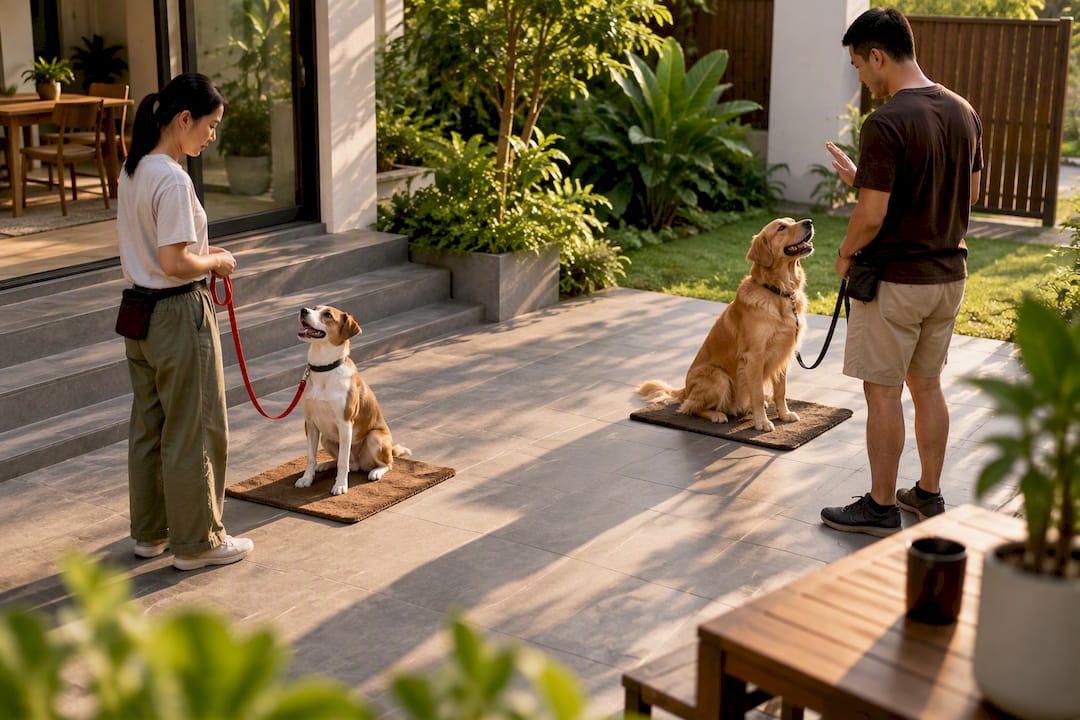
Train each dog individually until basic cues are reliable, then transfer those skills into group settings using station work while you manage feeding, toys, and supervision. Start today with separate feeding stations, short one-on-one training sessions, and, if you are introducing a new dog, a neutral first meeting. A JAVMA study found resource guarding drives most household fights, and professional trainers build every plan around removing that trigger first.
TL;DR:
Dogs should master individual cues such as name response, release words, and station training before engaging in group practices to ensure clarity and prevent response confusion.
Introducing a new dog requires neutral ground meetings, removing household resources beforehand, and gradual indoor access to minimize tension and prevent resource guarding.
Training two dogs simultaneously is most effective when each dog trains separately first, with a focus on rapid response obedience then gradual group exercises, avoiding pushing if signs of stress appear.
Resource guarding causes most household conflicts, so feeding dogs separately and removing high-value items when unsupervised helps prevent tension and fights.
Professional trainers recommend staged training, consistent management, and early intervention for signs of aggression to ensure safety and improve long-term integration of multiple dogs.
Table of Contents
What does multi dog household training actually involve?
Multi dog household training is not one skill. It is a sequence: individual obedience, then station and name recognition work, then supervised group practice, all sitting on top of firm resource management. Owners who skip straight to group walks or shared training sessions tend to run into trouble, because dogs cannot generalise a cue they have only half learned around distraction and competition from another dog.
Each dog needs a rock-solid response to their own name and a clear release word before you ever put two dogs to work together. Without that, you cannot tell which dog is responding to which cue, and rewards land on the wrong dog more often than you would think.
Core skills to lock in per dog:
Instant name response, tested with both dogs in the room but only one working
A release word (“okay” or “free”) that reliably ends a cue
Place or station training, where each dog holds a spot on command
Reliable sit, down, stay, recall, and “leave it” on their own, without a training partner present
Comfort on a leash or tether during early sessions, so a second handler can manage the other dog
Station training deserves special attention. Teach it with one dog at a time: lead them onto a mat or platform, reward heavily for staying, and only then introduce a release cue. Once one dog holds station reliably, add the second dog on a tether nearby, rewarding calm waiting rather than the exercise itself. This is the technique trainer guidance from the AKC points to as one of the highest-leverage skills for households with more than one dog, precisely because it gives every dog a job that does not depend on the other dog’s behaviour.
Pro Tip: Use a second leash and a second handler for the first few combined sessions, even if both dogs are normally off-lead reliable. It buys you a physical safety margin while you check that reward timing is landing on the correct dog.
How do you introduce a new dog safely?
Bringing a new dog into an established household is where most conflict starts, and it is also the stage where a little structure prevents months of tension later.
Meet on neutral ground. Use a park or quiet street, not your garden or hallway, with one handler per dog and a loose-leash parallel walk rather than a face-to-face greeting; consider dog runs and dog enclosures as practical options for secure outdoor introductions. Ohio State University’s Indoor Pet Initiative recommends this exact approach, alongside separate handlers throughout the first meeting.
Prepare the home before anyone comes inside. Remove food bowls, chews, toys, and favourite beds. Dog Trust’s introduction guidance also recommends scent swapping beforehand, letting each dog investigate the other’s bedding before they ever meet.
Bring them inside on house lines. Keep early indoor interactions brief and supervised, then separate the dogs completely the moment you cannot watch them directly.
Extend access gradually over days and weeks, not hours. Track any stiffening, hard staring, or guarding around objects, and slow the pace the moment you see it.
Resist calendar-only thinking here. The informal “7 7 7 rule” some rescue groups use as a settling timeline is not a validated framework, and treating it as one can mean you ignore real warning signs simply because “it’s only been three weeks.”
How do you train two dogs when they’re together?
Individual sessions come first, always. Short, frequent training blocks, five to ten minutes, done separately with each dog, let you nail reward timing before a second dog is anywhere near the room. This matters more than most owners expect: a badly timed reward with two dogs present teaches the wrong dog that barking or crowding gets treats.
Once each dog has a cue solid on its own, run this sequence:
Name, then cue, then reward, repeated until response is near-instant, with no hesitation
Recall practice in a low-distraction room before you try it in the garden or on a walk
Place work with slowly increasing duration and distraction, one dog at a time
Alternating turns with both dogs present, rewarding the “waiting” dog generously for calm behaviour while the other works
Only then, low-difficulty group drills, such as both dogs sitting together for a few seconds before release
Trainer guidance on training two dogs at once backs this rotation model specifically because it reduces distraction and keeps reinforcement accurate. Scale difficulty slowly. If either dog starts breaking position or fixating on the other, drop back a step rather than pushing through.
How can you stop resource guarding before it starts?
Most conflict in multi-dog homes traces back to resources, not personality clashes. Feed dogs in separate rooms or crates until you have proven, over weeks, that shared feeding causes no tension at all, and even then keep a close eye on speed and body language.
Feed separately by default; only trial co-feeding once individual training is solid
Remove single high-value chews and toys when you are not actively supervising, and buy duplicates of anything dogs compete over
Use crates or baby gates to give each dog a guaranteed safe break from the others
Provide multiple beds in separate locations rather than one shared spot
In smaller homes, stagger feeding and rest times rather than relying on space alone; the HDB dog training guide covers practical layout ideas for compact living
None of this is about restricting a dog’s life permanently. It is about removing the triggers while training does the slower work of building trust.
Do walks and exercise reduce tension between dogs?
Exercise on its own will not fix a training gap, but the right routine takes the edge off arousal enough that training actually sticks. Single-dog walks matter more than people assume, giving you focused time to reinforce recall and loose-leash walking without a second dog competing for attention or setting the pace.
Combine walks only once both dogs match reasonably well in pace and temperament, and bring a second handler along for the first few joint outings. Puzzle feeders and scent work sessions give dogs an outlet that has nothing to do with each other, which lowers general household tension over time. Keep arrivals and departures calm and low-key; a chaotic homecoming ritual with multiple excited dogs is a common, easily fixed source of daily friction.
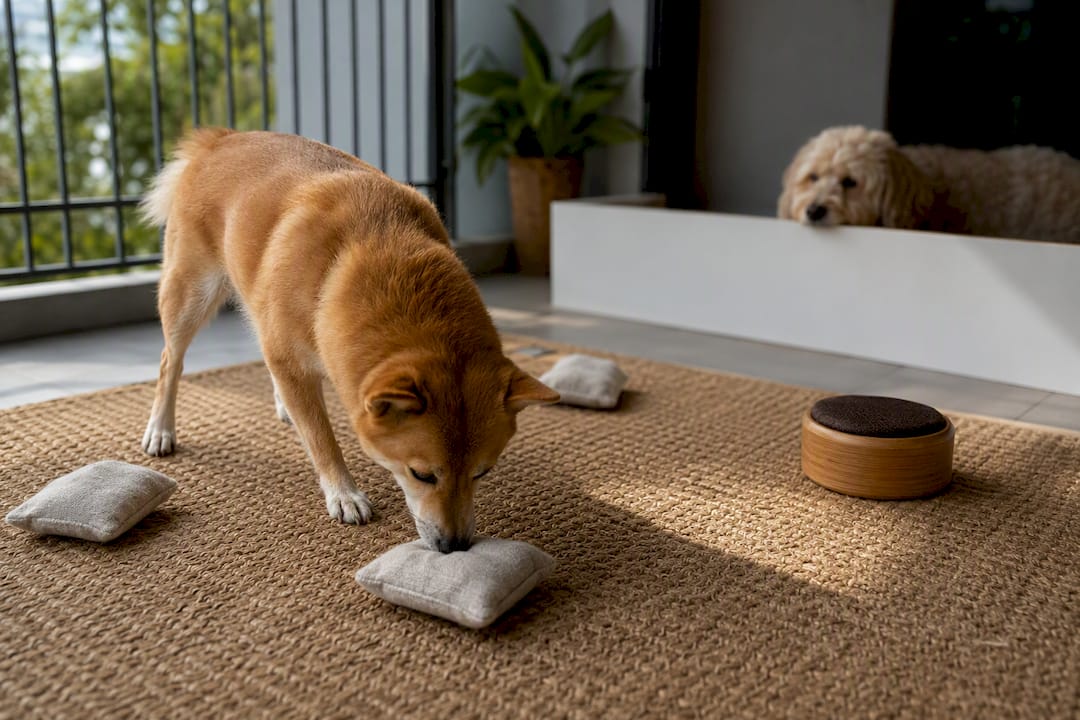
Pro Tip: If you only have time for one walk a day, split it. Ten minutes alone with each dog beats twenty minutes together when training is still shaky.
What are the warning signs of interdog aggression?
Watch for freezing, hard staring, rapid or tense eating, and one dog blocking another’s access to a doorway or resource. These are early signals, not overreactions, and catching them here is far easier than intervening after a fight.
The scale of the resource-guarding problem is well documented. In a JAVMA study of 305 intrahousehold aggression pairs, resource guarding was reported as the trigger in most cases, and same-sex pairs were overrepresented among poorer outcomes.
If you witness escalating tension, act calmly rather than dramatically:
Separate the dogs without shouting or grabbing collars in the middle of a scuffle
Record and timestamp incidents, including what triggered them
Stop combined training sessions immediately once a pattern emerges
Seek a veterinary behaviourist without delay if bites break skin, fights repeat, or either dog shows aggression on sight rather than only around specific resources. Professional intervention usually combines a management plan with counter-conditioning, and in some cases includes muzzle training or adjunct medication alongside ongoing follow-up. Happy-dogtraining’s own guide to inter-dog aggression walks through what that assessment process looks like, and the resource guarding page covers prevention in more depth.
What happens in a professional multi-dog consultation?
An accredited trainer starts with information, not exercises. Expect a request for behavioural history, a recent veterinary check, and video of the dogs together, since subtle guarding often shows up more clearly on footage than in a live room.
From there, the typical staged plan runs: secure safety and separation first, then rebuild each dog’s individual skills, then progress to supervised group work, with ongoing owner support once training milestones are met. Happy-dogtraining’s approach to aggression cases follows this same staged logic across an 8 to 12 week window.
Before a consult, prepare:
Two to three short videos of the dogs interacting, including any tense moments
A simple feeding and routine log for the past week
A list of specific triggers you have already noticed
Multiple dogs, more joy, and no shortcuts
Living with more than one dog brings a kind of companionship a single dog cannot quite replicate, and watching two dogs settle into easy trust is genuinely one of the best parts of this work. It also asks more of you: more sessions, more patience, more willingness to slow down when a dog tells you it is not ready.
Progress in a multi-dog home is measured in weeks and months, not days, and safety always outranks speed. If guarding, freezing, or repeated tension shows up despite consistent management, reach out for professional help rather than waiting to see if it resolves on its own.
— Mark
Getting hands-on support from Happy-dogtraining
Happy-dogtraining gives you what a book or video series cannot: a certified, AVS-accredited trainer physically in your home, watching how your specific dogs interact and adjusting the plan in real time. That matters enormously in multi-dog cases, where the same “textbook” advice plays out completely differently depending on breed, age gap, and history between your particular dogs.
For general skill building and the individual-then-group sequencing this guide describes, Private Obedience Dog Training Classes give each dog focused, one-on-one instruction before combined work begins. Where tension has already escalated into guarding or fighting, the Aggressive Behaviour Consult provides a structured assessment and management plan built around your household specifically. Owners who need a faster, more intensive reset, particularly before introducing a new dog or after a serious incident, often choose Board & Train for concentrated, hands-on behaviour work.
Ongoing support is often available after training finishes, so questions that arise months later when a new dog joins or routines change do not mean starting from scratch. Book a consult and bring along your feeding log and a short video of your dogs together; it gives the trainer a genuine head start on your plan.
Sources
FAQ
How do you manage a multi-dog household?
Manage it by training each dog individually first, then layering in station work and group cues once basics are solid, while keeping feeding, toys, and beds separate until you have proven peaceful sharing. Resource management matters most, since guarding triggers most household fights.
What is the 3-3-3 rule for dogs?
The 3-3-3 rule is an informal shorthand some rescues use, suggesting 3 days to decompress, 3 weeks to settle, and 3 months to feel fully at home. It is a rough guide, not a guarantee, and every dog adjusts on its own timeline.
What is the 7-7-7 rule for dogs?
The 7-7-7 rule extends the same idea to 7 days, 7 weeks, and 7 months as loose settling milestones after adoption. It is not a validated framework, and relying on it can mean overlooking real warning signs that need attention regardless of how long a dog has been home.
Are dogs happier in multi-dog homes?
Not automatically. A second dog can be a wonderful companion, but it does not reliably resolve separation anxiety or guarantee compatibility, and mismatched pairs can add stress rather than remove it. If separation anxiety is the underlying issue, Happy-dogtraining’s separation anxiety programme addresses it directly rather than hoping a new dog will.
When should I get professional help for dog aggression?
Seek help immediately if bites break skin, fights repeat, or a dog shows aggression on sight rather than only around specific triggers. Happy-dogtraining’s Aggressive Behaviour Consult is priced per session in the $200 range and includes a structured safety and management plan.
Recommended
Comments