PerfectK9.com alternatives for dog owners in the UK

What are the best alternatives to PerfectK9.com for dog training?
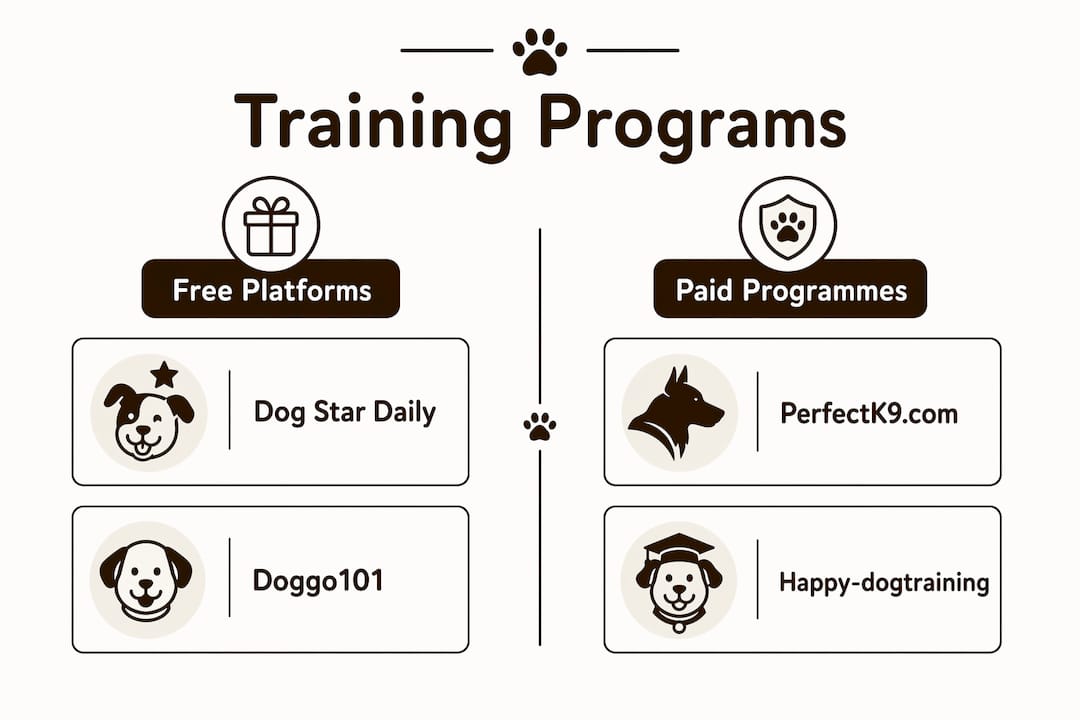
If you’re searching for PerfectK9.com alternatives that are genuinely accessible in the UK, three options stand out: Dog Star Daily, Doggo101, and Happy-dogtraining. Each takes a different approach to training, and the right choice depends on your dog’s needs, your budget, and how much hands-on guidance you want.
Dog Star Daily and Doggo101 are both free, science-based online resources that work well for self-motivated owners. Happy-dogtraining offers something different: certified, personalised training with extensive experience and AVS accreditation, tailored for dogs with specific behavioural challenges. PerfectK9.com itself is a Singapore-based in-person service, so UK owners looking for remote or online support will find the alternatives below far more practical.

Platform | Type | Methods used | Cost | UK accessibility | Trainer qualifications | Best for |
In-person (Singapore) | Reward-based, behaviour modification | Not publicly listed | Limited (Singapore only) | CPDT-KA, CBCC-KA, AVS-accredited | Singapore-based owners | |
Online (self-guided) | Science-based, positive reinforcement | Free | Fully accessible in UK | Editorial team, no listed individual credentials | Self-guided learners | |
Online (self-guided) | Marker training, operant conditioning | Free | Fully accessible in UK | Adapted from Rob Peladeau / NexGenK9 | Structured, stepwise learners | |
Happy-dogtraining | In-person / remote | Science-based, reward-focused, humane | Not publicly listed | Accessible for UK owners seeking proven methods | AVS-accredited, 20+ years’ experience | Behavioural issues, fearful or aggressive dogs |
Strengths and considerations at a glance:
Dog Star Daily: Extensive free content covering puppy husbandry and obedience fundamentals. No structured progression or personal feedback.
Doggo101: Clear, stepwise programme with failure-state guidance for every training step. No live trainer support.
PerfectK9.com: Certified trainers with strong credentials. Only practical for owners in Singapore.
Happy-dogtraining: Personalised plans, certified trainer, and free lifetime support after training. Best suited to dogs with fear, aggression, or complex behavioural needs.
Pro Tip: If your dog has already had some training, check whether a new programme uses the same conditioning philosophy before you switch. Mixing reward-based and correction-based methods can confuse dogs and slow progress.
How do popular dog training programmes compare in depth?
Choosing between dog training courses is rarely just about price. Training philosophy, post-training support, and the qualifications behind the programme all shape whether your dog actually makes lasting progress.
The table below covers the same four options with a closer look at support, accreditations, and suitability for specific training goals.
Platform | Post-training support | Accreditations | Trial / guarantee | Suitable goals |
PerfectK9.com | Not publicly listed | CPDT-KA, CBCC-KA, AVS | Not publicly listed | Obedience, behaviour modification, puppy training |
Dog Star Daily | None (self-guided) | None listed | N/A (free) | Puppy husbandry, foundational obedience |
Doggo101 | None (self-guided) | Adapted from NexGenK9 / Rob Peladeau | N/A (free) | Obedience, engagement, behaviour problems |
Happy-dogtraining | Free lifetime support | AVS-accredited | Not publicly listed | Fear, aggression, obedience, reactivity |
Dog Star Daily’s strength is breadth. It functions as a free digital textbook covering everything from early puppy socialisation to adult obedience, and UK owners can access it immediately with no sign-up required. The limitation is that it offers no structured progression and no way to ask questions when you get stuck.
Doggo101 takes a more structured approach. The programme is built on markers, conditioning, and engagement, adapted from Rob Peladeau’s methodology at NexGenK9. What sets it apart from most free resources is the failure-state guidance: for every training step, the site tells you what to do when things go wrong, not just when they go right. That kind of practical troubleshooting is rare in free content.
“The goal is not a dog that obeys out of fear. The goal is a dog that understands what you want and chooses to do it because you have built genuine engagement.” Rob Peladeau, founder of NexGenK9, as reflected in the Doggo101 methodology
For owners dealing with fear or aggression, neither free platform provides the personalised guidance those issues genuinely need. That’s where a certified trainer with a tailored programme becomes the more appropriate route. Trial periods and money-back guarantees, where offered, are worth asking about directly before committing to any paid programme.
Apps like Dogo and Zigzag are also worth mentioning for puppy owners and first-time handlers. They use reward-based positive reinforcement and are rated highly for accessibility and cost-effectiveness, particularly for foundational skills.
How to choose the right dog training programme for your needs
The single most useful question to ask before choosing a programme is: what does my dog actually need right now? A puppy learning basic manners needs something very different from an adult dog with reactivity or fear-based aggression.
Key factors to weigh up:
Training method compatibility: Check whether the programme uses positive reinforcement, marker training, or correction-based methods. The RSPCA advises that mixing reward-based and force-based methods can confuse dogs, particularly those with prior training experience.
Trainer certification: Look for recognised credentials such as CPDT-KA (Certified Professional Dog Trainer) or CBCC-KA (Certified Behaviour Consultant Canine). AVS accreditation is the relevant standard for Singapore-based trainers.
Cost and value: Free resources like Dog Star Daily and Doggo101 are genuinely good for foundational learning. For complex behavioural issues, a certified trainer’s fee reflects the personalised input you’re getting.
Your training goals: Puppy socialisation, basic obedience, and behaviour modification each call for different approaches. Be honest about which category your dog falls into.
Post-training support: Some programmes end when the course ends. Others, like Happy-dogtraining, include lifetime support after training completes.
Peer reviews: Check forums, Reddit communities such as r/OpenDogTraining, and Facebook groups for honest owner experiences before committing.
Pro Tip: Before starting any new programme, assess whether your dog’s existing behaviour patterns align with the conditioning philosophy being used. If your dog has been trained with reward-based methods, introducing corrections without careful guidance can set back progress significantly.
Trial periods or money-back guarantees reduce the risk of choosing the wrong fit. Not every provider offers them, but it’s always worth asking. A reputable trainer will welcome the question rather than avoid it.
What dog training methods actually work, and why?
The three main approaches you’ll encounter across dog training programmes are positive reinforcement, marker training, and correction-based methods. Understanding what each involves helps you pick a programme that suits both your dog and your own training style.
Positive reinforcement rewards the behaviour you want, immediately and consistently. The dog learns that good things happen when it does the right thing, which builds confidence and a willingness to engage. It’s the foundation of most science-based programmes, including those used by Dog Star Daily, Doggo101, and Happy-dogtraining.
Marker training (sometimes called clicker training) adds a precise signal, a click or a verbal marker like “yes,” to mark the exact moment the correct behaviour occurs. This precision speeds up learning because the dog knows exactly which action earned the reward. Doggo101’s system is built around this approach, using markers and conditioning to teach dogs clearly and without confusion.
Correction-based methods use consequences to reduce unwanted behaviour. When applied by an experienced trainer with precise timing, they can be effective. The risk comes when corrections are applied inconsistently or to dogs that don’t yet understand what’s being asked of them. The RSPCA is clear that force-based corrections applied to dogs with prior reward-based training experience risk confusing behavioural responses and weakening engagement.
Pros and considerations by method:
Positive reinforcement: Builds confidence and a strong bond. Works across all ages and breeds. Requires consistency and good timing.
Marker training: Fast, precise, and highly effective for teaching new behaviours. Needs an initial conditioning phase to establish the marker’s meaning.
Correction-based: Can address specific unwanted behaviours quickly in experienced hands. High risk of confusion or anxiety if applied without proper understanding of the dog’s history.
Rob Peladeau’s
, which underpins Doggo101, uses all four quadrants of operant conditioning with precision and timing, and zero emotional escalation. The aim is a dog that genuinely wants to comply, not one that complies to avoid discomfort. That distinction shapes the entire training relationship.
For owners who want to complement formal training with mental engagement at home, mental stimulation toys can reinforce learning between sessions and keep dogs focused and calm.
Why Happy-dogtraining stands out for complex behavioural needs
For dog owners dealing with fear, aggression, or deep-rooted behavioural problems, the free online resources covered above have real limits. Happy-dogtraining addresses exactly those gaps.
Happy-dogtraining’s trainer holds AVS accreditation and brings over 20 years of hands-on experience with dogs across a wide range of behavioural challenges, including fearfulness, aggression, and reactivity.
The programmes are built around science-based, reward-focused methods tailored to each individual dog. There’s no one-size-fits-all plan. Instead, the trainer assesses the dog’s specific history, temperament, and triggers before designing a programme. That personalised approach is what makes the difference for dogs that haven’t responded to generic online courses.
What Happy-dogtraining offers:
Personalised behaviour plans addressing specific issues such as fear, aggression, and reactivity
Science-based, humane methods aligned with positive reinforcement and marker training
AVS-accredited trainer with extensive experience
Free lifetime support after training completes
Programmes covering obedience training, fearful dog behaviour, and aggressive behaviour
Pro Tip: If your dog has shown signs of fear-based aggression, look for a trainer who specifically lists experience with that behaviour type, not just general obedience. The techniques required are meaningfully different.
The lifetime support commitment is worth noting. Most programmes, paid or free, end when the course ends. Happy-dogtraining’s ongoing availability means you have somewhere to turn if a behaviour resurfaces weeks or months later, which is common with fear and aggression cases. For UK owners exploring effective dog training techniques grounded in humane methods, Happy-dogtraining’s approach reflects the same principles that the best science-based resources recommend.
Key takeaways
The strongest PerfectK9.com alternatives for UK dog owners are Dog Star Daily and Doggo101 for free, self-guided learning, and Happy-dogtraining for personalised, certified support with complex behavioural needs.
Point | Details |
Free resources have real value | Dog Star Daily and Doggo101 offer science-based training at no cost, ideal for foundational skills and self-guided owners. |
Method compatibility matters | Mixing reward-based and correction-based methods can confuse dogs; check a programme’s philosophy before switching. |
Qualifications signal credibility | Look for CPDT-KA, CBCC-KA, or AVS accreditation when choosing a paid trainer or programme. |
Post-training support varies widely | Most programmes end when the course does; Happy-dogtraining provides free lifetime support after training completes. |
Happy-dogtraining for complex cases | For fear, aggression, or reactivity, Happy-dogtraining’s personalised, AVS-accredited approach offers the most targeted support. |
What I found when I actually looked beyond PerfectK9.com
The honest truth about researching dog training alternatives is that the volume of options can feel paralysing at first. Free platforms, paid courses, apps, certified trainers, and online communities all claim to have the answer. What actually cuts through the noise is knowing what your dog specifically needs before you start comparing.
When I worked through the options, the free resources genuinely impressed me more than I expected. Doggo101 in particular is unusually well-built for a free site. The failure-state guidance, the clear step-by-step structure, and the grounding in Rob Peladeau’s operant conditioning work give it a level of rigour that most paid apps don’t match. Dog Star Daily is broader but less structured, better suited to owners who want to read widely rather than follow a defined programme.
Where the free options fall short is predictable: there’s no one to ask when things go wrong, and for dogs with fear or aggression, that gap matters. Reading about how to handle a reactive dog is very different from having a certified trainer watch your dog, identify the specific trigger pattern, and adjust the approach in real time. That’s the case for working with a qualified professional rather than going it alone, and it’s a case worth taking seriously.
The peer review communities, particularly r/OpenDogTraining on Reddit and various Facebook groups for dog owners in Singapore and the UK, are genuinely useful for sanity-checking your choices. Owners there are candid about what worked and what didn’t, and their experiences often surface details that no programme’s own website will tell you.
Happy-dogtraining: a different kind of support for your dog
If the programmes above have left you wanting something more personalised, Happy-dogtraining offers a genuinely different route. Rather than a generic course, you get a certified trainer with extensive experience, AVS accreditation, and a programme built specifically around your dog’s behaviour and history.
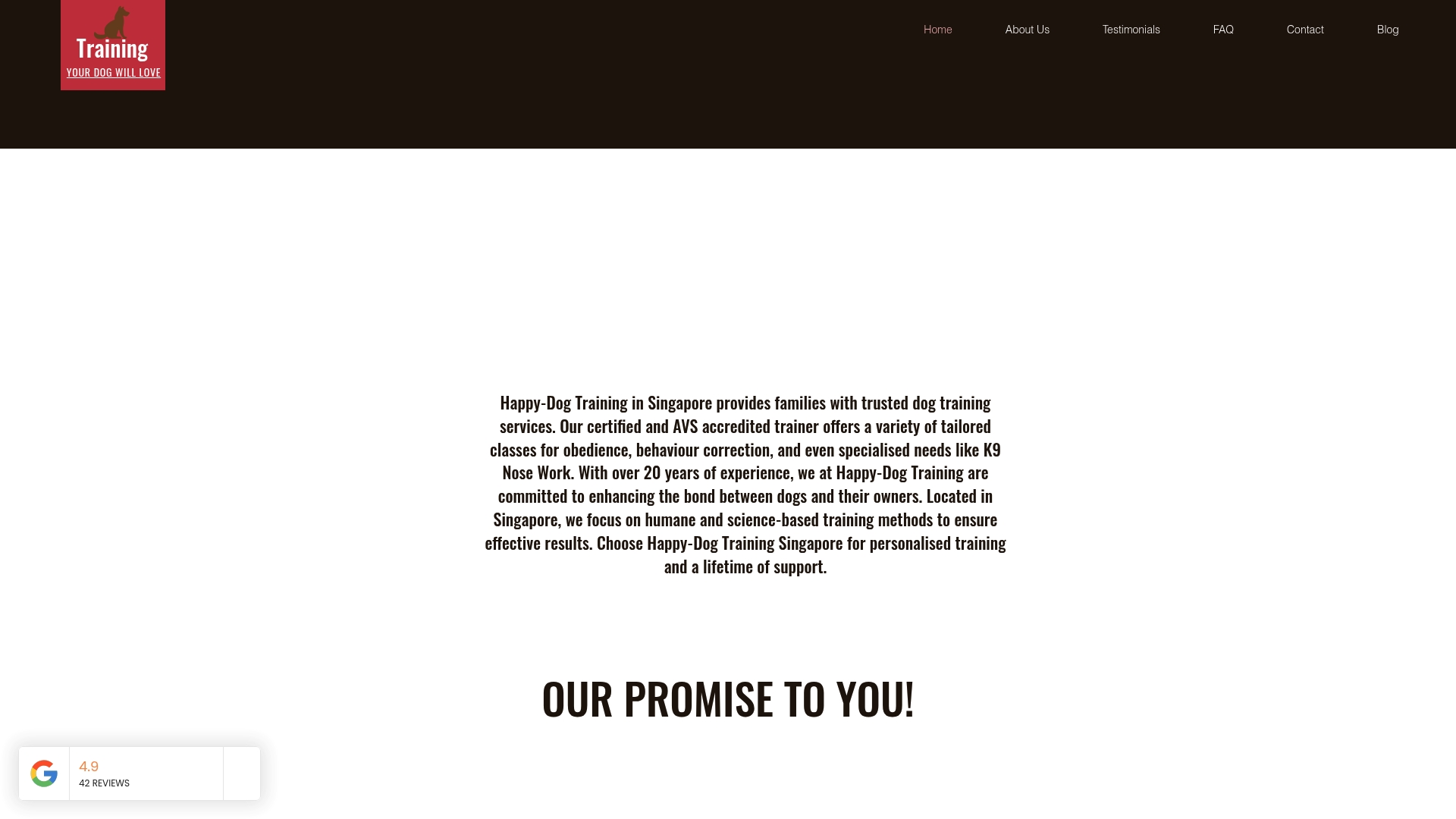
Happy-dogtraining specialises in the cases that free online resources aren’t equipped to handle: fearful dogs, aggressive behaviour, and reactivity. The AVS-approved intensive programme uses science-based, reward-focused methods throughout, and free lifetime support comes included after training ends. For UK owners who want the confidence of working with a certified professional and a proven methodology, it’s worth exploring what Happy-dogtraining can offer your dog.
You can also find holistic pet wellness resources to support your dog’s overall wellbeing alongside any training programme you choose.
Recommended
Comments