Puppy class benefits for families: what you need to know
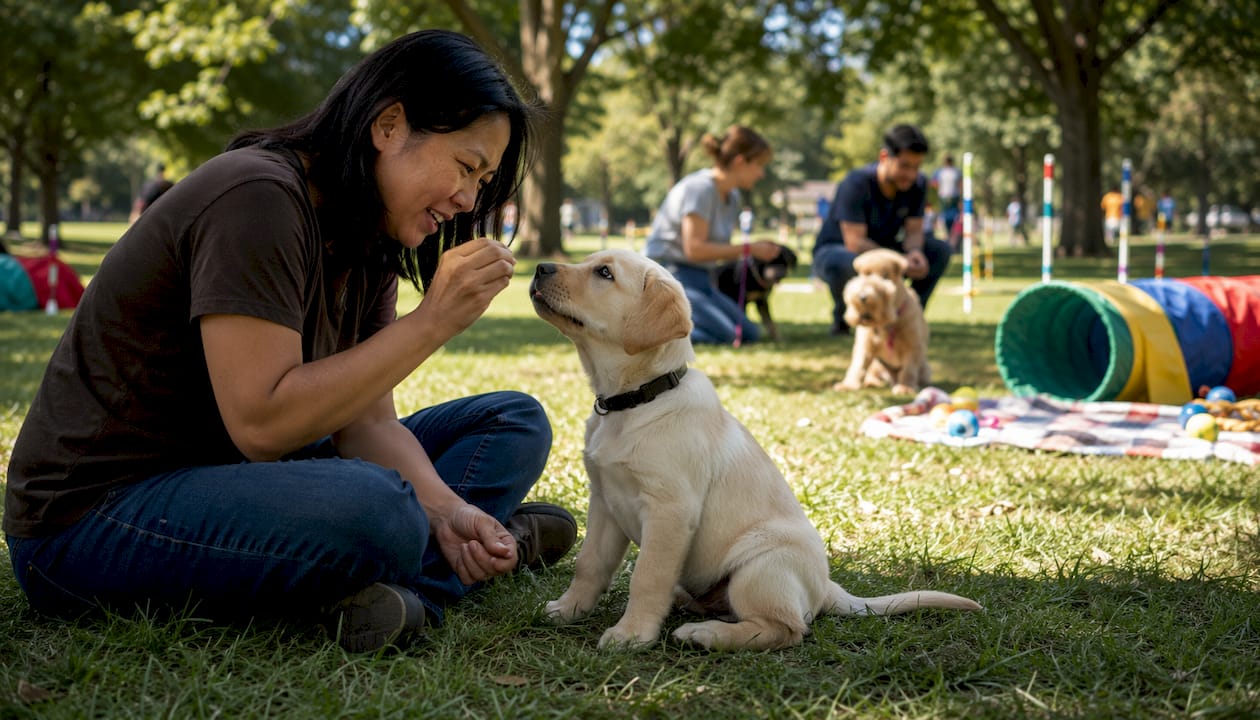
Puppy classes are one of the best investments you can make for your new dog and your whole household. They build your puppy’s social skills, confidence, and obedience from the very start, while teaching every family member how to communicate clearly and kindly. Research from the Ontario Veterinary College confirms that puppies attending classes meet more people and dogs, show fewer fear responses, and are less likely to develop separation anxiety than those kept at home. The benefits stretch well beyond basic commands.
Here is a quick summary of what families gain from enrolling early:
Improved social skills — puppies learn to greet people and other dogs calmly and confidently
Reduced fear and anxiety — positive exposure during the critical window prevents lifelong nervousness
Better obedience — consistent reward-based training builds a puppy that is eager to please
Stronger family bond — every household member learns the same cues, so the puppy listens to everyone
Safer interactions — children learn how to handle and lead the puppy appropriately
Early problem prevention — common issues like biting, jumping, and barking are addressed before they become habits
Owner confidence — families leave each session with practical skills and reassurance
Table of Contents
1. When should you start puppy classes, and what do they cover?
2. What health and vaccination requirements apply before joining a class?
3. Which behavioural challenges do puppy classes actually address?
4. What do puppy classes typically cost, and how long do they run?
5. How do puppy classes strengthen family bonds and safe interactions with children?
6. What do experts say about long-term family involvement in puppy training?
Happy-dogtraining: personalised puppy training for your whole family
1. When should you start puppy classes, and what do they cover?
The American Veterinary Society of Animal Behavior recommends starting socialisation classes as early as 7–8 weeks of age. The first three months of a puppy’s life are the primary window when sociability outweighs fear, making early enrolment genuinely time-sensitive.
A well-structured course typically covers:
Basic obedience commands such as sit, down, stay, and recall
Supervised puppy play to build healthy dog-to-dog communication
Handling and restraint exercises that prepare puppies for grooming and vet visits
Exposure to environmental stimuli including loud noises, unfamiliar objects, and different surfaces
Resource guarding prevention through trading and sharing exercises
Consistent cue guidance so families leave knowing exactly which words and gestures to use at home
Classes progress in difficulty as puppies mature, moving from simple commands in low-distraction settings to more complex tasks with distractions present. Adolescent follow-up classes, typically for puppies aged 7–14 months, help consolidate skills during a period when young dogs often test boundaries.
Pro Tip: Visit a class before enrolling. Watch whether the trainer uses positive methods, whether shy puppies are protected from boisterous ones, and whether playtime is genuinely supervised.
2. What health and vaccination requirements apply before joining a class?
Your puppy needs to have started its vaccination course and be parasite-free before attending any group class. This is not just a formality. The AVSAB position statement notes that the combination of maternal immunity, primary vaccination, and appropriate care makes the infection risk relatively small compared to the long-term risk of behavioural problems caused by poor socialisation.
Key health considerations include:
Puppies should have received their first vaccinations and be cleared of parasites before their first session
Classes held on easily cleaned, disinfected indoor surfaces carry the lowest illness risk
Dog parks and high-traffic outdoor areas with unknown dogs should be avoided until vaccination is complete
Handling exercises in class reduce stress during future vet visits by teaching puppies to accept touch calmly
Your vet can advise on the right timing based on your puppy’s specific vaccination schedule
For a clear overview of timing, the puppy vaccination and socialisation guide on Happy-dogtraining’s website walks you through the key milestones.
3. Which behavioural challenges do puppy classes actually address?
Early enrolment produces measurable, lasting results. Research published in Psychology Today found that puppies enrolled in classes before six months of age showed a Reduction in aggressive behaviour, destructive behaviour, compulsive behaviours, and excessive barking as adults, compared to dogs that began training later.
Classes tackle these challenges directly:
Dog-to-dog aggression — supervised play teaches appropriate greeting and play signals
Fear responses — gradual exposure to noises, strangers, and new environments builds genuine confidence
Touch sensitivity — handling exercises reduce guarded reactions to grooming and examinations
Biting and mouthing — trainers redirect nipping onto appropriate toys and teach bite inhibition
Jumping and excessive barking — consistent cues and reward-based redirection establish calmer greetings
Compulsive and destructive tendencies — mental stimulation and structured play reduce boredom-driven behaviour
Dogs that did not attend puppy classes were found to be 2.8 times more likely to show non-social fear responses to sudden noises, traffic, and unfamiliar situations. That gap is largely preventable with early, positive exposure.
4. What do puppy classes typically cost, and how long do they run?
Most puppy class programmes in the UK run for 4–8 weeks, with one session per week lasting roughly an hour. Costs vary depending on the venue, class size, and the instructor’s qualifications. Classes led by certified animal behaviourists or accredited trainers tend to sit at the higher end of the price range, and that expertise is worth paying for.
A few practical points to keep in mind:
Beginner courses focus on socialisation and basic commands; intermediate and advanced levels build on that foundation
Smaller class sizes generally mean more individual attention and better supervision during play
The cost of early training is modest compared to the expense of corrective behavioural work later in a dog’s life
Look for courses that include reward-based training rather than any form of punishment or aversive technique
Some providers offer family discounts or allow multiple household members to attend at no extra charge
Investing in a quality course now pays dividends for years. A puppy that learns confidence, calm greetings, and basic obedience before six months of age is far easier to live with as an adult dog.
5. How do puppy classes strengthen family bonds and safe interactions with children?
Consistent training language across every family member is one of the strongest predictors of lasting training success. When Mum says “sit,” Dad says “sit down,” and the children say nothing at all, the puppy simply gets confused. Classes teach the whole household to use the same words, tones, and gestures, so the puppy learns to respond to everyone.
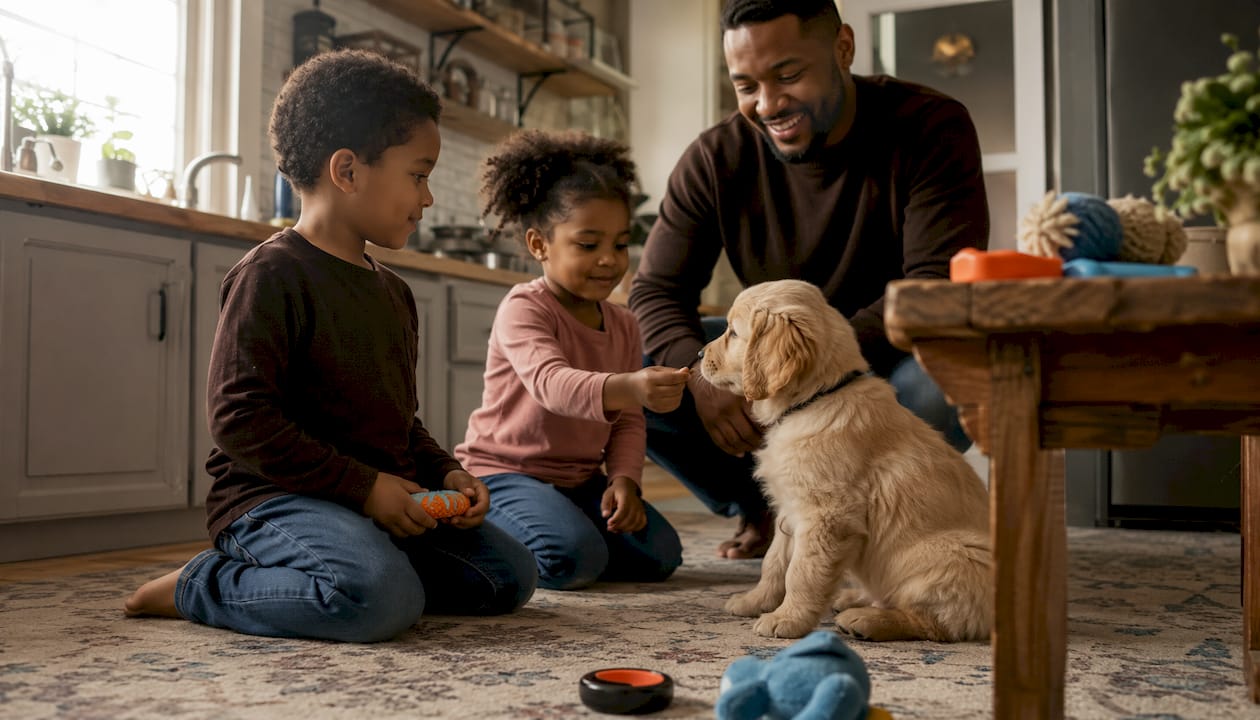
Children benefit just as much as the puppy. Involving children in training builds their empathy, confidence, and ability to lead the puppy safely. Puppies recognise children as leaders when given consistent, age-appropriate roles, and the relationship that develops is built on mutual trust rather than just excitement. Younger children can take on simple tasks such as filling the water bowl, measuring food, or offering a treat with a flat hand, while older children can practise recall and basic commands under adult supervision.
Classes also normalise the challenges every new puppy owner faces. Professional trainers address nocturnal vocalisation, biting, and house-training setbacks in a group setting, which reassures families that these struggles are entirely normal and solvable.
6. What do experts say about long-term family involvement in puppy training?
The evidence is clear: family-wide participation produces better-trained dogs and happier households. Structured family training sessions improve skill generalisation and prevent the common setbacks caused by inconsistent daily cues. When everyone practises the same commands at home, the puppy generalises what it learns in class to real-life situations far more quickly.
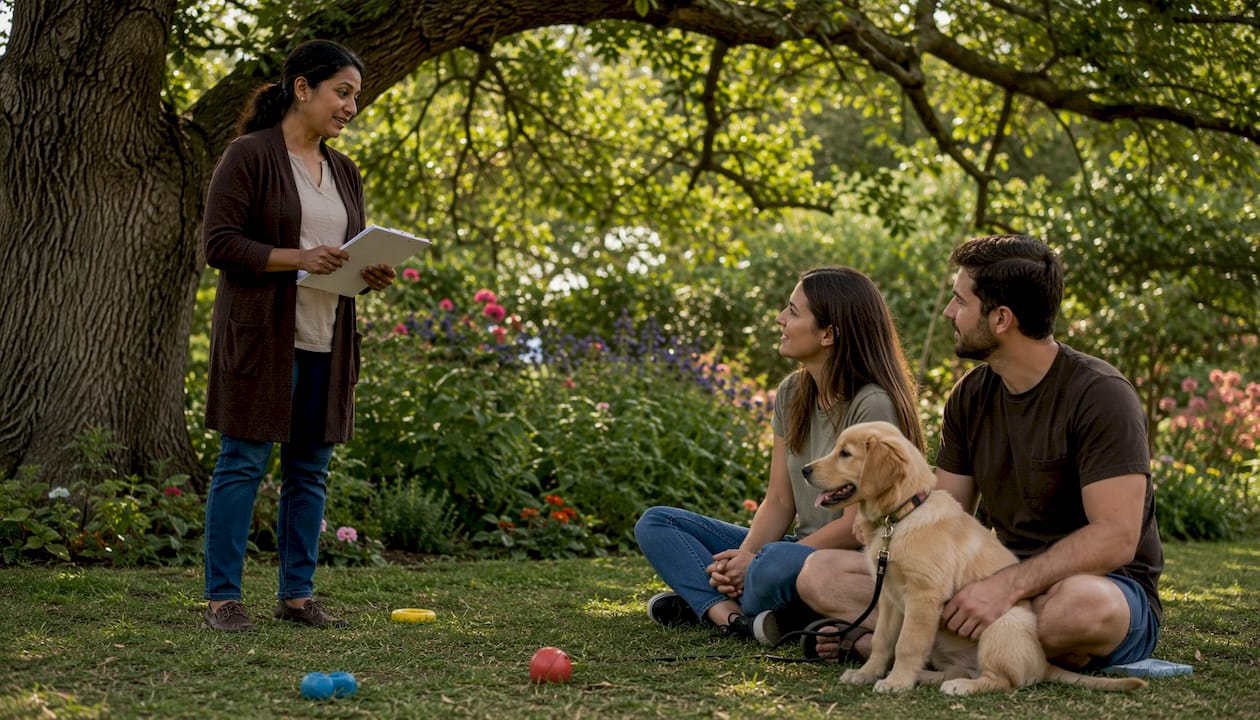
Veterinary behavioural experts recommend continuing socialisation throughout the entire first year, not just during the initial course. Ongoing exposure to new people, places, and experiences maintains an outgoing, confident dog and helps prevent separation-related behaviour from developing. For practical guidance on keeping that momentum going at home, Happy-dogtraining’s home training routine guide offers a clear, week-by-week framework.
Owners who use positive reinforcement techniques report less fearful behaviour in their puppies and a noticeably stronger bond. Reward-based training teaches puppies to enjoy learning, which makes every future training session easier and more rewarding for the whole family.
Pro Tip: After each class, hold a five-minute family practice session at home. Rotate who gives the cue so the puppy learns to respond to every voice in the household, not just one.
Happy-dogtraining: personalised puppy training for your whole family

Getting the right start with your puppy makes everything that follows easier, and Happy-dogtraining is built around exactly that goal. With over 20 years of experience and AVS-accredited methods, Happy-dogtraining offers personalised programmes that address your puppy’s specific needs, whether that is building confidence, tackling early aggression, or simply getting the whole family working together consistently.
Unlike a standard group class where one-size-fits-all, Happy-dogtraining’s science-based approach is tailored to your dog and your household. Every programme comes with free lifetime support after training, so you are never left to figure things out alone once the sessions end. Families with children particularly benefit from the hands-on guidance that helps every household member communicate clearly and kindly with their puppy.
Ready to give your puppy the best possible foundation? Book your place on Happy-dogtraining’s AVS-approved intensive programme and start building a bond that lasts a lifetime.
Key takeaways
Puppies enrolled in classes before six months of age show significantly fewer behavioural problems as adults, with studies finding early enrolment reduces adult aggression by 29%, destructive behaviour by 40%, and excessive barking by 32%. Families who train together consistently produce the best long-term results.
Point | Details |
Start early | Classes can begin at 7–8 weeks, during the critical socialisation window. |
Long-term behaviour gains | Early enrolment reduces adult aggression by 29%, destructive behaviour by 40%, and excessive barking by 32%. |
Whole-family consistency | Using the same cues across every household member is the biggest predictor of lasting success. |
Health requirements | Puppies must have started vaccinations and be parasite-free before attending any group class. |
Happy-dogtraining | Offers AVS-accredited, personalised programmes with free lifetime support for families seeking expert guidance. |
Recommended
Comments