3–14 Weeks: Safe Puppy Socialization Plan for Singapore Owners
The sensitive socialisation period runs from roughly three weeks old to about 12 to 14 weeks, and it’s the single most important window in your dog’s life. Handling should begin gently in the nest, then broaden into real-world exposure the moment your puppy comes home. The good news: expert guidance confirms you can start this before your puppy finishes their vaccination course, provided you manage the risk sensibly. Keep reading for the stages, the safety steps, and a week-by-week plan.
TL;DR:
Introducing your puppy to a variety of textures, sounds, and gentle handling before 12 weeks can shape calmer behavior later; avoid rushing to public spaces early.
Visiting socialisation classes from around 7 weeks can be beneficial, but owner-led exposure and reinforcement are equally important for long-term confidence.
A puppy’s most receptive learning window is between 3 and 14 weeks, with critical social experiences ideally occurring within this period to prevent fear-based problems.
Handling and safe exposure to familiar, vaccinated dogs before full vaccination protect social skills without risking illness.
Watch for signs of stress or fear during socialisation; if these appear, slow the pace and seek professional help to foster confidence.
Table of Contents
What are the developmental stages behind puppy socialisation age?
Your puppy moves through three distinct stages, and each one changes what they’re capable of learning. Get the timing wrong and you’re either wasting effort on a brain that isn’t ready yet, or missing a window that never fully reopens.
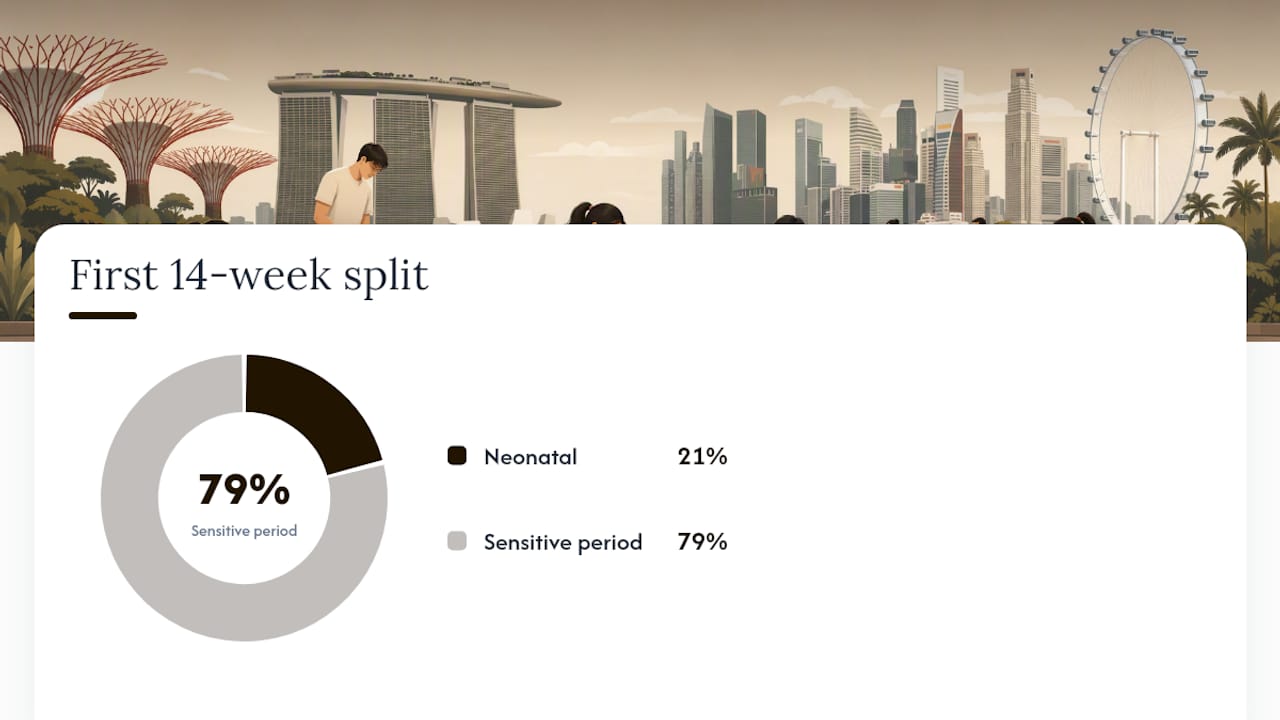
From birth to around three weeks, puppies are in the neonatal stage. Their eyes and ears aren’t functioning yet, so this period is about touch: gentle handling from the breeder builds the foundation for calm nervous systems later. From roughly three weeks to 12 or 14 weeks comes the sensitive period (sometimes called the socialisation period), when a puppy’s brain is uniquely primed to accept new people, animals, sounds, and surfaces as normal. After that comes the juvenile and adolescent stage, where learning continues but the easy, fear-free acceptance of novelty fades.
What that looks like in practice:
3 to 5 weeks: puppies start noticing sound and movement; breeders should be introducing varied textures, gentle noises, and calm human contact.
5 to 8 weeks: curiosity peaks; puppies explore readily and recover quickly from mild startles, making this a golden window for positive first experiences.
8 to 12/14 weeks: learning stays strong, but caution starts creeping in as adolescence approaches, so consistent, positive exposure matters more than ever.
Miss this window and the fallout isn’t infection, it’s fear. AVSAB’s position statement points out that behavioural problems, not infectious disease, are the leading cause of dogs being given up or dying young. A puppy who never met a skateboard, a toddler, or a stranger in a hat before 14 weeks often grows into an adult who finds all three terrifying.
How do you socialise a puppy safely before full vaccination?
Waiting until every jab is done means missing most of the sensitive period, and AVSAB treats managed early socialisation as standard veterinary practice, not a risk-taking shortcut. The trick is separating “no exposure” from “reckless exposure.”
Get a veterinary check and start your puppy’s first vaccinations and deworming as early as your vet recommends, and consider effective tick protection for dogs as part of your puppy’s health precautions.
Choose clean, indoor spaces over public parks and pavements for the first few weeks.
Carry your puppy across surfaces where unknown dogs may have toileted, rather than letting them walk.
Restrict direct contact to dogs you know are healthy, vaccinated, and non-reactive.
Wash hands and check paws after outings, and avoid areas with known outbreaks of parvovirus or other contagious disease.
A vaccination and socialisation schedule built alongside your vet lets you plan outings around each dose rather than guessing.
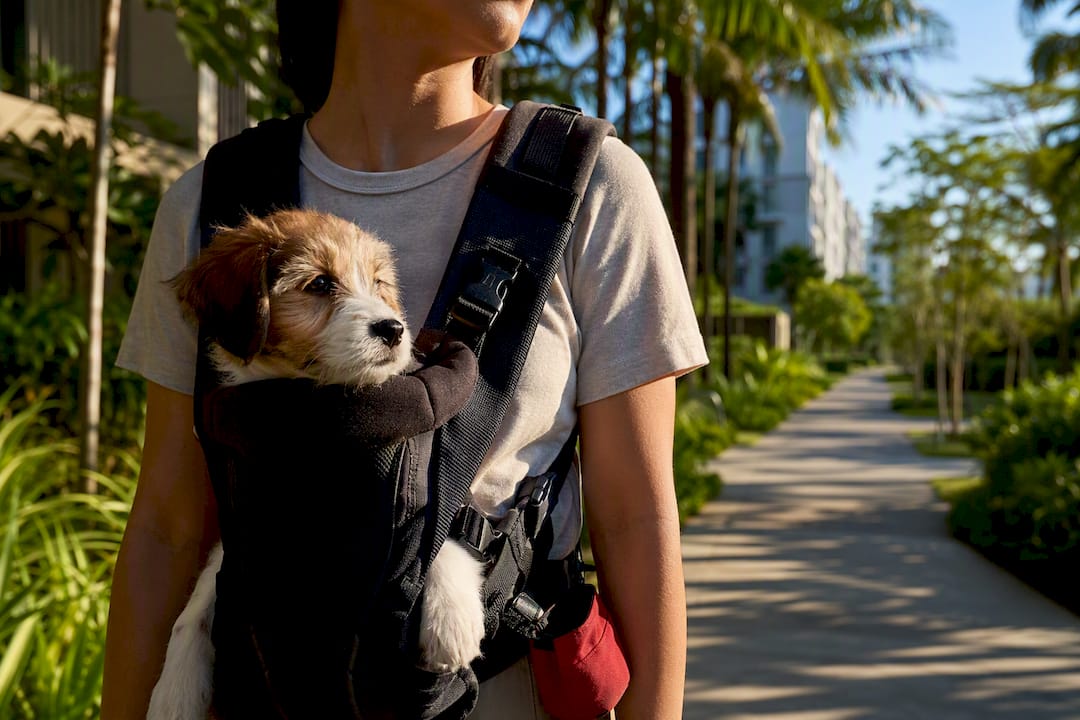
Pro Tip: Carrying your puppy in a bag or your arms for the first outings still counts as socialisation, they’re absorbing sights, sounds, and smells even before their paws touch the ground.
What does a puppy socialisation checklist look like by age?
A good puppy socialisation checklist breaks the sensitive period into manageable chunks rather than one overwhelming to-do list.
3 to 5 weeks (with the breeder): varied textures underfoot, brief handling of paws and ears, low-level household noise.
5 to 8 weeks: meeting different people (ages, heights, hats, glasses), short car rides, indoor surfaces like tile and carpet, recorded sounds such as thunder or fireworks played quietly.
8 to 12 weeks: carried outings past traffic, prams, and cyclists; supervised meetings with calm, vaccinated dogs; visits to a friend’s clean garden.
12 weeks and beyond: walking on-lead in varied environments, visits to pet-friendly shops or cafés, continued exposure to new dogs and people at a comfortable pace.
Pair every new experience with something your puppy already loves, usually food, to build a positive association rather than mere tolerance. This graded approach, low intensity paired with high-value reward, only increasing once your puppy relaxes, comes directly from peer-reviewed socialisation research.
Watch for stress signals throughout: a tucked tail, frozen posture, excessive panting, or attempts to bolt all mean it’s time to create distance and slow down, not push through. Fearful puppies need slower, reward-based exposure rather than repeated flooding.
When should puppy socialisation classes start?
Most well-run classes accept puppies from around 7 to 8 weeks, once they’ve had at least one set of vaccinations at least seven days beforehand and show no signs of illness, a timing standard AVSAB itself endorses.
A quality class should offer:
An indoor venue with cleanable, non-porous flooring.
Small, supervised puppy groups matched roughly by size and temperament.
As much coaching for owners as play for puppies, since owner education often drives the real long-term benefit.
Evidence on classes is genuinely mixed. Research on early socialisation practices shows gentle handling produces calmer puppies by eight weeks, but long-term outcomes from classes specifically vary study to study. That doesn’t make classes pointless. Understanding what a good puppy class actually offers helps you judge whether a particular one is worth your time.
When should you seek professional help for a fearful puppy?
Some puppies need more than a checklist. Watch for intense, persistent fear of ordinary things, growling or snapping that escalates rather than settles, or avoidance that gets worse with repeated gentle exposure rather than better.
These signs warrant a call to your vet first, to rule out pain or illness, then a referral to a veterinary behaviourist or a certified trainer experienced with fear and aggression. Acting during the sensitive period, rather than waiting to see if your puppy “grows out of it,” gives you the best odds of a confident adult dog.
Balancing disease risk against behavioural risk
Owners often fear illness more than they fear fear itself, but the data says otherwise: unsocialised dogs face a bigger long-term threat than managed infectious exposure. Follow AVSAB’s guidance, lean on your vet, and bring in a qualified trainer the moment you feel unsure. Stepwise, sensible socialisation beats waiting every time.
— Mark
Get structured support for your puppy’s socialisation
Happy-dogtraining gives you what a checklist alone can’t: a trained eye watching your puppy’s body language in real time, adjusting the pace before a bad experience becomes a lasting fear. Where generic advice tells you what to do, a qualified trainer can tell you whether your particular puppy is ready for it.
Our approach starts with an assessment of your puppy’s temperament and current exposure history, followed by a tailored plan, whether that means a place in a puppy socialisation class, a private consultation for a nervous pup, or a full AVS-approved intensive programme for owners who want structured, guided sessions from week one. Clients may receive ongoing support after training finishes, ensuring questions can be addressed beyond the sessions. If you’re unsure where your puppy sits in the sensitive period, get in touch through Happy-Dog Training Singapore and book an assessment before the window closes.
Sources
For primary guidance, see the AVSAB position statement, the PMC review on early socialisation practices, and the AVMA literature review.
FAQ
What age is best to socialise a puppy?
The best window runs from around three weeks to 12 to 14 weeks, with early handling from the breeder and active owner-led exposure from 8 weeks once your puppy comes home.
What month is hardest with a puppy?
Many owners find the third month home (roughly 12 to 14 weeks) hardest, as adolescence begins and a puppy who once accepted everything starts testing boundaries and showing new caution.
What is the 7-7-7 rule for puppies?
The 7-7-7 rule is an informal guideline suggesting puppies meet 7 new people, 7 new surfaces, and 7 new environments by 7 weeks old; it’s a popular shorthand rather than a formal veterinary standard, so treat it as a rough target, not a strict rule.
Can an 8-week-old puppy socialise with other dogs?
Yes, provided the other dogs are healthy, vaccinated, and known to be friendly; AVSAB guidance supports supervised contact with low-risk dogs well before a puppy’s vaccination course is complete.
Recommended
Comments