How to reinforce your trainer's techniques at home
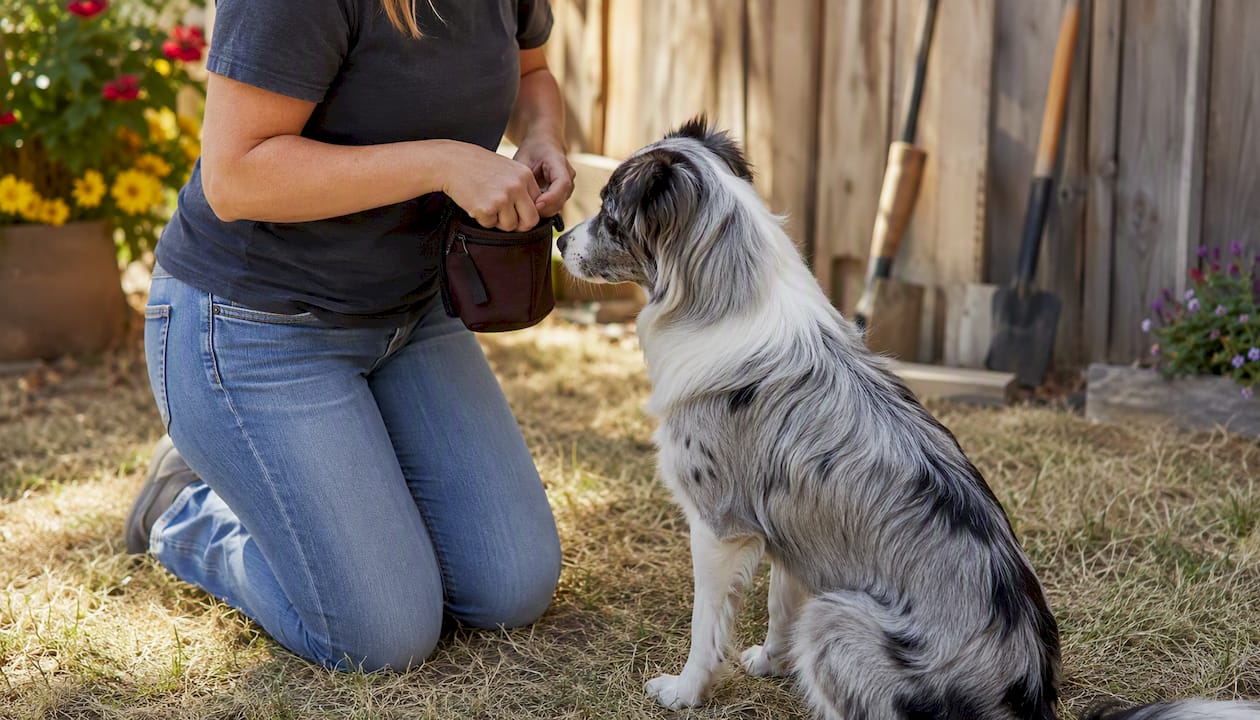
Start today: use your trainer’s exact cues, a consistent marker (a clicker or a clear word like “yes”), and a high-value reward. That combination, practised in short daily sessions, is how you reinforce trainer techniques at home and turn a paid lesson into a lasting skill.
Three things to do in the next ten minutes:
Pick one cue your trainer introduced in the last session and write it down exactly as they said it.
Gather your rewards — small, soft treats your dog loves, or a favourite toy — and place them within easy reach.
Run two or three repetitions in a quiet room, marking the moment your dog succeeds and rewarding within a second.
Pro Tip: Watch your dog’s body language throughout. Soft eyes, a loose body and a wagging tail tell you the session is going well. Yawning, lip-licking or turning away are early stress signals — stop, give your dog a break, and make the next attempt easier.
Key takeaways
Short, consistent, reward-based practice using your trainer’s exact cues is the most reliable way to maintain and strengthen the skills your dog has already learnt.
Point | Details |
Session length and frequency | Keep sessions brief and repeated several times daily for best retention. |
Marker and reward timing | Deliver the reward within one second of the marker to build a clear behaviour link. |
Household consistency | Agree one cue word and hand signal per behaviour and share it with everyone at home. |
Proofing in stages | Increase distance, duration and distraction one at a time, never all three together. |
Happy-dogtraining support | Personalised plans, video feedback and free lifetime support keep home practice on track. |
Table of Contents
Your daily practice checklist
Keep this list somewhere visible — on the fridge or saved to your phone. Before each session, run through it quickly.
Session length: brief periods per slot, several times a day
Distraction level: start low, increase only when the dog succeeds consistently
Cue to practise: one skill per session
Reward type and marker: agreed with your trainer in advance
One clear goal for the session (e.g. “sit with a 3-second wait”)
End-on-success rule: always finish on a repetition the dog gets right
After the session, jot one line in a notebook or phone note: what you practised, how many successes out of five attempts, and anything unusual. Film one or two repetitions on your phone. That short clip is the single most useful thing you can send your trainer for feedback.
Pro Tip: Photograph your treat pouch set-up or your training space before the first session. It takes ten seconds and gives your trainer useful context when you ask for advice remotely.
How should you set up home practice sessions?
The RSPCA advises short, regular sessions with minimal distractions, ending positively each time. Most trainers favour three to five short slots spread across the day rather than one long lesson, because dogs consolidate learning during rest periods between sessions.
Environment matters. Begin in the quietest room in your home, ideally the same spot your trainer used during a home visit. Once your dog responds reliably there, move to a slightly busier area — the hallway, then the garden, then the pavement outside. Each new location is a fresh challenge, so expect a small dip in performance and reward generously at first.
For setting up a dedicated training space, keep it consistent: same corner, same mat if you use one, same equipment bag. Predictability helps your dog shift into “learning mode” quickly.
Household consistency is where many owners lose progress. Agree on three simple rules with everyone in the house:
Use the same word, tone and hand signal for every cue.
Only the person running the session gives cues during that session.
Nobody rewards the dog for a behaviour the trainer has asked you to put on cue (for example, no rewarding a jump-up if you are working on “four paws on the floor”).
Pro Tip: Stick a cue card on the fridge listing every trained behaviour and its exact word and hand signal. It takes two minutes to make and prevents the most common source of confusion for dogs.
How to use rewards and markers correctly, and when to fade them
A marker — a click or a short word like “yes” — tells your dog the exact moment they did the right thing. Deliver the reward within one second of the marker whenever possible. That tight timing is what makes reward-based training so effective: the dog learns precisely which behaviour earned the reward.
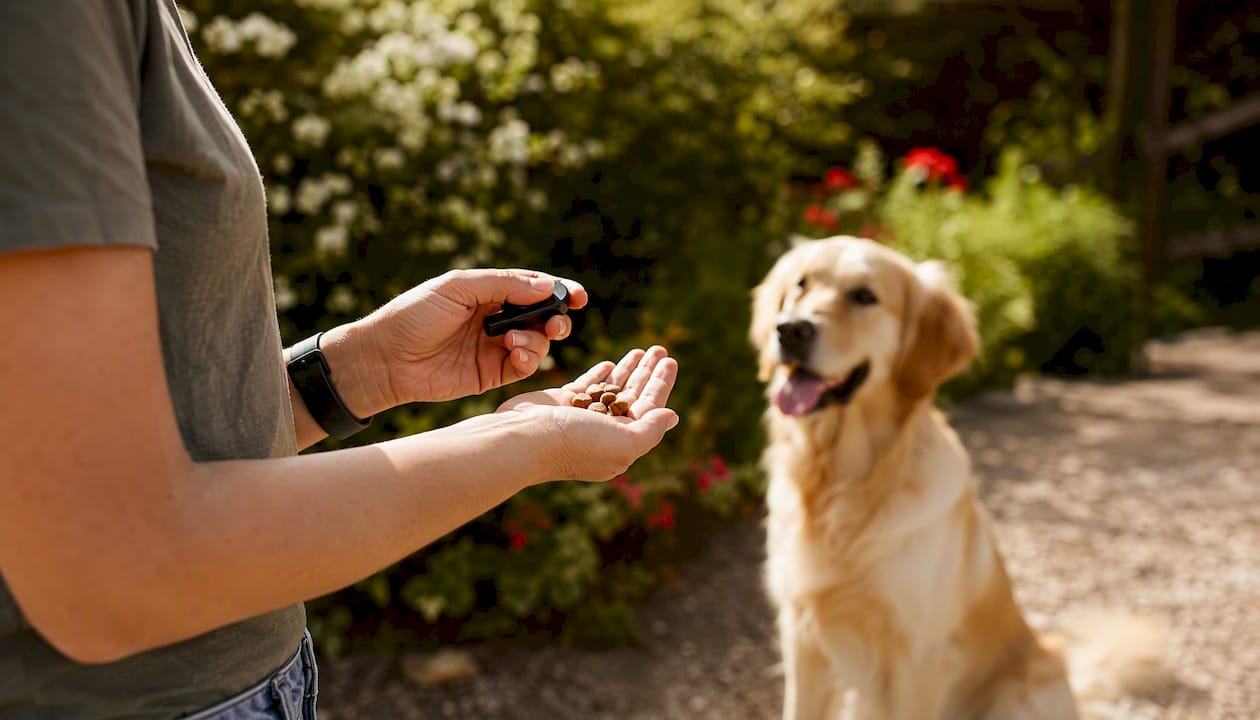
Choosing rewards: rotate between three or four options to keep value high. Small pieces of cooked chicken or cheese work well for most dogs. For a play-motivated dog, a brief tug game can be just as powerful. Ask your trainer which rewards they used and match them at home.
Fading the food reward is a planned process, not something to rush. Evidence summaries recommend starting with continuous reinforcement (every correct response gets a reward), then shifting to a variable schedule once the behaviour is reliable — rewarding every second or third correct response, then unpredictably. This variable schedule actually strengthens behaviour over time. Your trainer will advise when your dog is ready to move to this stage.
Practical examples trainers typically approve:
Recall: high-value treat or play every time until recall is rock-solid, then shift to variable food plus enthusiastic praise.
Sit: once reliable, reward with praise and a pat on alternate repetitions, keeping food for new challenges.
Stay: reward duration and distance separately before combining them.
Pro Tip: Keep a small “jackpot” reward — something exceptional like a piece of sausage — for breakthrough moments. Use it sparingly so it keeps its power.
Why exact cue replication matters and how to keep everyone consistent
Dogs learn specific sounds and signals, not general intentions. If your trainer used a quiet, flat “sit” and you use an upward-inflected “sit?”, your dog may hesitate. Tone, volume and hand-signal position all carry meaning. For best practices on home obedience training, matching the trainer’s delivery as closely as possible is the fastest route to reliability.
Ask your trainer for:
A written cue list with the exact word and any hand signal described.
A short demonstration video (even a 30-second phone clip) of each behaviour.
Written criteria: what does a correct “sit” look like? How long must the dog hold it?
Run a five-minute household rehearsal before involving the dog. Each person practises the cue, the marker timing and the reward delivery. It feels slightly silly but it prevents the dog from learning different responses for different family members.
Pro Tip: If a family member’s cue drifts slightly, gently correct it in private rather than during a session. Correcting someone in front of the dog disrupts the session’s calm.
How do you proof behaviours so they work in real life?
Proofing means teaching your dog that a cue applies everywhere, not just in the kitchen on a Tuesday morning. The staged approach is: increase distance, duration and distraction one at a time, never all three together.
The RSPCA’s six-step stay method is a clear model: begin in a quiet room, add a hand signal, reward the dog while it holds position, then gradually increase distance and context. That same logic applies to every behaviour you proof.
Safety-first rules:
Use a long line (not a retractable lead) when proofing recall outdoors until reliability is very high.
Use a baby gate or closed door when proofing “leave” around high-value food items.
Never let a failed repetition go unrewarded for effort — go back a step and set up an easy success.
Pro Tip: Proof in short bursts of two or three repetitions in a new location, then return to a familiar spot for a confidence-building repetition before ending the session.
Troubleshooting when practice stalls
The most common reasons a behaviour stops working at home: the cue has drifted, the reward value is too low for the environment, the session is too long, or the dog is being asked to perform in a context that is harder than the training has reached.
Practical fixes:
Go back one step in difficulty and rebuild from there.
Increase reward value for the current environment.
Shorten sessions to two or three repetitions if the dog is losing focus.
Film a session and send it to your trainer before assuming the behaviour has broken down.
When to contact your trainer immediately:
Your dog shows stress signals (panting, pacing, refusing food) that persist after the session ends.
A behaviour that was reliable has deteriorated over more than two weeks despite your adjustments.
Your dog growls, snaps or shows any sign of aggression during practice.
The DEFRA Code of Practice for dogs recommends seeking professional advice for behaviour problems rather than attempting to manage them alone. Aggression and severe anxiety always warrant a qualified behaviourist, not a home fix.
Pro Tip: When briefing your trainer, note the exact cue you used, the environment, the reward, and what the dog did instead of the expected behaviour. Specific information leads to specific solutions.
A sample home practice plan over several days
This plan assumes your trainer has already introduced the skills. Adapt it to whatever your trainer has taught.
A sample home practice plan with a progressive schedule and goals tailored to the dog’s age and capability. How puppy learning works explains why shorter, gentler sessions suit developing brains.
Pro Tip: On Day 7 and Day 14, watch back your session videos side by side. The improvement is usually visible and genuinely motivating.
How do you track progress and know when to ask for help?
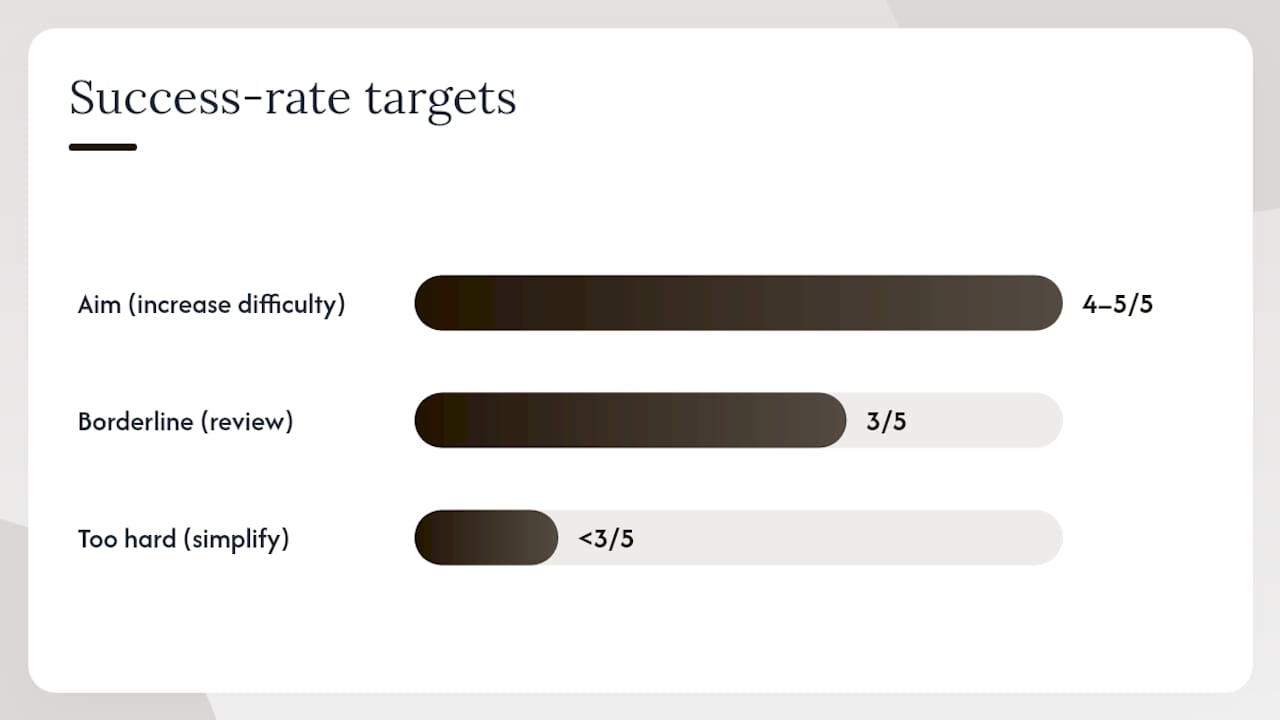
A simple success-rate measure works well: aim for four or five correct responses out of five attempts before increasing difficulty. If you are consistently below three out of five, the task is too hard for the current environment or the reward is too low.
Your one-line training diary entry needs only four things: date, skill, success rate, and one observation (e.g. “distracted by next-door’s dog, dropped to 2/5”). Over two weeks, patterns become clear.
Escalation criteria — contact your trainer when:
Success rate stays below three out of five for more than two weeks despite simplifying the task.
Your dog shows new stress signals or avoidance behaviours.
Any safety concern arises, including growling or snapping.
The RSPCA recommends checking ABTC credentials and seeking a qualified behaviourist for persistent or safety-related issues, not just a general trainer.
Pro Tip: Set a two-week review date in your calendar the day you start. It creates a natural checkpoint and stops you drifting without noticing.
Welfare-first rules and how to verify your trainer’s credentials
The BSAVA recommends reward-based training and warns that aversive methods and devices can cause stress, worsen behaviour and cause long-term welfare harm. The DEFRA Code of Practice supports this position and recommends professional advice for behaviour problems.
In the UK, anyone can legally call themselves a dog trainer. That makes credential-checking your responsibility.
Trust signals to look for:
Registration with the Animal Behaviour and Training Council (ABTC) or equivalent accreditation.
A written training plan provided before or after the first session.
Willingness to let you observe a class before committing.
Clear explanation of methods used and why.
Red flags to avoid:
Use of choke chains, prong collars, or electronic collars.
Refusal to explain methods or share a written plan.
Any technique that causes your dog to cower, freeze or show fear.
“Reward-based methods are not just kinder — the evidence shows they produce faster learning, better long-term stability and a healthier relationship between dog and owner.” (Second Nature Behaviour)
For effective, evidence-based training techniques, always work within a welfare-first framework.
A note from the trainer
Consistency between sessions is where real progress happens. Your dog does not need perfection from you — they need the same clear cue, the same warm response, and the same honest record of how things went. If something is not working, that is useful information, not a failure. Send a short video, drop a message, and we will adjust the plan together.
Every dog learns at their own pace. A rescue dog building confidence needs more easy wins and more patience than a young dog learning its first cues. A high-energy breed may need more physical exercise before a session to focus well. Trust the process, keep sessions short and positive, and the progress will come.
Happy-dogtraining: personalised support for your dog’s training journey
If you want a structured programme behind your home practice, Happy-dogtraining offers personalised, science-based training built around your dog’s specific needs and your household’s routine. With over 20 years of experience and a welfare-first approach, the team provides written plans, video feedback, and ongoing support so your home sessions stay on track.

Whether your dog needs basic obedience, behaviour modification, or a structured refresh, Happy-dogtraining’s intensive obedience programme gives you a clear, trainer-led plan to follow at home and in class. Free lifetime support after training means you are never left guessing between sessions. Book a consultation to get started.
Sources
Save these links and share them with your trainer if you have questions about methods or credentials.
Recommended
Comments