7 Day Rescue Dog Decompression Plan for Singapore Adopters

Decompression is the quiet, unhurried period a rescue dog needs after adoption to feel safe before anything else can happen. The first action is simple: set up a calm, undisturbed space, keep visitors and stimulation to a minimum, and let your dog set the pace. Use the 3-3-3 rule as your rough planning benchmark, not a deadline.
TL;DR:
Most rescue dogs take several weeks to fully settle, with individual recovery times varying based on their past trauma and ongoing body language cues.
Introducing other pets should progress gradually, using scent swapping and visual barriers before any direct contact to prevent setbacks.
Signs of stress include whales eye, pacing, and trembling, while positive progress features relaxed posture, normal appetite, and curiosity about surroundings.
Routine predictability and low-pressure enrichment help rebuild trust, with short, consistent walks and gentle nosework being effective during decompression.
Professional trainers are recommended only if anxiety or reactivity persists beyond a few weeks, and early veterinary checks are crucial if health issues or minimal appetite occur.
Table of Contents
What is rescue dog decompression and why the 3-3-3 rule matters?
Rescue dog decompression is the settling-in period during which a newly adopted dog’s nervous system winds down from the stress of shelter life, transport, and a brand-new environment. Every sound, smell, and person in your home is unfamiliar, and that constant novelty keeps a dog’s stress hormones elevated. Decompression gives the brain and body time to recalibrate before you ask for anything else, whether that’s a polite sit or a trip to meet the neighbours.
This is where the 3-3-3 rule earns its popularity among adopters and rescues alike. It breaks the adjustment period into three rough phases: a rough benchmark of initial days to begin adjusting, weeks to start settling into routine, and months before feeling fully at home, without strict deadlines. The 3-3-3 benchmark is a planning tool, not a countdown. Some dogs relax within days; others take considerably longer, and that variation is entirely normal.
What should guide your decisions during this stretch isn’t the calendar but your dog’s body language. A dog who’s still flinching at footsteps on day 10 needs more time in the “three days” mindset, regardless of what the timeline suggests. Watch for:
Loosening posture and a softer, less rigid tail carry
Willingness to approach you rather than retreat
Eating consistently and resting without startling awake
Curiosity about toys, corners of the room, or garden smells
Professional trainers consistently advise giving dogs choices rather than pushing bonding on your timeline. Rushing this stage, even with good intentions, tends to prolong the very stress you’re trying to resolve.
First week with a rescue dog: a day-by-day checklist
The first seven days set the tone for everything that follows. Here’s how to structure them.
Day 1: Take your dog straight to their prepared safe room, skip the house tour, and let them settle. Offer a toilet break on a lead, keep the household calm, and postpone visitors entirely.
Day 2 to 3: Walk the same short route near home so the environment starts to feel familiar rather than overwhelming. Feed at consistent times each day, and keep visitors to an absolute minimum. Short, “boring” walks in a predictable location help far more than an exciting new park at this stage.
Day 4 to 7: Introduce low-pressure enrichment such as a stuffed food toy or a scattered sniff in the garden. Start layering in simple communication cues, like a marker word before meals, without expecting obedience work yet.
Throughout the week, avoid changing your dog’s diet abruptly. A blanket or bedding with a familiar scent, provided by the rescue or shelter, can make the first few nights noticeably easier.
Book a vet check within the first week if one hasn’t already happened, even if your dog seems fine. Watch closely for warning signs that need prompt attention: no appetite for more than 72 hours, repeated vomiting or diarrhoea requiring prompt attention, or any signs of collapse. These need immediate veterinary care, not a wait-and-see approach.
Pro Tip: Resist the urge to “test” your new dog’s reactions to see how they’ll cope with the doorbell, the vacuum, or the children next door. Decompression works best when the first week has as few surprises as possible.

What should you do and avoid during decompression?
Adopters who get this stage right tend to follow a few consistent principles, and the ones who struggle usually make the same handful of mistakes.
Do:
Let your dog choose when to approach you rather than reaching for them first
Keep a consistent, predictable routine for meals, walks, and rest
Offer low-key enrichment like a chew or snuffle mat once your dog seems settled
Speak in a calm, ordinary tone rather than a high-pitched “excited” voice
Don’t:
Force physical contact, cuddles, or eye contact before your dog invites it
Crowd the safe space, even out of curiosity or affection
Invite a stream of friends and family to “meet the new dog” in week one
Start formal training before your dog feels secure in the home
Children need particularly clear ground rules here. Explain that the dog’s safe space is completely off limits, no exceptions, and that calm, quiet behaviour around the dog earns trust faster than excitement ever will. The same rule applies to every adult in the house: a space that’s genuinely off-limits to family members is what makes it work as a safe retreat.
How do you introduce other pets and family members safely?
Introductions during decompression should happen in careful stages, never all at once.
Scent first, no direct contact. Swap bedding or toys between your new dog and resident pets for a few days before any face-to-face meeting.
Visual introductions with distance. Use a baby gate, crate door, or long corridor to let animals see each other without pressure, rewarding calm behaviour on both sides.
Parallel walks for dogs. Two handlers walking dogs on either side of a quiet street, gradually narrowing the gap, works far better than a nose-to-nose meeting at the front door. A long line gives your dog freedom to move without losing control of the situation.
Cats and small pets need a slower, more controlled process, often with a permanent physical barrier for the first few weeks, since chase instinct can appear even in placid dogs.
Children should be taught to sit still and let the dog approach, never to hug, lean over, or corner a dog that’s still finding its feet.
Rushing any of these steps is one of the most common reasons a promising first week unravels into a setback.
How can you tell if your rescue dog is stressed or settling in?
Reading body language accurately matters more than watching the calendar. Stress signals to look for include:
Whale eye (the whites of the eyes showing)
Freezing in place or excessive stillness
Pacing, panting when it isn’t hot, or repeated yawning
A tucked tail, flattened ears, or lip-licking outside mealtimes
Positive signs of progress look quite different: consistent eating, a softer overall posture, brief moments of engagement like a glance or a gentle tail wag, and choosing to rest near you rather than as far away as possible.
Some setbacks are completely normal, a bad night, a flinch at a loud lorry, a day of hiding again after real progress. Genuine red flags are different: refusal to eat for several days, growling or snapping that escalates rather than fades, obsessive pacing, or any sign of physical illness. If you see these, contact your vet or a qualified behaviourist without delay. When you do reach out, note down when the behaviour started, exactly what triggered it, and how your dog responded. That detail helps a professional (or the rescue organisation) give you accurate guidance rather than generic advice.
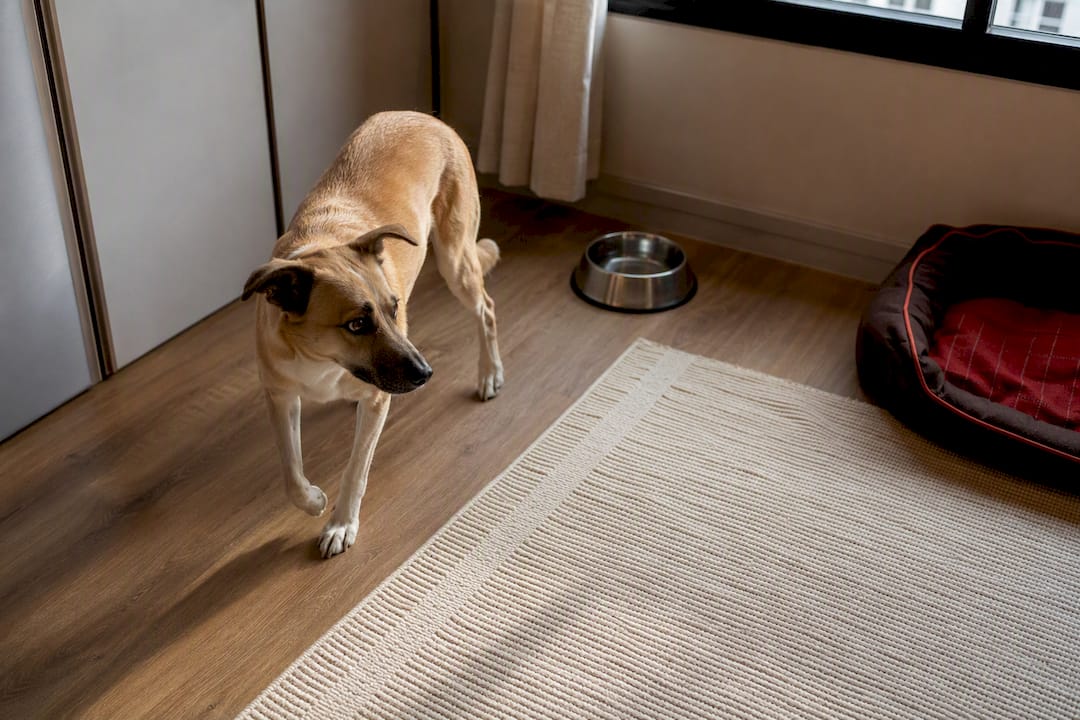
Which routines and enrichment actually help during decompression?
Predictability is genuinely soothing for a dog whose entire world has just changed. A consistent schedule for meals, walks, and quiet time gives your dog something solid to anchor to while everything else feels unfamiliar.
Structure your walks to be short and unremarkable rather than adventurous. The same route, walked at the same time each day, helps your dog orient to the new environment without piling on fresh stimulation. A long line is worth investing in here, since it gives your dog room to sniff and explore at a natural pace while you retain control.
Enrichment should stay low-pressure during this phase:
Food puzzles or a stuffed chew toy for solo downtime
Scatter feeding in the garden for gentle nosework
Short scent games indoors rather than structured obedience drills
Rebuilding trust in a crate or den takes patience. Never force a dog inside; instead, scatter treats near the entrance and let curiosity do the work over several days.
Pro Tip: If your dog seems bored rather than anxious by week two, that’s often a good sign; boredom means the nervous system has settled enough to want something to do.
For families juggling a new rescue dog alongside a young puppy at home, the same low-pressure principles apply to both. This early-care checklist for puppies covers similar first-week routines that can run alongside your rescue dog’s decompression without adding conflict.
When and how can a trainer help during rescue dog decompression?
Not every dog needs professional support to decompress well, but some situations call for it clearly. Booking a trainer makes sense when you see escalating anxiety that isn’t easing after a couple of weeks, any escape attempts from the garden or on lead, or reactivity toward people or other dogs that feels beyond what you can safely manage alone.
An initial assessment with a professional dog trainer typically involves observing your dog’s behaviour in the home environment and talking through what’s happened since adoption, rather than jumping straight into commands. From there, a short, structured programme can address the specific issue, whether that’s fearfulness, early aggression signs, or separation anxiety, using humane, science-based methods built over more than 20 years of practice.
A few things worth knowing about working with a trainer at this stage:
Sessions are led by an AVS-accredited trainer with certified experience in fearfulness and aggression cases
Free lifetime support is included after training programmes, so questions after the fact don’t cost extra
Training complements decompression rather than replacing it. Your dog still needs that quiet settling-in period alongside any structured sessions
The goal is never to rush a dog through decompression with training drills. It’s to give you tailored tools that make the whole process smoother.
Trainer note: mindset and small wins
Decompression rewards patience more than any technique I could describe here. The dogs who come furthest aren’t necessarily the ones with the mildest history. They’re the ones whose owners learned to celebrate a tail wag, a full food bowl, or five seconds of eye contact as genuine progress rather than waiting for a finished, “fixed” dog to appear.
Progress during this period is rarely a straight line, and a good day followed by a wobble doesn’t mean you’ve gone backwards. It usually means your dog is processing something new. If you find yourself unsure whether what you’re seeing is normal settling-in or something that needs professional eyes on it, that uncertainty alone is reason enough to ask. A short conversation with a trainer or your vet costs far less than weeks of guessing.
— Mark
How to get help from Happy-Dog Training
Happy-Dog Training Singapore works alongside decompression, not against it, stepping in exactly when a rescue dog’s anxiety, reactivity, or escape risk needs more structure than a quiet routine alone can provide. If your dog is showing signs that feel beyond what home management can address, an aggressive behaviour consult gives you a clear, professional read on what’s happening and what to do next.
A first booking typically starts with a conversation about your dog’s history and current behaviour, followed by an assessment that shapes a tailored plan, whether that’s ongoing private sessions or the 4-week AVS-approved intensive programme for dogs needing more structured behaviour change. Every programme comes with free lifetime support afterwards, so you’re never left guessing once the sessions end. If you’re not sure which option fits your situation, get in touch and ask about the right first step for your dog.
Sources
For more on decompression timelines and first-week routines, see the AKC’s guidance on bringing home a new dog and the 3-3-3 rule explained.
FAQ
What is the 3-3-3 rule for rescue dogs?
The 3-3-3 rule suggests three days to begin decompressing, three weeks to learn the household routine, and three months to feel truly at home. It’s a general benchmark for planning, not a fixed deadline every dog will follow exactly.
What is the 7-7-7 rule for dogs?
The 7-7-7 rule is a different, less established framework some trainers reference for puppy socialisation windows rather than rescue dog decompression specifically. For adult rescue dogs settling into a new home, the 3-3-3 rule is the more widely used and better-supported benchmark.
What is the hardest part of adopting a rescue dog?
Most adopters find the uncertainty hardest. Not knowing exactly what your dog has experienced or how long decompression will take, which is precisely why body language cues matter more than any fixed timeline.
How long should decompression last before I start training?
Basic communication cues can begin gently within the first week, but formal training works best once your dog eats consistently, rests calmly, and shows curiosity rather than constant vigilance. If progress stalls, a trainer such as Happy-Dog Training Singapore can help you judge readiness accurately.
When should I contact a vet during decompression?
Contact a vet promptly if your dog refuses food for more than 72 hours, has repeated vomiting or diarrhoea requiring prompt attention, or shows any sign of collapse. These symptoms need medical attention rather than a wait-and-see approach.
Recommended
Comments