The role of routine in dog anxiety: a 2026 guide
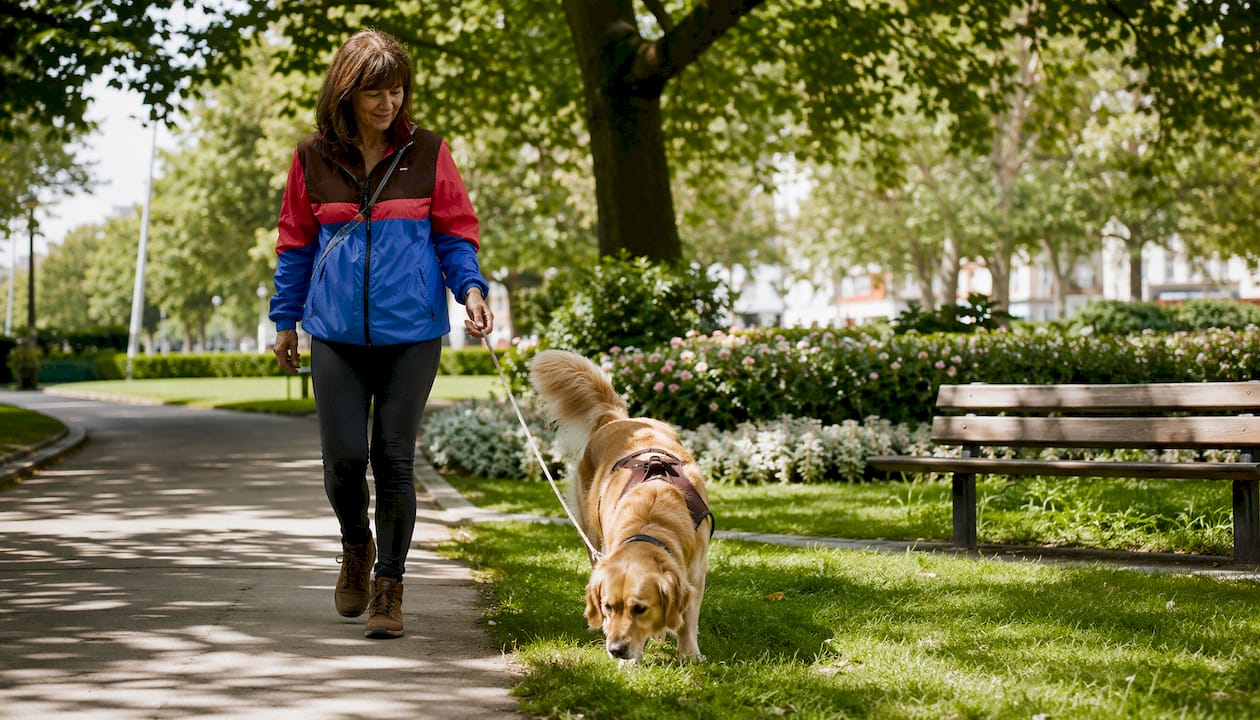
Routine is one of the most powerful tools you have for a calmer, happier dog; for additional guidance on building calm, predictable daily routines to ease canine anxiety, visit Caring for your dog – Lakewood Ranch Doodles. When your dog knows what comes next, their nervous system stops scanning for threats and genuinely relaxes. Consistent daily patterns lower cortisol levels, reduce fear-based reactivity, and create the emotional stability that makes training possible. Dogs Trust (UK) places routine at the heart of canine wellbeing, and 2026 research continues to confirm it as a leading non-medical intervention for anxiety. Here is what that looks like in practice:
Predictability reduces stress. When your dog can anticipate feeding, walks, and rest, their brain exits “high alert” mode.
Nervous system regulation. Stable patterns allow cortisol to drop naturally, creating a calmer baseline throughout the day.
Fear-based reactivity decreases. A dog who understands their day reacts less sharply to minor triggers like doorbells or strangers.
Training becomes possible. Routine builds calm before commands can take effect. A dog in high arousal cannot reliably process verbal cues.
Emotional resilience grows. Over weeks of consistent application, your dog learns that the world is understandable and safe.
Why consistent daily routines are crucial for dogs with anxiety
Your dog’s nervous system runs a constant prediction engine. Every waking moment, their brain asks: what is about to happen, and is it safe? When the answer is unknown, the stress response stays activated. Cortisol remains elevated. The dog paces, barks at everything, cannot settle, and reacts explosively to small triggers. Unpredictable environments keep dogs in this vigilant state not because anything dangerous is happening, but because their brain cannot confirm that it is not.
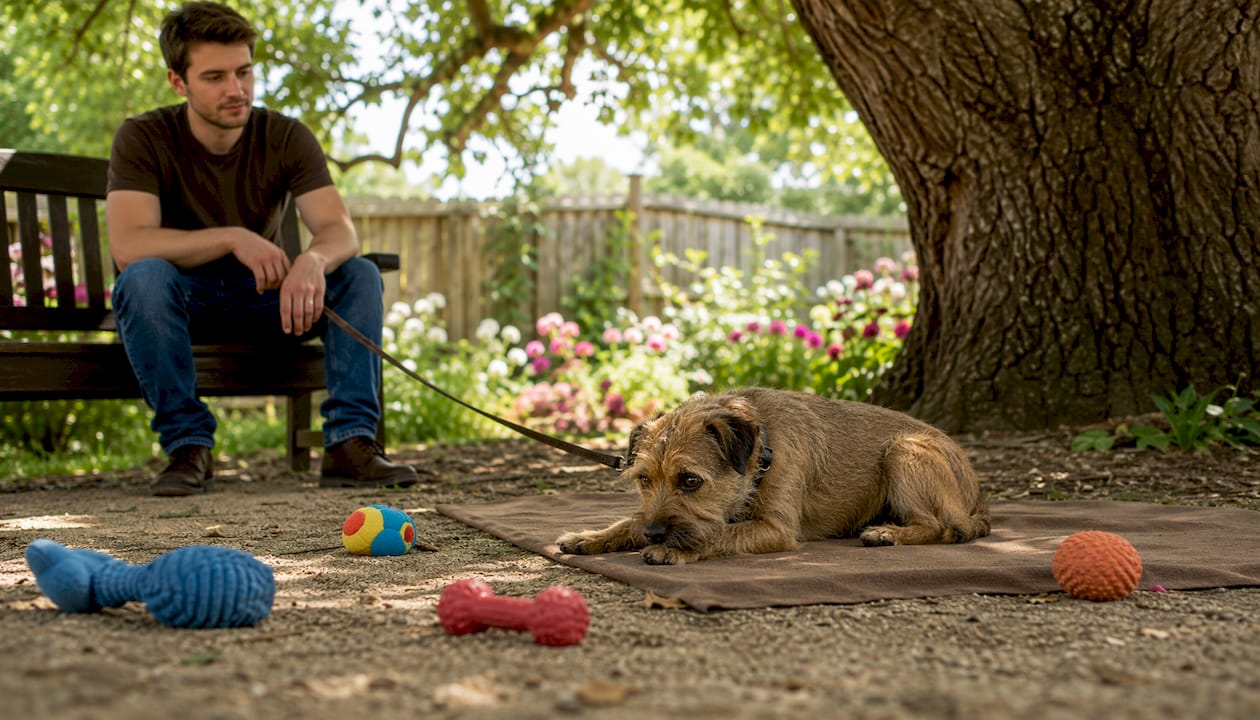
When the pattern is familiar, the opposite occurs. The stress response downregulates. The brain genuinely relaxes, because there is nothing unknown to scan for. This is not a soft wellness idea. It is how the mammalian nervous system works.
Dogs Trust puts it plainly: a routine means your dog can predict events, which is so important for their wellbeing and helps to avoid them feeling anxious. A dog who knows that a certain point in the day is “naptime” will settle nicely, because they know nothing else will happen during that time. Without that structure, the same dog sits in a state of low-level uncertainty all day long.
What should a daily routine for an anxious dog include?
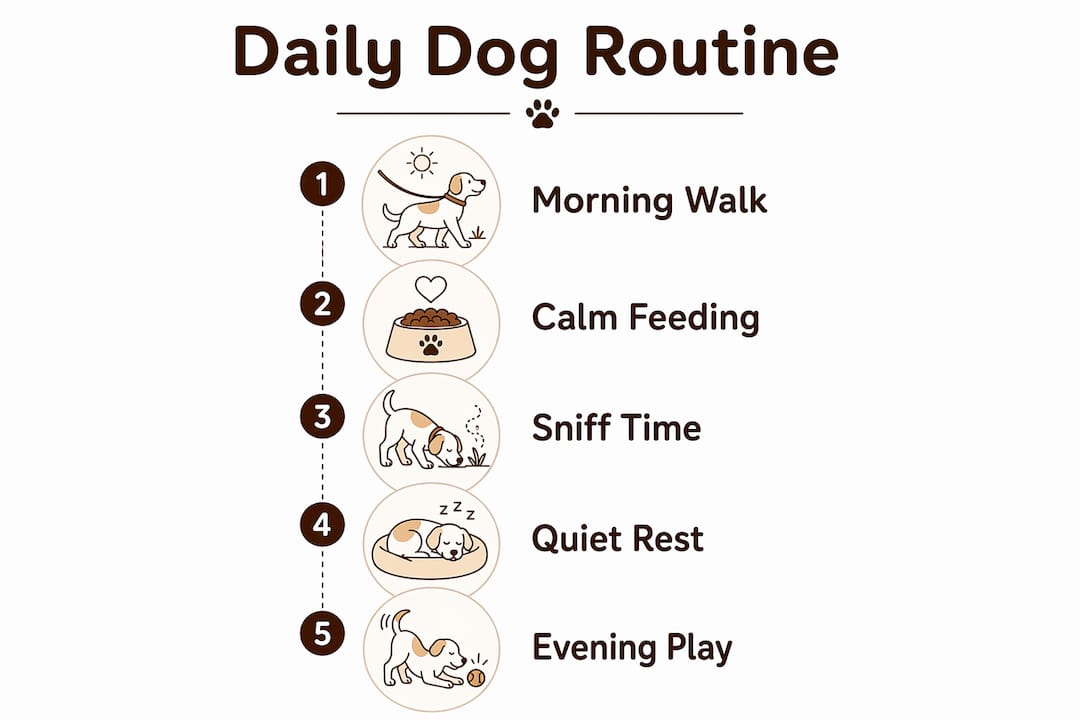
The most effective daily schedule for dog anxiety is built around event order, not rigid clock times. Routine is a sequence of familiar events rather than a military timetable, and that distinction matters for owners whose days are rarely identical.
Core components of a calming daily routine:
Morning walk with sniff time. Start the day with physical movement and dedicated sniffing on a long lead. This sets a lower neurological baseline for the hours ahead.
Consistent meal location and cue. Feed your dog in the same spot, triggered by the same environmental cue (the sound of the food container, for example). Predictable feeding is one of the simplest anxiety anchors available.
Short training sessions. Two sessions of 3–5 minutes focused on known cues like “sit,” “touch,” or “go to mat” build confidence without tipping into frustration.
Scheduled rest with a safe space. Rest is a trained skill for anxious dogs. Guide your dog to their bed or crate after activity, using a consistent cue such as white noise or a specific blanket.
Evening wind-down. Reduce stimulation 1–2 hours before bedtime. Lower the TV volume, avoid rough play, and keep lighting steady.
Consistent bedtime location. Lead your dog to their sleeping spot at the same time each night.
Routine phase | Suggested activity | Anxiety benefit |
Morning | Walk with sniff time on long lead | Lowers cortisol, sets calm baseline |
Post-walk | Breakfast in consistent location | Reinforces predictability |
Mid-morning | Short training session (3–5 mins) | Builds confidence and focus |
Afternoon | Rest period with safe-space cue | Nervous system recovery |
Late afternoon | Second walk or enrichment activity | Physical and mental outlet |
Evening | Wind-down, reduced stimulation | Prepares nervous system for sleep |
Bedtime | Consistent sleep location and cue | Supports sleep quality |
Pro Tip: A lick mat or slow-feeder bowl at mealtimes turns eating into a calming activity rather than a rushed one, lowering arousal before the rest of the day begins.
How to keep your dog’s routine steady when your schedule changes
Life is unpredictable. Work shifts, family visits, and travel all disrupt the clock. The good news is that routine order matters more than exact timing. When events happen in a familiar sequence, your dog’s nervous system relaxes even if the clock has shifted by an hour or two.
Cornell University’s veterinary guidance confirms that maintaining routine stability regardless of owner schedule changes creates a “safe harbour” for dogs. The sequence itself carries the calming signal, not the timestamp.
Practical ways to protect your dog’s routine during busy periods:
Identify three anchor events that stay constant no matter what: a morning toilet break, a meal, and a bedtime cue. These alone provide meaningful structure.
Use environmental cues deliberately. The sound of the food container, the same lead hanging by the door, a specific blanket on the bed. These signals operate below conscious processing in a stressed dog and are more reliable than verbal commands.
Keep the order, not the clock. Wake, toilet, feed, rest. Walk, rest, train. Evening wind-down, bed. The sequence is the routine.
Avoid stacking new stressors. If your schedule is disrupted, hold off on introducing new people, environments, or training challenges until the anchor events are re-established.
Pro Tip: If someone else is walking or feeding your dog during a busy week, write out the sequence of events rather than the times. “Walk first, then feed, then crate” is far more useful to a dog-sitter than “feed at 7:30am.”
You can find more detail on how pre-departure patterns affect anxious dogs in this guide on pre-departure anxiety signals.
Why sniff-walks calm anxious dogs more than fast exercise
Exercise is a neurological reset for a high-arousal nervous system. But not all exercise works equally well for anxiety. Sniff-walks on a long lead engage the brain in focused, natural behaviour that lowers arousal more effectively than a brisk lap around the block.
When your dog sniffs, their brain shifts into a state of concentrated, purposeful engagement. The scanning, vigilant mode that drives anxiety gives way to something more like absorption. A 10–15 minute sniff-walk, where your dog leads the pace and chooses what to investigate, can produce a noticeably calmer dog for the hours that follow.
Fast-paced walks, by contrast, can maintain or even increase arousal in anxious dogs. The physical exertion burns energy but does not necessarily downregulate the nervous system. Think of it this way: a sprint raises adrenaline; a slow, curious wander through interesting smells does the opposite.
How to build sniff-walks into your daily schedule:
Use a long lead (5–10 metres) to give your dog freedom to follow their nose.
Let your dog set the pace. Resist the urge to keep moving.
Choose quieter routes where your dog is less likely to encounter triggers.
Pair the sniff-walk with a post-walk settle routine: guide your dog to their bed with a chew or lick mat immediately on returning home.
For owners building a daily training schedule around their dog’s anxiety, sniff-walks belong in the morning slot where they have the greatest impact on the day’s emotional baseline.
What certified trainers say about routine and nervous system regulation
Routine does not just modify behaviour. It regulates the nervous system, and that distinction changes how you approach an anxious dog entirely. Commands target cognition, but anxiety lives in the nervous system. A dog can follow cues perfectly and still feel unsafe if the day itself feels unpredictable.
At Happy-dogtraining, with over 20 years of science-based, reward-based training experience, the approach starts with establishing predictable patterns before introducing obedience work. The reasoning is straightforward: routine provides safety signals that reduce nervous system activation, creating the calmness in which learning becomes possible. Commands build on top of that foundation. They do not replace it.
Key principles certified trainers apply when building routines for anxious dogs:
Environmental cues over verbal commands. Repeated environmental signals like the sound of a food container or a specific lead operate below conscious processing in a stressed dog. They are more reliable than words when arousal is high.
Routine before training. Obedience sessions work best after the dog feels safe within the flow of the day. Introducing commands into a chaotic environment produces frustration, not learning.
Gradual introduction. New routine elements are added one at a time, with each step repeated until it becomes automatic before the next is added.
Flexibility within structure. A routine so rigid that any deviation causes distress is counterproductive. The goal is a dog who feels secure enough to handle small changes, not one who falls apart when you sleep in on a Sunday.
Consistent owner behaviour. Your dog has catalogued your pre-departure sequence, your tone of voice when you reach for your keys, and the specific way you move before a vet visit. Consistency in your own patterns is as important as consistency in theirs.
If your dog’s anxiety includes separation-related behaviour, routine is particularly powerful because it makes your departures predictable and therefore less threatening.
Does routine work differently depending on your dog’s breed or temperament?
Yes, and understanding this prevents a lot of frustration. The core mechanism is the same across all dogs: predictability reduces nervous system activation. But how quickly a dog responds to routine, and how much structure they need, varies considerably.
High-drive breeds such as Border Collies, Belgian Malinois, and working-line German Shepherds tend to become anxious when under-stimulated rather than over-stimulated. For these dogs, a routine that includes sufficient mental engagement, scent work, and training challenges is as important as physical exercise. A walk alone rarely satisfies them.
Sensitive or soft-natured breeds such as Cavalier King Charles Spaniels, Vizslas, and some Greyhound types often respond quickly to routine but can also become over-attached to it. If every walk is identical and every day perfectly predictable, even a small disruption can feel enormous. Building gentle, manageable variety into an otherwise stable routine helps these dogs develop flexibility alongside security.
Rescue dogs and dogs with trauma histories frequently need longer to trust a new routine. The pattern must be repeated many more times before the nervous system accepts it as reliable. Patience here is not optional. Two or three weeks of consistency may produce little visible change; six to eight weeks often produces a noticeably different dog.
Individual temperament matters as much as breed. A naturally bold, curious dog may need less structure than a naturally cautious one. You can read more about matching training methods to temperament to tailor your approach further.
The practical takeaway: start with the same core structure for any dog, then adjust the depth of mental stimulation, the pace of change, and the tolerance for variation based on what you observe over the first few weeks.
Common mistakes owners make when building routines for anxious dogs
Most owners who try to establish a routine for an anxious dog are doing so with genuine care. The mistakes below are easy to make and equally easy to correct once you know what to look for.
1. Focusing on exact times rather than event order If you feed your dog at precisely 7:30am every day, they will become anxious the moment you sleep in. Prioritise the sequence of events over the clock. “Walk, then feed, then rest” is a routine. “Feed at 7:30am” is a dependency.
2. Skipping the post-activity settle Many anxious dogs lack a natural “off switch.” Without a deliberate settle cue after walks or play, they stay in an elevated state for hours. Guide your dog to their bed with a chew or white noise immediately after stimulating activity.
3. Over-reassuring during anxious moments Excessive soothing when your dog is panicking can reinforce the anxiety rather than resolve it. Calm, matter-of-fact behaviour from you is more helpful than prolonged comfort.
4. Introducing too many changes at once New routine, new training method, new sleeping location, and new family member all in the same week is overwhelming. Change one element at a time and allow it to become familiar before adding the next.
5. Inconsistency across household members Your dog reads patterns from everyone in the home. If one person follows the routine and another does not, the predictability breaks down. A shared, visible schedule, as Dogs Trust recommends, keeps everyone aligned.
6. High-energy play before rest periods Rough play or intense exercise immediately before a scheduled rest period keeps the nervous system activated. Build in a 20–30 minute transition of calm activity between stimulation and expected settling time.
7. Abandoning the routine too quickly A routine will not reduce anxiety in a week. The pattern must be repeated consistently enough for the nervous system to form a genuine predictive association. For many anxious dogs, meaningful change takes 6–8 weeks of reliable repetition.
Ready to build a calmer life for your dog?
At Happy-dogtraining, we work with anxious dogs every day, combining science-based methods with personalised, humane training programmes built around your dog’s specific needs. Whether your dog struggles with reactivity, fearfulness, or separation anxiety, our 4-week intensive programme gives you a structured, expert-guided path to lasting calm. With over 20 years of experience and free lifetime support after training, we are here for the long run, just like a good routine should be.
Key takeaways
Consistent daily routines reduce dog anxiety by giving the nervous system a predictable world to rest in, making routine the single most effective non-medical tool for anxious dogs.
Point | Details |
Event order beats clock times | Familiar sequences calm the nervous system even when timing shifts by an hour or two. |
Sniff-walks outperform fast exercise | Long-lead sniffing lowers arousal more effectively than brisk walking for anxious dogs. |
Rest must be trained | Anxious dogs need a deliberate post-activity settle cue; they rarely downshift on their own. |
Environmental cues beat commands | Repeated physical signals work when verbal commands cannot reach a dog in high arousal. |
Breed and temperament shape the timeline | High-drive dogs need more mental stimulation; rescue dogs often need 6–8 weeks before routine takes hold. |
Recommended
Comments