Set up a home dog training space: 2026 guide
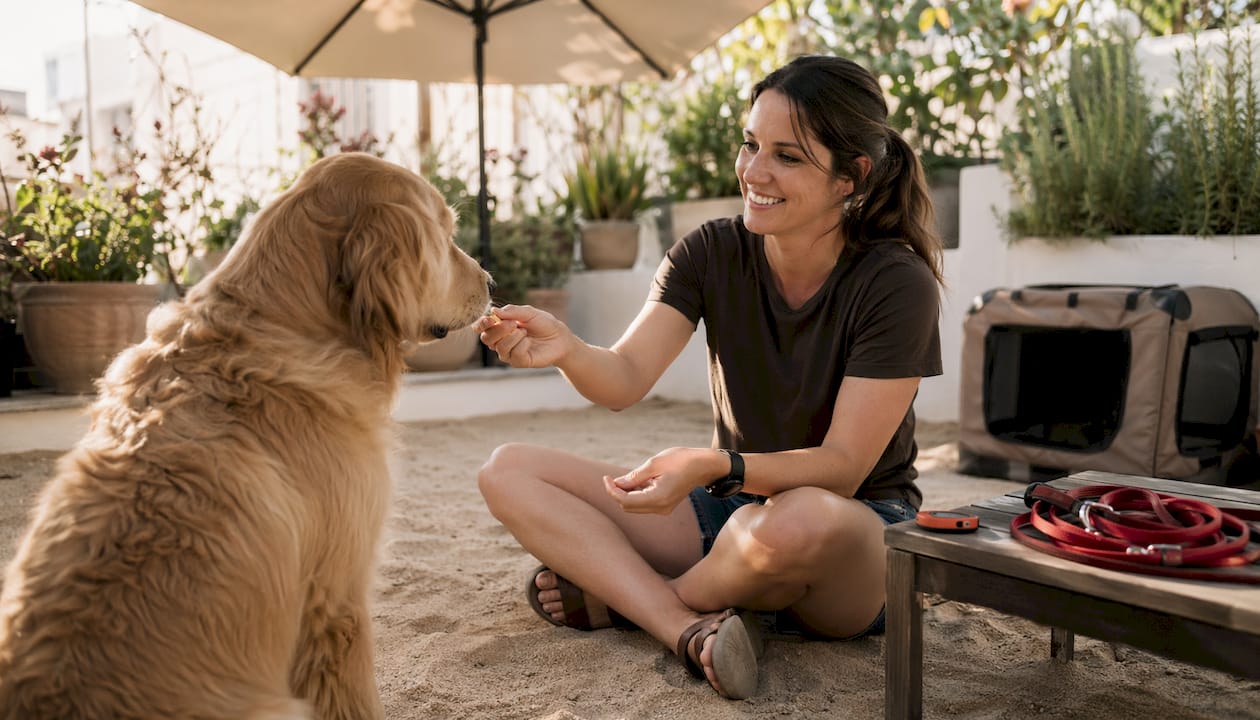
A dedicated home dog training space is defined as a fixed, distraction-minimised area within your home where your dog learns commands, builds confidence, and practises good behaviour consistently. Getting this right matters more than most owners realise. The environment shapes how quickly your dog learns and how much they enjoy the process. When you set up a home dog training space correctly, you give your dog the best possible conditions for success. This guide covers the equipment, location, routine, and troubleshooting advice you need to get started with confidence.
What does an effective home dog training space need?
The physical setup of your training area determines how well your dog can focus and how safely they can move. Positive reinforcement is 2–5 times more effective than punishment for behavioural training at home. That effectiveness depends heavily on having the right tools and space to deliver rewards clearly and consistently.
Essential equipment
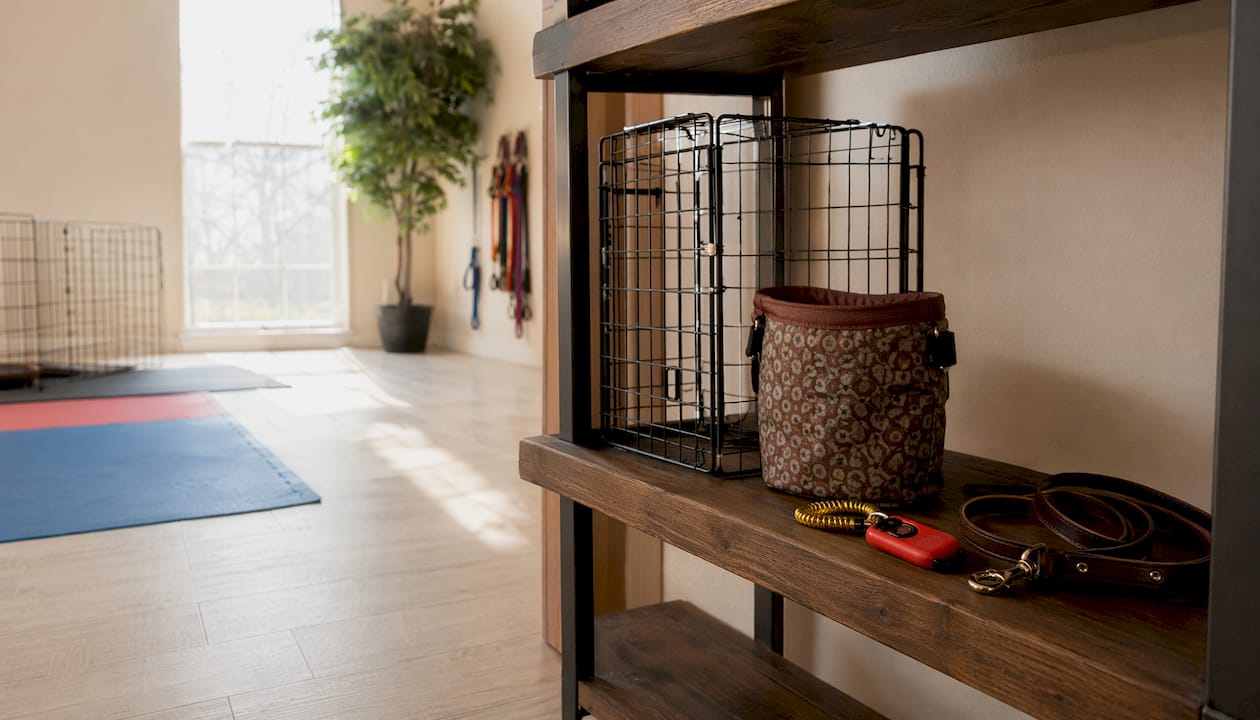
Every home dog training setup benefits from a short list of core items:
Standard 6-foot leash. This gives you control without restricting movement during recall and heel work.
High-value soft treats. Small, soft pieces your dog can eat quickly keep sessions moving without long chewing pauses.
Clicker or marker word. A clicker marks the exact moment your dog performs the correct behaviour. If you prefer, a short word like “yes” works just as well.
Exercise pen. A metal exercise pen creates a controlled training haven that reduces stress and limits environmental unpredictability. The pen must be large enough for your dog to stand fully, turn around, and lie down comfortably, with space for a water bowl and a toy.
Non-slip mat or rubber flooring. Flooring with traction improves safety and confidence during training. Slippery surfaces reduce performance and increase the risk of injury. Yoga mats, rugs, or rubber tiles all work well.
Space requirements at a glance
Feature | Recommendation |
Minimum floor area | Enough for your dog to move freely in all directions |
Flooring | Non-slip mat, rubber tile, or rug over hard floors |
Ventilation | Good airflow; avoid heating vents and drafty windows |
Lighting | Natural light preferred; avoid harsh glare |
Exercise pen size | Large enough for standing, turning, lying, water, and a toy |
Pro Tip: Keep your treat pouch, clicker, and leash in a small basket at the edge of your training space. When everything is ready to grab, you are far more likely to run a session consistently.
Where in your home should the training space be?
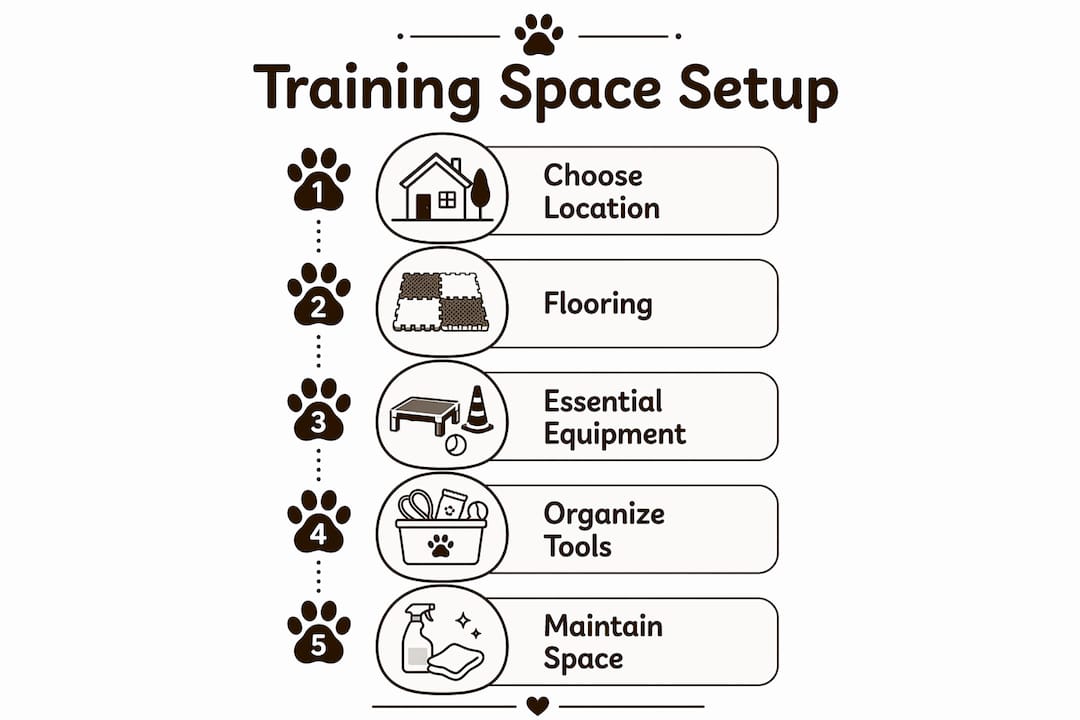
Location is the single most overlooked factor in home dog obedience training. Effective training environments are calm and stable before any challenge is introduced. Choosing the wrong spot, such as a busy hallway or a room next to a noisy road, sets your dog up to fail before a single command is given.
The best spots share these qualities:
Low foot traffic. Avoid corridors, open-plan kitchen areas during meal prep, and rooms where family members pass through constantly.
Away from heating vents and drafty windows. Indoor training zones should avoid these features to reduce anxiety and distraction.
Near family activity, not isolated. Keeping your dog close to the family during pen training reduces separation anxiety and supports learning. A corner of the living room or a quiet section of the dining area works well for this reason.
Natural light. A well-lit space keeps both you and your dog alert and comfortable. Avoid rooms where you need to rely entirely on artificial lighting.
Quiet, but not silent. Complete silence is not the goal. You want a calm baseline, not a soundproofed room. Your dog needs to learn to focus with mild ambient noise present.
Common household spaces that adapt well include a cleared corner of the living room, a spare bedroom with furniture pushed back, or a covered section of a balcony. Basements can work if they are well-ventilated and not damp. The training environment matters far more than its size.
How to organise and maintain your training space
A well-organised space makes consistency easy. Consistency is what produces results. The best home training for dogs follows a clear progression from simple commands to more complex skills, with short sessions repeated regularly.
Follow these steps to build a working routine:
Schedule short, frequent sessions. Short sessions of 5–15 minutes, repeated 2–3 times daily, improve engagement and reduce frustration. Longer sessions lead to mental fatigue and disinterest.
Start with basics and build gradually. A structured 12-week plan progresses from basic commands in early weeks to real-world generalisation by week 12. Begin with sit, down, and stay before moving to recall and loose-lead walking.
Keep the space clean and accessible. Remove soiled mats promptly. Store equipment in the same spot after every session so setup takes under a minute.
Rotate toys and enrichment items. Novelty keeps your dog interested. Swap one toy each week to maintain curiosity without overwhelming the space.
Track progress simply. A small notebook or phone note listing which commands your dog practised and how they responded is enough. You do not need a complex system.
Sample weekly training schedule
Day | Morning session | Evening session |
Monday | Sit, down, stay | Recall practice |
Wednesday | Loose-lead walking | Stay with distance |
Friday | Sit, down, stay review | New command introduction |
Sunday | Free-choice review | Play-based reinforcement |
Pro Tip: Link training to daily routines. Ask for a sit before placing the food bowl down, or a wait before opening the door. Incorporating training into daily routines dramatically boosts behavioural consistency without adding extra sessions to your day.
How do you troubleshoot common home training challenges?
Even a well-designed space produces setbacks. Knowing what to look for makes the difference between a dog that progresses and one that stalls.
The most common issues and their fixes:
Dog loses focus quickly. Shorten the session further. Five minutes of sharp attention beats fifteen minutes of wandering. Check that the treat value is high enough; bland kibble rarely motivates a distracted dog.
Dog shows anxiety in the training space. Move the exercise pen closer to family activity. Pen placement near family areas reduces separation anxiety and supports learning. Never force your dog into the space; let them enter willingly and reward them for doing so.
Commands work at home but not elsewhere. This is context dependency, not a training failure. Start training in low-distraction indoor spaces first, then introduce new environments progressively once commands are solid.
Household members undermine progress. Consistency across all household members using identical commands and rules is the most common factor affecting training success. Hold a brief family meeting to align on cues and rules.
Dog seems bored with the space. Rearrange the layout slightly, introduce a new prop, or change the order of exercises. Small changes refresh the environment without disrupting the routine.
The 3D training progression, covering Duration, Distance, and Distraction, is the most reliable framework for advancing skills without overwhelming your dog. Raise only one variable at a time. Most failures in new environments happen because distractions are too challenging, not because the dog has forgotten the command.
“The training space is not just a physical location. It is the foundation of your dog’s confidence. Get the environment right, and the commands follow far more naturally than most owners expect.”
Key takeaways
A well-chosen, consistently used home training space is the single greatest factor in how quickly your dog learns and how much they enjoy the process.
Point | Details |
Choose the right location | Select a calm, low-traffic spot near family activity to reduce anxiety and maintain focus. |
Equip the space properly | Use a non-slip mat, exercise pen, 6-foot leash, clicker, and high-value treats as your core kit. |
Keep sessions short and frequent | Sessions of 5–15 minutes, 2–3 times daily, produce better results than long infrequent ones. |
Apply the 3D progression | Increase Duration, Distance, and Distraction one at a time to avoid overwhelming your dog. |
Align the whole household | Consistent commands and rules across all family members are the most critical factor in training success. |
What I have learned from watching training spaces in action
After working with dogs and their owners for many years, the pattern I see most often is this: owners invest in good equipment but neglect the environment itself. They buy a quality clicker and premium treats, then practise in the busiest room of the house during the noisiest part of the day. The dog is not failing. The setup is failing the dog.
The owners who see the fastest progress are not always the ones with the most space or the fanciest gear. They are the ones who pick one quiet corner, keep it consistent, and show up every day. A cleared section of a bedroom with a yoga mat and a treat pouch outperforms a purpose-built garden room that gets used twice a week.
One thing I encourage every owner to do is resist the urge to add distractions too early. The 3D framework exists for a reason. When a dog struggles with a command in a new setting, the instinct is to practise harder. The better move is to return to the familiar space, rebuild the behaviour cleanly, and then introduce the new environment gradually. Patience here pays off far more than repetition. If you are finding the home environment genuinely difficult to manage, a fearful dog programme or a structured obedience course can give you the external framework your home setup needs.
— Mark
Professional support for your home training setup
Building a home training space is a strong first step. Pairing it with expert guidance accelerates results significantly.

Happy-dogtraining offers personalised programmes built around your dog’s specific needs, whether that is basic obedience, fearfulness, or more complex behavioural challenges. With over 20 years of experience and AVS-accredited methods, the team provides science-based support that complements everything you build at home. The 4-week intensive obedience programme is a popular choice for owners who want structured, measurable progress alongside their home practice. Every client also receives free lifetime support after training, so the guidance does not stop when the programme ends. Visit Happy-dogtraining to find the right programme for your dog.
FAQ
What is the ideal size for a home dog training space?
The space must be large enough for your dog to move freely in all directions, with room for an exercise pen, a non-slip mat, and you to stand and move. A cleared area of roughly 3 x 3 metres works well for most breeds.
How long should home training sessions be?
Sessions of 5–15 minutes, repeated 2–3 times daily, produce the best results. Shorter, focused sessions maintain your dog’s engagement and prevent mental fatigue far better than single long sessions.
What flooring is best for a dog training area?
Non-slip surfaces are the safest and most effective choice. Yoga mats, rubber tiles, or rugs laid over hardwood or tile floors provide the traction your dog needs to move confidently and safely during training.
Why does my dog perform commands at home but not elsewhere?
This is called context dependency. Dogs learn commands in the environment where they practised them. Train in your home space first, then introduce new locations gradually, keeping distractions low until the command is reliable in each new setting.
How do I keep all family members consistent during training?
Agree on one set of commands and one set of rules before you begin. Write them down and post them near the training space if needed. Consistency across all household members is the most common factor affecting long-term training success.
Recommended
Comments