What is inter-dog aggression: causes and management
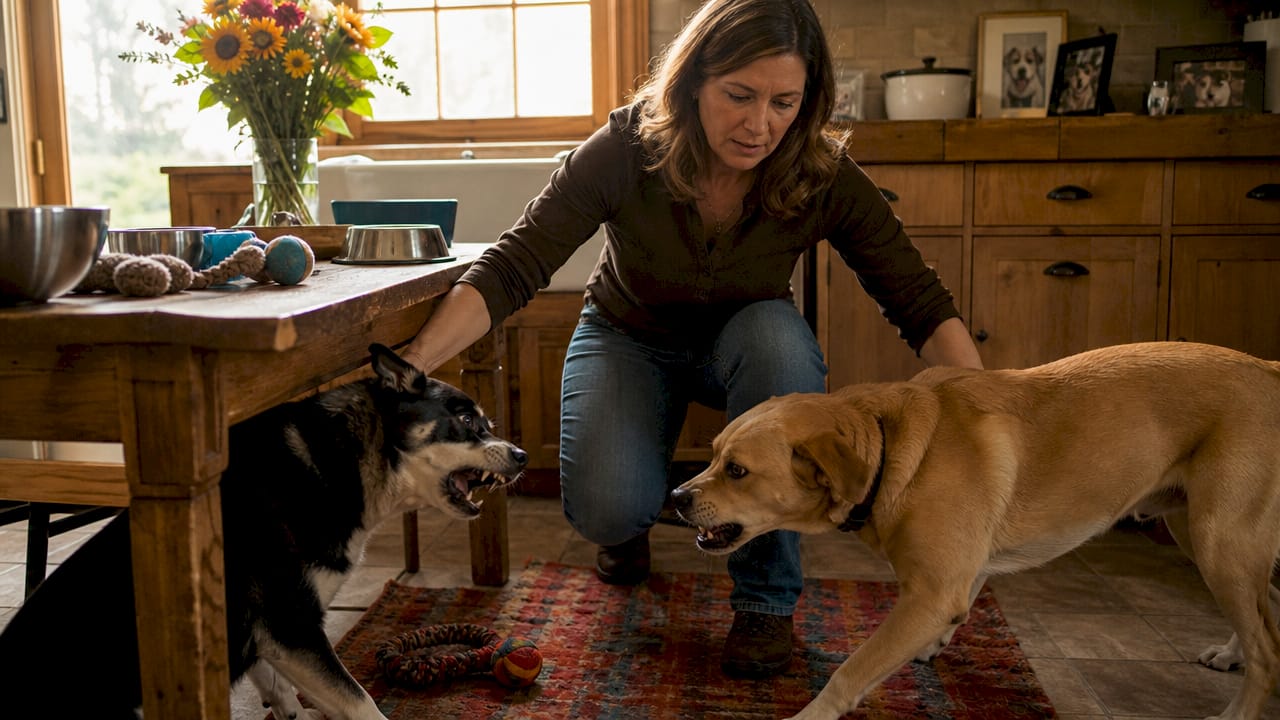
Inter-dog aggression is defined as hostile or threatening behaviour directed by one dog towards another, whether in the same household or towards unfamiliar dogs. The Merck Veterinary Manual recognises it as a functional emotional response, not a permanent personality flaw or a sign of dominance. The American Kennel Club and certified veterinary behaviourists classify it as one of the most common and misunderstood dog aggression types seen in multi-dog homes. Understanding what drives this behaviour is the first step towards helping your dog feel safer and calmer around others.
What is inter-dog aggression and what causes it?
Inter-dog aggression is rooted in emotional states, not bad character. The Merck Veterinary Manual confirms that aggression is a distance-increasing behaviour, meaning a dog uses it to push away something it perceives as a threat. Labelling a dog as “dominant” misses the point entirely and delays effective help.
The most common reasons for dog aggression between dogs include:
Fear and anxiety. A dog that feels cornered, overwhelmed, or unable to escape will often escalate to aggression as a last resort.
Resource guarding. Food bowls, toys, resting spots, and even owner attention can trigger intense competition between dogs sharing a space.
Territoriality. Some dogs guard their home, garden, or sleeping area with significant intensity, particularly when a new dog is introduced.
Communication breakdowns. Owners often overlook the subtle social signals dogs exchange, and when those signals are misread or ignored, conflict escalates quickly.
Medical conditions. Arthritis, vision loss, or chronic pain can reduce a dog’s emotional resilience, making it far more reactive than usual.
Cumulative stress. Minor stressors pile up over hours or days until a dog’s tolerance is exhausted, producing an outburst that seems sudden but was building steadily.
Understanding training fatigue in dogs follows the same principle. Emotional reserves deplete, and the dog reaches a tipping point.
Pro Tip: Watch for subtle stress signals such as yawning, lip licking, or turning away. Catching these early gives you the chance to separate dogs before any conflict begins.
How do you recognise the signs of inter-dog aggression?
Recognising inter-dog behaviour issues early is far easier than managing a full fight. Dogs communicate their discomfort through a clear progression of signals, and learning to read them gives you time to act.
Early warning signs include:
Stiff, rigid body posture with weight shifted forward
Hard, unblinking eye contact directed at the other dog
Raised hackles along the back and neck
Low, sustained growling or a closed, tense mouth
Tail held high and rigid rather than relaxed
These signals are appeasement attempts gone wrong. A dog that is genuinely trying to avoid conflict will show calming signals such as looking away, sniffing the ground, or offering a play bow. When those signals are ignored by the other dog, the situation escalates.
Redirected aggression occurs when a dog cannot reach its original trigger and bites a nearby dog or person instead. This is driven by frustration, fear, or overarousal and is one of the most dangerous patterns in inter-dog aggression cases. A dog barking frantically at a dog outside the window may suddenly turn and snap at the dog standing beside it indoors.
Context matters enormously. The same two dogs that coexist peacefully most of the time may clash when one is unwell, when a visitor arrives, or when feeding time creates competition. Keeping a simple log of when incidents occur helps you identify patterns and triggers far more reliably than memory alone.
How do you safely manage and intervene in dog aggression incidents?
Safe management starts before any fight occurs. Prevention through environment and routine management is vastly more effective than relying on fight intervention skills, and far less dangerous for everyone involved.
Step one: veterinary assessment
A professional veterinary assessment of 30–60 minutes is essential to rule out medical drivers such as arthritis, which can halve a dog’s emotional resilience. Pain changes behaviour in ways that no amount of training can fully address. Book this before starting any behaviour programme.
Environmental management strategies
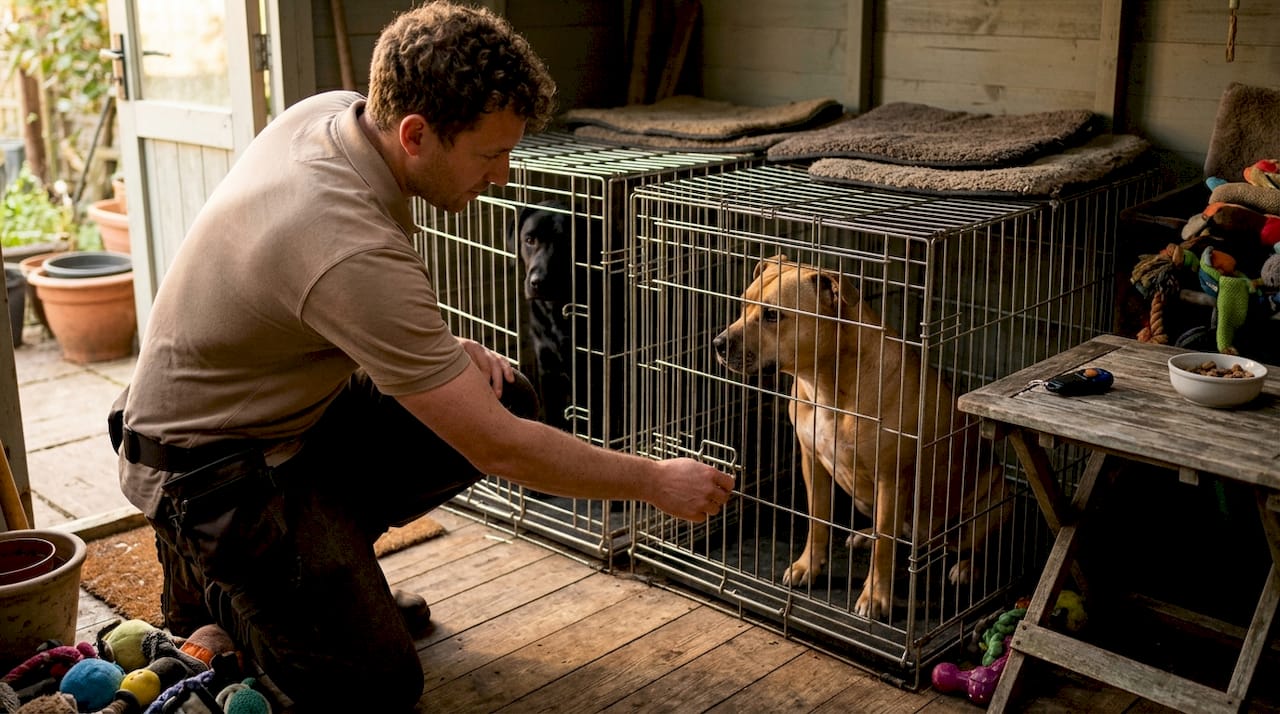
Crate-and-rotate and trigger removal are the two most practical tools for reducing conflict at home. Crate-and-rotate means dogs share the space at different times, removing the opportunity for confrontation while behaviour work progresses. Removing triggers means feeding dogs separately, providing multiple water bowls, and ensuring each dog has its own resting area.
Strategy | Benefit | Safety consideration |
Crate-and-rotate | Eliminates direct conflict during modification | Requires consistent routine to avoid frustration |
Separate feeding stations | Removes resource guarding trigger | Must be maintained permanently in some households |
Baby gates and barriers | Allows visual contact without physical access | Ensure barriers are tall and secure enough |
Auditory distraction | Can interrupt early-stage conflict | Works best before full arousal, not mid-fight |
External barrier during a fight | Safest physical intervention method | Requires a solid object such as a board or bin lid |
How to handle dog fights safely
The safest method to break up a dog fight is using an external barrier or a loud, sudden noise such as a horn or clapping. Direct physical contact puts you at serious risk of a redirected bite. The wheelbarrow technique, where two people each grab a dog’s hind legs, carries significant injury risk and should only be attempted by trained two-person teams as a last resort. Grabbing collars is particularly dangerous and is not recommended.
Pro Tip: Keep a large piece of cardboard or a folded exercise mat near areas where your dogs interact. Sliding it between two dogs in conflict is far safer than using your hands.
What training strategies help dogs coexist long-term?
Behavioural modification is the foundation of long-term management. Positive reinforcement, counterconditioning, and desensitisation are the science-based methods with the strongest evidence behind them. Punishment-based approaches increase anxiety and fear, which are the very emotions driving the aggression in the first place.
Effective training strategies for dogs with aggression issues include:
Desensitisation. Gradually expose your dog to the trigger at a distance where it remains calm, then slowly reduce that distance over many sessions.
Counterconditioning. Pair the presence of the other dog with something your dog loves, such as high-value treats, to change the emotional association from threat to reward.
Marker training. Use a clicker or a verbal marker to precisely mark calm behaviour around other dogs, building a clear communication channel.
Threshold management. Keep your dog below its reactivity threshold during every training session. Progress made above threshold does not stick.
Individualised plans. Every dog has a unique trigger history. A plan built around your dog’s specific patterns produces far better results than a generic programme.
Working with a certified dog behaviourist is not a sign of failure. Treatment plans typically require multi-month commitments and professional guidance to succeed. Attempting to rush the process or skip steps leads to setbacks that can take weeks to recover from.
Emotional resilience in dogs can genuinely be rebuilt. The science is clear that emotional states driving aggression can be modified with the right approach, patience, and consistency. Dogs that once lunged and snapped at every passing dog can learn to walk calmly with proper support.
Key takeaways
Inter-dog aggression is a fear-driven, emotionally rooted behaviour that responds well to science-based management, veterinary assessment, and consistent environmental controls.
Point | Details |
Aggression is emotional, not dominant | Dogs use aggression to increase distance from threats, not to control others. |
Cumulative stress causes outbursts | Minor daily stressors build up and can tip a dog into aggression unexpectedly. |
Vet assessment comes first | Rule out pain and medical conditions before starting any behaviour programme. |
Prevention beats intervention | Environmental management reduces conflict more safely than breaking up fights. |
Science-based training works | Counterconditioning and desensitisation change emotional responses over time. |
What I have learned from working with inter-dog aggression cases
After years of working with dogs that lunge, snap, and fight, the pattern I see most often is this: owners wait too long. They dismiss the first growl as a one-off. They separate the dogs after a scuffle and assume it is resolved. By the time they seek help, the behaviour is deeply practised and the dogs have learned that aggression works.
The single most useful shift I have seen owners make is stopping the search for a dominant dog and starting to ask, “What is my dog feeling right now?” That question changes everything. It moves you from punishment to curiosity, and from frustration to genuine problem-solving.
Rushing reintroductions is the other common mistake. Two dogs that had a serious fight need weeks of careful, structured management before they share space again. Forcing them together too soon, even with the best intentions, resets progress and damages trust on both sides.
The good news is real. Dogs are not fixed in their emotional responses. With the right support, a multi-disciplinary approach involving your vet, a certified trainer, and consistent environmental management, most cases improve meaningfully. Celebrate the small wins. A dog that used to react at 10 metres now passing calmly at 8 metres is genuine progress. Hold onto that.
— Mark
Professional support for dogs with aggression issues
Managing inter-dog aggression at home is hard work, and you do not have to do it alone.
Happy-dogtraining offers aggressive behaviour consultations led by a certified, AVS-accredited trainer with over 20 years of experience in Singapore. Each consultation is personalised to your dog’s specific triggers, history, and household setup. For dogs that need structured group work alongside other dogs, the reactive dog class provides a safe, controlled environment to practise calm behaviour. Every programme includes free lifetime support after training, so you are never left managing setbacks on your own.
FAQ
What is inter-dog aggression exactly?
Inter-dog aggression is hostile or threatening behaviour directed by one dog towards another. It is driven by emotional states such as fear, anxiety, or resource competition, not dominance or bad temperament.
Can inter-dog aggression be cured?
Full resolution is not guaranteed, but significant improvement is achievable in most cases. Science-based methods including counterconditioning and desensitisation can change the emotional responses driving the behaviour over time.
Why do dogs that live together suddenly start fighting?
Cumulative stress, changes in routine, medical conditions, or a new trigger in the environment can tip a dog over its tolerance threshold. What looks sudden to owners has usually been building gradually through smaller stressors.
Is it safe to break up a dog fight yourself?
Direct physical contact during a dog fight carries a serious risk of redirected bites. The safest approach is using an external barrier or a loud noise to interrupt the fight without putting your hands near either dog.
When should I seek professional help for dog aggression?
Seek professional help after the first serious incident, not after repeated ones. A veterinary check followed by a consultation with a certified behaviourist gives you the clearest picture of what is driving the behaviour and the safest path forward.
Recommended
Comments