What is predatory drift in dogs, and how do you spot it?
- Mark McDade
- 1 day ago
- 10 min read
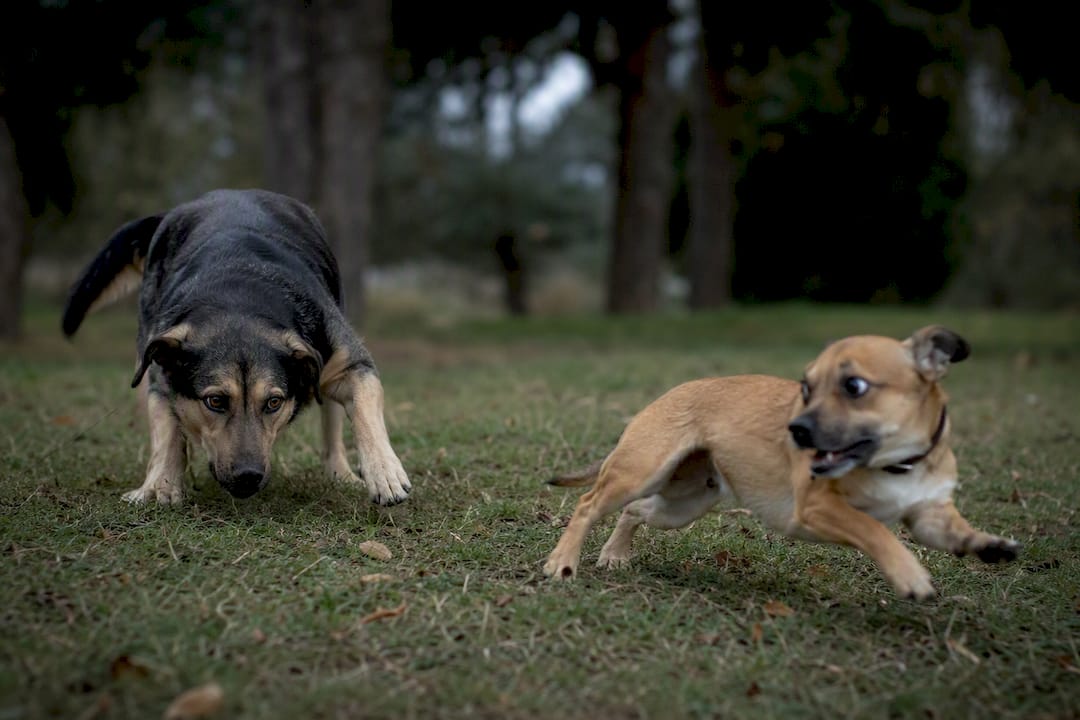
Predatory drift is a sudden switch from normal play into a prey-driven hunting sequence, triggered by movement, sound, or size difference rather than anger or dominance. It’s not aggression in the way most owners understand the word. There’s no grudge, no build-up of frustration, no warning growl that escalates over minutes. One second, two dogs are wrestling happily. The next, one dog’s brain has flipped into “chase and catch” mode, and the other dog is the target.
Here’s the safety verdict you need first: if you see the switch happen, you interrupt calmly and separate the dogs immediately. You don’t wait to see how it plays out, and you don’t reach in with your hands.
Predatory drift can happen in any dog, regardless of how sweet or well-trained they are day to day, because it taps into an instinct that predates domestication itself.
What should you actually do if you suspect it’s starting?
Supervise every multi-dog play session, especially with new playmates or a size gap.
Interrupt early, before a chase becomes locked in.
Separate by size where you can, particularly at dog parks with mixed groups.
Remove the smaller or more vulnerable dog from the situation rather than trying to reason with the pursuing dog mid-chase.
Pro Tip: Watch for the moment play goes silent. Noisy, bouncy play is usually safe. A sudden hush, paired with a locked stare, is often the first visible sign of the switch.
Predatory drift can be sparked by fast movement, high-pitched squeals, or one dog appearing more prey-like than playmate-like, and multiple dogs can amplify each other’s arousal in a way that makes the risk far higher in group settings than one-on-one play. Understanding predatory drift starts with accepting that it’s a wiring issue, not a character flaw in the dog who does it.
Key Takeaways
Predatory drift is a sudden, prey-driven switch from play into a hunting sequence, and supervision plus early interruption remain the most effective safeguards against it.
Point | Details |
Definition matters | Predatory drift is prey-driven, not spiteful, triggered by arousal rather than dominance or grudges. |
Watch the sequence | The search, approach, chase, bite pattern shows how far arousal can push a dog past normal play. |
Know the triggers | Fast movement, squeals, and group arousal are the most common sparks for a dangerous switch. |
Act fast, act calm | Scatter treats, call calmly, and use barriers rather than grabbing collars or hands. |
Manage, don’t cure | Structured outlets and supervision work; expecting the instinct to disappear does not. |
Get expert support | Happy-dogtraining offers behaviour consultations and AVS-approved training to build a plan around your dog’s specific triggers. |
Table of Contents
How predatory drift connects to prey drive and the predatory sequence
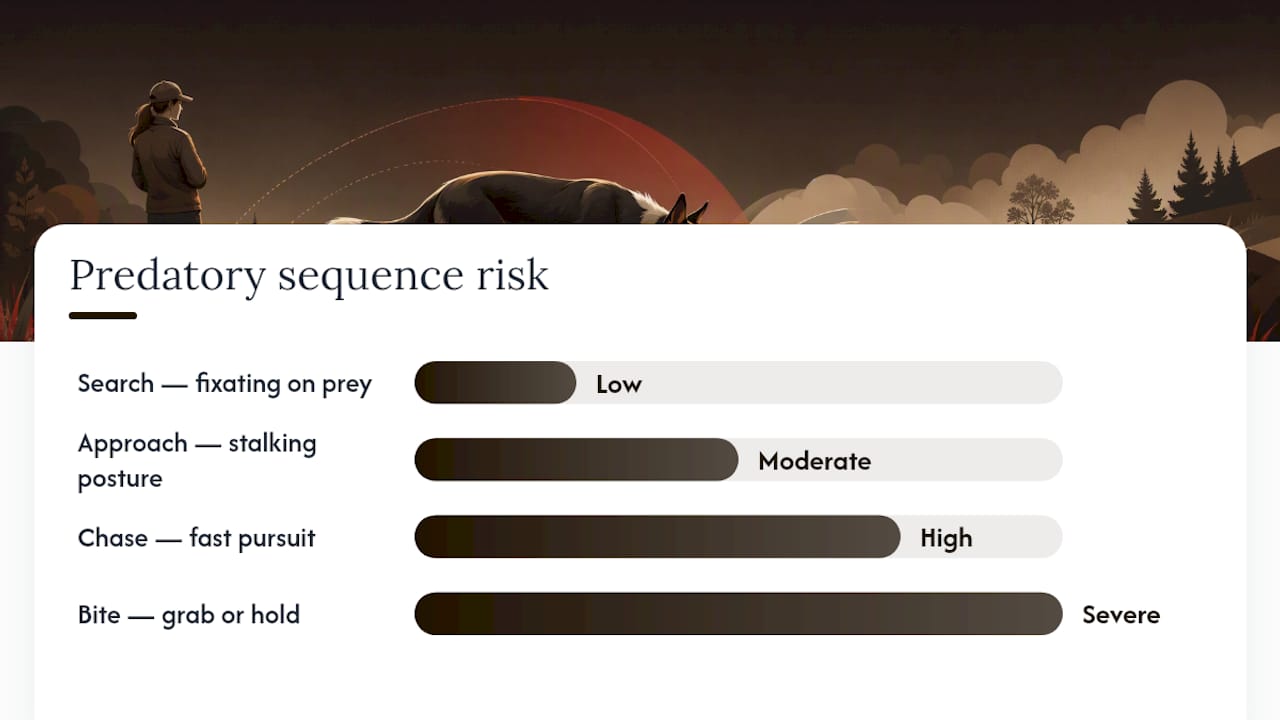
Every dog carries some version of prey drive, an instinct built from thousands of years before dogs slept on sofas. Researchers describe it as a sequence with four recognisable stages: search, approach, chase, and bite. In wild canids, that sequence ends in a kill. In your living room or the local park, it’s usually interrupted early, showing up as a dog fixating on a squirrel, stalking a rolling ball, or lunging at a jogger’s ankles.
Most pet dogs only display fragments of this sequence, and breeding has softened or exaggerated different pieces of it depending on the job a breed was created for. Some breeds bred to dispatch vermin often show a strong bite-oriented drive. Some bred to run down game show an intense chase response but weaker interest in the bite itself. Domestic play usually stays in the search-and-chase zone, which is why rough-and-tumble games look playful rather than predatory.
The problem starts when arousal climbs high enough to push a dog further along that sequence than it would normally go. A peer-reviewed ethogram study documents this four-phase pattern across breeds, giving behaviourists a shared vocabulary for what’s actually happening when play tips over.
High arousal doesn’t create a new behaviour out of nowhere. It simply completes a sequence the dog was already partway through, at a speed too fast for owners to catch in the moment.
Sequence phase | What it looks like in play | Risk when arousal spikes |
Search | Scanning, sniffing, watching movement | Low on its own |
Approach | Stalking posture, fixed attention | Moderate, often mistaken for focus |
Chase | Fast pursuit, tunnel vision | High, especially with a fleeing dog |
Bite | Grab, shake, or hold | Severe, can cause real injury |
PetMD’s summary of prey drive makes a useful point: any dog can display parts of this sequence, and it’s the arousal level, not the dog’s temperament, that decides how far it goes.
Typical triggers and immediate causes to watch for
Predatory drift rarely appears out of thin air. It’s almost always set off by something specific, and once you know the pattern, you’ll start spotting it before it escalates.
Frantic movement, especially a dog running away in genuine fear or panic rather than playful zoomies.
High-pitched yelps or squeals, which mimic the sound of injured prey and can flip a chasing dog’s focus instantly.
Sudden starts, slips, or falls, where a dog’s abrupt loss of control reads as vulnerability to onlookers.
Toy noises or novel prey-like stimuli, such as squeaky toys, that keep arousal climbing during a game.
Competitive play where several dogs chase the same toy or dog, pushing everyone’s excitement higher.
Group arousal, sometimes called social facilitation, where one dog’s excitement spreads through the whole group like a spark catching dry grass.
This last trigger is worth taking seriously. Vetstreet’s guidance on dog park behaviour notes that multiple dogs can effectively gang up on one, not out of coordinated malice, but because each dog’s arousal feeds off the others until the group is chasing a single target.
If you notice several of these triggers stacking up at once, a squealing small dog running from a group of larger, aroused playmates, treat it as your cue to step in, not wait and watch.
Behavioural red flags during play: what to watch for
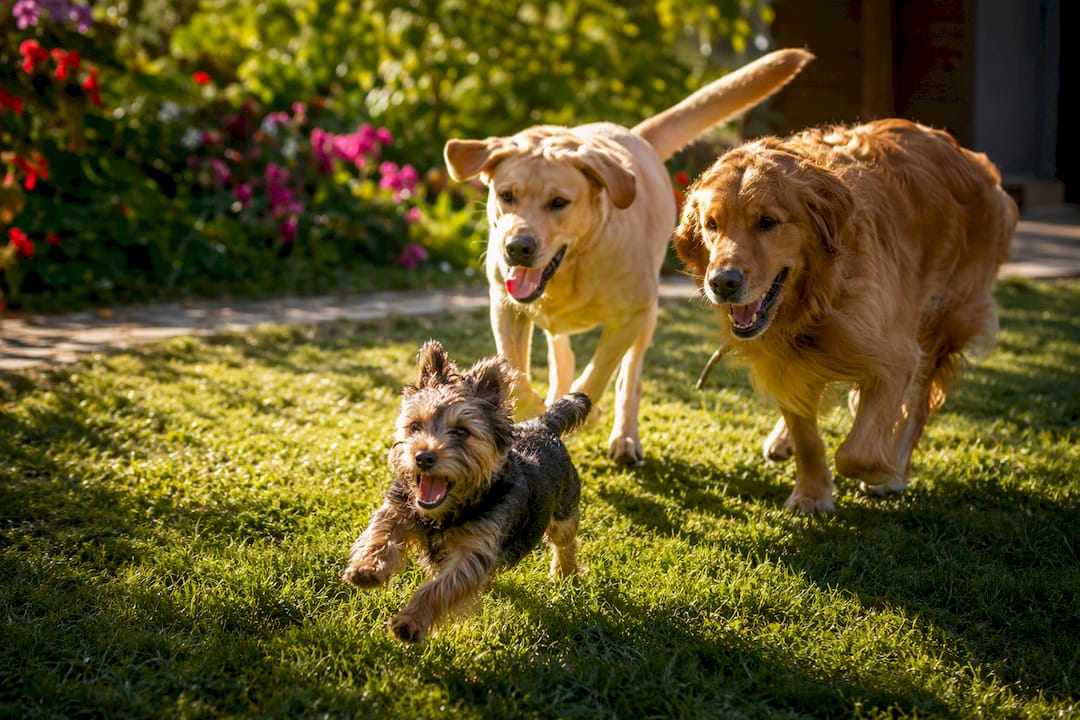
Reciprocal play looks messy but balanced. Dogs take turns being chased, roles swap, mouths stay open and loose, and there are natural pauses. Predatory drift looks different, and once you’ve seen the contrast, you won’t unsee it.
Watch for these signs:
Quiet focus replaces noisy play. Barking and growling stop; the pursuing dog goes silent and locked on.
The stare fixes on one point. Rather than glancing around, the dog’s eyes track a single target without breaking.
The mouth closes. Open, relaxed jaws during play tighten into a closed, purposeful set.
Movement becomes efficient rather than bouncy. Play bounces waste energy on purpose; predatory movement doesn’t.
Role reversal disappears. One dog is always fleeing, never chasing back, and shows real distress, yelping, tucking, trying to climb up something or someone to escape.
Here’s a fast, practical check: pause the interaction for three seconds, by stepping between the dogs, making a noise, or calling one away. If both dogs relax, glance around, and want to reset the game, it was almost certainly play. If one dog doesn’t stop scanning for the target and the other stays frozen or tries to flee, treat it as a genuine red flag and separate them.
Pro Tip: Film a session on your phone if you’re unsure. Slowed-down footage often reveals the closed mouth and locked stare far more clearly than watching in real time.
Risk factors that raise the stakes
Not every predatory drift incident carries the same consequences, and knowing your risk profile helps you decide how strictly to manage a given play session.
Size mismatch tops the list. A larger dog doesn’t need to intend harm to cause serious injury; weight and jaw strength alone can turn a switch into a medical emergency.
Adolescence brings impulse control that hasn’t caught up with physical capability, making teenage dogs (roughly six months to two years) more prone to arousal spikes.
Exhaustion and overstimulation lower a dog’s ability to self-regulate, so drift often shows up late in a long, high-energy play session rather than at the start.
Functional breed tendencies matter too. Breeds developed for chasing or catching, sighthounds, some terriers, certain working types, carry a stronger baseline chase response, though individual variation is significant.
Bite inhibition varies widely between dogs and isn’t reliably predictable from breed alone, which is part of why supervision matters more than assumptions.
Immediate safety actions: how to interrupt and separate safely
When you see the signs building, calm and quick action matters far more than force. Panicking, shouting, or grabbing tends to raise arousal further rather than defuse it.
Scatter a handful of treats on the ground between or near the dogs. The sudden change in focus, food on the floor, often breaks a chase faster than yelling ever will.
Clap sharply or call a dog’s name in an upbeat, familiar tone rather than a panicked one; a startle response can interrupt the fixation.
Use a long leash or drag line to retrieve a dog from a distance if one is trailing, rather than reaching directly for a collar.
Create a physical barrier where possible, a door, a body-blocking stance, or an object placed between the dogs.
Separate using the “wheelbarrow” technique as a last resort, where two people each lift a dog’s back legs to physically move them apart, but only with training and only if there’s real danger, since it carries its own injury risk to handlers.
Avoid grabbing collars or putting your hands between two aroused dogs. Redirected bites happen fast, and hands are exactly where teeth end up. Guidance from experienced trainers consistently warns against reaching between dogs mid-chase, recommending distraction and distance instead.
Pro Tip: Keep a small bag of high-value treats in your pocket at every group play session, not just for training. It’s the fastest interruption tool you’ll have on hand.
Once dogs are separated, check the smaller or targeted dog thoroughly for puncture wounds, which can look minor on the surface but run deep; if needed, consult a veterinary professional for a thorough checkup. Any bleeding that won’t stop, limping, or visible shock means a vet visit, ideally the same day. Even a “no damage” outcome deserves a calmer, size-appropriate play setup next time.
Long-term management and training to reduce recurrence
A single scary incident doesn’t mean your dog is dangerous forever, but it does mean the current play setup needs changes. Long-term management for predatory drift centres on control, not punishment.
Set clear supervision rules: no unsupervised multi-dog play, ever, and size-segregated groups where a real mismatch exists.
Train a rock-solid emergency recall, practised regularly in low-distraction settings so it holds up under real arousal.
Build a strong “leave it” or an alternative interrupt cue, reserved for genuine emergencies so it keeps its power.
Channel the drive into structured outlets: flirt pole games, tug with rules, scent work, or dog training approaches shaped around temperament that give a high-drive dog a legitimate, satisfying job.
There is no reliable way to erase a hard-wired prey drive, and pretending otherwise sets owners up for disappointment. Whole Dog Journal’s guidance on highly predatory dogs is blunt about this: management and structured outlets work; hoping the instinct disappears does not.
Converting raw chase energy into a controlled sport or toy-based game gives a dog a reliable, satisfying reward while keeping the owner firmly in charge of when and how it happens.
Owners managing a dog with a strong prey response often benefit from threshold management techniques originally developed for reactivity work, since the underlying skill, recognising arousal before it peaks, transfers directly. A behaviour consultation adds an outside eye that spots patterns you’re too close to see, and builds a plan specific to your dog’s triggers rather than generic advice.
When to seek professional help
Some situations call for expert eyes rather than more DIY management. Reach out to a qualified trainer or behaviourist if you notice:
Repeated close calls, even without injury, especially with the same dog or trigger pattern.
Any incident causing serious injury, which needs both veterinary care and a behaviour plan before further group play happens.
Tunnel vision that’s hard to interrupt, where your usual tools (treats, recall, name calls) stop working.
Family safety concerns, particularly with children present during play.
A proper assessment typically includes a medical check to rule out pain-driven reactivity, a review of video footage if available, and a written management and training plan tailored to your dog. Expect a focus on realistic, management-based outcomes rather than promises to eliminate the instinct altogether.
Why owners shouldn’t blame the dog
Predatory drift unsettles owners because it feels like a betrayal, as if a dog you trust suddenly turned into something else. It hasn’t. What’s changed is arousal, not character, and that distinction matters for how you respond afterwards.
I’d argue the biggest mistake owners make isn’t missing the warning signs; it’s the guilt spiral that follows an incident, which often leads to either over-punishment or avoidance rather than structured management. Neither helps. Happy-dogtraining’s science-based approach, built over 20 years of AVS-accredited behaviour work, treats predatory drift as a solvable management problem, not a moral failing in the dog. Supervision, honest risk assessment, and channelling that drive into something the dog can actually do well will get you further than any amount of self-blame.
How Happy-dogtraining helps you manage predatory drift safely
If your dog has shown any signs of predatory drift, whether that’s a locked stare at the park or a genuine near-miss with another dog, guesswork isn’t a strategy. Happy-dogtraining brings over 20 years of hands-on, AVS-accredited behaviour work to exactly this kind of problem, building a management plan around your dog’s specific triggers rather than generic advice pulled from a forum.
A behaviour consultation typically starts with understanding what’s actually setting your dog off, whether that’s size mismatch, group arousal, or specific movement cues, then builds a practical plan around it. For dogs that struggle specifically around other dogs, the dog reactive class gives structured, supervised exposure rather than trial and error at the park. Owners wanting a broader obedience foundation alongside behaviour work often start with the AVS-approved four-week intensive programme, which builds the recall and impulse control that make emergency interruptions actually work. Every client also gets free lifetime support after training finishes, so questions that come up months later don’t go unanswered. Book a consultation through Happy-dogtraining to get a plan built around your dog rather than a checklist that assumes every dog is the same.
Sources
Recommended
Comments