Shaping behaviour in dogs: a practical guide for owners
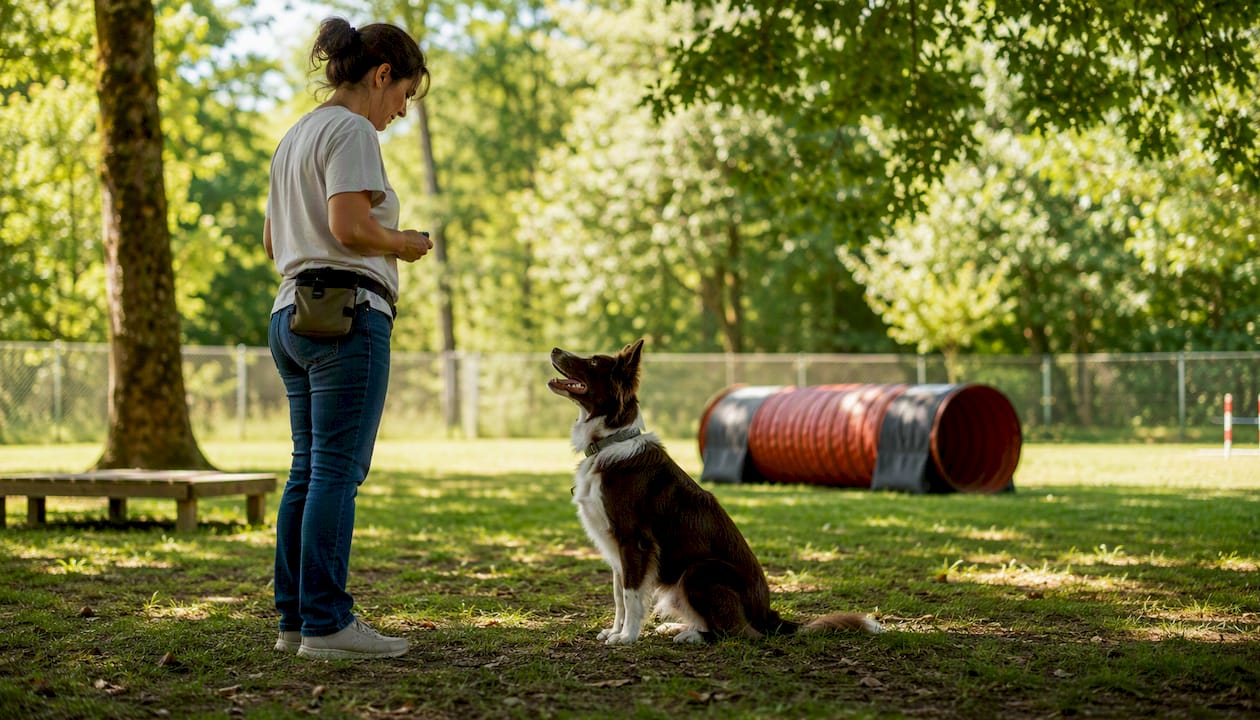
Shaping is a reward-based training method that builds a new behaviour by reinforcing tiny, successive steps until the full action emerges naturally. Rooted in B. F. Skinner’s operant conditioning research, it is the technique behind everything from a simple paw wave to complex sports foundations, and the Merck Veterinary Manual recognises it as a science-backed behaviour modification approach. If you want to understand what shaping behaviour in dogs really means and how to use it today, here are three things to do right now:
Pick one clear goal. Choose a single, specific end behaviour (for example, both front paws on a low platform).
Choose a marker and tiny reinforcers. A clicker or a short verbal cue such as “yes” paired with pea-sized, high-value treats gives you the precision shaping needs.
Run short trials lasting a few minutes each. Keep sessions brief and frequent rather than long and occasional.
Shaping is especially well-suited to behaviours your dog does not already offer spontaneously, and it is one of the kindest tools available for building confidence in shy or anxious dogs. Happy-dogtraining uses it as a core part of personalised programmes precisely because it rewards effort rather than demanding perfection.
Key takeaways
Shaping builds reliable, confident behaviour by reinforcing successive small steps, and its effectiveness depends on precise marking, short frequent sessions, and the willingness to split criteria smaller whenever progress stalls.
Point | Details |
Mark with precision | Use a clicker or verbal marker within one to two seconds of the target behaviour. |
Keep sessions short | Three to five minutes per session, several times a day, outperforms one long session. |
Split, never lump | If the dog stalls, break the current step into a smaller increment and rebuild fluency. |
Reward effort, not perfection | Reward movement in the right direction early; raise the standard gradually as confidence grows. |
Generalise deliberately | Once a behaviour is reliable at home, practise in new environments to build true fluency. |
Table of Contents
What is shaping behaviour in dogs, and why does it work?
The theoretical roots sit firmly in operant conditioning, the learning framework B. F. Skinner developed in the mid-twentieth century. The core principle is straightforward: behaviours that produce a pleasant outcome become more frequent. Positive reinforcement is the specific mechanism at work during shaping. Each time you mark and reward a small step toward your goal, you increase the likelihood that the dog will repeat and extend that step.
What makes shaping distinct is the concept of successive approximations. Rather than waiting for the complete behaviour to appear, you reward any movement in the right direction, then gradually raise the standard. Trainers call this “splitting not lumping.” Lumping means waiting for a large chunk of behaviour before rewarding; splitting means breaking the goal into the smallest possible increments and rewarding each one. The Whole Dog Journal describes this as reinforcing closer and closer approximations until the desired behaviour becomes fluent.
A typical chain of micro-steps for teaching a dog to touch a target with its nose might look like this:
Dog glances toward the target → mark and reward.
Dog turns its head toward the target → mark and reward.
Dog takes one step toward the target → mark and reward.
Dog sniffs near the target → mark and reward.
Dog touches the target with its nose → mark and reward.
There is an important emotional dimension here too. Because the dog is actively problem-solving rather than following a lure, shaping builds genuine confidence. A dog that has learned to offer behaviours to earn rewards becomes curious and engaged, which is particularly valuable for fearful dogs who might shut down under pressure.
How does shaping actually work in a session?
The marker is the single most important tool in your kit. Whether you use a clicker or a verbal cue, its job is to act as a precise bridge between the moment the dog does the right thing and the moment the treat arrives. Without a marker, the dog cannot tell which fraction of its movement earned the reward. AKC guidance stresses that using a marker and adjusting your plan on the fly when the dog stalls are both non-negotiable skills for effective shaping. For a deeper look at how markers function, the guide on marker training for dog owners covers the mechanics in full.
Timing matters enormously. The mark should land within one to two seconds of the target behaviour. Deliver the treat within a few seconds of the mark. Delays longer than that blur the connection between behaviour and reward, and the dog starts guessing.
Reinforcement schedules shift as training progresses:
Early phase: Reward every single correct approximation (continuous reinforcement). The dog needs to understand what earns the click.
Middle phase: Once a step is reliable, begin rewarding roughly every second or third correct response before raising the criterion.
Late phase: Move to a variable schedule once the full behaviour is fluent. Variable reinforcement maintains behaviour strongly over time.
Common timing errors and quick corrections:
Marking the wrong moment (e.g. clicking as the dog looks away): pause, reset, and wait for the correct movement before marking again.
Delayed reward delivery: pre-load treats in your dominant hand so you can deliver within two seconds of the click.
Clicking too slowly: practise your click-and-treat sequence without the dog first until the motion is automatic.
Rewarding position rather than movement: mark the instant of movement, not the static end position, during early steps.
Pro Tip: Cut treats to the size of a pea or smaller before the session starts. Tiny treats mean you can reward twenty or thirty times in a five-minute session without overfeeding, and the dog stays hungry enough to stay motivated.
How to plan a productive shaping session
Good sessions do not happen by accident. A short checklist before you start saves a lot of frustration mid-session.
Choose your environment. Low distraction for new behaviours; gradually add distractions once the behaviour is reliable.
Set a single, specific goal for this session. Not “teach the wave” but “reward any paw lift above knee height.”
Prepare your marker. Clicker loaded, or verbal cue rehearsed.
Portion your treats. Weigh or count them in advance so you know when the session should end, and keep total treat weight within your dog’s daily calorie allowance.
Decide your exit criterion. What does success look like today? Write it down before you start.
Set a timer. Three to five minutes per session is enough for most dogs, especially puppies or anxious dogs.
PetMD recommends fast, frequent marking and tiny, high-value treats so shaping can be repeated many times without filling the dog. Short, frequent sessions across the day outperform one long session every few days.
For tracking, keep a simple note after each session:
Date and session number.
The specific criterion you were working on.
How many successful repetitions you got.
Whether you raised, held, or lowered the criterion.
Any observations about the dog’s energy or focus.
This record helps you spot patterns: if you have been stuck on the same step for three sessions, it is a clear signal to split that step smaller. For more on structuring home practice, best practices for home obedience training offers a useful framework.
Three shaping walkthroughs you can try at home
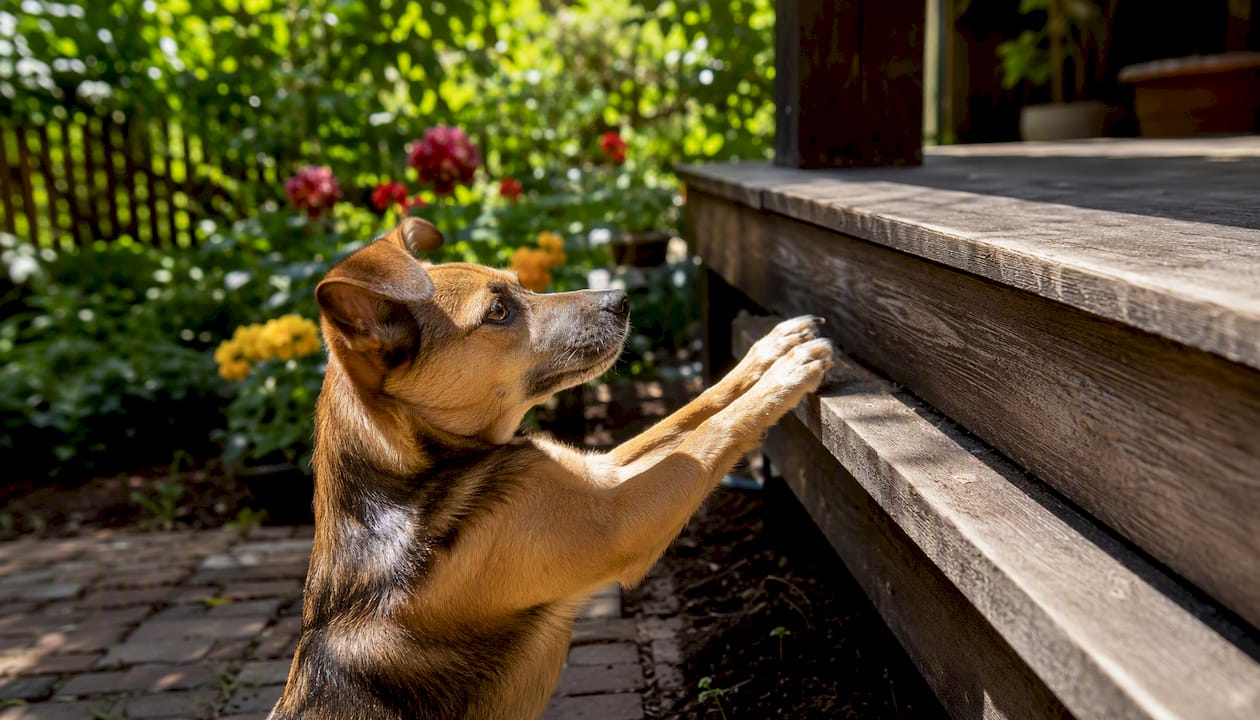
Example 1: Front paws on a platform
Goal: Both front paws resting on a low, stable platform (a book, a low step, or a purpose-made paw target).
Place the platform on the floor. Mark and reward any glance toward it.
Mark and reward a step toward it.
Mark and reward sniffing or nosing it.
Mark and reward one paw touching it.
Mark and reward one paw resting on it.
Raise the criterion: both paws on.
Progression criterion: Three reliable repetitions of one paw on the platform before moving to two paws.
Troubleshooting: If the dog ignores the platform after a few sessions, make it more interesting by placing it on a different surface or briefly moving it. Do not lure with food onto the platform; let the dog discover it.
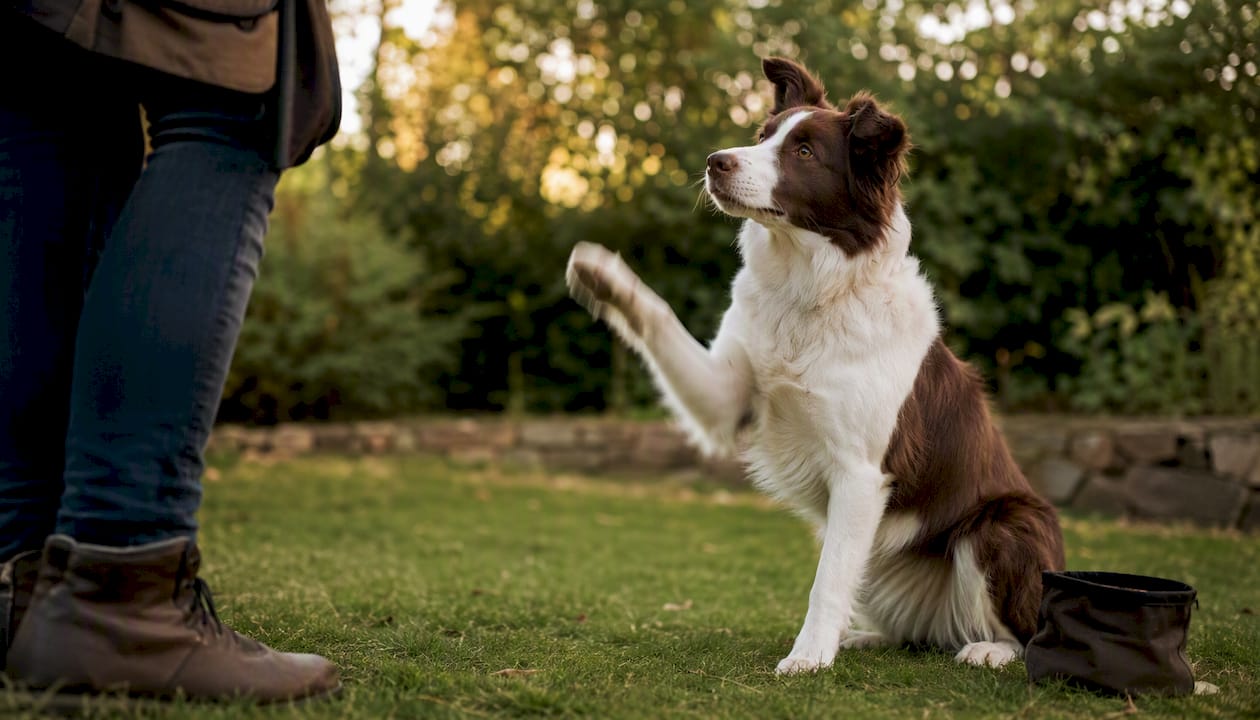
Example 2: Teaching a wave using shaping
Goal: Dog lifts one paw above shoulder height in a wave gesture.
Mark and reward any weight shift onto three legs.
Mark and reward a slight paw lift (even one centimetre off the ground).
Gradually raise the criterion: mark only lifts above the knee, then above the shoulder.
Once the paw lift is reliable, add a hand signal as a cue just before the dog offers the behaviour.
Progression criterion: Five consistent paw lifts at the current height before raising the standard.
Troubleshooting: If the dog offers a sit or a down instead of a paw lift, wait it out. Mark the first moment a paw moves, however slight. Patience here pays off quickly.
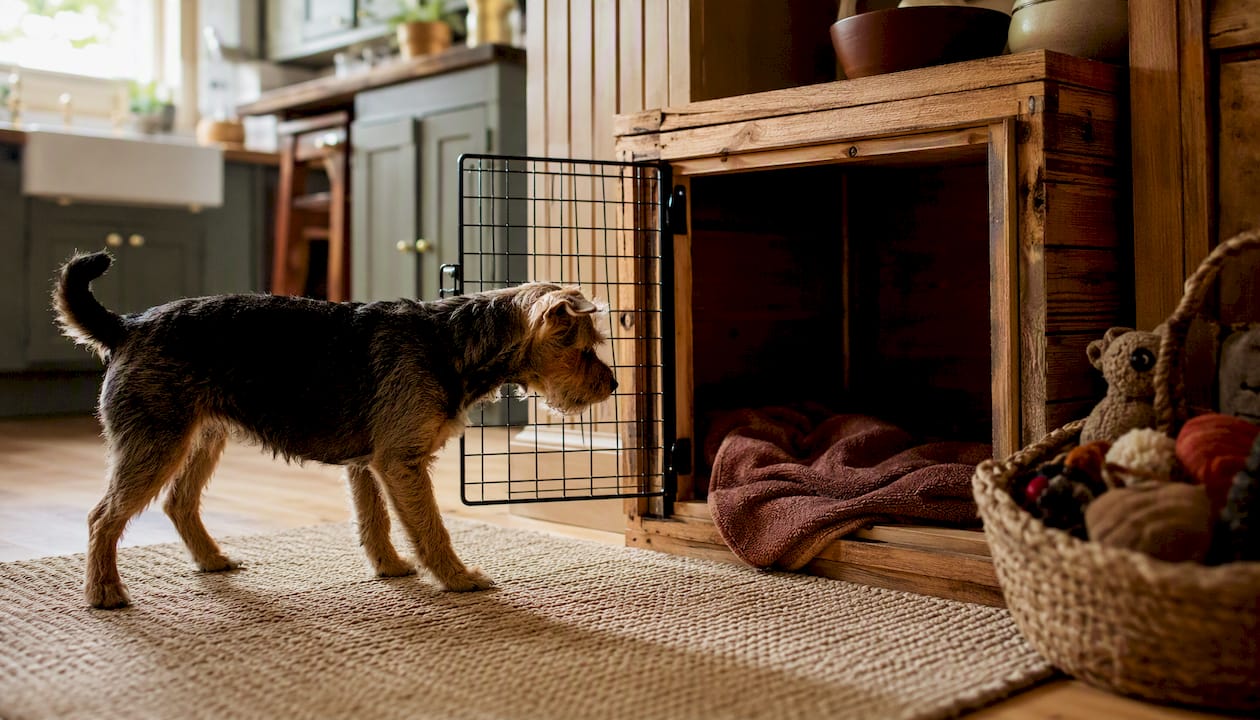
Example 3: Building confidence through a dog door or into a crate
This is where shaping truly shines for reluctant dogs. PetMD’s stepwise example of coaxing a dog through a dog door illustrates the method perfectly.
Mark and reward the dog for looking at the door or crate entrance.
Mark and reward one step toward it.
Mark and reward nose or head near the opening.
Mark and reward one paw crossing the threshold.
Mark and reward the dog halfway through.
Mark and reward the full pass-through.
Progression criterion: Three calm, unpressured repetitions at each stage before moving forward.
Troubleshooting: Never push or lure the dog through. If the dog freezes, drop back two steps and rebuild. Speed is irrelevant; confidence is everything. For dogs with deeper anxiety around enclosed spaces, the behaviour modification plan for fearful dogs provides additional support.
How does shaping differ from luring and chaining?
Understanding the differences helps you pick the right tool for each situation.
Luring uses a treat or toy held in front of the dog to physically guide it into position. It is fast and intuitive, making it ideal for teaching basic positions (sit, down, stand) quickly. The risk is cue dependence: the dog may only perform when it sees the lure. Fading the lure promptly is critical.
Shaping asks the dog to offer behaviours without physical guidance. The dog problem-solves, which builds stronger understanding and better retention. It takes more patience but produces behaviours that transfer well to new contexts.
Chaining links several already-trained behaviours into a sequence. It is the method behind complex routines and sports exercises. Chaining requires each individual behaviour to be reliable before you link them.
Method | Guidance style | Dog’s role | Speed of learning | Transfer to new contexts |
Luring | Physical prompt | Follows guidance | Fast | Moderate (lure must be faded) |
Shaping | No prompt | Active problem-solver | Slower initially | Strong |
Chaining | Sequence cues | Performs known steps | Moderate | Depends on individual behaviours |
When to choose each:
Shape when the behaviour is novel, complex, or requires precision; when the dog is fearful; or when you want strong independent understanding.
Lure when you need a basic position quickly and plan to fade the lure within a few repetitions.
Chain when you have several reliable behaviours and want to combine them into a routine.
Positively recommends shaping specifically for precision and for dogs that do not yet know the desired response, pairing it with a marker for best results.
Common mistakes and how to fix them
Even experienced owners run into the same handful of problems. Recognising them early keeps sessions productive.
Moving criteria too fast: The most common error. If the dog’s success rate drops below roughly 70–80%, you have raised the bar too quickly. Drop back to the last reliable step and rebuild.
Inconsistent marking: Clicking sometimes and not others for the same behaviour confuses the dog. Decide your criterion before the session starts and stick to it.
Rewarding the wrong behaviour: If you click a sit when you were shaping a paw lift, you have just reinforced the sit. Reset calmly and wait for the target movement.
Sessions that run too long: A tired or frustrated dog stops offering behaviours. End every session on a success, even if that means dropping back to an easy step for the final few repetitions.
Overfeeding: Large treats mean you hit the dog’s calorie limit after ten repetitions. Use pea-sized pieces and account for treat calories in the daily food allowance.
If your dog stalls completely, the AKC advises returning to the last reliably offered sub-step, splitting it into an even smaller increment, and reinforcing until fluency returns before moving forward again.
When is shaping the best choice?
Shaping is not always the fastest route, but in certain situations it is clearly the most effective one.
Complex tricks and precision tasks: Behaviours that require exact body positioning (a formal heel, a chin rest, a retrieve to hand) benefit from shaping because the dog learns the precise movement rather than a rough approximation guided by a lure.
Sports foundations: Agility, obedience, and scent work all require dogs to offer behaviours independently. Shaping builds exactly that independence from the start.
Cooperative care positions: Teaching a dog to hold still for ear cleaning, nail filing, or vet examinations is far easier when the dog has been shaped to offer the position rather than forced into it.
Fearful or shut-down dogs: Because shaping never forces or pressures, it allows a reluctant dog to approach a scary object or situation at its own pace. The Just Behaving practitioner notes highlight that free-shaping encourages dogs to offer behaviours rather than follow a lure, which is particularly valuable for dogs that shut down under pressure. For dogs whose temperament affects how they respond to training, the guide on training methods by dog temperament offers further context.
Where shaping may be slower or unnecessary: for a simple, one-step behaviour like “sit” that a dog already offers naturally, a brief lure-and-reward sequence is faster. Shaping earns its place when complexity, precision, or confidence-building is the priority.
What research and recognised trainers say
The evidence base for reward-based training is consistent. The Merck Veterinary Manual states that reward-based training is more likely to result in fewer behavioural problems than punishment-based methods, and that shaping is a recognised behaviour modification technique using successive approximations. Reward-based approaches are also associated with better owner-dog relationships and reduced fear compared with aversive techniques.
The AKC and Positively.com both recommend marker use as a core component of shaping, with the AKC stressing the importance of planning steps ahead and adjusting in real time when the dog stalls.
A copyable five-session protocol
Use this as your starting template for any new shaping goal:
Session 1: Introduce the environment and the prop (platform, target, door). Reward any orientation toward it. End after 3–5 minutes or 20 treats, whichever comes first.
Session 2: Raise the criterion to physical contact (nose, paw, or body part touching the prop). Reward every contact.
Session 3: Require sustained contact (paw resting, not just touching). Begin rewarding only the cleaner, more deliberate contacts.
Session 4: Raise the criterion to the next increment (both paws, full body through, paw above knee). Reward roughly every second correct response.
Session 5: Consolidate. Run 15–20 repetitions at the current criterion. If success rate is above 80%, plan the next increment for Session 6.
Realistic timeline: Most dogs show clear progress on a simple shaping goal within one to two weeks of daily short sessions. Complex behaviours with many increments may take four to six weeks of consistent practice.
A trainer’s perspective on shaping
The thing beginners find most surprising about shaping is how quickly a dog “gets it.” Within a few sessions, many dogs begin offering behaviours the moment you pick up the clicker, watching you with bright, expectant eyes. That shift from passive follower to active participant is one of the most rewarding things to witness in training.
The second surprise is the opposite: a dog that suddenly stalls and offers nothing. This usually means one of two things. Either the criterion jumped too far in one step, or the dog is tired and needs a break. Neither is a failure. Both are information.
Progress is on track when your dog’s success rate stays consistently good across sessions and when you raise criteria regularly after a few sessions. If you have been stuck on the same step for a week of daily practice, that is a good moment to arrange a professional consultation. A fresh pair of eyes can spot what you cannot see from inside the session.
If you are working with a dog that has significant fear, reactivity, or a history of aversive training, shaping is a wonderful starting point, but professional support makes the process faster and safer. Happy-dogtraining’s humane, science-based programmes are built around exactly these principles, with personalised guidance tailored to your dog’s specific needs.
Ready to take the next step with your dog?

Shaping at home is a brilliant start. When you want expert guidance, a structured programme, or support with a dog that has specific behavioural challenges, Happy-dogtraining is here to help. The 4-Week AVS-Approved Intensive Programme combines science-based methods with personalised coaching so you and your dog can make real, lasting progress together.
Sources
Recommended
Comments