Why anxious dogs follow owners everywhere: the real reasons
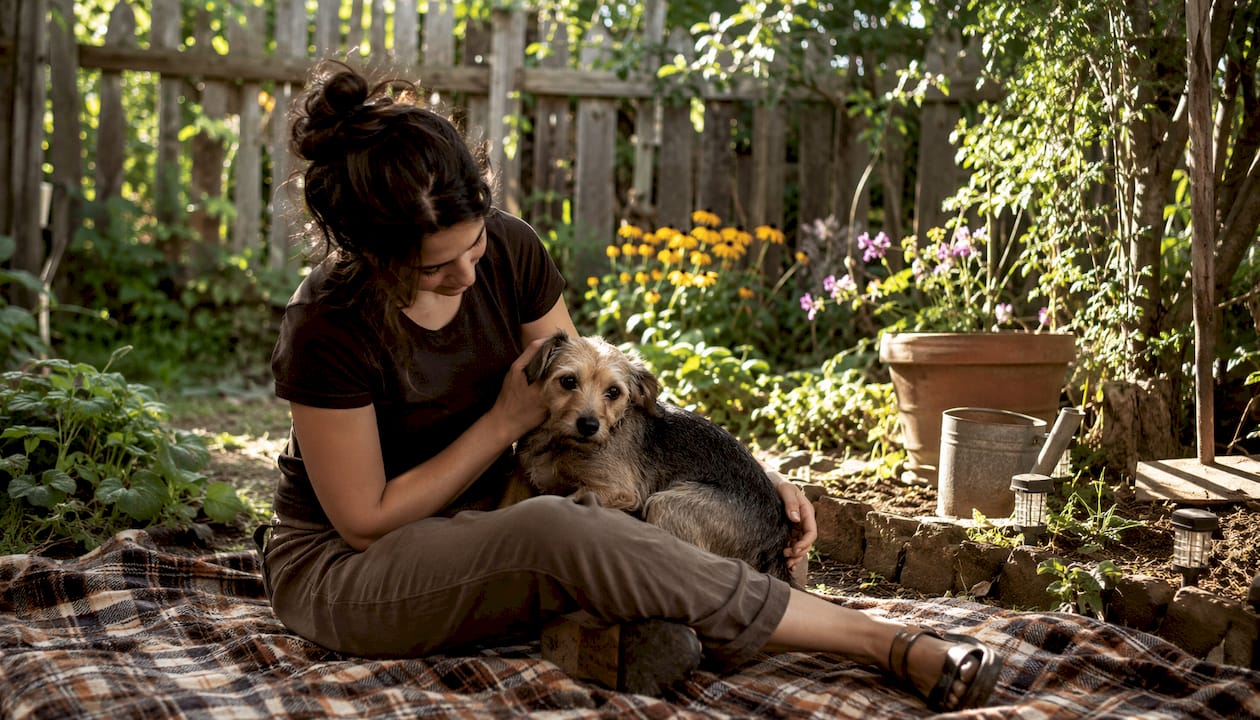
Your dog trailing you from room to room can feel endearing, but when it happens constantly, with visible distress, it is worth understanding what is actually driving that behaviour. Anxious dogs follow their owners everywhere primarily as a coping mechanism: your presence lowers their stress and provides the safety they cannot find on their own. That is the short answer. The fuller picture involves biology, environment, and learned habits that are genuinely worth knowing.
Table of Contents
Why anxious dogs follow you everywhere
Most dogs enjoy being near their owners, and that is perfectly healthy. Dogs are social animals, and closeness to a trusted person is natural and comforting. The concern arises when that closeness tips into something more urgent.
When a dog is anxious, your presence actively reduces their stress. Research shows that owner proximity lowers cortisol in dogs, acting as a direct physiological coping mechanism. Your dog is not being manipulative or “naughty.” They are doing the one thing that makes them feel safer.
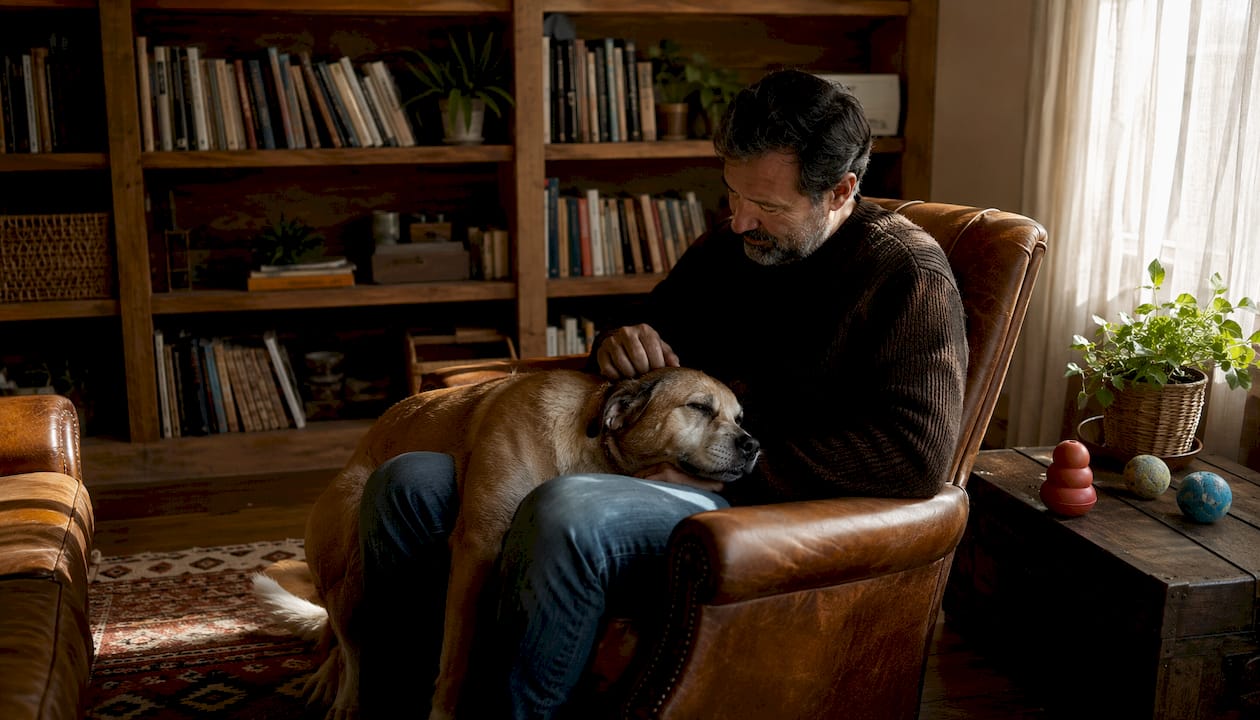
The key distinction between normal affection and anxiety-driven following comes down to what happens when you move away. A relaxed dog might glance up and settle back down. An anxious dog shows panic signs like pacing, whining, or destructive chewing the moment you step out of sight. That difference matters enormously for how you respond.
Common reasons why anxious dogs follow their owners closely include:
Separation distress: Dogs that have never learnt that being alone is safe will seek constant reassurance from their owner.
Environmental change: Moving house, a new baby, a change in your work schedule, or the loss of another pet can all trigger clingy behaviour as dogs try to re-establish security.
Breed and temperament: Some breeds are naturally more people-focused, making them more prone to close following.
Learned behaviour: Dogs repeat what earns them attention. If following you has consistently resulted in fuss or treats, the pattern strengthens over time.
Underlying health issues: Pain, sensory decline, or cognitive changes can make the world feel less predictable, pushing dogs to stay close for reassurance.
How to tell when following signals anxiety or distress
Not every shadow is a sign of trouble. The question is whether your dog is choosing to be near you or compelled to be. Dogs Trust notes that dogs who suddenly become “stuck to you like glue” after a period of settled behaviour may be signalling something underlying that needs attention.
Watch for these specific signs that following has crossed into separation distress:
Anticipatory anxiety: Your dog becomes unsettled as soon as you pick up your keys, put on your coat, or reach for your bag. These pre-departure signals can trigger a stress response before you have even left.
Whining, pacing, or trembling when you move to another room or prepare to leave.
Destructive behaviour such as chewing furniture or scratching doors when left alone.
Toileting indoors despite being house-trained.
Frantic greetings when you return, far beyond normal excitement.
Inability to settle even when you are present, particularly if your dog cannot relax unless physically touching you.
The RSPCA recommends filming your dog when left alone from time to time, since many dogs show hidden distress signs such as trembling or pacing that owners never witness directly. Sudden clinginess in an older dog also warrants a vet visit, as sensory decline or pain can cause dogs to feel unsafe and seek proximity.
Understanding separation anxiety and what drives clingy behaviour
Separation anxiety is a specific clinical condition, distinct from general clinginess. A dog with separation anxiety does not simply prefer your company; they experience genuine fear when separated from you. That fear can escalate into distress behaviours that are exhausting for both of you.
Clinginess is a symptom, not a diagnosis. It signals that something in your dog’s environment, health, or emotional state needs addressing. Routine disruptions are a particularly common trigger: changes to daily schedules or home environments can leave dogs feeling uncertain, and following you becomes their way of managing that uncertainty.
One important misconception to clear up: your dog is not following you out of spite or dominance. Dogs Trust is clear on this point. Disruptive or clingy behaviours stem from anxiety or past experience, not a desire to control you. Responding with frustration or punishment makes things considerably worse.
Veterinary practitioner Jimmy Bratley at Adaptil recommends creating a safe, predictable ‘den’ space within your home. Dogs are social animals, but they also benefit from having a quiet, undisturbed area where they can settle and manage their own emotional state when you are not immediately present.
Pro Tip: If your dog has started following you more than usual and nothing obvious has changed at home, book a vet check before starting any behaviour programme. Pain, hormonal changes, and early cognitive decline can all present as sudden clinginess, and ruling these out first saves time and stress for everyone.
Key factors that contribute to separation anxiety and clingy behaviour:
Lack of early training in being alone
Previous negative experiences when left alone
Significant life changes such as rehoming, bereavement, or owner returning to work
Inadvertent reinforcement of following behaviour through attention or food
Insufficient physical and mental stimulation
Practical strategies to reduce anxious following behaviour
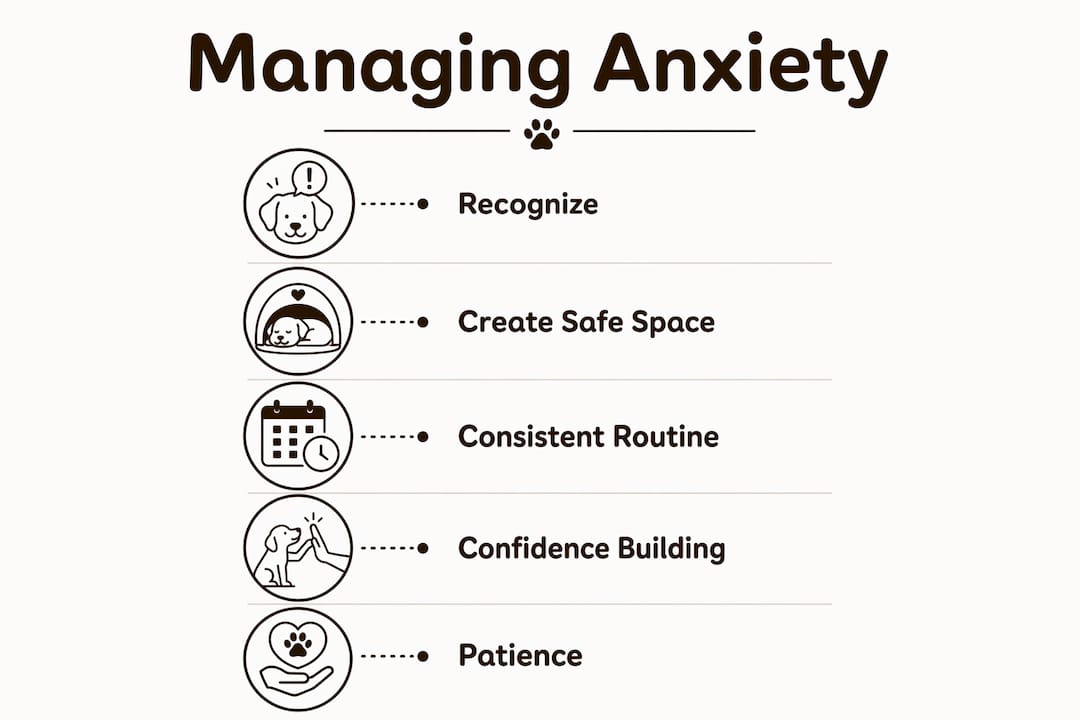
The good news is that anxious following behaviour responds well to consistent, patient management. The goal is not to push your dog away but to build their confidence so they feel safe without needing to shadow you constantly.
Clinical animal behaviourists advise strongly against punishing separation-related behaviours. Punishment links your return home with fear, which increases anxiety and makes the underlying problem worse. The RSPCA reinforces this: even letting your dog see that you are annoyed can heighten their stress the next time you leave.
Here is what actually helps:
Gradual desensitisation: Start by leaving the room for just a few seconds, then return calmly before your dog becomes distressed. Build duration slowly, always staying within your dog’s comfort threshold.
Reward independence, not following: When your dog settles on their bed without prompting, quietly reward that calm behaviour with a treat or gentle praise. Avoid rewarding frantic following with attention or food.
Use food toys: A filled KONG placed a short distance from you encourages your dog to settle and engage independently. Gradually move it further away over several weeks.
Baby gates: These allow you to move between rooms without your dog always following, helping them learn that brief separation is safe and unremarkable.
Predictable routines: Regular walks, feeding times, and rest periods reduce uncertainty. Dogs thrive on knowing what comes next.
Seek professional help early: If your dog cannot cope with even brief separations, a clinical animal behaviourist can identify the root cause and build a structured plan. The earlier you seek support, the easier the process tends to be.
For senior dogs, physical comfort matters too. Ensuring your dog has a supportive resting place and, where relevant, appropriate feeding equipment can reduce physical discomfort that contributes to restlessness and seeking proximity.
Positive training approaches that build your dog’s confidence
Sustainable change comes from building your dog’s confidence, not simply managing their following behaviour in the moment. Humane, reward-based training is the foundation recommended by UK experts and the approach at the heart of Happy-dogtraining’s methods.
The core principle is straightforward: reward the behaviour you want to see more of. When your dog chooses to settle independently, even briefly, that moment deserves quiet acknowledgement. Over time, your dog learns that calm, independent behaviour is safe and rewarding.
Practical training approaches that support anxious dogs:
Marker training: Use a consistent marker (a clicker or a calm “yes”) the instant your dog settles away from you, followed by a reward. Precision matters here; timing the marker correctly teaches your dog exactly what earned the reward.
Short, positive training sessions: Brief, frequent sessions keep your dog engaged without overwhelming them. Five minutes of focused, reward-based work builds confidence faster than long, pressured sessions.
Strengthen the bond without increasing dependence: Play, gentle handling, and dog independence training build trust while teaching your dog that time apart is equally safe.
Early socialisation: Dogs exposed to varied environments, people, and brief separations from a young age tend to develop greater resilience. If that window has passed, it is never too late to build confidence gradually.
Consistent, calm departures and arrivals: Keep greetings and goodbyes low-key. Dramatic farewells heighten anticipatory anxiety; calm, matter-of-fact exits teach your dog that leaving is ordinary.
Patience is not optional here. Your dog may have spent months or years reinforcing this pattern, and unlearning it takes time. Progress is rarely linear, and that is completely normal. Happy-dogtraining’s certified trainers, with over 20 years of experience using science-based, humane methods, offer personalised support for anxious dogs alongside free lifetime guidance after training, so you are never navigating this alone.
Key takeaways
Anxious dogs follow their owners everywhere because your presence reduces their stress and provides the safety they cannot create independently, but consistent reward-based training and predictable routines can rebuild their confidence over time.
Point | Details |
Anxiety drives following | Dogs follow owners to lower cortisol and feel safe, not out of spite or dominance. |
Spot the warning signs | Pacing, whining, destructive behaviour, and pre-departure distress signal anxiety beyond normal affection. |
Rule out health issues first | Sudden clinginess, especially in older dogs, may indicate pain, sensory decline, or cognitive changes. |
Never punish clingy behaviour | Punishment worsens fear and can convert mild attachment into clinical separation anxiety. |
Reward calm independence | Consistently reinforcing settled, independent behaviour is the most effective long-term strategy. |
If your dog’s anxious following is affecting daily life, Happy-dogtraining’s fearful and anxious dog programme offers personalised, science-based support tailored to your dog’s specific needs. With humane methods, certified expertise, and free lifetime support after training, you and your dog can build the confidence and calm you both deserve.
Recommended
Comments