Why neutering affects aggression: what the evidence says

Neutering is not a reliable off-switch for aggression. That is the clearest, most honest summary of what the research shows. Large dataset analyses using the C-BARQ questionnaire (Canine Behavioural Assessment and Research Questionnaire) found no consistent link between gonadectomy and reduced aggression toward familiar people or dogs, and VCA Animal Hospitals’ clinical guidance notes that vets often recommend a behaviourist referral before surgery when aggression is the presenting concern. The Royal College of Veterinary Surgeons (RCVS) similarly encourages case-by-case assessment rather than routine surgery for behaviour problems.
Here is the practical summary:
Neutering is most likely to help when aggression is driven by sexual competition, roaming, or inter-male territorial behaviour in intact male dogs.
Neutering can make things worse when aggression is rooted in fear, anxiety, or low confidence, particularly in dogs neutered early or in certain breeds.
Effect is uncertain for resource guarding, owner-directed aggression, and most forms of aggression in female dogs.
Table of Contents
How sex hormones shape behaviour: the biology behind aggression
Testosterone and oestrogens do not cause aggression directly. They modulate the systems that regulate social motivation, confidence, and threat response, and that distinction matters when you are trying to predict what removing them will do.
The key pathways work roughly like this:
Sex hormones interact with oxytocin and cortisol. Research published on PMC links neutering-related hormonal shifts to changes in oxytocin and cortisol balance, which can reduce emotional resilience and increase stress reactivity in some dogs.
The important caveat: these pathways are correlational in most animal studies. Removing testosterone reduces the drive for certain behaviours, but it does not erase learned patterns or fear-based responses that have been reinforced over months or years. A dog that has learned aggression as a coping strategy will not unlearn it through surgery alone.
What does the research actually show about neutering and aggression?
The honest answer is that studies disagree, and the direction of effect depends heavily on the type of aggression, the dog’s age at surgery, and the study design. Here is what the most influential work tells us.
Key findings from the literature:
The large Frontiers in Veterinary Science C-BARQ analysis of over 13,000 survey responses found no significant association between gonadectomy and aggression toward familiar people or familiar dogs. It did find a small but statistically significant increase in stranger-directed aggression, driven largely by dogs castrated at 7–12 months.
A PLOS One analysis examining percentage lifetime gonadal hormone exposure (PLGH) in 6,235 male dogs found that allowing puberty to occur was associated with reduced later fear and aggression in some males. Early castration was linked to higher odds of several unwanted behaviours.
A comprehensive MDPI Animals review concluded that the behavioural evidence is conflicting overall: neutering can reduce sexual behaviours but may increase stress, fear, and aggression in some animals, alongside documented health trade-offs.
A 2024 Springer study reported statistically significant breed-dependent variation in stress and aggression outcomes after neutering, arguing against blanket recommendations.
Study type | Approximate sample | Main effect direction | Key limitation |
Large C-BARQ dataset (Frontiers) | 13,000+ dogs | No change (familiar); small increase (strangers) | Owner-report; selection bias possible |
PLGH / age-at-castration (PLOS One) | 6,235 male dogs | Early castration linked to more unwanted behaviours | Retrospective; cannot confirm causality |
Systematic review (MDPI Animals) | Multiple studies | Conflicting; context-dependent | Heterogeneous study designs |
Breed-dependent study (Springer 2024) | Breed-stratified | Varies by breed group | Single-country sample; limited breeds |
A critical methodological issue runs through much of this literature: selection bias. Dogs are sometimes neutered because they are already aggressive, which inflates apparent associations between neutering and aggression in retrospective studies. The MDPI review flags this explicitly, and it is worth raising with your vet when interpreting any study result.
Which types of aggression are most affected by neutering?
Not all aggression is the same, and the type your dog shows is the single most important factor in predicting whether neutering will help, make no difference, or make things worse.
Resource guarding: Evidence is weak and inconsistent. Resource guarding is primarily a learned behaviour with limited hormonal underpinning, so neutering rarely resolves it. Structured behaviour modification is the appropriate first step.
Inter-dog aggression in females: — Spaying has less predictable effects on female-to-female aggression. Some studies report increases post-spay, possibly linked to reduced oestrogen’s calming influence on social behaviour.
Pro Tip: Before booking surgery, ask yourself: does your dog’s aggression occur in contexts linked to sexual competition (intact dogs nearby, roaming, mounting)? If yes, neutering may help. If the aggression is triggered by fear, surprise, or resource proximity, surgery is unlikely to be the answer.
Potential downsides: anxiety, confidence, and health trade-offs
Neutering can bring genuine medical benefits, including reduced risk of testicular cancer and pyometra. But the behavioural and health risks deserve equal attention.
Behavioural risks reported in the literature:
Increased anxiety and fearfulness, particularly in dogs neutered before social maturity
Reduced boldness and confidence, linked to the loss of testosterone’s role in building resilience during development
Higher incidence of separation anxiety in some neutered dogs
Increased noise phobia, reported in several survey-based studies
Potential increase in fear-based aggression, as discussed in the PMC study on neuter status and social behaviour
Health trade-offs noted in the MDPI comprehensive review include elevated risk of certain cancers (haemangiosarcoma, osteosarcoma in some large breeds), orthopaedic issues related to delayed growth plate closure, and metabolic changes including increased obesity risk.
The RCVS and UK veterinary guidance consistently recommend that owners considering neutering for behaviour reasons consult a veterinary behaviourist before proceeding. This is not a formality: a behaviourist can assess whether the aggression type is one that neutering is likely to influence, and can design a behaviour modification plan that will work regardless of the surgical decision.
Pro Tip: Ask your vet specifically about surgical alternatives. A deslorelin implant can temporarily suppress sex hormones and act as a reversible trial. If behaviour improves during the implant period, permanent castration is more likely to help. If it does not, you have avoided an irreversible decision.
How long after neutering might behaviour change?
When behaviour does change after neutering, it typically appears over weeks to months rather than days. Sexual behaviours such as mounting, marking, and roaming often reduce within 2–8 weeks of castration in male dogs, as testosterone levels fall. Complex social behaviours, fear responses, and established aggression patterns take considerably longer to shift, and many will not improve without concurrent structured training.

Concurrent training and environmental management accelerate and consolidate any positive changes. A dog that receives behaviour modification alongside neutering is far more likely to show lasting improvement than one that has surgery alone. The PLOS One findings on PLGH reinforce this: hormonal changes set a context, but learned behaviour requires active intervention to change.
What works better than relying on neutering alone?
Many behavioural problems respond better to targeted training or environmental change than to gonadectomy alone. This is not a reason to avoid neutering; it is a reason to treat it as one component of a wider plan rather than the whole solution.
Approach | Best suited to | Key limitation | Works alongside neutering? |
Behaviour modification / training | Fear, resource guarding, owner-directed aggression | Requires consistency and professional guidance | Yes, always recommended |
Behaviour consultation | Any aggression type; pre-surgical assessment | Requires qualified behaviourist | Yes, ideally before surgery |
Vasectomy / hysterectomy | Population control without hormonal change | Does not address hormone-driven behaviour | Depends on goal |
Deslorelin implant (chemical contraception) | Reversible hormonal trial before permanent surgery | Temporary; requires vet prescription | Yes, as a diagnostic tool |
Castration / spay | Sexual/territorial aggression in intact males | Irreversible; uncertain for fear-based aggression | Yes, with training |
Complementary measures that consistently support better outcomes:
Formal behaviour consultation with a qualified veterinary behaviourist or accredited trainer before and after any surgical decision
Desensitisation and counter-conditioning for fear-based and reactive aggression, using evidence-based methods
Environmental management to reduce exposure to triggers while training is underway
Structured socialisation appropriate to the dog’s age and temperament
Medication when indicated, prescribed by a vet, to support behaviour modification in severe anxiety cases
UK veterinary guidance, including the RCVS position, supports combining medical and behavioural approaches rather than treating them as alternatives.
Should you neuter your aggressive dog? A step-by-step framework
Work through these steps before making a decision, and bring this list to your vet or behaviourist appointment.
Define the aggression type. Is it triggered by intact dogs, sexual competition, or roaming? Or by fear, surprise, resource proximity, or handling? The answer shapes everything that follows. Resources like understanding inter-dog aggression can help you identify the pattern.
Questions to ask your vet: What procedure are you recommending, and will it remove sex hormones? What behaviour change is realistic for my dog’s aggression type? What are the health trade-offs for my dog’s breed and age?
Questions to ask your behaviourist: Is this aggression type likely to respond to neutering? What training plan would you recommend regardless of the surgical decision? How will we measure progress?
Pro Tip: Use a standardised tool like the C-BARQ questionnaire to record your dog’s baseline behaviour before any intervention. It takes about 15 minutes and gives you a structured profile you can share with both your vet and behaviourist, making follow-up comparisons far more meaningful.
What to do right now if your dog is showing aggression
Your immediate priority is safety for everyone in the household, then structured assessment. Do not wait for a surgical appointment before taking action.
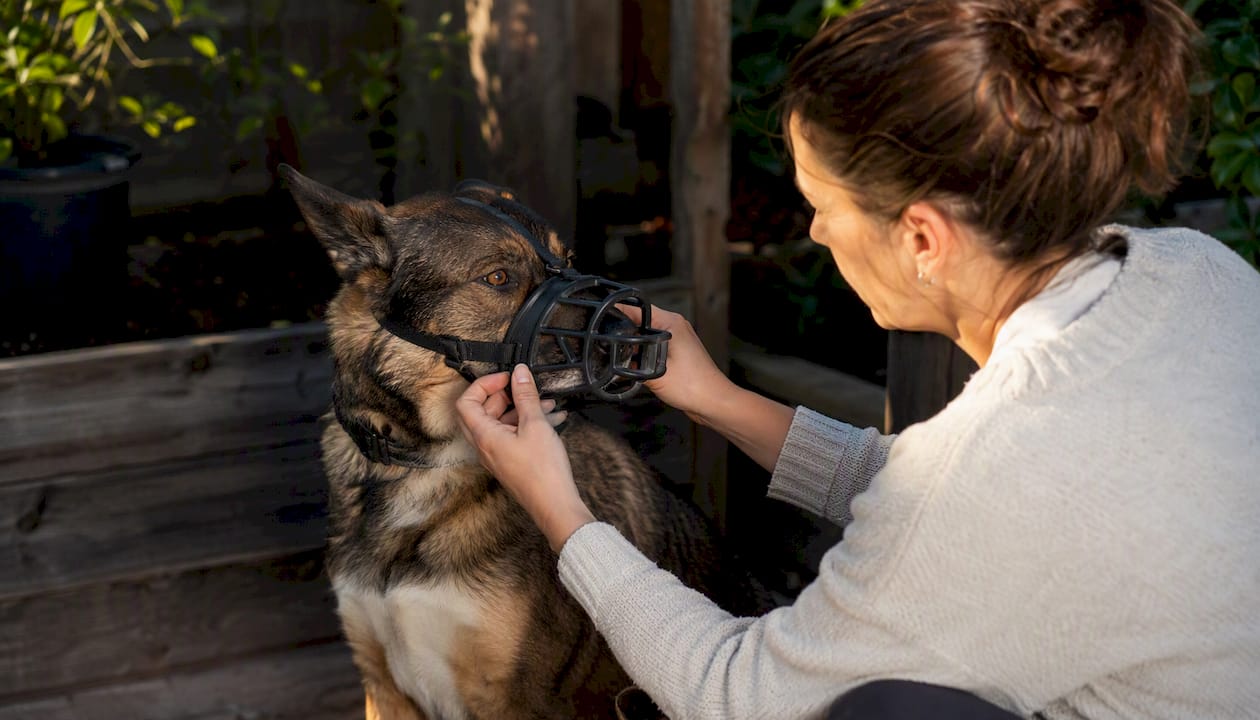
Pro Tip: Start a behaviour diary today. Note the date, trigger, context, your dog’s body language, and what happened. Three weeks of records transforms a vague “he’s been aggressive” into a clinical picture a behaviourist can actually work with.
Practical steps to take now:
Secure your environment first. Use management tools such as a well-fitted muzzle for high-risk situations, baby gates to separate dogs, and leads in the garden. Avoid known triggers while you gather information. These are not permanent solutions, but they reduce risk while you build a plan. Contact a certified behaviourist or accredited trainer promptly; a professional aggressive dog behaviour consultation gives you a structured assessment and a clear starting point. Also book a veterinary health check to rule out pain or illness as a contributing factor.
Key takeaways
Neutering affects aggression in ways that depend on the type of aggression, the dog’s sex, age at surgery, and breed, making a behaviourist consultation before surgery the single most important step for UK owners.
Point | Details |
Type of aggression determines outcome | Sexual and territorial aggression in intact males is most likely to reduce; fear-based aggression may worsen. |
Age at neuter matters | Dogs castrated at 7–12 months showed a small but significant increase in stranger-directed aggression in large C-BARQ analysis. |
Breed affects response | A 2024 Springer study found statistically significant breed-dependent variation; blanket recommendations are not supported. |
Training is always needed | Behaviour modification improves outcomes regardless of surgical decision; surgery alone rarely resolves established aggression. |
Consult before you commit | RCVS and UK veterinary guidance recommend behaviourist referral before neutering for aggression problems. |
A practitioner’s honest view on neutering and aggression
The question owners most often bring to a consultation is: “Will neutering fix this?” The honest answer, grounded in the evidence, is: sometimes, for specific types of aggression, in the right dog, at the right time. That is a far more useful answer than a simple yes or no, even if it is less satisfying.
What concerns me most in practice is the expectation that surgery is a shortcut past the harder work of behaviour modification. Neutering can reduce the hormonal drive behind sexual and territorial behaviour in intact males, and that is genuinely useful. But fear-based aggression, resource guarding, and owner-directed reactivity are learned patterns. They do not dissolve with a change in hormone levels. In some dogs, particularly those neutered early or those with a naturally anxious temperament, removing sex hormones can actually reduce the confidence that was helping them cope. The result is a dog that is more reactive, not less.
The approach that consistently produces the best outcomes is this: define the aggression type clearly, trial structured behaviour modification with a qualified professional, and treat neutering as one tool in a wider plan rather than the plan itself. When owners come to Happy-dogtraining with an aggressive dog, we assess the behaviour profile first, recommend a behaviour consultation before any surgical decision, and build a training plan that will work regardless of what the vet ultimately recommends. That sequence, assessment before surgery, training alongside any medical decision, and consistent follow-through, is what actually moves the needle.
If you are at the point of considering neutering for aggression, the best thing you can do today is book a professional assessment and start a behaviour diary. The evidence, and the dogs, will thank you for it.
Key studies and further reading
These are the primary sources underpinning this article, with brief notes on what each contributes and where it is most relevant.
Source | Why it matters | Most relevant section |
Largest owner-report dataset on neutering and aggression; key finding on stranger-directed aggression and age at neuter | Evidence summary, age/sex/breed modifiers | |
6,235-dog analysis linking early castration to higher odds of unwanted behaviours | Age at neuter, mechanisms | |
Systematic-style review covering behavioural and health trade-offs; highlights conflicting evidence and selection bias | Evidence summary, risks, decision framework | |
Links neutering to oxytocin/cortisol changes and increased stress reactivity | Mechanisms, risks | |
Breed-stratified findings on stress and aggression; argues against blanket recommendations | Breed modifiers, evidence summary | |
Clinical guidance on sexual behaviour reduction and behaviourist referral recommendation | BLUF, aggression types, decision framework | |
Standardised owner-report tool used across major datasets; available for owners to complete | Evidence summary, decision framework | |
Contextual scale of dog ownership underpinning population-control policy drivers for neutering | Background context |
For UK owners: The RCVS is the governing body for veterinary surgeons in the United Kingdom. If you are unsure whether your vet has recommended the right approach for your dog’s specific aggression type, you can ask for a referral to a veterinary behaviourist registered with the RCVS or the Association of Pet Behaviour Counsellors (APBC). Bring the studies above, your behaviour diary, and a clear description of the aggression type to that appointment.
Recommended
Comments