Best practices for home obedience training your dog
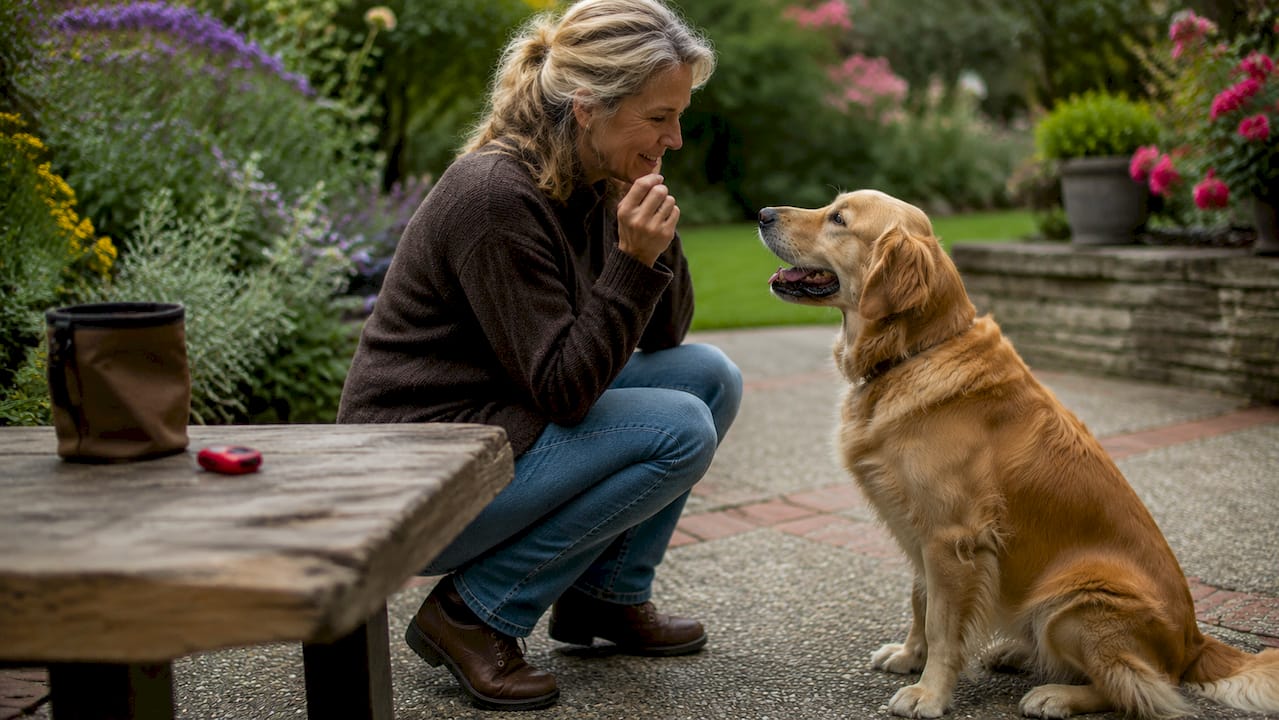
Home obedience training is defined as a structured, reward-based approach to teaching your dog reliable behaviours through short, consistent sessions in your own environment. The best practices home obedience training relies on are clear communication, precise timing, and positive reinforcement. These three elements work together to build a dog that listens, stays calm, and responds reliably. Whether you have a new puppy or an adult dog with existing habits, the methods in this guide are grounded in science and shaped by real results.
1. Why short, frequent sessions outperform long ones
Short training sessions of 5–10 minutes for adult dogs and 3–5 minutes for puppies improve learning far more than longer, infrequent ones. Dogs have a limited attention span, and sessions over 10 minutes produce diminishing returns and disengagement. Two to three short sessions daily build stronger retention than one long session each week.
Shorter sessions also keep your dog’s motivation high. When training ends while your dog is still engaged and succeeding, you finish on a positive note. That feeling carries into the next session.
Keep adult dog sessions to 5–10 minutes
Keep puppy sessions to 3–5 minutes
Aim for 2–3 sessions per day
End each session with a success, not a struggle
Pro Tip: Watch for yawning, sniffing the ground, or looking away. These are early signs of mental fatigue. Stop the session before your dog fully disengages, not after.
2. Positive reinforcement: the foundation of effective home training
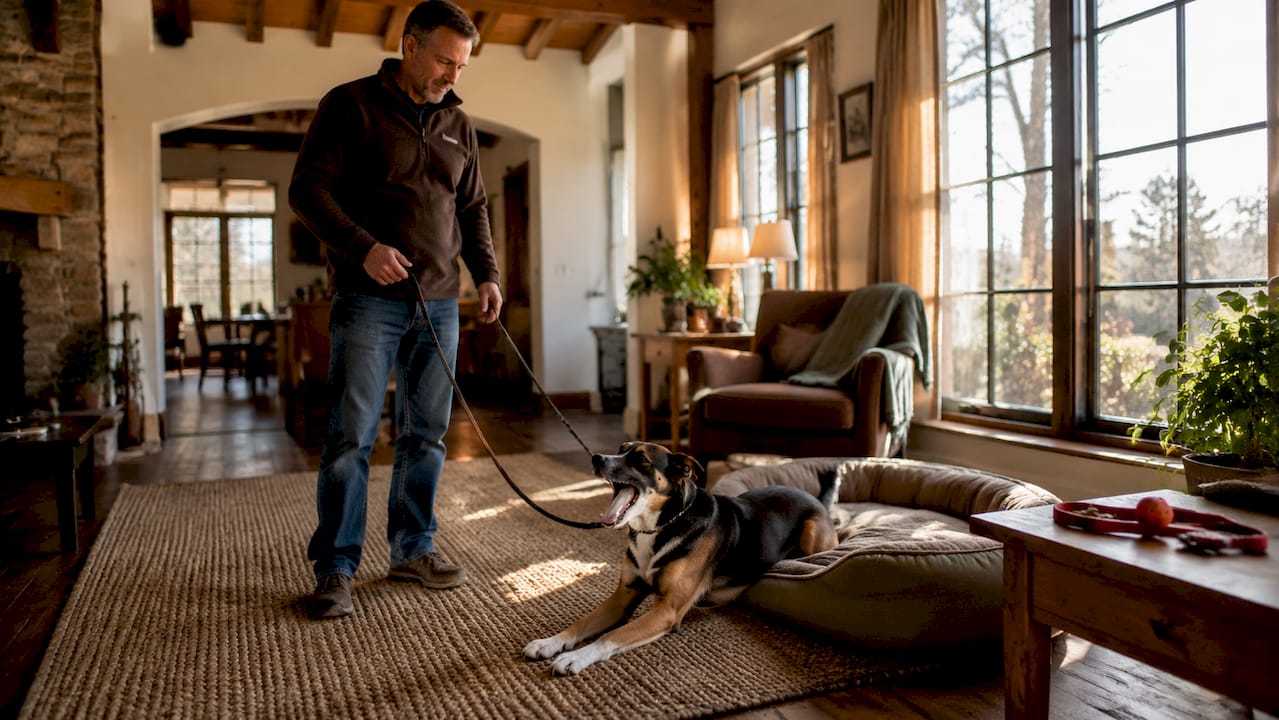
Positive reinforcement training is 2–5 times more effective than punishment-based methods and produces lower stress and stronger bonds. That is not a minor difference. It means your dog learns faster, stays calmer, and trusts you more. The Australian Veterinary Association confirms that punitive methods cause fear and aggression, making behaviour problems worse rather than better.
Reward-based training works by marking the exact moment your dog does something right. A marker, such as a clicker or a clear verbal cue like “Yes!”, signals to your dog that a reward is coming. The marker does the heavy lifting. It tells your dog precisely which action earned the reward.
“Timing is everything. A reward delivered three seconds late teaches your dog nothing useful. A reward delivered within one to two seconds teaches your dog exactly what you want.”
Common mistakes to avoid:
Delaying the reward beyond 1–2 seconds after the behaviour
Using inconsistent verbal markers (sometimes “Yes!”, sometimes “Good boy!”, sometimes nothing)
Rewarding the wrong moment, such as when your dog breaks a sit to come to you
Relying only on praise when your dog needs a higher-value reward
High-value treats like boiled chicken or cheese maintain motivation for difficult behaviours, especially in distracting environments. Save these for the moments that matter most.
3. The 7 core commands to teach at home
These seven commands form the backbone of reliable home obedience. Each one builds on the last, and together they give you the tools to manage your dog in almost any situation.
Sit. The starting point for most training. Use a treat lure held above your dog’s nose and move it slowly back over the head. The moment the bottom touches the floor, mark and reward.
Down. From a sit, lower a treat lure to the floor between your dog’s front paws. Mark and reward the moment the elbows hit the ground.
Come (recall). Start close, crouch down, and call your dog’s name followed by “come” in a warm, upbeat tone. Reward generously every single time. Recall must always predict something good.
Leave it. Place a low-value treat in a closed fist. Wait for your dog to stop pawing and sniffing, then mark and reward with a different treat from your other hand. Gradually progress to treats on the floor.
Stay. Ask for a sit or down, then reward your dog for remaining still. Increase duration before you add distance. Never add both at once.
Heel. Reward your dog for walking close to your left side. Use frequent, short rewards to keep attention on you rather than the environment.
Place. Send your dog to a mat or bed and reward them for staying there. This command is particularly useful for managing greetings and mealtimes.
Pro Tip: Give each cue once only. Repeating commands teaches your dog that the first cue is optional. If there is no response, use a lure to guide the behaviour, then try the cue again cleanly.
Once your dog responds reliably in a quiet room, practise each command in at least three different environments. Multi-location practice builds the kind of obedience that holds up when distractions appear.
Command | Primary method | Key mistake to avoid |
Sit | Treat lure over the head | Pushing the dog’s bottom down |
Down | Lure to the floor | Rushing the duration too quickly |
Come | Warm tone, generous reward | Calling the dog for anything unpleasant |
Leave it | Closed fist, patience | Rewarding before the dog disengages |
Stay | Duration before distance | Adding distance and duration together |
Heel | Frequent short rewards | Allowing pulling to go unrewarded |
Place | Mat targeting, gradual duration | Releasing too early |
4. Common pitfalls in home obedience training
Most training problems come from a small set of repeated mistakes. Recognising them early saves weeks of frustration.
Repeating cues. Saying a command multiple times teaches your dog that the first few repetitions are background noise. Give the cue once. If your dog does not respond, help them with a lure rather than repeating the word.
Inconsistent vocabulary. If one family member says “down” to mean lie down and another uses it to mean get off the sofa, your dog cannot learn either reliably. Agree on one word per behaviour and write it down.
Training only at home. A dog that sits perfectly in your kitchen may completely ignore you at the park. Consistent commands across environments are vital. Start easy, then gradually increase the challenge of the location.
Using low-value rewards for hard tasks. Dry kibble may work in a quiet room. It will not hold your dog’s attention near a busy road. Match the reward value to the difficulty of the task.
Increasing the 3 Ds all at once. The 3 Ds principle refers to Duration, Distance, and Distraction. Increasing all three at the same time almost always leads to failure. Increase only one variable at a time, and drop the others back when you do.
5. How to generalise trained behaviour into real life
Training integrated into daily routines creates more reliable habits than isolated formal sessions. Real-life practice is where obedience becomes genuine. It is also where most owners stop, which is exactly why their dog’s behaviour plateaus.
Ask for a sit before placing the food bowl down. Request a wait at the door before walks. Practise a calm greeting when visitors arrive. These small moments add up to dozens of repetitions each day without any dedicated training time. Your dog learns that good behaviour pays off in the real world, not just in the living room.
Gradual exposure to new environments and stimuli is equally important. Start in low-distraction areas and build up slowly. A dog that has practised in multiple locations generalises commands far more reliably than one trained only at home. For deeper guidance on how the training environment shapes learning, the Happy-dogtraining article on training environment effects is worth reading.
Pro Tip: When your dog responds correctly in a distracting environment, reward immediately and generously. That moment of success in a hard context is worth ten repetitions in a quiet room.
Key takeaways
Consistent, short, reward-based sessions are the most effective home obedience training approach, and integrating those sessions into daily life produces the most durable results.
Point | Details |
Keep sessions short | Adult dogs need 5–10 minutes; puppies need 3–5 minutes per session. |
Mark behaviour precisely | Use a clicker or “Yes!” within 1–2 seconds to clearly signal the correct action. |
Give each cue once only | Repeating commands teaches dogs to ignore the first cue. |
Increase one variable at a time | Never raise Duration, Distance, and Distraction simultaneously. |
Train in multiple environments | Practise each command in at least three locations for reliable generalisation. |
What 20 years of training has taught me about timing and trust
The single most common mistake I see from owners is not cruelty or laziness. It is simply poor timing. A reward delivered two seconds too late does not reinforce the sit. It reinforces whatever the dog was doing when the treat arrived, which is often standing up and sniffing your hand. Owners then wonder why their dog’s sit is unreliable. The sit was never actually being rewarded.
The second pattern I see constantly is inconsistency across the household. One person trains with patience and precision. Another lets the dog jump up because it is “cute.” The dog does not learn two sets of rules. The dog learns that rules are optional. That is a much harder problem to fix than starting consistently from day one.
What genuinely works, and what I have seen transform hundreds of dogs over two decades, is building training into the rhythm of daily life. The owners who get the best results are not the ones who spend the most time in formal sessions. They are the ones who ask for a sit before every meal, a wait before every door, and a calm settle before every greeting. Their dogs are not just obedient. They are confident, settled, and genuinely happy. That is the bond worth building.
For puppy-specific guidance on session length and reinforcement, the Happy-dogtraining resource on puppy training tips covers the early stages in practical detail.
— Mark
Take your home training further with professional support
Home training builds the foundation. Professional guidance accelerates everything built on top of it. Happy-dogtraining offers a structured 4-week intensive obedience programme that is AVS-approved and designed to complement what you practise at home. The programme addresses real-world behaviour challenges with science-based methods tailored to your individual dog.

With over 20 years of experience and free lifetime support after training, Happy-dogtraining gives you and your dog the tools to succeed long after the course ends. If you are ready to see genuine, lasting change in your dog’s behaviour, the Happy-dogtraining team is here to help you get there.
FAQ
How long should a home obedience training session be?
Adult dogs benefit most from sessions of 5–10 minutes, while puppies do best with 3–5 minutes. Multiple short sessions daily produce better results than one long session.
What is the best reward to use in positive reinforcement training?
High-value treats like boiled chicken or cheese work best for difficult tasks or distracting environments. Match the reward value to the difficulty of what you are asking your dog to do.
Why does my dog ignore commands outside the house?
Dogs do not automatically transfer a learnt behaviour from one location to another. Practising each command in at least three different environments builds the generalisation needed for reliable obedience outdoors.
How do I stop my dog ignoring the first cue?
Give each command once only. If your dog does not respond, use a lure to guide the behaviour rather than repeating the word. Repeating cues teaches dogs that the first few are optional.
Is positive reinforcement training suitable for dogs with behaviour issues?
Positive reinforcement is the recommended approach for all dogs, including those with fear or aggression. Punitive methods increase stress and can worsen existing behaviour problems.
Recommended
Comments