How marker training works: a guide for dog owners
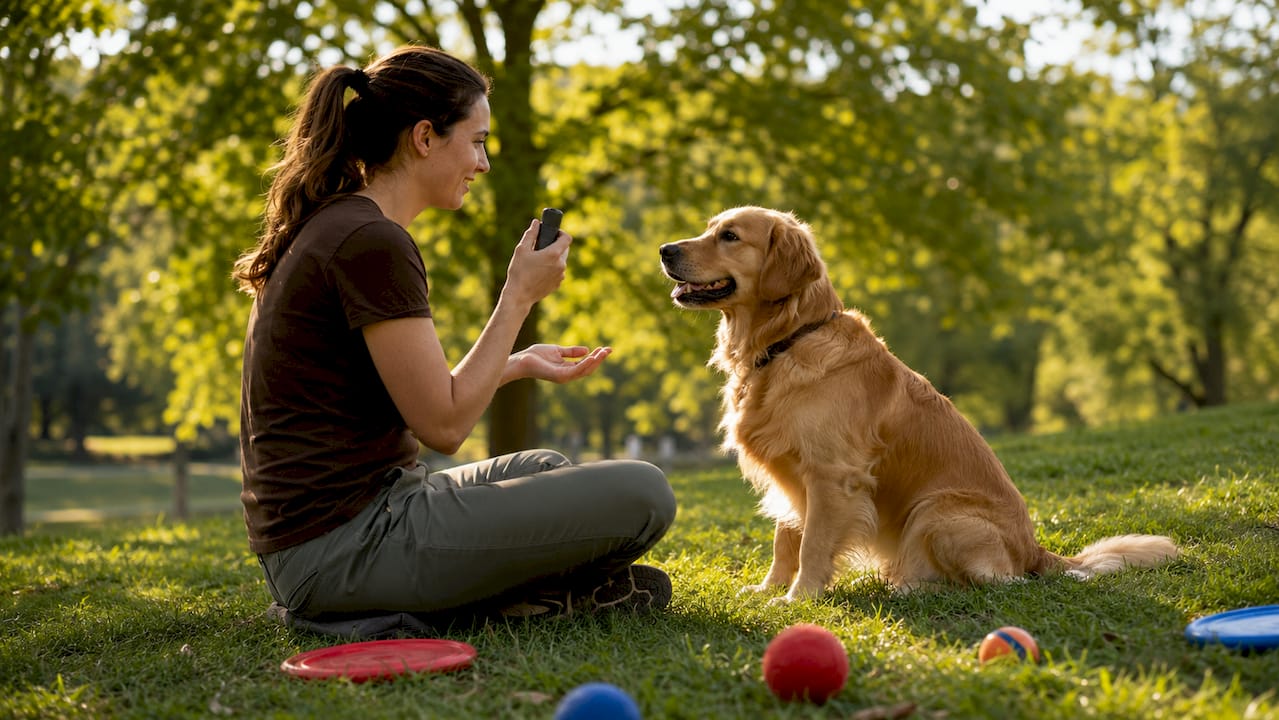
Marker training is defined as a method of communicating with your dog using a precise, consistent signal that marks the exact moment a desired behaviour occurs. That signal, whether a short word like “Yes” or the click of a clicker device, acts as a bridge between the behaviour and the reward that follows. Understanding how marker training works for dogs gives you a clear, kind, and science-backed way to teach almost anything, from basic obedience to resolving stubborn behavioural issues. The method is grounded in learning science, and when applied correctly, it produces faster results and happier dogs.
How does marker training work for dogs?
Marker training works by turning a neutral sound into a powerful communication tool through a process called operant conditioning. Your dog learns that the marker signal predicts a reward, so the moment they hear it, they know exactly which behaviour earned that reward. This precision is what separates marker training from general praise, and it is why marker training builds trust and clarity between you and your dog.
The science behind this is straightforward. A neutral signal, such as the word “Yes” or a clicker sound, becomes a conditioned reinforcer after repeated pairing with something the dog values, typically food treats. Over time, the marker itself carries meaning. Your dog does not just feel good when they hear it; they understand it as confirmation that a specific behaviour was correct.
Timing is the single most important variable in marker training. The reward must follow the marker within 1–2 seconds for the dog to make the correct association. Delays longer than two seconds significantly reduce learning accuracy.
The key principles that make this method work are:
Positive reinforcement: Desired behaviours are rewarded, making them more likely to be repeated.
Conditioned reinforcer: The marker gains its power through consistent pairing with rewards, not through praise or emotion.
Precise timing: The marker must be delivered at the exact moment the behaviour occurs, not before or after.
Consistency: The same marker signal is used every time, so the dog never has to guess what it means.
Research confirms that dogs trained with markers learn new behaviours faster and retain them more reliably than dogs trained with traditional praise methods alone. That is a meaningful advantage when you are working on recall, loose-lead walking, or managing reactivity.
How to train dogs with markers: a step-by-step process

Getting started with marker training is simpler than most people expect. The process follows a clear sequence, and consistency at each stage is what makes it work.
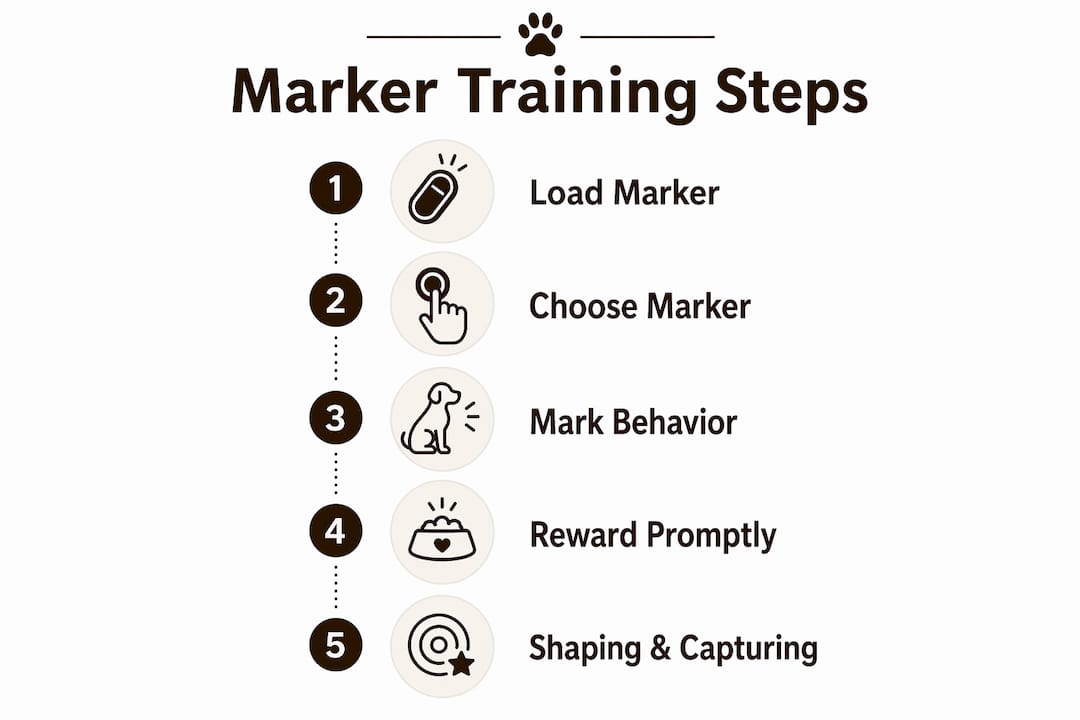
Step 1: Load the marker
Before you use the marker in any training context, your dog must learn what it means. This is called the loading phase. The initial loading phase requires 20–30 consecutive marker-treat pairings in a single session, with no behaviour required from the dog. You simply say “Yes” (or click), then immediately deliver a treat. Repeat this until your dog’s ears perk up or they look at you the moment they hear the marker. That response tells you the association has formed.
Step 2: Choose your marker carefully
A short, one-syllable word like “Yes” or “Click” works best as a verbal marker. The word should be one you do not use in everyday conversation, so it retains its precise meaning. A physical clicker device is equally effective and has the advantage of sounding identical every time, removing any variation in your tone of voice.
Pro Tip: Never use “Good boy” or “Good girl” as your marker. These phrases appear constantly in normal life, which dilutes their training value. Reserve your marker word exclusively for training moments.
Step 3: Mark the behaviour at the right moment
Once your marker is loaded, begin using it in training. The moment your dog performs the desired behaviour, deliver the marker signal immediately. If you are teaching a sit, the marker fires the instant your dog’s bottom touches the ground, not a second later. This precision is what tells your dog exactly what earned the reward.
Step 4: Deliver the reward promptly
After the marker, deliver the treat within 1–2 seconds. The marker buys you a small window of time, which is useful if the treat is in your pocket, but do not stretch that window. Speed matters, especially in the early stages of teaching a new behaviour.
Step 5: Use capturing and shaping
Capturing and shaping are the two core techniques for building behaviours with a marker.
Capturing means marking a behaviour your dog does naturally, such as lying down or looking at you. You wait for the behaviour to happen, mark it, and reward it. Over time, the dog offers it more frequently.
Shaping means rewarding small steps toward a final behaviour. If you want your dog to go to a mat, you might first mark them for looking at the mat, then for stepping toward it, then for touching it, and finally for lying on it. Each step builds on the last.
Pro Tip: Keep early training sessions to 3–5 minutes. Short, focused sessions produce better results than long, tiring ones. Your dog’s enthusiasm is your best indicator of whether the session is going well.
Marker training vs traditional dog training methods
Understanding the difference between marker training and conventional methods helps you see why so many dog owners and professional trainers have made the switch.
Feature | Marker training | Traditional praise methods |
Timing precision | Exact moment of behaviour | Often delayed or vague |
Clarity for the dog | High: specific signal confirms correct behaviour | Lower: praise can feel general |
Learning speed | Faster, with better retention | Slower, with more repetition needed |
Stress levels | Lower: dog knows what to expect | Higher: ambiguity can cause confusion |
Suitability for complex behaviours | Excellent: supports shaping and chaining | Limited: harder to break down steps |
Traditional praise, such as saying “Good dog” in a warm tone, is not without value. It builds warmth and connection. The problem is that it lacks the precision a dog needs to understand which specific behaviour earned the reward. If your dog sits, then sniffs the ground, then looks up at you, and you say “Good dog” at that point, what exactly are you rewarding?
Marker training removes that ambiguity entirely. The signal fires at the precise moment, so your dog receives clear information. Marker training creates a behavioural contract between you and your dog, making communication predictable and trust-building. That predictability is particularly valuable when working on obedience or addressing reactive behaviour.
Marker training is not always the right tool in isolation. For dogs with severe anxiety or fear responses, the environment and emotional state must be managed alongside the marker work. You can read more about this in the Happy-dogtraining guide on training environment factors.
What are the most common mistakes in marker training?
Most marker training problems come down to timing and consistency. These are the errors to watch for:
Delayed marking: Marking a second or two after the behaviour means you are rewarding whatever the dog is doing at that moment, not the behaviour you intended. A delay over two seconds significantly reduces learning effectiveness.
Inconsistent marker use: Using the marker sometimes but not others, or using multiple different words, confuses the dog. Pick one marker and use it every time.
Emotional marking: Saying “Yes!” with excitement in one session and flatly in another changes the signal. The marker should be neutral and consistent, not a reflection of your mood.
Skipping the loading phase: Jumping straight into training without loading the marker means the signal carries no meaning. Always complete the pairing phase first.
Rewarding after the marker is forgotten: If you mark and then get distracted before delivering the treat, you break the association. The treat must follow every single marker, without exception.
Pro Tip: Film a short training session on your phone and watch it back. You will often spot timing errors you did not notice in the moment. It is one of the fastest ways to sharpen your marker skills.
Avoiding these mistakes is not complicated, but it does require attention. The good news is that dogs are forgiving learners. If you correct your timing and stay consistent, progress comes quickly.
Can marker training help with complex behaviours and bonding?
Marker training is not just for teaching basic commands. It is a communication system that grows with your dog and your relationship.
Chaining behaviours: You can use the marker to build sequences of actions, such as going to a place, lying down, and staying. Each step is marked and rewarded individually before being linked together.
Addressing behavioural issues: For dogs with fearfulness or reactivity, marker training provides the clarity and predictability that reduces stress and builds confidence. A dog that understands what earns rewards is a calmer, more settled dog.
Everyday communication: Using your marker outside formal sessions, for example, marking your dog for sitting calmly when a visitor arrives, reinforces good behaviour in real-life situations.
Strengthening the bond: Every time you mark and reward correctly, you are telling your dog, “I see you, and I appreciate what you just did.” That consistency builds genuine trust over time.
For urban dog owners managing obedience in smaller spaces, the Happy-dogtraining HDB dog training guide shows how marker training applies practically in confined environments.
Key takeaways
Marker training is the most precise and effective reward-based method available to dog owners, because it gives your dog clear, immediate information about exactly which behaviour earned the reward.
Point | Details |
Load the marker first | Complete 20–30 marker-treat pairings before using it in training sessions. |
Timing is non-negotiable | Deliver the reward within 1–2 seconds of the marker signal every time. |
Use a neutral, consistent marker | Choose a single short word or clicker and use it the same way in every session. |
Capturing and shaping build behaviours | Use these two techniques to teach both simple and complex behaviours step by step. |
Marker training reduces stress | Clear signals make training predictable, which builds confidence and trust in your dog. |
Why marker training changed how I see dog communication
I have worked with dogs for over two decades, and the shift to marker training was one of the most significant changes I made as a trainer. Before I understood the science behind it, I relied heavily on verbal praise and repetition. Dogs learned, but slowly, and I could see the confusion in their eyes when they were not sure what they had done right.
The moment I started using a precise marker, the difference was immediate. Dogs that had been struggling with a behaviour for weeks made progress within a single session. What struck me most was not the speed of learning. It was the change in the dog’s attitude. They became more engaged, more willing to try new things, because they understood the rules of the game.
The most common mistake I see from owners who try marker training on their own is emotional marking. They get excited when the dog does something right and their “Yes!” becomes a shout of joy rather than a neutral signal. The dog reads the emotion, not the information. Keeping the marker calm and consistent is harder than it sounds, but it is the detail that separates good results from great ones.
Marker training also changed how I think about the owner-dog relationship. When you communicate clearly and reward honestly, your dog learns to trust your signals. That trust carries over into every part of your life together, not just formal training sessions. Wagging tails and joyful moments in training are not just pleasant. They are evidence that your dog understands you, and that is worth every second of practice.
— Mark
Start marker training with Happy-dogtraining
If you are ready to put marker training into practice with expert guidance, Happy-dogtraining is here to help. With over 20 years of experience and AVS-accredited methods, the team works with each dog individually to build the obedience and confidence that lasts.

Whether your dog needs foundational obedience work or support with reactive or fearful behaviour, Happy-dogtraining’s structured programmes incorporate marker training at every stage. The 4-week obedience programme is designed to deliver real, lasting results using science-based techniques, with free lifetime support included after training. You can also explore the full range of humane training methods to find the right fit for your dog’s needs.
FAQ
What is marker training for dogs?
Marker training is a method that uses a precise, consistent signal, such as the word “Yes” or a clicker sound, to tell a dog the exact moment a desired behaviour has occurred. The marker is always followed immediately by a reward, creating a clear communication system between owner and dog.
How long does it take to load a marker?
The loading phase typically requires 20–30 marker-treat pairings in a single session, with no behaviour required from the dog. Most dogs show a clear response to the marker within one or two sessions.
Is a clicker better than a verbal marker?
A clicker produces an identical sound every time, which removes variation in tone. A verbal marker like “Yes” is equally effective if delivered consistently and calmly. The best marker is the one you will use accurately and reliably in every session.
Can marker training help with aggression or fearfulness?
Yes. Marker training reduces stress by making training signals clear and predictable, which builds confidence in anxious or reactive dogs. It is most effective when combined with a structured programme tailored to the individual dog’s needs.
How soon will I see results with marker training?
Many owners notice improved responsiveness within the first few sessions once the marker is properly loaded. Complex behaviours take longer to build, but the clarity of marker training means progress is typically faster than with traditional praise methods alone.
Recommended
Comments