Types of humane dog training methods explained
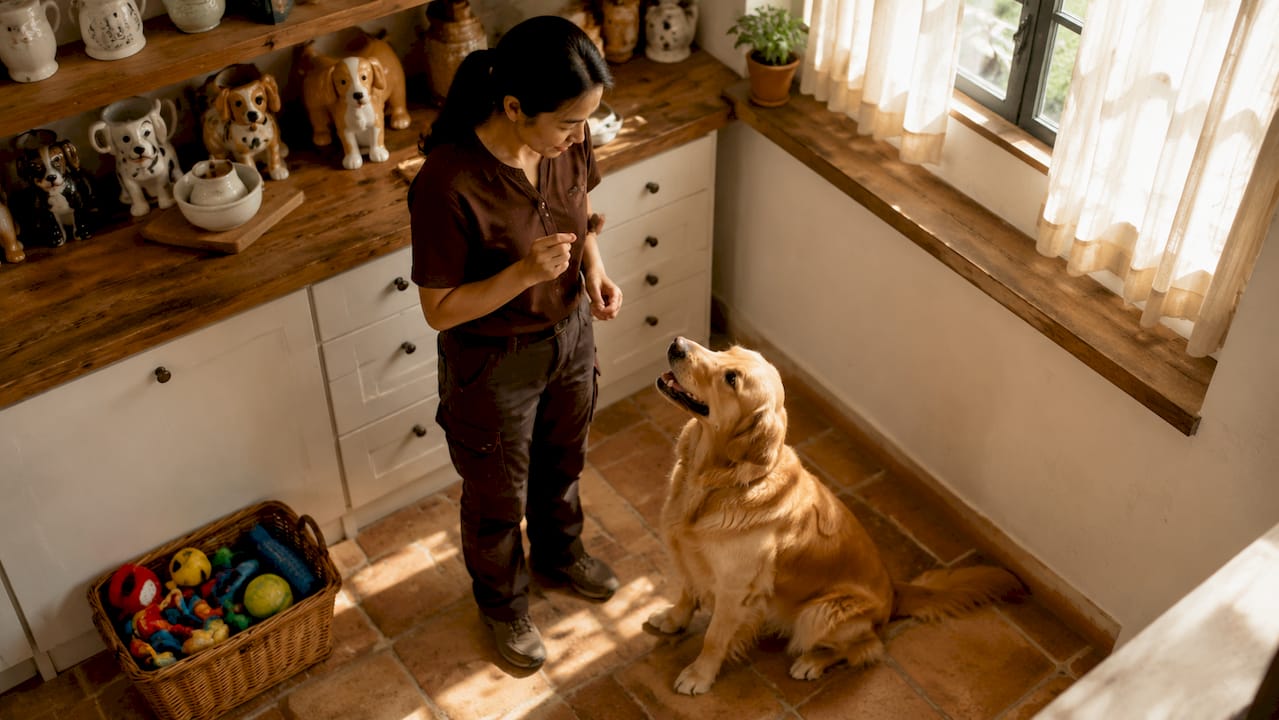
Humane dog training methods are defined as techniques that teach dogs through positive reinforcement, rewarding desired behaviours rather than punishing mistakes. The industry standard term for this approach is reward-based training, and it sits at the heart of every science-backed, force-free method available today. A 2026 study on reward-based training confirms that humane methods not only improve behaviour but also protect your dog’s emotional wellbeing. Whether you have a bouncy puppy or a dog with long-standing habits, understanding the different types of gentle training techniques gives you the tools to build a relationship built on trust and confidence.
1. What are the types of humane dog training methods?
Reward-based training is a structured system, not a permissive free-for-all. It sets clear boundaries by engaging your dog as a willing, motivated partner. The methods below each have a distinct role, and the most effective trainers at Happy-dogtraining use a combination depending on the dog’s age, temperament, and learning stage.
The core types of humane dog training methods are:
Positive reinforcement training — rewarding behaviour you want to see more of
Lure-and-reward training — using a treat or toy to guide the dog into position
Shaping — reinforcing small steps toward a final behaviour
Capturing — rewarding naturally occurring behaviours
Marker training / clicker training — using a precise signal to mark the exact moment of correct behaviour
Each method works within the same ethical framework: your dog learns that good choices lead to good things. That clarity is what makes reward-based training so effective.
2. Positive reinforcement training: the foundation of kind training
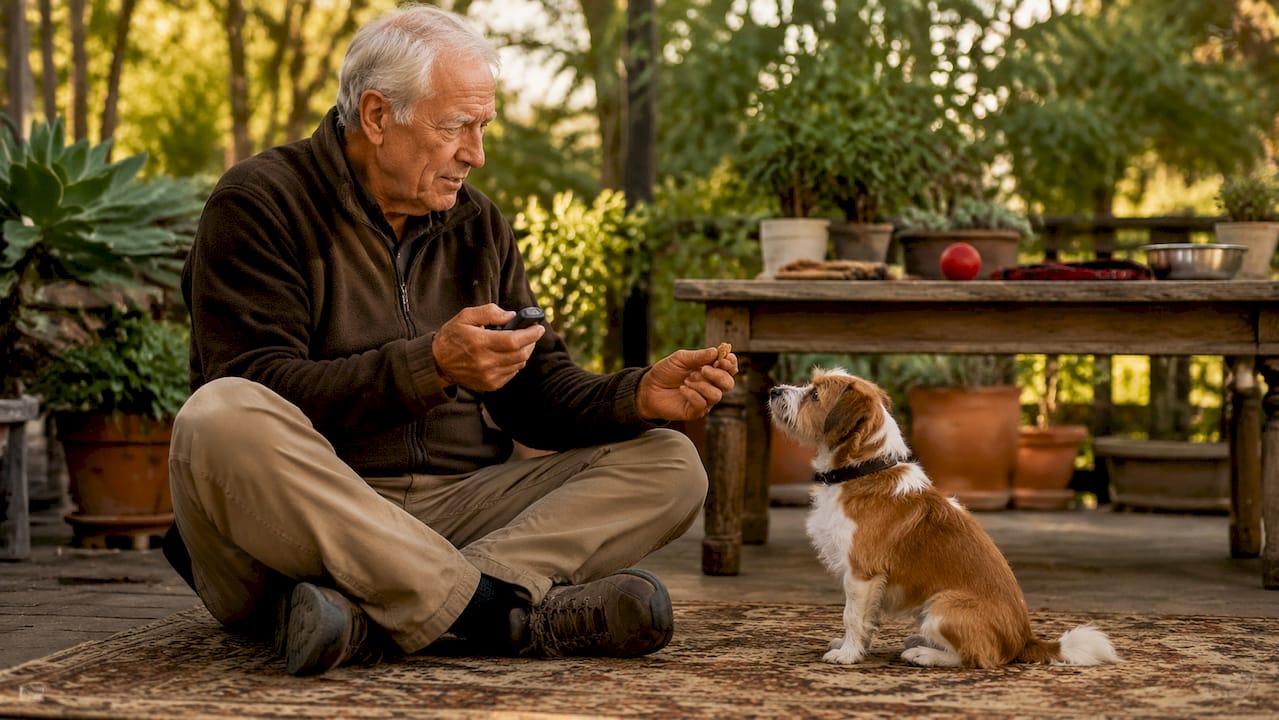
Positive reinforcement is defined as adding a desired stimulus immediately after a behaviour to increase the likelihood of that behaviour happening again. It is the most widely researched and recommended approach in modern canine science. When your dog sits and you give a treat, you are not bribing. You are communicating clearly.
Rewards are not limited to food. Diverse reinforcers including toys, praise, sniffing opportunities, and play all count, and understanding what motivates your dog specifically makes training far more effective. A dog who loves a game of tug may respond better to a toy reward than a food treat. Matching the reward to the dog is one of the most underused skills in home training.
Proper reinforcement requires waiting for the behaviour before producing the reward. Rewarding before the behaviour creates bribery, not learning. The dog must work for the reward, not follow a visible lure indefinitely.
Pro Tip: Vary your rewards across sessions. Use high-value treats like chicken or cheese for new or difficult behaviours, and lower-value rewards for well-practised ones. This keeps your dog engaged and prevents them from becoming selective.
Key reward types to rotate:
Small, pea-sized food treats (chicken, cheese, commercial training treats)
Favourite toys or tug games
Verbal praise paired with calm physical affection
Life rewards such as permission to sniff, greet another dog, or go through a gate
3. How lure-and-reward training works and when to use it
Lure training uses a visible treat or toy to guide your dog’s body into the desired position. It is one of the most beginner-friendly humane obedience training methods because it produces fast, visible results. Hold a treat near your dog’s nose, move it slowly back over their head, and most dogs will naturally lower into a sit. The behaviour happens, you reward it, and the association begins to form.
Lure training is best suited to teaching new commands such as sit, down, and spin, particularly with puppies or dogs new to training. The critical step that many owners miss is fading the lure. Once your dog performs the behaviour reliably, you must remove the treat from your hand and use an empty hand signal instead, rewarding from your other hand or a treat pouch after the behaviour is complete.
Luring has limits. If the lure is never faded, the dog learns to respond only when food is visible, which is not reliable real-world behaviour. Use luring to introduce a behaviour, then transition to other methods to build fluency.
When lure training works best:
Teaching a brand-new behaviour in a single session
Working with young puppies in the 3 to 14 week socialisation window
Helping nervous dogs feel comfortable with movement-based cues
Demonstrating a behaviour to a dog who has no prior training history
4. How shaping and capturing support skill development
Shaping is defined as reinforcing successive approximations of a final behaviour, rewarding each small step toward the goal rather than waiting for the complete action. Teaching a dog to close a door, for example, starts with rewarding any nose touch to the door, then a firmer push, then a push that moves the door, and so on. Shaping builds focus, problem-solving confidence, and a dog who actively tries to figure out what earns the reward.
Capturing works differently. You simply wait for your dog to offer a behaviour naturally, then mark and reward it the moment it happens. If your dog stretches into a bow after waking up, mark it and reward it consistently, and you will soon have a dog who offers that behaviour on cue. Capturing is particularly useful for building on things your dog already does well.
Choose one target behaviour and decide whether shaping or capturing suits it better.
Set a clear criteria for each step in shaping so you know exactly what earns the reward.
Keep sessions short. Five minutes of focused shaping is more productive than twenty minutes of unfocused repetition.
End on success. Always finish a session with a behaviour your dog knows well so they leave the session feeling confident.
Pro Tip: Keep a training journal for one week. Note which behaviours your dog offers spontaneously throughout the day. You will likely find three or four natural behaviours worth capturing that you had not considered training.
5. What is clicker training and why does it work so well?
Clicker training is a form of marker training that uses a small handheld device to produce a precise, consistent click sound the moment your dog performs the correct behaviour. The clicker bridges the gap between the behaviour and the reward, which is critical because human reaction time is often too slow to reward accurately with food alone. The click tells your dog: that exact thing you just did is what earned the reward.
The science behind it is straightforward. Through consistent pairing with food rewards, the click becomes a conditioned reinforcer that triggers a positive emotional response in the dog. This is why clicker training improves learning speed and engagement. The dog is not just responding to food. They are responding to the clarity of communication.
Verbal markers such as “yes” work on the same principle and are useful when your hands are occupied. The advantage of a clicker is consistency. Your voice changes with emotion, tiredness, and context. The clicker always sounds the same, which removes ambiguity for the dog.
How to introduce the clicker:
Click once and immediately give a treat, repeating 10 to 15 times in a row with no behaviour required. This is called loading the clicker.
Once your dog’s ears prick at the sound of the click, the clicker is loaded and ready to use in training.
Always click during the behaviour, not after. The timing must be precise.
Never click without following up with a reward, even if you clicked by accident.
6. Humane training vs punishment-based methods: a clear comparison
Punishment-based training uses aversive stimuli, such as choke chains, prong collars, or harsh verbal corrections, to suppress unwanted behaviour. Aversive methods are linked to increased stress, fear, and aggression, and they damage the trust between dog and owner. Critically, punishment suppresses the visible behaviour but leaves the underlying emotional state unchanged. A dog who stops growling because of punishment has not become less anxious. They have simply lost their warning signal.
The Ziv 2017 systematic review confirms that reward-based methods are the preferred first-line approach, with punishment-based training carrying measurable welfare risks. This is not a matter of opinion. It is the current scientific consensus.
Factor | Humane reward-based training | Punishment-based training |
Dog’s emotional state | Positive, engaged, confident | Stressed, fearful, suppressed |
Learning retention | Strong, long-term | Short-term, context-dependent |
Dog-owner bond | Strengthened through trust | Weakened through fear |
Risk of aggression | Low | Elevated |
Recommended by science | Yes, confirmed 2026 | No, discouraged by research |
Choosing dog training without punishment is not simply a softer option. It is the more effective one, producing dogs who are genuinely willing to cooperate rather than simply avoiding discomfort.
Key takeaways
The most effective types of humane dog training methods are positive reinforcement techniques, including clicker training, lure training, shaping, and capturing, because they build willing cooperation and protect your dog’s emotional wellbeing.
Point | Details |
Positive reinforcement is the foundation | Reward desired behaviour immediately and consistently to build reliable responses. |
Lures must be faded | Introduce lures to teach new behaviours, then remove them to build genuine understanding. |
Clickers improve timing | A clicker marks the exact moment of correct behaviour, speeding up learning. |
Punishment carries real risks | Aversive methods increase stress and aggression without resolving the underlying cause. |
Reward variety matters | Rotate food, toys, praise, and play to match your dog’s motivation and keep training fresh. |
What twenty years of training has taught me about kindness and results
I have worked with hundreds of dogs across Singapore, from confident Labradors to deeply fearful rescues, and the pattern is always the same. The owners who see the fastest, most lasting results are not the ones who apply the most pressure. They are the ones who stay consistent, stay calm, and genuinely enjoy the process with their dog.
The ethical stance of the trainer is the strongest predictor of training success. That finding from 2026 research does not surprise me at all. When you believe your dog is a sentient being who deserves clarity and kindness, you train differently. You notice what is working. You adjust without frustration. You celebrate small wins.
One thing I see owners underestimate is how much their own energy shapes the session. A tense owner produces a tense dog. A patient owner who finds the session genuinely enjoyable produces a dog who wants to come back for more. That wagging tail at the start of a training session is not just endearing. It is evidence that your dog trusts the process.
My honest advice: do not rush to the end goal. The dog who learns to sit reliably in three weeks, with full understanding and enthusiasm, is far more useful than the dog who sits on command after three days but only when you are holding a treat. Build the foundation properly, and everything else follows.
— Mark
Ready to train with confidence and kindness?
Happy-dog training has spent over 20 years helping Singapore dog owners build strong, joyful relationships with their dogs through science-based, force-free methods. Whether you are starting from scratch with a new puppy or working through a specific behavioural challenge, there is a programme designed for your dog’s exact needs.

Explore private obedience classes tailored to your dog’s temperament and your goals, or book a place on the 4-week AVS-approved intensive programme for dogs who need structured, consistent guidance. For dogs showing reactive or aggressive behaviour, Happy-dog training also offers specialist consultations with free lifetime support after training. Your dog’s best behaviour is closer than you think.
FAQ
What is the most effective humane dog training method?
Positive reinforcement training is the most research-supported humane method, using immediate rewards to strengthen desired behaviours. Combining it with marker training, such as clicker training, improves timing and accelerates learning.
How does humane training differ from punishment-based training?
Humane training rewards correct behaviour to build willing cooperation, while punishment-based training suppresses behaviour through aversive stimuli. Research confirms that punishment increases stress and aggression without addressing the dog’s underlying emotional state.
Can humane methods work for dogs with aggression or fear issues?
Yes. Gentle, reward-based techniques are particularly effective for fearful or reactive dogs because they build confidence without adding stress. Specialist programmes, such as those offered by Happy-dogtraining, use force-free behaviour modification tailored to each dog’s needs.
How quickly should I reward my dog during training?
Reward delivery within 1 to 2 seconds of the desired behaviour is critical for the dog to make the correct association. A clicker or verbal marker bridges any delay between the behaviour and the treat.
Do I always need treats for humane training?
No. While food is a powerful motivator, diverse rewards including toys, praise, play, and sniffing opportunities are all valid reinforcers. The key is identifying what your individual dog finds most motivating and using that to your advantage.
Recommended
Comments