Confinement anxiety in dogs: causes, signs, and help
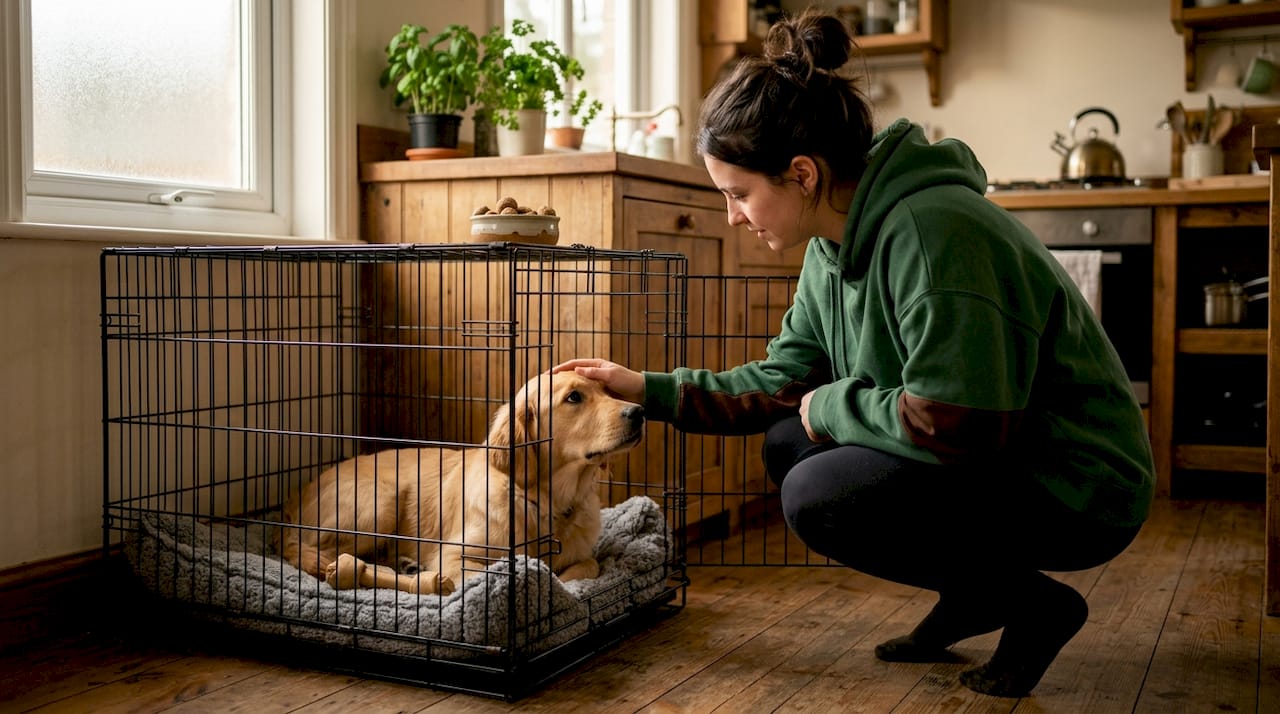
Confinement anxiety in dogs is defined as an intense panic response triggered when a dog is physically restricted, whether in a crate, pen, or small room, regardless of whether the owner is present. This is the key distinction from dog separation anxiety, which is driven by the owner’s absence rather than physical restriction. Veterinary behaviourists recognise confinement anxiety as a genuine physiological panic state, not wilful disobedience. Symptoms start within minutes of restriction and include panting, drooling, whining, pacing, and escape attempts. Understanding what is confinement anxiety in dogs is the first step towards helping your dog feel safe and settled again.
What are the signs of confinement anxiety in dogs?
Confinement anxiety produces clear, observable signs that appear quickly once a dog is restricted. Knowing what to look for helps you act early and avoid unnecessary distress for your dog.
The most common signs include:
Panting and drooling even in a cool environment, indicating physiological stress rather than temperature regulation
Vocalisation such as barking, whining, or howling that begins almost immediately after confinement
Pacing back and forth within the confined space, showing an inability to settle
Scratching and chewing at crate doors, pen walls, or room exits in an attempt to escape
House soiling despite being fully toilet trained, because panic overrides learned behaviour
Self-injury including broken nails, worn teeth, or raw paws from persistent escape attempts
These signs differ from normal restlessness. A dog that is simply bored or frustrated may vocalise briefly and then settle. A dog with confinement anxiety escalates rather than calms. The panic response is physiological and beyond the dog’s conscious control, which is why punishment makes the situation significantly worse.
Pro Tip: Set up a camera or use a pet monitoring app to film your dog for the first 30 minutes after confinement. What you see on video is often very different from what you imagine is happening, and it gives you accurate information to share with a vet or behaviourist.
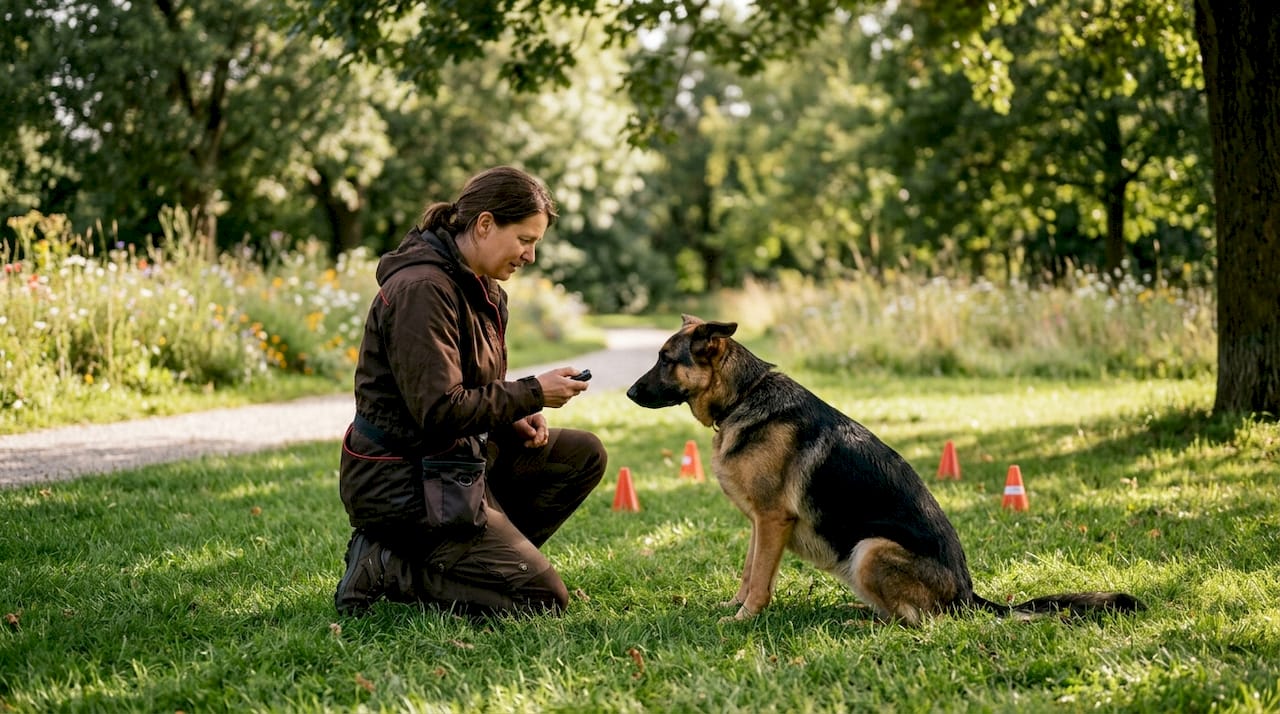
Behavioural signs that specifically point to confinement anxiety rather than general restlessness include distress that begins before the door is even fully closed, and behaviour that does not reduce over repeated confinement sessions. You can learn more about reading your dog’s body language by understanding canine stress signals, which often appear before full panic sets in.
How does confinement anxiety differ from separation anxiety?
Confinement anxiety and dog separation anxiety are related but distinct conditions. Accurate identification matters because the treatment approach for each is different.
Separation anxiety is triggered by the owner’s absence. The dog panics because the person they are bonded to has left, regardless of whether the dog is confined or free to roam the house. Confinement anxiety is triggered by physical restriction. The dog panics because it cannot move freely, even if the owner is sitting in the same room.
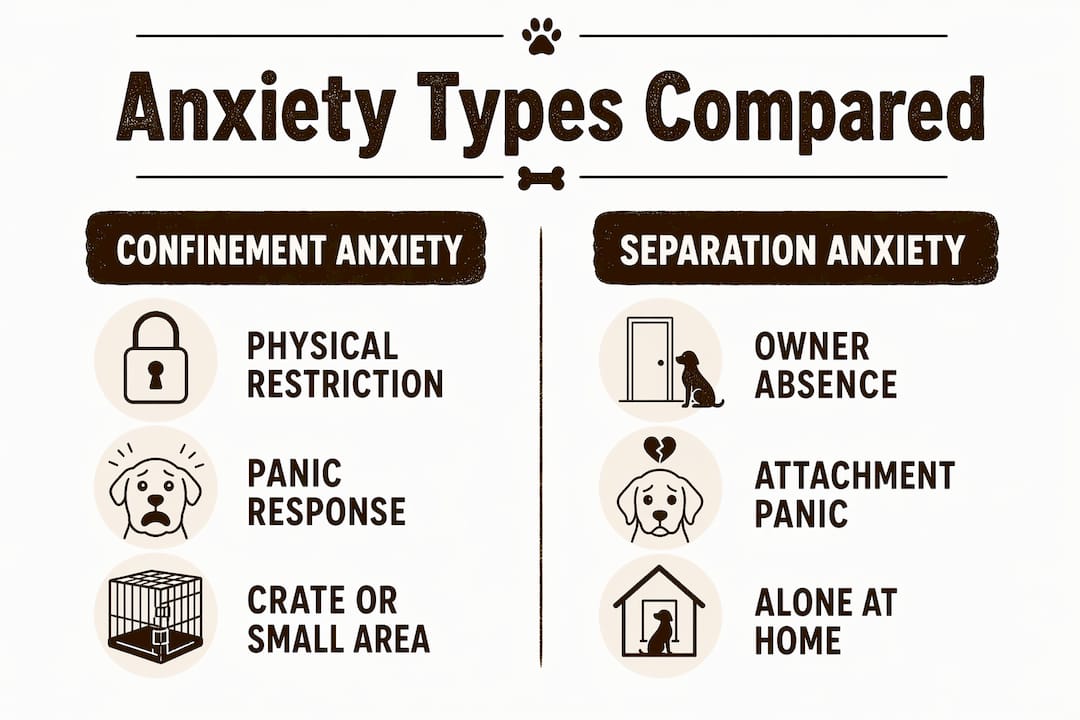
Some dogs experience both conditions simultaneously, which makes diagnosis more complex. A dog left alone in a crate may be reacting to the crate, to the owner’s absence, or to both at once.
Feature | Confinement anxiety | Separation anxiety |
Primary trigger | Physical restriction | Owner’s absence |
Owner present? | Distress occurs even with owner nearby | Distress reduces when owner returns |
Free roam when alone | Dog may be calm if not confined | Dog distressed regardless of confinement |
Both conditions | Possible to have both simultaneously | Possible to have both simultaneously |
Key symptom focus | Escape attempts, scratching at barriers | Vocalisation, destruction near exits |
Understanding this distinction shapes every decision you make about management. A dog with pure separation anxiety may do well with gradual alone training that builds confidence when left free in the home. A dog with confinement anxiety needs a different starting point entirely. For a detailed look at separation anxiety symptoms, the separation anxiety owner’s guide covers the full picture.
What causes confinement anxiety in dogs?
Confinement anxiety develops from a combination of past experience, genetics, and how a dog was introduced to restricted spaces. There is rarely a single cause.
Common contributing factors include:
Previous trauma or negative experiences in a crate or enclosed space, such as being left for excessive periods or using confinement as punishment
Lack of gradual habituation where a dog was placed directly into a crate without a slow, positive introduction
Genetic predisposition in certain breeds or individual dogs that are naturally more sensitive to restriction
Changes in routine or environment such as moving home, a new family member, or a shift in the owner’s schedule
Improper crate training where the crate was associated with isolation or distress from the very beginning
The physiological panic response in confinement anxiety is real and measurable. The dog’s nervous system activates a fight-or-flight reaction. This is why owners frequently misinterpret the behaviour as stubbornness or defiance, when in fact the dog is experiencing genuine terror. Labelling it as naughtiness delays effective help and damages the dog’s trust.
Pro Tip: If your dog was ever placed in a crate as a form of punishment, even once, that association can persist for years. Rebuilding a positive relationship with the crate takes patience and a structured desensitisation plan, not repetition of the same approach.
One commonly overlooked cause is the well-intentioned owner who upgrades to a stronger, more secure crate when their dog escapes. Increasing crate security without addressing the emotional state does not reduce anxiety. It removes the dog’s perceived escape route and can cause serious self-injury. Physical containment and emotional management are not the same thing.
What treatment options are available for confinement anxiety?
Treating anxiety in dogs with confinement-specific distress requires a structured, layered approach. No single technique works in isolation.
Avoid unnecessary confinement. If your dog is in genuine panic, continuing to confine them while you work on training causes ongoing harm. Manage the environment first by using baby gates, exercise pens with more space, or keeping your dog in a larger room while you build a treatment plan.
Begin desensitisation and counter-conditioning. This means introducing the crate or confined space in tiny, non-threatening steps. Start with the door open, reward calm behaviour near the space, and build duration very gradually. Never rush this process. Dog independence training follows similar principles and can run alongside confinement work.
Consider pharmacological support. Medication such as fluoxetine or clomipramine is recommended by veterinary behaviourists when anxiety is severe. These medications are typically administered up to 2 hours before an expected confinement event. Medication is not a shortcut. It creates a calmer baseline from which the dog can actually learn.
Use medication as a learning window. High-arousal panic states prevent learning entirely. A dog in full panic cannot absorb new associations. Medication reduces the arousal level enough for behaviour modification to take effect. This is a clinical reality, not a sign of failure.
Monitor progress with video. Film your dog during every training session. Track whether the time before distress onset is increasing. Note whether your dog is genuinely settling or simply exhausted after a panic episode.
Seek professional veterinary and behavioural guidance. Confinement anxiety at a clinical level requires expert assessment. A qualified behaviourist can design a protocol specific to your dog’s triggers, history, and temperament.
How can you assess and monitor confinement anxiety at home?
Accurate assessment is the foundation of effective management. Many owners underestimate the severity of their dog’s distress because they are not present to observe it.
Key monitoring steps include:
Film the first 30 minutes of every confinement session. Failure to settle within 15 minutes indicates clinical anxiety rather than normal adjustment.
Distinguish genuine calm from exhausted collapse. A dog that appears to settle after 40 minutes may simply be too tired to continue panicking. Video surveillance reveals whether the dog is resting calmly or has simply run out of energy after sustained distress.
Note the exact trigger point. Does distress begin when you pick up your keys, when you close the crate door, or when you leave the room? Pinpointing the trigger shapes the desensitisation starting point.
Track patterns over time. Keep a simple log of date, duration of confinement, and first sign of distress. Share this with your vet or behaviourist.
Observation | What it suggests |
Distress within 1–2 minutes of confinement | Severe confinement anxiety; professional help needed |
Settles after 10–15 minutes | Mild adjustment; monitor and continue gradual training |
Appears calm but shows exhaustion signs | Panic followed by collapse; do not mistake for progress |
No distress when owner is present in room | Likely confinement anxiety rather than separation anxiety |
Checking for signs of improvement over time gives you confidence that your approach is working and helps you adjust when it is not.
Key takeaways
Confinement anxiety in dogs is a physiological panic response to physical restriction, and it requires a structured combination of environmental management, desensitisation, and professional support to resolve effectively.
Point | Details |
Distinct from separation anxiety | Confinement anxiety is triggered by physical restriction, not the owner’s absence. |
Symptoms escalate quickly | Panting, vocalisation, and escape attempts begin within minutes of confinement. |
Punishment worsens the condition | The panic response is involuntary; scolding increases fear and delays recovery. |
Medication supports learning | Anxiolytics reduce arousal enough for behaviour modification to take effect. |
Video monitoring is non-negotiable | Filming the first 30 minutes reveals true distress patterns that owners cannot observe in person. |
What I have learned from working with confinement anxiety
Working with anxious dogs over many years has taught me one thing above all else: owners are rarely the problem, but they are always the solution. The guilt that comes with watching your dog panic in a crate is real and understandable. You put them there to keep them safe, and it looks like you have caused harm. That conflict is one of the hardest parts of this condition to sit with.
What I have seen consistently is that the owners who make the most progress are the ones who stop trying to push through the anxiety and start working around it. They remove the confinement trigger while they build a proper plan. They film their dog instead of guessing. They ask for help early rather than waiting months to see if things improve on their own.
The biggest misconception I encounter is that medication means giving up on training. The opposite is true. A dog in full panic cannot learn. Medication brings the arousal down to a level where training can actually work. Accepting that is not weakness. It is good science and good care.
Patience is not passive. Every calm, positive repetition you build with your dog is progress, even when it feels invisible. The dogs I have seen recover from severe confinement anxiety are proof that this condition is manageable. It takes time, consistency, and the right support, but the outcome is absolutely worth it.
— Mark
How Happy-dogtraining can help your anxious dog
If your dog is showing signs of confinement anxiety, professional guidance makes a measurable difference to how quickly and safely they recover.
Happy-dogtraining has over 20 years of experience working with dogs that struggle with fear, anxiety, and confinement-related distress. The programmes are personalised to each dog’s history and temperament, using humane, science-based methods that build genuine confidence rather than simply suppressing behaviour. The AVS-accredited trainer works with owners as partners throughout the process, and every client receives free lifetime support after training. For dogs with anxiety, that ongoing relationship matters. Visit Happy-dogtraining to find out how a tailored programme can support your dog, or explore the dedicated fearful dog class for dogs with anxiety and fear responses.
FAQ
What is confinement anxiety in dogs?
Confinement anxiety is a panic response that occurs when a dog is physically restricted in a crate, pen, or small room. It differs from separation anxiety because distress occurs even when the owner is present nearby.
Can a dog have both confinement anxiety and separation anxiety?
Yes. Some dogs experience both conditions at the same time, reacting to physical restriction and to the owner’s absence as separate triggers. Accurate diagnosis requires observing the dog in different scenarios, ideally with video monitoring.
Is confinement anxiety the same as being naughty in the crate?
No. The behaviour is a physiological panic response that the dog cannot consciously control. Treating it as defiance delays effective help and can worsen the dog’s distress significantly.
Does medication help with confinement anxiety?
Medication such as fluoxetine or clomipramine can reduce arousal enough for behaviour modification to take effect. Veterinary behaviourists recommend it when anxiety is severe, administered up to 2 hours before confinement events.
How long does it take to treat confinement anxiety?
Recovery time varies depending on severity, history, and consistency of the management plan. Mild cases may improve within weeks of gradual desensitisation, while severe cases often require months of combined behavioural and pharmacological support.
Recommended
Comments