Why rescue dogs develop separation issues: a guide for new owners
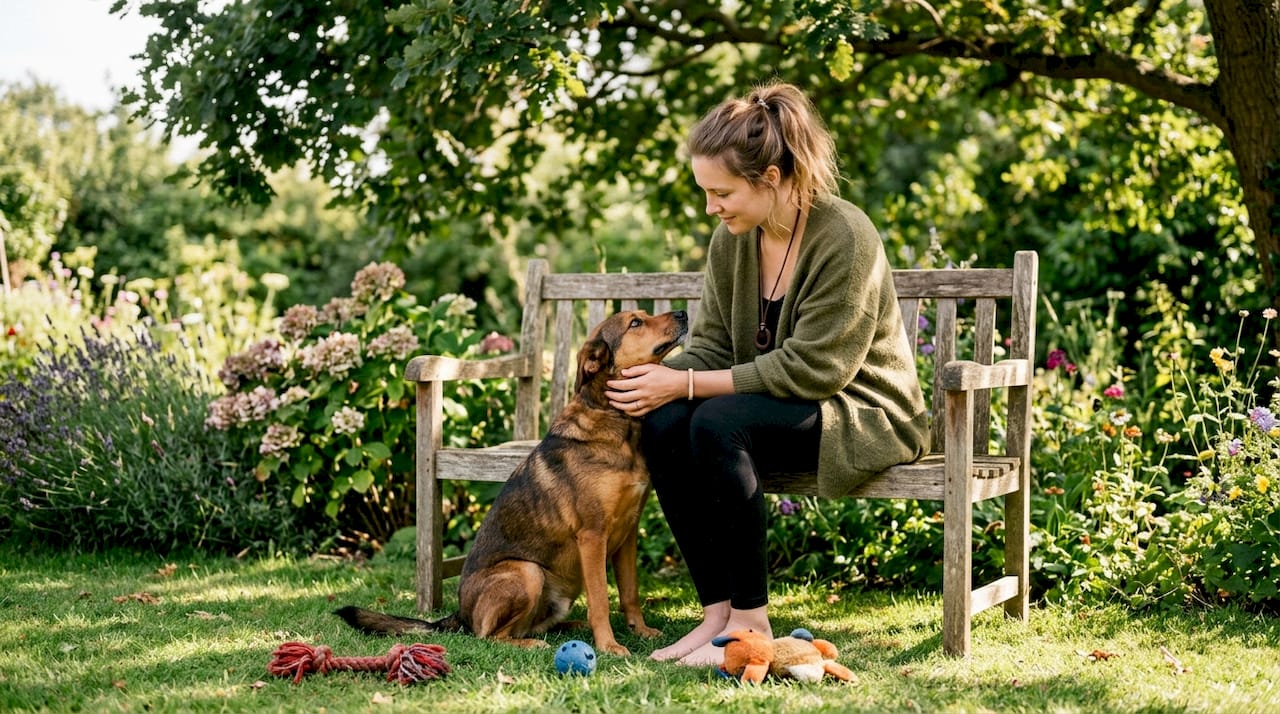
Separation anxiety in dogs is defined as a fear-based disorder triggered specifically by the absence of a primary caregiver. Clinical separation anxiety affects approximately 15–20% of the dog population, making it one of the most common behavioural disorders vets and trainers encounter. Rescue dogs sit at the higher end of that range because their histories are rarely straightforward. Understanding why rescue dogs develop separation issues is the first step towards helping your dog feel genuinely safe when you leave the room. This guide explains the real causes, what the signs look like, and what you can do about it with confidence and kindness.
Why do rescue dogs develop separation anxiety?
Rescue dogs develop separation anxiety because their past has taught them that people disappear without warning and do not always come back. That is not a metaphor. A rescue dog’s history of upheaval programmes the nervous system to treat an owner’s departure as a genuine threat, not an inconvenience. The result is panic, not naughtiness.
Several factors combine to create this vulnerability:
Prior instability. Multiple rehomings, time in kennels, or sudden loss of a family all disrupt a dog’s sense of safety. Each transition resets the dog’s baseline stress level upward.
High baseline cortisol. Rescue dogs’ nervous systems often run hot due to accumulated past stress. A dog that cannot self-settle in a calm home will not cope when left alone.
Genetic predisposition. Certain breeds and individual temperaments carry a higher sensitivity to social separation. This is not a flaw. It simply means the dog needs more deliberate support.
Insufficient exercise and mental stimulation. A Nordic study identified daily exercise as the strongest environmental factor separating dogs with and without separation problems. A physically under-stimulated dog has more nervous energy to direct at anxiety.
Owner emotional style. Caregiver emotional closeness and training attitudes explain up to 15% of the variance in separation anxiety severity. Excessive emotional attachment from owners was identified as a more significant factor than avoidant attachment. That finding surprises most owners, but it makes sense: a dog that is never encouraged to be independent never learns that solitude is survivable.
Lack of learned solitude skills. Many rescue dogs simply were never taught that being alone is safe. This is a life skill, and it can be taught at any age through dog independence training.
The causes of separation anxiety in dogs are rarely a single event. They are almost always a combination of history, biology, and the environment the dog lands in after adoption.
How does separation anxiety show up in rescue dogs?
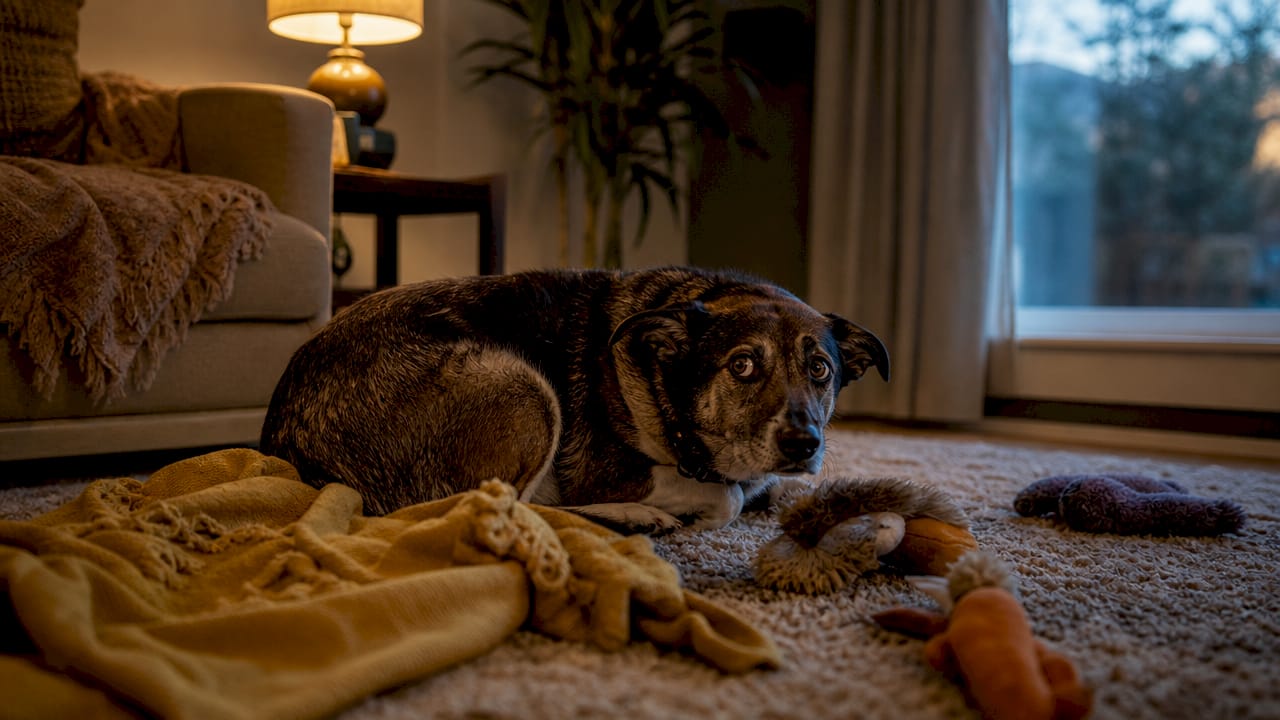
Recognising the signs early gives you the best chance of addressing them before they become entrenched. The most common separation anxiety symptoms fall into three categories.
Behavioural signs when alone:
Destructive behaviour focused near exit points such as doors, windows, and gates
Persistent barking, howling, or whining that begins shortly after departure
Indoor toileting in a dog that is otherwise house-trained
Pacing, circling, or inability to settle
Pre-departure anxiety cues:
These are easy to miss but highly telling. Your dog may begin showing distress before you even leave. Reacting to the sound of keys, following you to the door, trembling when you put on shoes, or refusing food when your bag appears are all pre-departure signals. They indicate the dog has learnt to associate certain cues with your absence.
What separation anxiety is not:
Distinguishing separation anxiety from noise phobia and confinement anxiety requires one key question: does the distress occur only when the owner is absent? A dog that panics in a crate regardless of whether you are home likely has confinement anxiety, not separation anxiety. A dog that reacts to thunder whether you are present or not has a noise sensitivity issue. Getting this distinction right matters because the training approach differs significantly.
Pro Tip: Set up a phone or tablet to record your dog for the first 30 minutes after you leave. Video evidence removes guesswork and helps a trainer or vet make an accurate assessment quickly.
What is the 3-3-3 rule and when should you seek help?
The 3-3-3 rule is a widely used framework for understanding how rescue dogs adjust after adoption. It describes three distinct phases:
First 3 days. Your dog is in shock. Expect shutdown behaviour, refusal to eat, or conversely, frantic energy. This is decompression, not personality.
First 3 weeks. Your dog begins to relax into a routine. Behavioural signs seen in the first 2–3 weeks post-adoption often indicate progress, not regression. Early destructive behaviour can reflect emotional decompression rather than worsening anxiety.
First 3 months. Your dog’s true temperament emerges. Persistent problems at 3 months are a clear signal that professional behavioural assistance is needed.
The 3-3-3 rule matters because it protects owners from two opposite mistakes: panicking too early and waiting too long. If your dog is still unable to be left alone without distress at the three-month mark, that is not a phase. It is a pattern that requires structured intervention.
Pro Tip: Keep a simple daily log during the first three months. Note what triggers distress, how long it lasts, and what seems to help. This record is invaluable when you consult a trainer or vet behaviourist.
How can you help a rescue dog overcome separation anxiety?
Helping a dog with separation-related disorders requires patience, consistency, and the right approach. The goal is not to comfort the anxiety away. The goal is to build genuine confidence.
Build independence gradually
Over-attachment and excessive reassurance can worsen separation anxiety by creating emotional dependence. This is one of the most counterintuitive findings in canine behavioural science. Owners who allow constant physical contact and respond to every anxious signal inadvertently reinforce the idea that the owner’s presence is the only source of safety. Instead, practise short alone-time intervals from day one, even when you are at home.
Use reward-based training methods
Positive reinforcement is the most effective tool for changing fear-based behaviour. Reward calm, settled behaviour with treats or quiet praise. Use a marker word or clicker to mark the exact moment your dog relaxes. Avoid punishment entirely. Punishing anxiety does not reduce it. It adds a second layer of fear on top of the first.
Address physical needs first
Environmental enrichment including mental stimulation reduces symptoms that mimic or worsen separation anxiety. Before any formal training session, make sure your dog has had adequate physical exercise and mental engagement. Sniff walks, food puzzles, and training games all lower the overall arousal level, making calm behaviour far easier to achieve.
Practise gradual desensitisation
Desensitisation means exposing your dog to departure cues at a level too low to trigger anxiety, then building up slowly. Pick up your keys, then sit back down. Put on your coat, then watch television. Leave for 10 seconds, return calmly, and repeat. The aim is to break the association between departure cues and panic. Progress is measured in weeks, not days.
Seek professional behaviour modification
For moderate to severe cases, a structured behaviour modification plan from a qualified trainer makes a significant difference. Look for someone who uses science-based, reward-based methods and has specific experience with fearful or adopted dogs.
What mistakes do new owners commonly make?
New owners make these mistakes with the best intentions. Recognising them early saves a great deal of time and distress.
Over-reassuring during anxious moments. Saying “it’s okay, it’s okay” in a soothing voice when your dog is distressed communicates that the distress is warranted. Calm, neutral behaviour from you is far more reassuring than anxious comfort.
Misdiagnosing the problem. Careful behavioural observation and video monitoring are the only reliable ways to distinguish separation anxiety from confinement anxiety, noise phobia, or boredom-related destruction. Acting on the wrong diagnosis wastes time and can make things worse.
Inconsistent routines. Dogs rely on predictability to feel safe. Sudden changes to feeding times, walk schedules, or departure patterns can trigger relapses even in dogs that were making good progress.
Expecting too much too soon. Separation anxiety in adopted dogs is not fixed in a weekend. Owners who expect rapid results often give up or shift strategies before any single approach has had time to work.
Pro Tip: Ignore your dog for the first two minutes after returning home. A calm, low-key greeting teaches your dog that arrivals and departures are unremarkable events, which is exactly the message you want to send.
Key takeaways
Rescue dogs develop separation anxiety because their history of instability leaves them without the emotional tools to cope with being alone, and building those tools requires consistent, patient, reward-based training.
Point | Details |
Prevalence is high | Clinical separation anxiety affects approximately 15–20% of dogs, with rescue dogs at greater risk. |
Causes are multifactorial | Past trauma, high cortisol, genetic sensitivity, and owner over-attachment all contribute. |
Early signs matter | Pre-departure cues and video monitoring help identify the problem before it becomes entrenched. |
The 3-3-3 rule guides timing | Persistent anxiety at three months post-adoption signals the need for professional support. |
Independence must be taught | Gradual desensitisation and reward-based training build the confidence rescue dogs need to settle alone. |
What I have learnt from working with rescue dogs over the years
The owners I work with are not doing anything wrong out of carelessness. They are doing everything wrong out of love, and that distinction matters enormously. When a rescue dog trembles at the door, the human instinct is to scoop them up, soothe them, and promise never to leave. That impulse is kind. It is also, unfortunately, the thing that slows recovery the most.
What I have found, time and again, is that rescue dogs do not need more comfort. They need more confidence. Those are different things. Comfort is something you give to a dog in a moment of fear. Confidence is something you build over weeks of calm, consistent leadership. The dog that learns to settle on a mat while you move around the house is not being ignored. It is being given the most valuable gift you can offer: proof that the world is predictable and safe.
The owners who make the fastest progress are the ones who manage their own anxiety first. When you leave the house in a cloud of guilt and apology, your dog reads that energy and concludes that departure is indeed something to worry about. When you leave matter-of-factly, with a stuffed food toy and no fanfare, you send a completely different message.
Seeing a rescue dog show signs of improvement after weeks of steady work is one of the most rewarding things in this field. The wagging tail at the door when you return, rather than a destroyed skirting board, tells you everything. It is worth every patient repetition.
— Mark
Support for rescue dog owners from Happy-dogtraining
If your rescue dog is struggling with separation-related distress, you do not have to work through it alone.
Happy-dogtraining has over 20 years of experience helping fearful and adopted dogs build the confidence to cope calmly when left alone. The fearful dog classes are designed specifically for dogs with anxiety-based behavioural issues, using humane, science-based methods that respect each dog’s pace. As an AVS-accredited trainer, Happy-dogtraining provides personalised programmes with free lifetime support after training, so you and your dog continue to thrive long after the sessions end. Visit Happy-dogtraining to find the right programme for your dog.
FAQ
What is the most common cause of separation anxiety in rescue dogs?
The most common cause is a history of instability, including multiple rehomings or kennel stays, which leaves dogs without the coping skills to tolerate being alone. High baseline stress hormones compound the problem significantly.
How long does it take for a rescue dog to settle after adoption?
The 3-3-3 rule suggests most dogs decompress within 3 days, establish routines within 3 weeks, and show their true temperament by 3 months. Persistent separation distress beyond three months warrants professional support.
Can separation anxiety in rescue dogs be cured?
Separation anxiety can be significantly reduced or fully resolved with consistent reward-based training and gradual desensitisation. Severe cases benefit from a structured behaviour modification plan from a qualified trainer.
How do I know if my dog has separation anxiety or another issue?
True separation anxiety occurs only when the owner is absent. If your dog panics in a crate regardless of your presence, that points to confinement anxiety. Video monitoring your dog after departure is the most reliable diagnostic tool.
Does reassuring an anxious rescue dog make things worse?
Excessive reassurance can reinforce anxiety by confirming to the dog that its fear is justified. Calm, neutral behaviour and a low-key departure routine are more effective than soothing words or prolonged goodbyes.
Recommended
Comments