Daily training schedules in boarding: a 2026 owner's guide
Updated: Jul 29
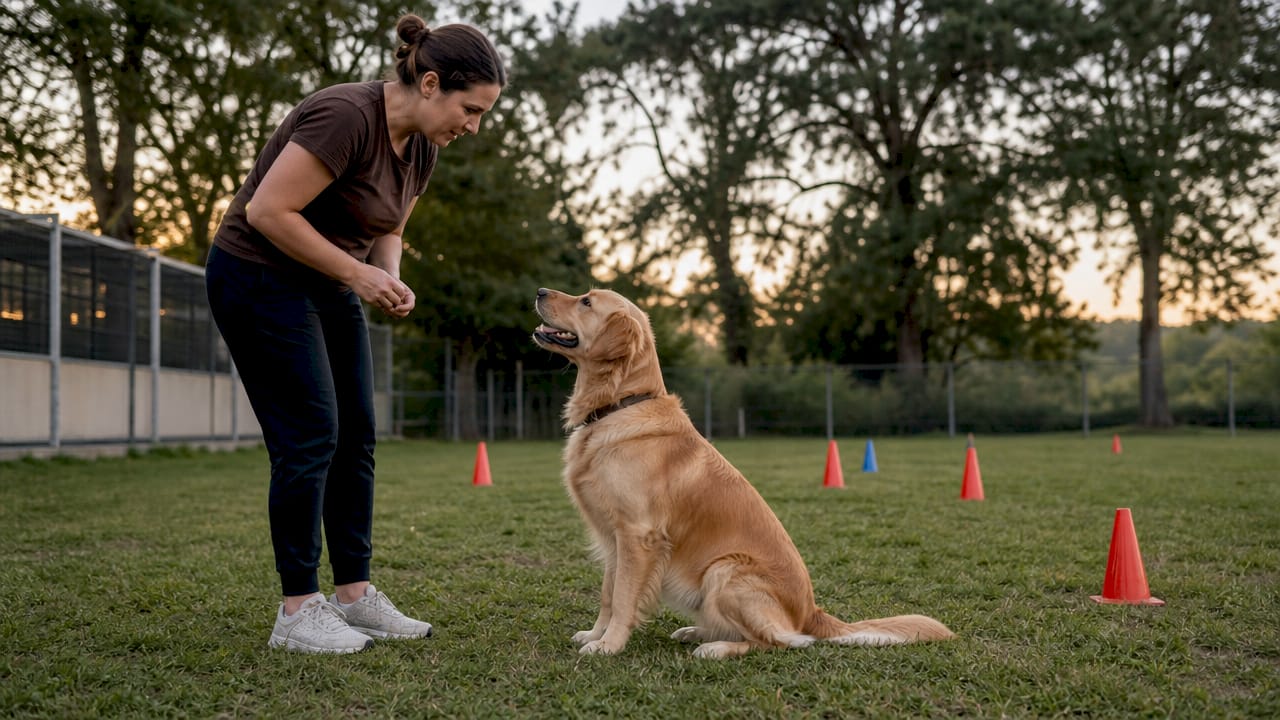
Structured daily training schedules in boarding are the single most effective method for accelerating your dog’s behavioural development and social confidence. Unlike occasional lessons at home, a boarding environment embeds learning into every part of your dog’s day. The role of daily training schedules in boarding is to create consistent, repeated reinforcement that builds new habits faster than weekly classes ever could. When boarding training routines are designed well, your dog returns home calmer, more responsive, and genuinely happier. This guide explains how those schedules work, how to prepare your dog, and how to keep the progress going once you are back together.
How are daily training schedules structured in boarding?
A well-designed boarding training routine divides the day into three clear phases, each with a distinct purpose. Morning sessions focus on foundation work: obedience commands, marker training, and building focus. Mid-day shifts to environmental proofing, where dogs practise known behaviours around controlled distractions. Evening sessions are gentler, emphasising relaxation, calm settling, and confidence consolidation.
The most important structural principle is session length. Multiple short sessions of 10–15 minutes each outperform single hour-long sessions that lead to burnout. A 15-minute mental workout can tire a dog more thoroughly than a long walk. That matters because a mentally tired dog is a calm, receptive dog.

True behaviour change occurs beyond formal sessions, embedded in every daily interaction. Feeding time, leash walks, and play all become training opportunities when handled with intention. This is what separates a structured boarding programme from simple kennelling.
A typical daily plan looks like this:
Morning foundation session (7:00–7:15 AM): Obedience commands, sit, down, stay, and recall in a low-distraction space.
Mid-morning exercise and play (8:00–9:00 AM): Physical activity to release energy before the next learning window.
Mid-day proofing session (12:00–12:15 PM): Practising commands around other dogs, sounds, and movement.
Afternoon rest (1:00–3:00 PM): Unstructured downtime for memory consolidation and recovery.
Late afternoon session (4:00–4:15 PM): Reinforcing the day’s lessons with reward-based training.
Evening relaxation (7:00–8:00 PM): Calm settling exercises, gentle handling, and quiet time.
Pro Tip: Never skip the rest periods. Dogs encode new learning during sleep and downtime, not during the session itself. Cutting rest to add more training time actually slows progress.
What should owners do before boarding to prepare their dog?
Preparation before boarding is not optional. It directly affects how quickly your dog settles and how much progress they make during their stay. A dog that arrives anxious and disoriented loses the first day or two simply adjusting. A dog that arrives prepared gets straight to learning.
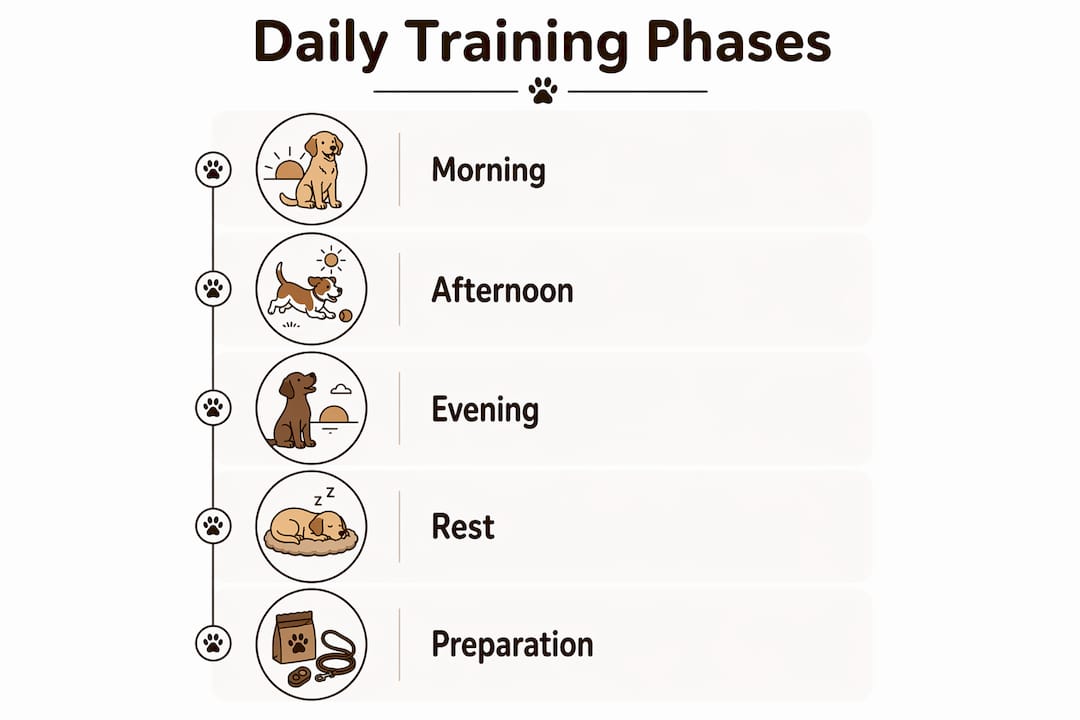
Begin a boarding training routine at least five days before drop-off, focusing on two skills: the “place” command and calm separation intervals. The place command teaches your dog to go to a designated spot and stay there calmly. Calm separation means your dog can be alone for short periods without distress. Both skills make the boarding environment feel familiar rather than frightening.
For a smooth handover, work through this checklist in the week before boarding:
Seven days out: Confirm vaccination records are current, prepare emergency contact details, and write out your dog’s feeding schedule and any dietary needs.
Five days out: Begin daily “place” command practice for 10 minutes per session. Introduce short, calm separations of 5–10 minutes.
Three days out: Practise crate or confinement tolerance with the door closed for up to 20 minutes. Keep your own energy calm and matter-of-fact during these sessions.
Two days out: Work on leash manners and gentle handling, including touching paws, ears, and collar. This prepares your dog for handling by unfamiliar staff.
Day before: Keep the routine quiet and predictable. Avoid exciting activities that raise arousal levels before a big change.
You can find a full preparation walkthrough in this guide on preparing for board and train.
Pro Tip: Your emotional state at drop-off matters more than you think. Dogs read your body language precisely. A calm, confident goodbye signals safety. A prolonged, tearful farewell signals danger.
How does boarding enhance socialisation and behaviour through structured schedules?
Boarding works as a behaviour tool because immersion removes the inconsistency that slows progress at home. At home, your dog might receive training for 20 minutes a day and then spend the remaining hours reinforcing old habits. In a structured boarding environment, every interaction is a training opportunity, not just the formal sessions.
The benefits of this immersive approach are specific and measurable:
Socialisation under guidance: Dogs meet other dogs and people in controlled settings, building confidence without rehearsing reactive or fearful responses.
Consistent correction: Every handler uses the same communication style, the same cues, and the same expectations. This prevents the confusion that derails progress.
Controlled distraction training: Dogs practise known commands around real-world distractions, which is the step most home training programmes skip entirely.
Continuous feedback: Dogs receive clear, immediate feedback throughout the day, not just during a single evening session.
Maintaining the same communication style and training standards during boarding as in initial training is critical to prevent confusion and ensure balanced behaviour. This is why Happy-dogtraining integrates boarding and training under one consistent approach, rather than sending dogs to a separate facility with different methods.
“Behaviour modification in boarding relies on a rhythm of work, play, and restorative rest where each interaction has a clear purpose. Facilities offering vague ‘general’ boarding with infrequent training are far less effective for genuine behaviour progress.”
The importance of training schedules becomes clearest when you compare structured boarding to standard kennelling. A dog in standard kennelling practises waiting, boredom, and sometimes anxiety. A dog in structured boarding practises confidence, responsiveness, and calm. The daily training plan is what makes the difference between the two outcomes.
For a deeper look at building these routines, the 2026 training plan guide covers daily structure in detail.
How can owners maintain training progress after boarding?
The gains made during boarding are real, but they are not permanent without follow-through at home. Dogs do not generalise automatically. A behaviour learned in a boarding facility needs to be practised in your home, your garden, and your neighbourhood before it becomes a reliable habit.
Consistency and structured routines at home after boarding are the single most important factor in maintaining behavioural gains. The following habits protect the progress your dog has made:
Match the communication style: Use the same cues, the same tone, and the same reward timing that the boarding facility used. Switching signals confuses your dog and erodes confidence.
Apply commands daily: Ask for a sit before meals, a down before play, and a stay before opening the door. These small repetitions keep skills sharp without requiring formal sessions.
Book a go-home lesson: Owner involvement through a go-home lesson teaches you to use training tools and communication effectively in real environments. This single session prevents the most common cause of regression: owners unknowingly undoing what the boarding programme built.
Schedule follow-up sessions: Private lessons in the weeks after boarding reinforce progress and address any new challenges that emerge at home.
Avoid sudden rule changes: If your dog was not allowed on furniture during boarding, maintain that boundary at home. Inconsistency in rules is the fastest route to regression.
Building a daily training routine at home that mirrors the boarding structure gives your dog the continuity they need to thrive long term.
Key takeaways
Structured daily training schedules in boarding produce lasting behavioural change because they embed consistent, purposeful reinforcement into every part of a dog’s day, not just formal sessions.
Point | Details |
Session length matters | Multiple 10–15 minute sessions outperform long single sessions and prevent cognitive burnout. |
Prepare before boarding | Start place commands and calm separation at least five days before drop-off for a smoother transition. |
Immersion accelerates learning | Boarding environments turn every interaction, including feeding and walking, into a training opportunity. |
Consistency prevents regression | Using the same cues and expectations at home after boarding protects the progress your dog has made. |
Owner involvement is essential | A go-home lesson and follow-up sessions are the most reliable way to sustain boarding training gains. |
What I have learned from pairing boarding with daily training schedules
After working with dogs and their owners for over two decades, the pattern I see most clearly is this: the owners who get the best long-term results are not the ones whose dogs had the most intensive boarding programme. They are the ones who showed up to the go-home lesson, asked questions, and then applied what they learned consistently for the following three weeks.
Boarding does the heavy lifting. The daily training schedule inside a boarding facility creates conditions that home training simply cannot replicate: controlled distractions, consistent handling, and immersive repetition. A 15-minute mental session in a structured environment achieves what an hour of unfocused practice at home cannot.
What surprises most owners is how much the rest periods matter. I have seen dogs plateau during boarding simply because the facility crammed in too many sessions without adequate downtime. Rest is not wasted time. It is when the brain consolidates what it has just learned. A good boarding training routine builds rest in deliberately, not as an afterthought.
My honest advice: view boarding as the beginning of a training relationship, not the end of a behaviour problem. The schedule your dog follows during boarding is a template. Your job is to carry that template home and keep it alive. When you do, the results are genuinely remarkable.
— Mark
Happy-dogtraining’s intensive boarding programme

Happy-dogtraining offers a 4-week AVS-approved intensive obedience programme that integrates structured daily training schedules directly into the boarding experience. Every day follows a clear routine of foundation work, proofing, and relaxation, built around short, focused sessions that prevent burnout and accelerate learning. The programme includes personalised owner coaching and a go-home lesson so you can maintain every gain your dog makes. With over 20 years of experience and free lifetime support after training, Happy-dogtraining gives you and your dog the consistency needed for real, lasting change. Visit Happy-dogtraining to book a consultation.
FAQ
What is the role of daily training schedules in boarding?
Daily training schedules in boarding provide structured, repeated reinforcement that embeds new behaviours throughout the entire day, not just during formal lessons. This consistency accelerates learning and prevents the confusion that comes from irregular or infrequent training.
How long should each training session be during boarding?
Sessions of 10–15 minutes each are most effective, with multiple sessions spread across the day. Short, repeated training bursts prevent cognitive burnout and promote long-term memory encoding in dogs.
How far in advance should I prepare my dog for boarding?
Begin boarding preparation at least five days before drop-off, focusing on place commands and calm separation. Confirm vaccinations, feeding instructions, and emergency contacts at least seven days before the stay.
What happens if I do not maintain the routine after boarding?
Without consistent follow-through at home, dogs revert to old habits because behaviours need to be practised across multiple environments to become reliable. A go-home lesson and regular daily commands are the most effective way to prevent regression.
Does boarding work for dogs with fearfulness or reactivity?
Structured boarding with daily training plans is particularly effective for fearful or reactive dogs because it provides controlled socialisation and consistent handling throughout the day. Happy-dogtraining’s programmes address fearfulness and reactivity through science-based, reward-based training methods tailored to each dog’s needs.
Recommended
Comments