Creating a dog training routine at home: 2026 guide
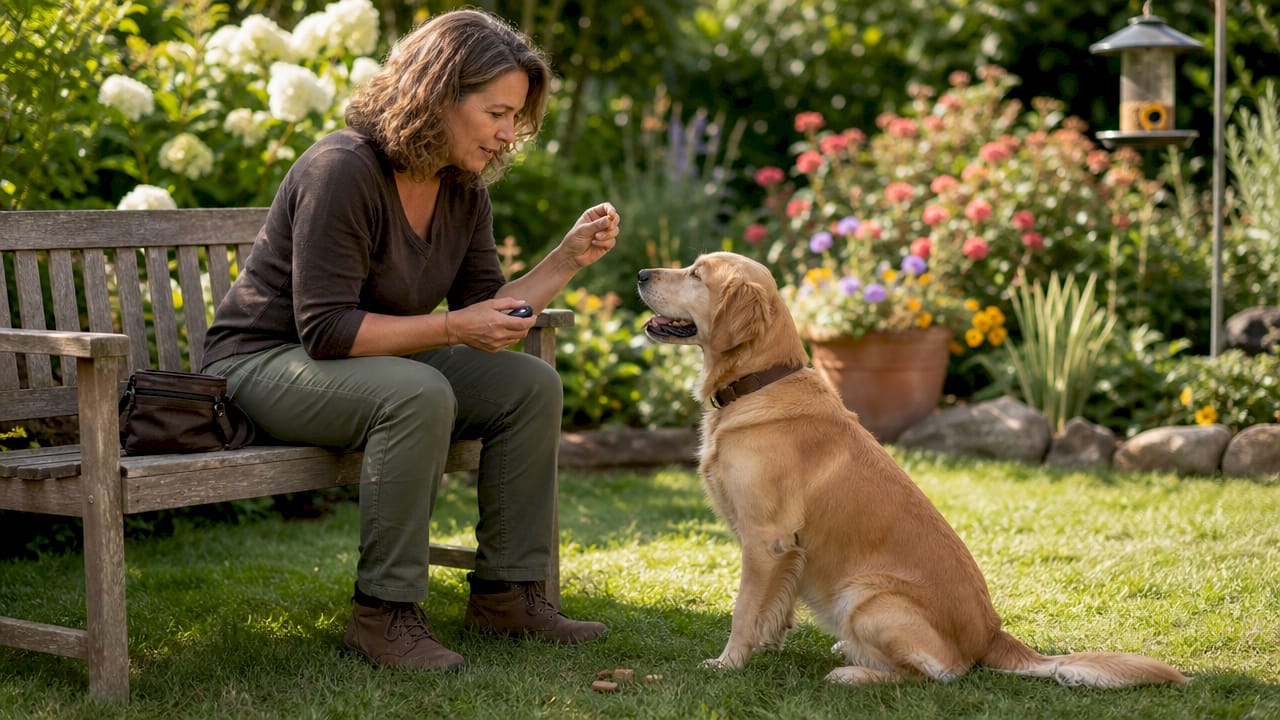
A dog training routine is defined as a structured series of short, frequent, positive sessions that build reliable behaviour through repetition and reward. Creating a dog training routine at home is the single most effective thing you can do to improve your dog’s behaviour without professional help. The American Veterinary Medical Association (AVMA) and the American College of Veterinary Behaviourists (ACVB) both endorse reward-based training as the gold standard. Consistency, timing, and positive reinforcement are the three pillars every successful home training plan rests on.
1. What is the ideal dog training schedule for home practice?
Short, frequent sessions produce far better results than long, occasional ones. Three sessions of 5–10 minutes daily significantly outperform a single 30–60 minute weekly session. That finding matters because dogs learn through repetition spaced across time, not through marathon drilling.
Session length depends on your dog’s age and experience:
Puppies (under 6 months): Keep sessions to 2–5 minutes. Their attention spans are short, and fatigue sets in quickly.
Adult dogs: Aim for 5–10 minutes per session. More than 10–15 minutes often leads to loss of focus and increased errors.
Three sessions per day: Morning, midday, and evening slots work well. Space them out so your dog arrives at each one fresh and eager.
Build gradually: Start with one daily session and add more as your dog grows comfortable with the routine.
Weaving sessions into your existing schedule removes the pressure of finding dedicated training time. Practice “sit” before placing the food bowl down. Ask for “wait” before opening the back door. These micro-sessions add up fast.
Pro Tip: Set a phone timer for each session. When it goes off, stop. Ending before your dog loses interest keeps the experience positive and leaves them wanting more.

For a deeper look at how session length affects focus, the home obedience training guide at Happy-dogtraining covers the science clearly.
2. Which positive reinforcement methods work best for home dog training?
Reward-based training is the most effective and humane method available. Treats, play, and praise all function as positive reinforcers when delivered promptly after the desired behaviour. The key word is promptly. A reward given three seconds late loses most of its teaching power because your dog has already moved on mentally.
The AVMA and ACVB warn against aversive tools for good reason. Choke collars, prong collars, and shock devices increase fear and aggression rather than reducing unwanted behaviour. Avoid them entirely.
Effective positive reinforcement tools and techniques include:
High-value treats: Small, soft pieces of chicken, cheese, or commercial training treats work best. Save them exclusively for training so they retain their appeal.
Marker training: A short, sharp word like “yes” or a clicker marks the exact moment your dog does the right thing. This precision speeds up learning considerably.
Play as reward: For dogs less motivated by food, a short game of tug or a favourite toy thrown immediately after a correct response works equally well.
Praise and touch: Calm, warm verbal praise combined with a gentle stroke reinforces the bond alongside the behaviour.
“Successful training focuses on communication over control, encouraging positive experiences and confidence-building.” — MSPCA-Angell
Avoid repeating commands. If you say “sit” five times before your dog responds, you are teaching them that “sit” means nothing until the fifth repetition. Say it once, guide gently if needed, then reward.
3. How to maintain consistency across all household members
Inconsistency among household members is one of the most common reasons training stalls. Dogs learn patterns, not speeches. Mixed signals from different people confuse your dog and slow progress significantly.
The solution is straightforward. Every person in the household must use the same verbal cues, the same hand signals, and the same rules. If one person allows the dog on the sofa and another does not, the dog cannot learn what is expected. That confusion is not stubbornness. It is a communication failure on the human side.
Pro Tip: Write a one-page “house rules” sheet and stick it to the fridge. List every command you are teaching, the exact word used, and the hand signal. Anyone new to the household, including guests and dog sitters, should read it before interacting with your dog.
Key behaviours to align on across the household:
Sit: One word, one signal, one reward. No variations like “sit down” or “sit, sit, sit.”
Stay: Agree on how long “stay” means before releasing. Three seconds or thirty? Decide together.
Come: Never call your dog to come and then do something unpleasant. Every household member must honour this rule.
Leave it: Use the same phrase and the same consequence every time.
Consistent use of cues by everyone in the household is fundamental to effective training. When your dog hears the same word from every person and gets the same outcome every time, learning accelerates noticeably.
4. Practical steps to incorporate training into everyday life
The best dog obedience routine is one that fits naturally into your day. Structured training slots are valuable, but the real gains come from weaving commands into ordinary moments. Practising sit before meals, wait at doors, and calm behaviour before walks reinforces commands as normal habits rather than special events.
Here is how to build training into your daily routine step by step:
Morning feed: Ask for “sit” and “wait” before placing the bowl down. Release with a calm “OK.” This takes fifteen seconds and happens twice a day.
Door exits: Before any walk or outing, ask your dog to sit and wait at the door. Only open it once they are calm. This prevents bolting and builds impulse control.
Greetings: When you return home, ignore jumping and wait for four paws on the floor before giving attention. Reward calm greetings every single time.
Garden time: Use the garden as a low-distraction training space. Practice recall, down, and stay with no competing stimuli before moving to busier environments.
Evening wind-down: A short two-minute session before bed, ending with a calm “down-stay,” helps your dog settle and reinforces the day’s learning.
Training should begin in familiar, distraction-free areas before you gradually introduce new environments. Start indoors, move to the garden, then progress to quiet streets, and eventually to parks. Each new environment is a new challenge, so expect a temporary dip in performance and reward generously.
The short training intervals guide at Happy-dogtraining explains exactly how to use brief, repeated practice to build attention and retention over time.
Key takeaways
A consistent dog training routine built on short sessions, positive reinforcement, and household-wide agreement produces the fastest and most lasting results.
Point | Details |
Session length matters | Keep sessions to 5–10 minutes for adults and 2–5 minutes for puppies to maintain focus. |
Reward timing is critical | Deliver treats, play, or praise immediately after the correct behaviour to reinforce learning. |
Household consistency wins | Every person must use the same cues and rules to prevent confusion and speed up progress. |
Daily routines are training opportunities | Practise commands at mealtimes, door exits, and greetings to build habits naturally. |
Start simple, then add distractions | Begin in quiet, familiar spaces before gradually introducing busier environments. |
What I have learned after years of watching dogs train at home
The single biggest mistake I see dog owners make is waiting for a “proper training session” before practising anything. They set up a dedicated slot, gather their treats, and then spend the rest of the day ignoring every natural teaching moment the day offers. The dog learns during the session and then unlearns during the other twenty-three hours.
The owners who see the fastest progress are the ones who treat every interaction as a micro-session. The dog sits before the lead goes on. The dog waits before the car door opens. These moments cost nothing and compound quickly.
The second thing I have noticed is how often people push through a session when the dog is clearly tired or distracted. Ending on a high note is not just a nice idea. It is the difference between a dog who trots eagerly to the training spot and one who slinks away. Quit while you are ahead. Always.
Finally, adjust your expectations to your individual dog. A confident Labrador and a nervous rescue terrier need very different pacing. The effective dog training techniques guide at Happy-dogtraining covers how to read your dog’s signals and adapt your approach accordingly. Patience and predictability build confidence. Confidence builds behaviour.
— Mark
Professional support for your home training plan
Home training works brilliantly for most dogs, and the right professional guidance makes it work even better.

Happy-dogtraining has over 20 years of experience helping Singapore dog owners address specific behavioural challenges through personalised, science-based programmes. Whether your dog needs structured obedience training through the AVS-approved 4-week intensive programme, or you need a one-to-one consultation for a more complex issue, the team at Happy-dogtraining provides expert support tailored to your dog’s individual needs. Free lifetime support is included after every programme, so you are never left to figure things out alone.
FAQ
How long should a dog training session be at home?
Keep sessions to 5–10 minutes for adult dogs and 2–5 minutes for puppies. Sessions longer than 10–15 minutes reduce focus and increase mistakes.
How many times a day should I train my dog?
Three short sessions per day produce significantly better results than one long session. Space them across morning, midday, and evening for best retention.
What is the most effective reward for home dog training?
High-value treats delivered immediately after the correct behaviour are the most reliable reinforcer. Play and praise work equally well for dogs with lower food motivation.
Why is my dog not responding to commands at home?
Inconsistent cues from different household members are the most common cause. Agree on one word and one signal per command, and use them every time without exception.
When should I move training from indoors to outdoors?
Move to outdoor environments only after your dog responds reliably indoors. Begin in a quiet garden, then progress to low-traffic areas before attempting busier public spaces.
Recommended
Comments