How nose work training works: a 2026 guide
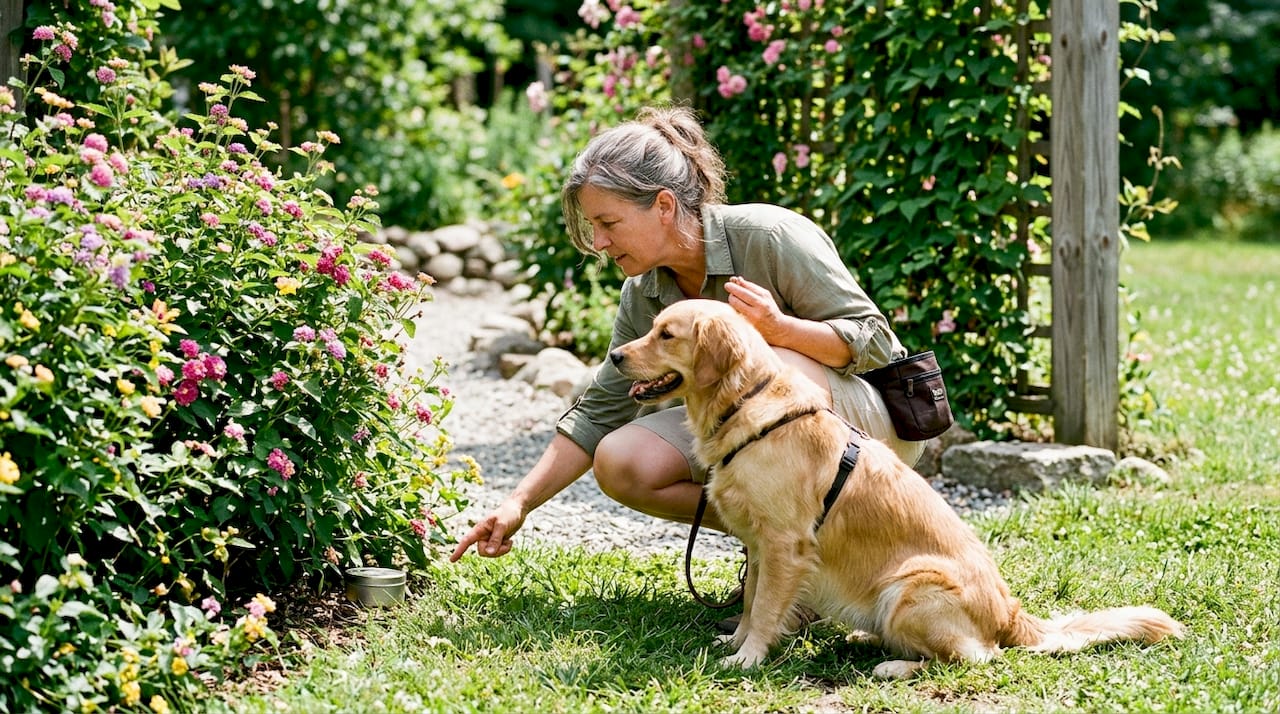
Nose work training is a structured scent detection activity that teaches dogs to identify and alert on specific target odours through positive reinforcement and reward-based games. Dogs possess approximately 300 million olfactory receptors compared to humans’ 6 million. That biological advantage makes scent work one of the most natural and satisfying activities you can offer your dog. Formally known as scentwork or scent detection, nose work training builds on this ability through a clear progression from treat-finding games to pure odour alerts. The cognitive and emotional benefits are well documented, and the activity suits dogs of all ages, breeds, and abilities.
How nose work training works: the brain and behaviour benefits
Nose work training does far more than tire your dog out physically. Intensive sniffing increases brain oxygen uptake and lowers baseline stress markers, producing a calming effect that aerobic exercise alone cannot replicate. That means a 15-minute scent session can leave your dog more settled than a 45-minute run.
The physiological reason is straightforward. Scent work activates the parasympathetic nervous system, the part of the nervous system responsible for rest and recovery. Scent work consistently lowers baseline stress and arousal in dogs, making it especially useful for those who struggle with anxiety or reactivity. Dogs that are easily over-stimulated outdoors often find scent work genuinely calming rather than exciting.
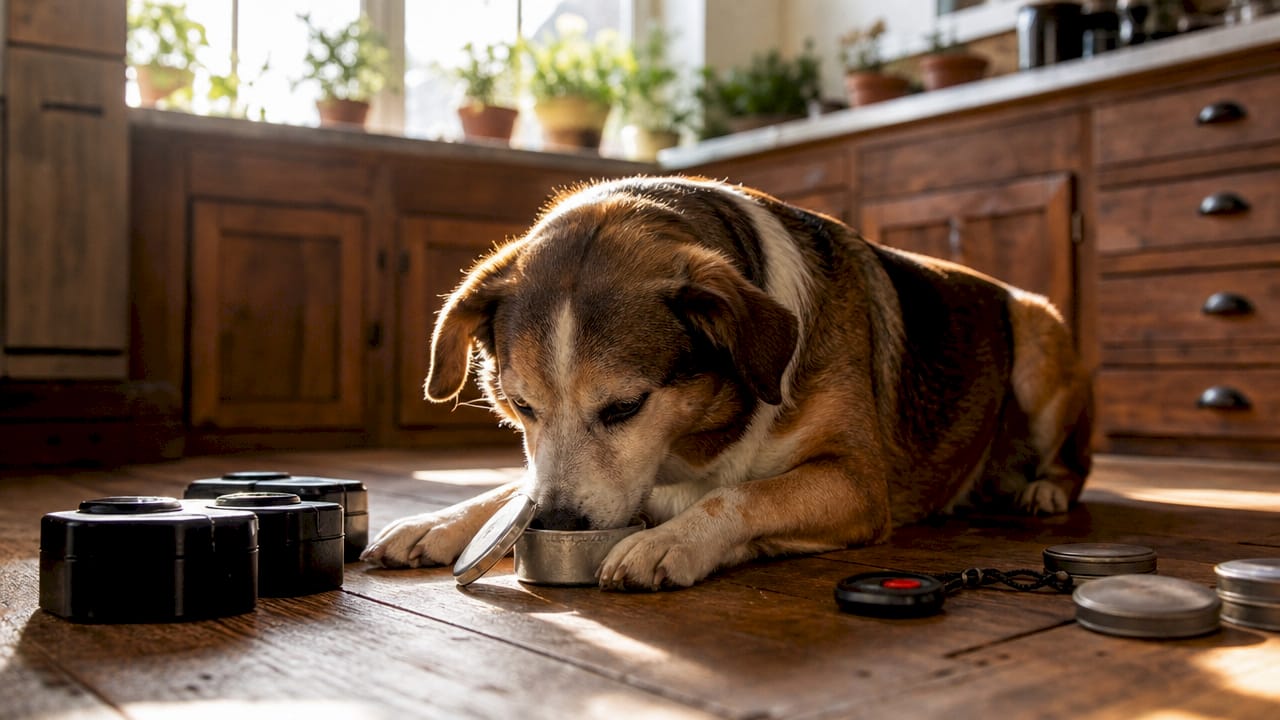
The cognitive benefits are equally significant. Nose work requires your dog to hold a scent picture in memory, filter out distractions, and make independent decisions. That mental effort builds problem-solving confidence over time. Dog-led scent work boosts confidence, allowing dogs to succeed independently and reducing fear-based behaviours. Shy or fearful dogs in particular show meaningful improvements in emotional stability after consistent scent work.
Here is a summary of the key benefits:
Cognitive fatigue. Short sessions produce genuine mental tiredness without raising arousal levels.
Stress reduction. Parasympathetic activation lowers cortisol and settles the nervous system.
Confidence building. Independent problem-solving gives dogs a clear sense of achievement.
Low physical impact. Ideal for older dogs, dogs recovering from injury, or those with joint conditions.
Improved focus. Regular scent work trains dogs to concentrate for longer periods in distracting environments.
Pro Tip: If your dog is reactive on walks, try a short scent session before heading out. The parasympathetic activation from sniffing can lower arousal before you even reach the front door.
What does the nose work training process involve?
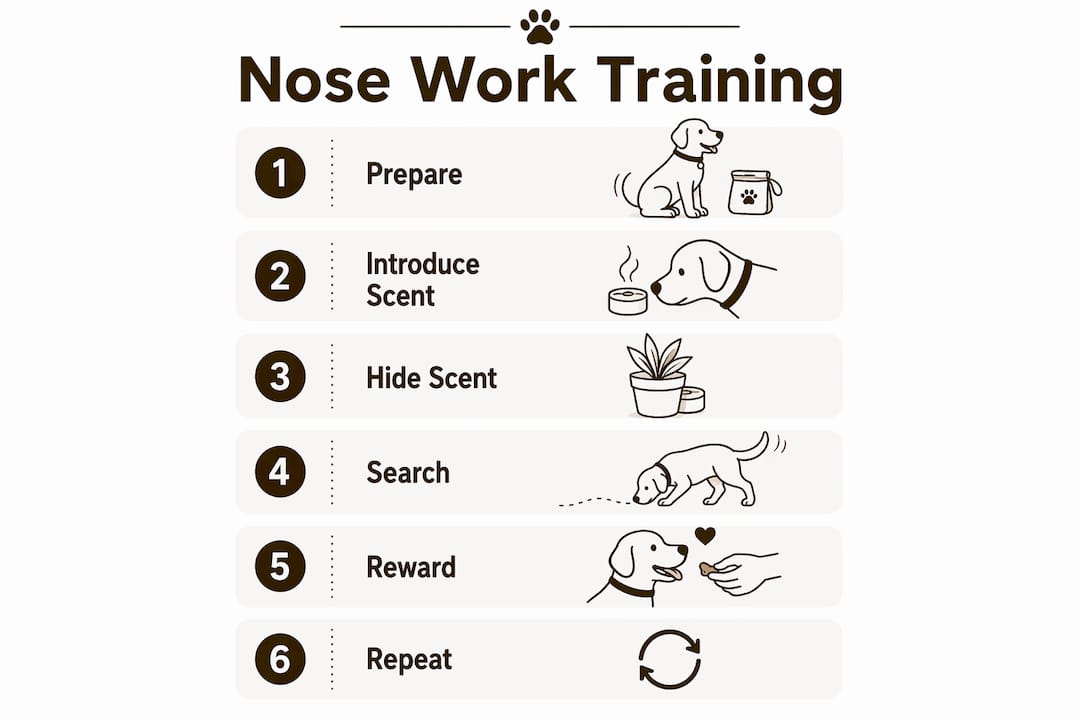
The training follows a clear, staged progression. Rushing any stage reduces your dog’s motivation and confidence, so patience at each step matters.
Introduce the game with treats in boxes. Place several cardboard boxes on the floor and hide a high-value treat inside one. Let your dog explore freely. The goal here is simply to build enthusiasm for searching. Your dog does not need to know what they are looking for yet.
Add the target odour. Once your dog searches boxes confidently, introduce a target scent such as birch, anise, or clove. Sticking to one scent early on prevents confusion and helps your dog build a clear scent picture quickly. Place the odour container inside the box alongside the treat.
Mark the alert. When your dog indicates the correct box, mark the moment with a clear verbal marker or clicker and reward immediately. Marker training is particularly effective here because it tells your dog precisely which behaviour earned the reward.
Fade the food reward gradually. Once your dog alerts reliably on the scented box, begin removing the treat from inside the box. The odour alone becomes the target. Do not rush this transition; premature removal of treats causes frustration and reduces engagement. Wait for consistent, reliable alert behaviour before making the change.
Introduce variety. Move from boxes to other containers, then to searching rooms, vehicles, or outdoor areas. Scentwork pipes and purpose-built odour containers are useful tools at this stage, as they allow you to hide scent in more complex locations without contaminating the environment.
Maintain handler neutrality. Avoid pointing or over-helping during searches. Your dog needs to lead the search independently. Stepping in too early teaches your dog to rely on your cues rather than their nose.
Pro Tip: Keep sessions to 5–15 minutes, especially in the early stages. Short, quality sessions outperform longer ones for mental fatigue and nervous system regulation. Finish while your dog is still enthusiastic.
How to start nose work training at home
Starting at home is straightforward, and you do not need specialist equipment. The training environment matters more than the tools you use. A quiet room with minimal distractions is the right starting point.
Choose one target scent and stick with it. Birch essential oil on a cotton bud placed inside a small tin is a common starting setup. Use the same scent every session until your dog alerts reliably before introducing anything new.
Keep the following principles in mind as you begin:
Start simple. Use three to five identical boxes or containers. Complexity comes later.
Use high-value rewards. Small pieces of cheese, chicken, or your dog’s favourite treat work well. The reward must be worth the effort.
Avoid corrections. There are no wrong answers in nose work. If your dog investigates the wrong box, simply wait. Do not redirect or correct.
Build positive associations. Every session should end on a successful find. If your dog is struggling, make the hide easier before finishing.
Adapt for your dog. Puppies and senior dogs benefit from even shorter sessions. Brachycephalic breeds may tire more quickly due to restricted airways.
The table below shows how to adapt session structure by dog profile:
Dog profile | Session length | Difficulty level | Key consideration |
Puppy (under 12 months) | 3–5 minutes | Very easy, open hides | Short attention span; keep it playful |
Adult dog, no anxiety | 10–15 minutes | Moderate progression | Can handle increasing complexity |
Anxious or reactive dog | 5–10 minutes | Easy to moderate | Prioritise calm; avoid frustration |
Senior dog | 5–10 minutes | Easy, low movement | Watch for physical fatigue alongside mental |
High-drive working breed | 10–15 minutes | Moderate to complex | Needs mental challenge to stay engaged |
For guidance on supporting independent decision-making during training, the principles that apply to independence work transfer directly to nose work.
Common challenges in nose work training and how to fix them
Most problems in nose work training come from one of two sources: rushing the progression or the handler interfering too much. Both are easy to correct once you recognise them.
Frustration during the treat-fading stage is the most common issue. Dogs that have not yet formed a reliable association between the odour and the reward become confused when treats disappear too quickly. The fix is simple: go back a step. Reintroduce the treat alongside the odour and rebuild the association before trying again.
Handler interference is subtler but equally damaging. Leaning towards the correct box, making eye contact at the right moment, or calling your dog back when they drift all give away the hide. Over time, your dog learns to read you rather than the scent. Allowing the dog to lead builds independent problem-solving skills and genuine confidence.
Watch for these signs that your dog needs a reset:
Sniffing quickly without committing to any box (scanning rather than searching)
Pawing or barking at you instead of the hide
Disengaging from the game entirely
Repeated false alerts on empty containers
Pro Tip: If your dog disengages mid-session, end the game calmly and try again later. Pushing through disengagement teaches your dog that nose work is stressful, not rewarding. A short break resets enthusiasm far better than persistence.
Variety keeps the game fresh without overwhelming your dog. Change the location of hides, the type of container, or the room you search in. Avoid increasing difficulty and novelty at the same time. Change one variable per session so your dog can succeed.
Key takeaways
Nose work training works because it engages a dog’s most powerful sense, activates the parasympathetic nervous system, and builds independent confidence through reward-based scent detection.
Point | Details |
Scent work calms the nervous system | Sniffing activates the parasympathetic system, lowering stress more effectively than aerobic exercise. |
Progress in clear stages | Move from treat-finding to odour alerts gradually; rushing the transition causes frustration and disengagement. |
Handler neutrality is critical | Avoid pointing or guiding during searches so your dog builds genuine scent-detection confidence. |
Short sessions outperform long ones | Sessions of 5–15 minutes produce better mental fatigue and learning than extended training periods. |
Suits all dogs | Nose work adapts for puppies, seniors, anxious dogs, and high-drive breeds with simple session adjustments. |
Why nose work changed how I think about dog training
I have worked with dogs for over two decades, and nose work remains one of the most consistently surprising tools in my practice. The transformation it produces in shy or fearful dogs is unlike anything I see from obedience work alone. A dog that flinches at strangers and shuts down in new environments will often light up the moment they catch a scent trail. That shift in body language, from tight and cautious to loose and purposeful, happens within a single session.
What strikes me most is that nose work is genuinely dog-led. Your dog is not waiting for your instruction. They are making decisions, following information you cannot perceive, and succeeding on their own terms. That independence is what builds real confidence. A dog that learns it can solve problems without human guidance carries that confidence into every other area of life.
The owners who get the most from nose work are the ones who resist the urge to help. Standing back and watching your dog work is harder than it sounds. We are conditioned to guide and correct. Nose work asks you to trust your dog completely, and that trust, once established, changes the relationship in ways that go well beyond scent detection.
My advice to any owner starting out: celebrate the small moments. The first time your dog pauses at the correct box, the first time they offer a clear alert, the first time they search a new room with confidence. These moments matter. They are evidence that your dog is thinking, choosing, and succeeding. That is worth every patient minute you invest.
— Mark
Nose work support from Happy-dogtraining
Nose work training is most effective when it is part of a wider, personalised plan that accounts for your dog’s temperament, history, and specific needs.
Happy-dogtraining brings over 20 years of experience to exactly this kind of work. Whether your dog is anxious, reactive, or simply in need of more mental engagement, the team designs programmes that build on your dog’s natural strengths. For dogs with fearfulness or reactivity, scent work is often integrated as a foundational confidence-building tool. If you are ready to give your dog the mental stimulation they deserve, explore the full range of training services available in Singapore, backed by AVS accreditation and free lifetime support after training.
FAQ
What scents are used in nose work training?
The most common target scents in nose work are birch, anise, and clove. Starting with one scent and building reliability before introducing others prevents confusion and speeds up learning.
How long does it take a dog to learn nose work?
Most dogs begin to understand searching for a specific scent within a few structured sessions. Reliable alert behaviour typically develops over several weeks of consistent, short practice.
Is nose work suitable for anxious dogs?
Nose work is particularly well suited to anxious dogs. Scent work activates the parasympathetic nervous system, which lowers arousal and stress, making it a calming rather than stimulating activity.
How does nose work training help with reactivity?
Scent work reduces baseline arousal by engaging the dog’s nervous system in a focused, calming task. Dogs with reactivity often show lower stress levels after regular nose work sessions, which can reduce reactive responses over time.
Can I do nose work training at home without specialist equipment?
Yes. Cardboard boxes, small tins, and cotton buds with essential oil are sufficient to begin. A quiet room and a consistent target scent are the only real requirements for getting started.
Recommended
Comments