Evidence-based methods for reactive dogs: a practical guide
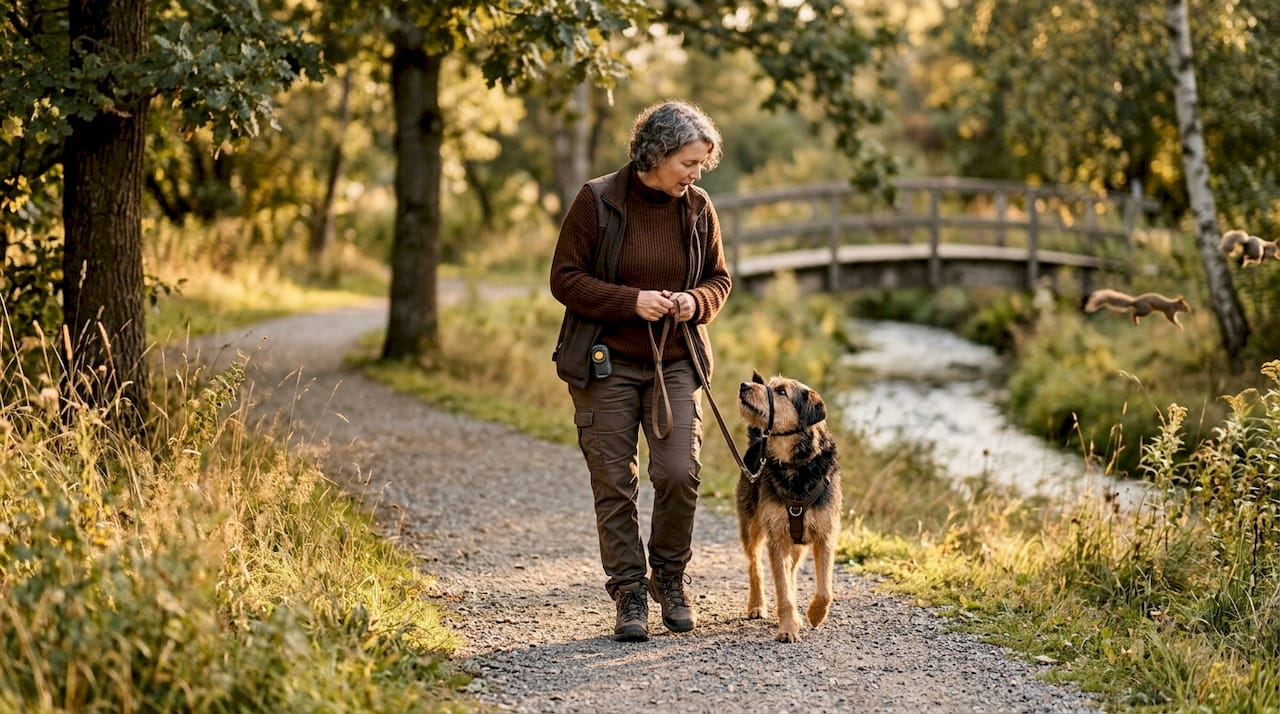
Reactivity in dogs is defined as an exaggerated emotional response to specific triggers, such as other dogs, strangers, or traffic, driven by fear, anxiety, or defensive aggression. Evidence-based methods for reactive dogs are training techniques grounded in learning theory and professional standards, such as the CCPDT Hierarchy of Behaviour Change Procedures, that change your dog’s emotional response without force or punishment. Techniques like counterconditioning and systematic desensitisation have a strong scientific consensus behind them. They work by shifting your dog’s nervous system from a threat state to a calm one, producing lasting behaviour change rather than temporary suppression.
What causes reactive behaviour and why evidence-based methods work
Reactivity is not disobedience. It is an emotional state, most commonly fear or anxiety, that triggers a defensive response. Your dog lunges, barks, or snaps because their brain has learned that a particular trigger predicts something threatening. That prediction drives everything.
Changing a dog’s emotional prediction about a trigger is the real goal of training, not teaching a sit or a stay. When your dog sees another dog and expects something bad, their sympathetic nervous system fires: heart rate rises, muscles tense, and rational thought shuts down. No amount of obedience commands reaches a dog in that state.
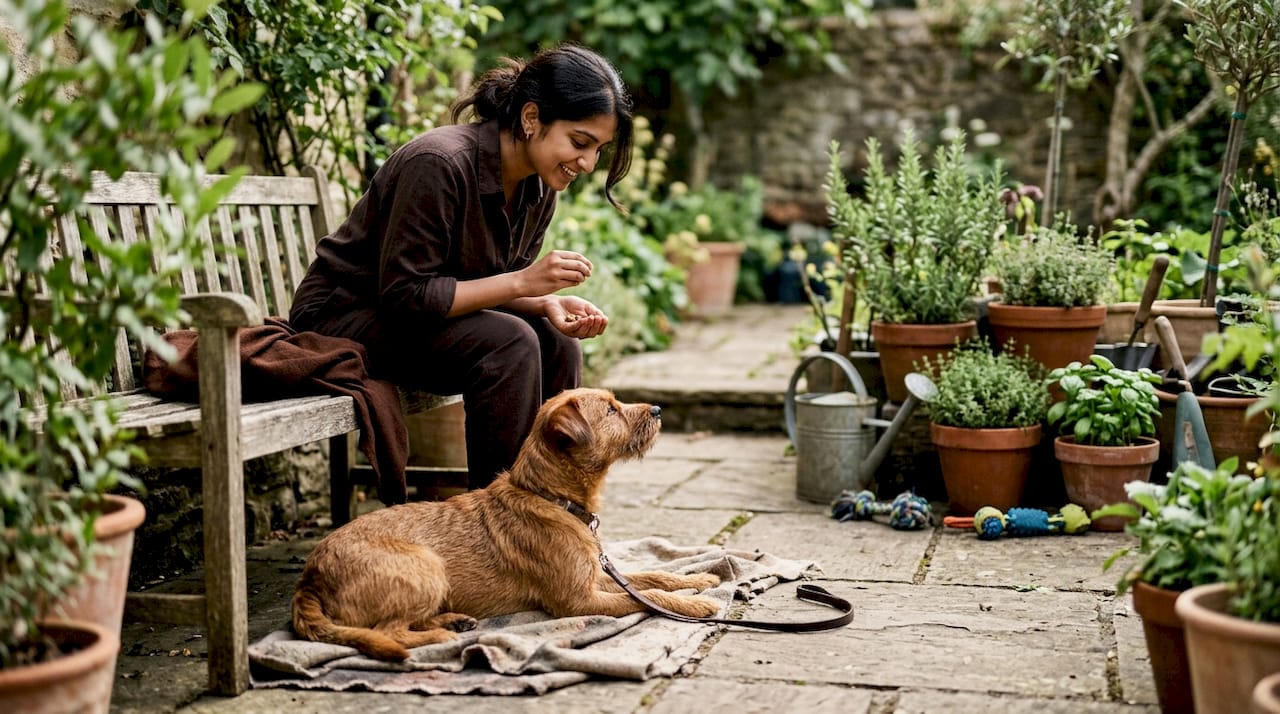
Evidence-based behaviour modification works because it targets the root cause. Classical conditioning rewires the emotional association. Operant conditioning builds new, calmer responses. Together, they shift your dog from the sympathetic “fight or flight” state toward the parasympathetic “rest and digest” state where learning actually happens.
Key reasons why science-backed methods outperform punishment-based approaches:
Punishment increases fear. Scientific consensus discourages punishment because it raises stress and risks making reactive behaviour worse.
Positive reinforcement builds trust. A randomised controlled trial with 63 dogs showed reward-based training produces better obedience and welfare outcomes than e-collar training.
Emotional change is measurable. When counterconditioning works, you see physical signs: a loose body, soft eyes, and a dog who looks at the trigger and then back at you for a treat.
What do you need before starting reactive dog training?
Preparation matters as much as technique. Skipping it is the most common reason training stalls.
The CCPDT Behaviour Change Procedures place physical health and environmental management at the top of the hierarchy, before any complex training begins. Pain, thyroid imbalance, and neurological conditions all increase reactivity. A vet check is not optional; it is the starting point.
Once health is ruled out, focus on managing your dog’s environment to reduce unnecessary trigger exposure. Every uncontrolled reaction reinforces the fear response. Fewer blow-ups mean faster progress.
Essential tools and preparations:
Head halter or front-clip harness. These give you physical control without causing pain, keeping both you and your dog safe during walks.
High-value treats. Cheese, chicken, or liver work well. The treat must be more exciting than the trigger.
Safe outdoor spaces. Quiet streets, parks at off-peak hours, or fenced areas let you control distance from triggers.
Calming cues. A trained “look at me” or “touch” cue gives your dog something to do when a trigger appears.
No flooding, no punishment tools. Forcing your dog to face triggers at close range, or using prong collars and shock devices, worsens fear and breaks trust.
Pro Tip: Before each training session, give your dog a short sniff walk to lower baseline arousal. A calmer dog learns faster.
How do counterconditioning and desensitisation work step by step?
These two techniques are the core of training techniques for reactive dogs and are most effective when used together.
Counterconditioning changes what a trigger means emotionally. You pair the trigger with something your dog loves, so the trigger starts to predict good things instead of bad ones. Counterconditioning combined with relaxation training is the most effective technique for reducing fear-based reactivity, with over 70% owner-reported improvement.
Systematic desensitisation controls the intensity of exposure. You start at a distance or intensity where your dog notices the trigger but stays calm. That point is called the threshold. Understanding what threshold means in practice is critical: below threshold, your dog can think and learn; above it, they cannot.
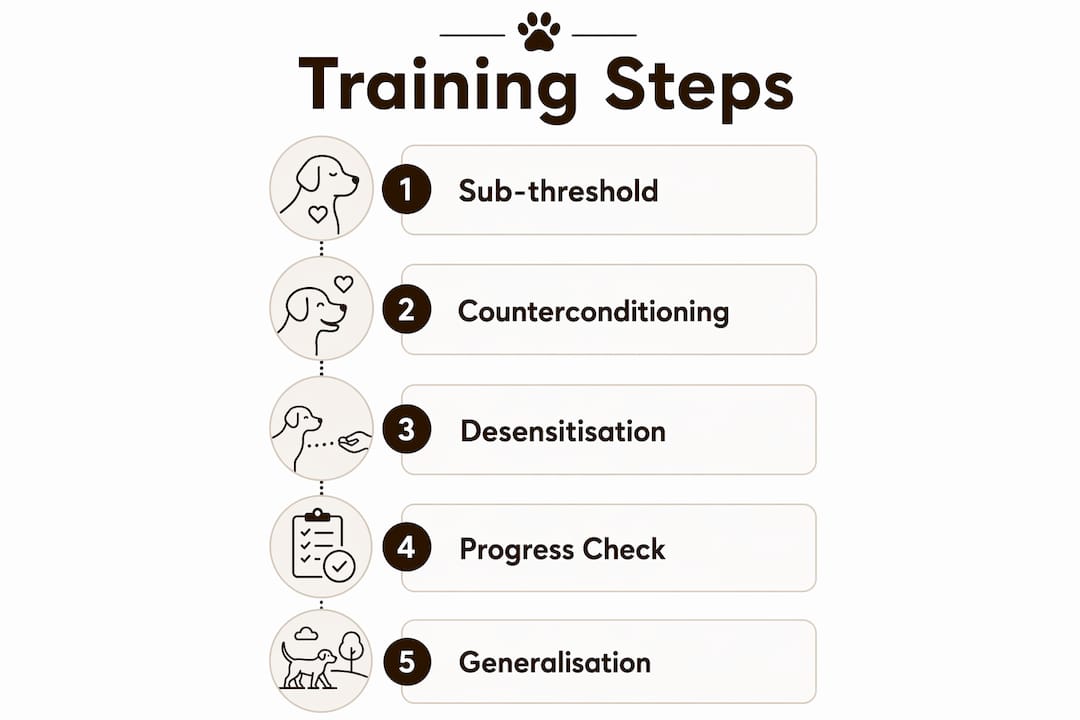
Follow this progression:
Identify your dog’s threshold distance. Walk toward the trigger until your dog notices it but remains calm. That distance is your starting point.
Pair the trigger with a high-value treat. The moment your dog sees the trigger, deliver the treat. Trigger appears, treat appears. Trigger disappears, treat disappears.
Keep sessions short. Sessions of 3–5 minutes prevent trigger stacking, the cumulative stress that builds when a dog encounters too many triggers in one outing.
Increase difficulty gradually. Reduce distance or increase trigger intensity only when your dog is consistently calm and looking to you for the treat.
Introduce Behaviour Adjustment Training (BAT). BAT allows your dog to use natural calming signals and move away from the trigger as a reward. It builds confidence alongside emotional calm.
Training stage | Goal | Sign of readiness to progress |
Sub-threshold exposure | Dog notices trigger, stays calm | Loose body, no vocalisation |
Counterconditioning | Trigger predicts treat | Dog looks at trigger, then at you |
Gradual distance reduction | Increase exposure safely | Consistent calm at current distance |
Real-world generalisation | Apply skills in new locations | Calm responses across varied settings |
Pro Tip: Carry a treat pouch on every walk, not just training sessions. Reactive moments happen without warning, and having rewards ready lets you respond immediately.
What are the most common mistakes in reactive dog training?
The biggest mistake is pushing too fast. When your dog goes over threshold, they are no longer learning. They are reacting. Continuing to expose them to the trigger at that point does not build resilience; it deepens the fear response.
Watch for these signs that your dog is over threshold: stiff body, whale eye (showing the whites of the eyes), inability to take treats, and sustained barking or lunging. When you see these, increase distance immediately. Emergency U-turns and calming exercises are practical tools for exactly this situation. Turn, move away, and let your dog decompress before continuing.
Common pitfalls to avoid:
Rushing exposure. Progress feels slow, but each calm encounter builds the neural pathway you need.
Inconsistent responses. Reacting with tension on the lead or raised voices signals danger to your dog and reinforces their fear.
Skipping management. Training sessions alone are not enough. Every unmanaged reaction outside sessions sets progress back.
Expecting linear improvement. Setbacks are normal, especially in new environments or after stressful events.
Owner compliance is critical to success. Research on counterconditioning protocols found that 44% non-compliance correlated directly with reduced behavioural gains. Consistency between sessions matters as much as the sessions themselves.
Seek professional help when your dog’s reactivity involves biting history, when progress has stalled for more than four to six weeks, or when you feel unsafe on walks. A certified behaviourist can assess the full picture and adjust the protocol.
How do you maintain progress and generalise calm behaviour?
Behaviour change does not end when your dog improves at home or on your usual route. Generalisation, applying learned calm to new places, people, and situations, requires deliberate practice.
Strategies to sustain and extend your dog’s progress:
Continue reinforcement. Do not stop rewarding calm behaviour once it becomes reliable. Occasional reinforcement keeps the emotional association strong.
Introduce new environments gradually. A dog calm on a quiet street may still react in a busy park. Treat each new setting as a fresh starting point at a safe distance.
Use controlled socialisation. Arrange meet-and-greets with known, calm dogs at a distance before attempting closer contact. Controlled exposure builds positive associations without unpredictability.
Modify the environment at home. Window film, white noise machines, and secure garden fencing reduce trigger exposure during downtime, lowering your dog’s overall stress baseline.
Practise emotional self-regulation cues. Teach a “settle” on a mat as a portable calm station. This gives your dog a familiar, safe behaviour to default to in new or stressful situations.
Refresher sessions every few weeks, particularly after a setback or a change in routine, keep skills sharp. Reactivity rarely disappears entirely, but with consistent management and reinforcement, most dogs reach a point where triggers no longer derail their day.
Key takeaways
Evidence-based behaviour modification works by changing your dog’s emotional prediction about triggers, not by suppressing reactions through force.
Point | Details |
Address health first | Rule out pain or medical conditions before starting any behaviour modification programme. |
Stay below threshold | Keep your dog calm enough to take treats; learning only happens below the stress threshold. |
Pair triggers with rewards | Counterconditioning changes what a trigger means emotionally, shifting fear to anticipation of good things. |
Keep sessions brief | Sessions of 3–5 minutes prevent trigger stacking and allow biological learning to consolidate. |
Consistency drives results | Owner compliance between sessions is as important as the training itself for lasting improvement. |
What I have learned from years of working with reactive dogs
Working with reactive dogs for over two decades has taught me one thing above all else: patience is not passive. It is an active choice you make every single session, even when progress feels invisible.
The owners who see the most lasting change are not the ones who train the hardest. They are the ones who resist the urge to push. They turn around when the dog needs space. They celebrate a loose lead past a trigger at 20 metres as a genuine win. That mindset shift, from “fixing” the dog to supporting them, is where real progress begins.
I have also seen how quickly owners give up when they hit a plateau. Plateaus are not failure. They are the nervous system consolidating what it has learned. A dog who was lunging at every dog on the street six weeks ago and now only stiffens at close range has made enormous progress, even if it does not feel that way.
Quick fixes do not exist for reactivity. Gadgets that suppress the behaviour without addressing the emotion underneath create dogs who are quiet but no less afraid. That is not a good outcome for anyone. The science is clear, and the results from humane, reinforcement-based work speak for themselves: wagging tails, confident gaits, and owners who can actually enjoy a walk again.
If you are feeling stuck, reach out to a certified professional rather than trying a harsher method. The right support makes the process faster, not harder.
— Mark
Professional support for your reactive dog in Singapore
Reactive dog training is most effective when you have expert guidance tailored to your dog’s specific triggers and history.
Happy-dogtraining has over 20 years of experience working with reactive and aggressive dogs in Singapore, using humane, science-based methods accredited by the AVS. Whether your dog reacts to other dogs, strangers, or traffic, Happy-dogtraining builds a personalised programme around your dog’s threshold and emotional needs. The reactive dog class provides structured, controlled environments where your dog can practise calm responses safely. Every client receives free lifetime support after training, so you are never left to manage setbacks alone. Contact Happy-dogtraining to take the first calm, confident step forward.
FAQ
What are evidence-based methods for reactive dogs?
Evidence-based methods are training techniques grounded in learning science, primarily counterconditioning and systematic desensitisation, that change a dog’s emotional response to triggers without punishment or force.
How long does it take to see improvement in a reactive dog?
Progress varies by dog and consistency, but many owners report noticeable improvement within four to eight weeks of regular, threshold-based training sessions.
Is positive reinforcement enough to manage severe reactivity?
Positive reinforcement combined with environmental management and systematic desensitisation is the recommended approach. Severe cases, particularly those involving biting history, benefit from professional assessment alongside reward-based training.
What does “sub-threshold” mean in reactive dog training?
Sub-threshold means your dog is aware of a trigger but calm enough to take treats and respond to cues. Training at this level is where genuine learning and emotional change occur.
When should I seek professional help for my reactive dog?
Seek professional help if your dog has a biting history, if progress has stalled after four to six weeks, or if you feel unsafe managing your dog on walks.
Recommended
Comments