How to troubleshoot dog training setbacks at home
A dog training setback is defined as a regression in previously learned behaviour caused by environmental change, inconsistent reinforcement, or stress. The industry term for this is training regression, and it is far more common than most owners realise. When you troubleshoot dog training setbacks at home, the goal is not to repeat commands louder or more often. The goal is to identify the root cause and apply a targeted fix. This guide covers obedience failures, anxiety, fear, aggression, and everyday disruptions, drawing on the latest expert frameworks and practical techniques you can use right now.
What causes dog training setbacks at home?
Training regression is not your dog forgetting what they learned. Environment, routine, and reward consistency are the three most common drivers of setbacks at home. When one of those shifts, your dog’s behaviour shifts with it. Understanding which factor has changed is the first step toward fixing the problem.
The four main causes of canine training challenges at home are:
Clarity breakdown. Your dog learned a cue in one room but has never practised it in the kitchen, garden, or near the front door. This is a generalisation failure, not disobedience.
Inconsistent reinforcement. Rewards arrive at random intervals or the cue is repeated multiple times before the dog complies. Both patterns weaken the behaviour.
Stress and routine shifts. A new baby, a house move, or a change in your work schedule can push a dog into a state where learning becomes very difficult.
Medical issues. Arthritis, dental pain, UTIs, and cognitive decline all cause sudden behavioural changes in trained dogs. Rule out health problems before assuming a training cause.
Pro Tip: Before changing your training plan, book a vet check. Untreated pain is one of the most overlooked reasons for sudden regression, and no amount of reward-based training will fix a dog that is hurting.
The concept of being over threshold is also worth understanding. When a dog is exposed to a trigger at an intensity that overwhelms their ability to think and respond, training fails completely. Shouting the cue again does not help. Reducing the intensity of the trigger does.
How to fix obedience training setbacks at home
Obedience failures at home are most often generalisation failures. Your dog learned to sit in the living room. That does not mean they know how to sit in the garden with a squirrel nearby. Practising a command in one location is not the same as teaching it reliably.
Follow this step-by-step retraining plan to rebuild obedience reliability:
Return to basics in a low-distraction space. Start in the quietest room in your home. Reward every correct response with a high-value treat such as chicken, cheese, or hot dog rather than kibble.
Practise across multiple locations. Practise commands across at least 10 different locations and gradually increase distractions. Move from the living room to the hallway, then the garden, then near the front gate.
Raise criteria slowly. Only increase difficulty, distance, or distraction when your dog is succeeding at least 8 out of 10 times at the current level.
Fix your cue timing. Give the cue once. If your dog does not respond, do not repeat it. Instead, lower the difficulty and try again. Repeating a command when the dog does not comply poisons the cue and teaches your dog that the first request is optional.
Use consistent marker training. A clear marker, either a clicker or a verbal “yes”, tells your dog the exact moment they got it right. Inconsistent timing creates confusion.
Pro Tip: If a cue has been poisoned through repeated use without compliance, retire it temporarily. Teach the same behaviour under a new word or hand signal, then rebuild from scratch at a lower difficulty level.
The table below compares two common reinforcement approaches and when to use each.
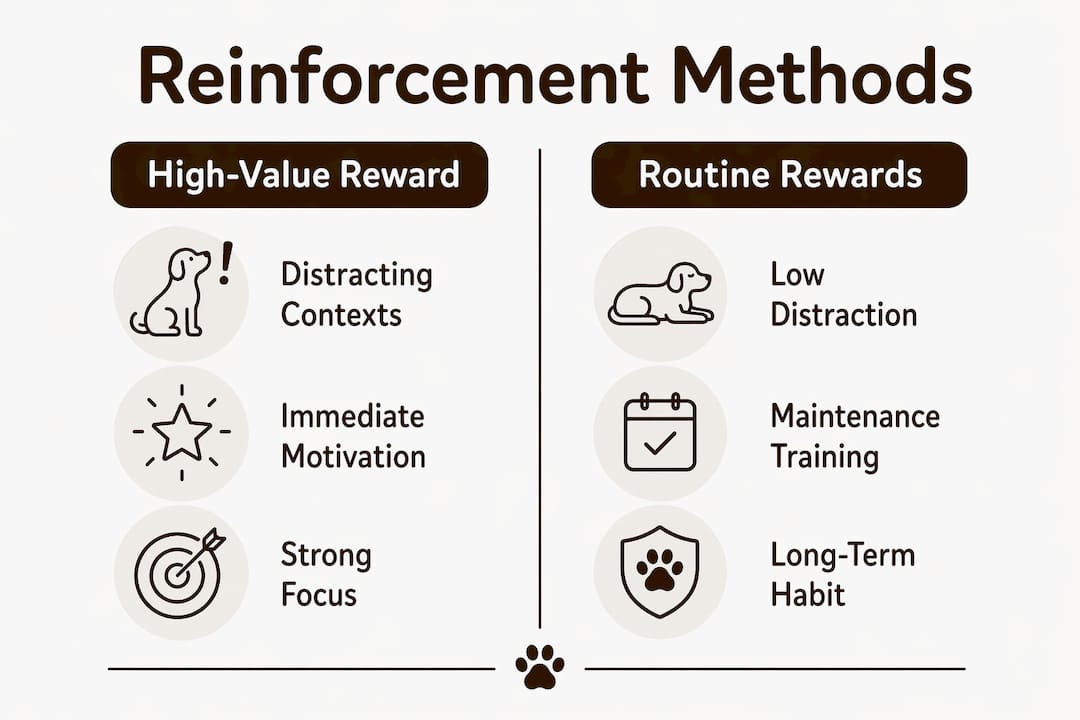
Approach | Best used when | Key advantage |
High-value food reward | Distracting environments, new locations | Increases engagement and motivation quickly |
Variable reward schedule | Behaviour is already reliable | Maintains behaviour without constant food |
For more on home obedience training practices, Happy-dogtraining has a detailed guide covering reward-based methods for challenging home situations.
How do anxiety, fear, and aggression cause training setbacks?
Fear and anxiety are the most misunderstood causes of dog obedience training setbacks. A dog that growls, freezes, lunges, or shuts down is not being stubborn. That dog is over threshold and cannot learn in that state. Addressing the emotional state comes before addressing the behaviour.
The gold standard approach is counterconditioning combined with desensitisation. Desensitisation means exposing your dog to a trigger at such a low intensity that it does not cause a fear response. Counterconditioning means pairing that low-intensity trigger with something your dog loves, typically a high-value treat. Done correctly, the trigger begins to predict good things rather than fear.
A simple counterconditioning exercise at home looks like this:
Identify the trigger (for example, the sound of thunder or a visitor at the door).
Expose your dog to the trigger at a very low intensity, such as a recording of thunder played quietly from another room.
The moment the sound plays, give your dog a small piece of chicken. Stop when the sound stops.
Repeat over several sessions, very gradually increasing the volume only when your dog remains calm and engaged.
Desensitisation must always stay below threshold. If your dog is reacting, the intensity is too high. Drop back to a level where they can remain calm and eat treats.
For noise aversion and separation anxiety, the FDA approved tasipimidine (Tessie) in 2026 as an oral medication to be used alongside behavioural modification. Medication alone is not a solution. It reduces the emotional intensity enough for behaviour modification to work.
Some symptoms require professional help rather than home treatment. Seek a qualified behaviourist if you observe any of the following:
Bite incidents or near-bites directed at people or other animals
Severe separation anxiety with self-injury or property destruction
Aggression that is unpredictable or escalating in intensity
Fear responses that do not improve after several weeks of consistent counterconditioning
For guidance on when professional input is the right call, Happy-dogtraining’s resource on certified animal behaviourist roles explains the difference between a trainer and a behaviourist clearly.
Troubleshooting distractions, interruptions, and routine changes
Distractions and routine changes are the most common day-to-day causes of home training problems. Your dog may have been performing beautifully until the school holidays started, a new pet arrived, or your training sessions moved to a different time of day. These shifts matter more than most owners expect.
The key to resolving dog behaviour issues caused by distractions is to temporarily reduce the distraction level rather than push through it. Training in a quieter room, removing visual triggers from windows, or practising before the household gets busy are all effective first steps. Higher-value treats during difficult sessions help your dog stay engaged when the environment is working against you.
Use this checklist to identify whether a routine change is driving the setback:
Has your training time or location changed recently?
Has a new person, pet, or piece of furniture been introduced to the home?
Has your dog’s sleep, feeding, or exercise schedule shifted?
Are there new sounds, smells, or visitors in the environment?
Has your own stress level increased? Dogs read owner emotions accurately.
If you answered yes to any of these, the fix is consistency. Re-establish a predictable training schedule, return to a low-distraction space, and rebuild the behaviour from a lower difficulty level. The training environment shapes your dog’s ability to learn far more than most owners realise.
Pro Tip: Short, frequent sessions of 3–5 minutes outperform long, infrequent ones. Consistency in timing and location rebuilds confidence faster than any single long session.
Key takeaways
Resolving dog training setbacks at home requires identifying the root cause first, whether that is a generalisation failure, inconsistent reinforcement, a medical issue, or an emotional threshold problem, and then applying a targeted fix at the right difficulty level.
Point | Details |
Rule out medical causes first | Arthritis, dental pain, and UTIs cause sudden regression; a vet check comes before any training change. |
Generalisation drives obedience failures | Practise commands across multiple rooms and locations, not just where training first succeeded. |
Stay below threshold for fear and anxiety | Counterconditioning only works when your dog is calm enough to eat treats and engage. |
Never repeat a poisoned cue | Retire the cue, teach the behaviour under a new word, and rebuild from a lower difficulty level. |
Routine consistency reduces setbacks | A predictable training schedule and low-distraction environment rebuild reliable behaviour faster. |
What I have learned from 20 years of training setbacks
The most damaging thing I see owners do is blame themselves or their dog when a setback appears. Both responses lead to the same mistake: pushing harder instead of stepping back. A setback is information. It tells you exactly where the training plan needs adjustment.
Early in my career, I worked with a Labrador who had solid recall in the park but ignored every cue at home near the kitchen. The owner was frustrated and convinced the dog was being defiant. The real issue was simple. The dog had never been trained in the kitchen. The smell of food was a distraction far above his threshold. We dropped back to basics in that specific room, used higher-value rewards, and rebuilt the cue over two weeks. The recall became reliable everywhere.
The mindset shift from “my dog is being stubborn” to “my training plan needs adjusting” changes everything. Solving clarity, consistency, and environmental factors is always more productive than repeating the same approach and expecting a different result.
Knowing when to call a professional is also part of good ownership, not a sign of failure. Credentialed behaviourists apply risk assessment and tailored protocols for aggression and severe anxiety that go well beyond what home training can safely address. If your dog has bitten someone or is showing escalating aggression, please do not wait. Get expert help promptly.
— Mark
How Happy-dogtraining can help when setbacks persist
When home training adjustments are not enough, professional support makes a measurable difference.
Happy-dogtraining offers personalised programmes for owners dealing with obedience failures, fear-based behaviour, and aggression in Singapore. With over 20 years of experience and AVS accreditation, the team applies science-based, humane methods tailored to each dog’s specific needs. Whether your dog needs structured obedience training or a specialist aggression behaviour consult, Happy-dogtraining provides free lifetime support after training so progress continues long after the programme ends. Visit Happy-dogtraining to find the right programme for your dog.
FAQ
Why does my dog ignore commands at home but not outside?
This is a generalisation failure. Your dog learned the cue in one context and has not yet practised it in your home environment. Retrain the behaviour specifically in the rooms and situations where it breaks down.
How do I know if my dog’s setback is medical?
Sudden behavioural changes in a previously trained dog often signal pain or illness. Conditions such as arthritis, dental pain, and UTIs are common culprits. A vet check should always come before changing your training approach.
What is cue poisoning and how do I fix it?
Cue poisoning happens when a command is repeated multiple times without compliance, teaching the dog that the first request is optional. Retire the cue, teach the same behaviour under a new word, and rebuild from a low difficulty level with consistent rewards.
When should I see a professional behaviourist for aggression?
Seek a qualified behaviourist if your dog has bitten someone, if aggression is escalating, or if fear responses are not improving after several weeks of consistent counterconditioning at home. These situations carry safety risks that require expert assessment.
Can medication help with anxiety-related training setbacks?
Yes, in some cases. The FDA approved tasipimidine (Tessie) in 2026 for noise aversion and separation anxiety. Medication reduces emotional intensity enough for behaviour modification to work, but it must always be combined with a structured training plan.
Recommended
Comments