Dog Afraid of Elevators? A Gentle Plan for Singapore Homes
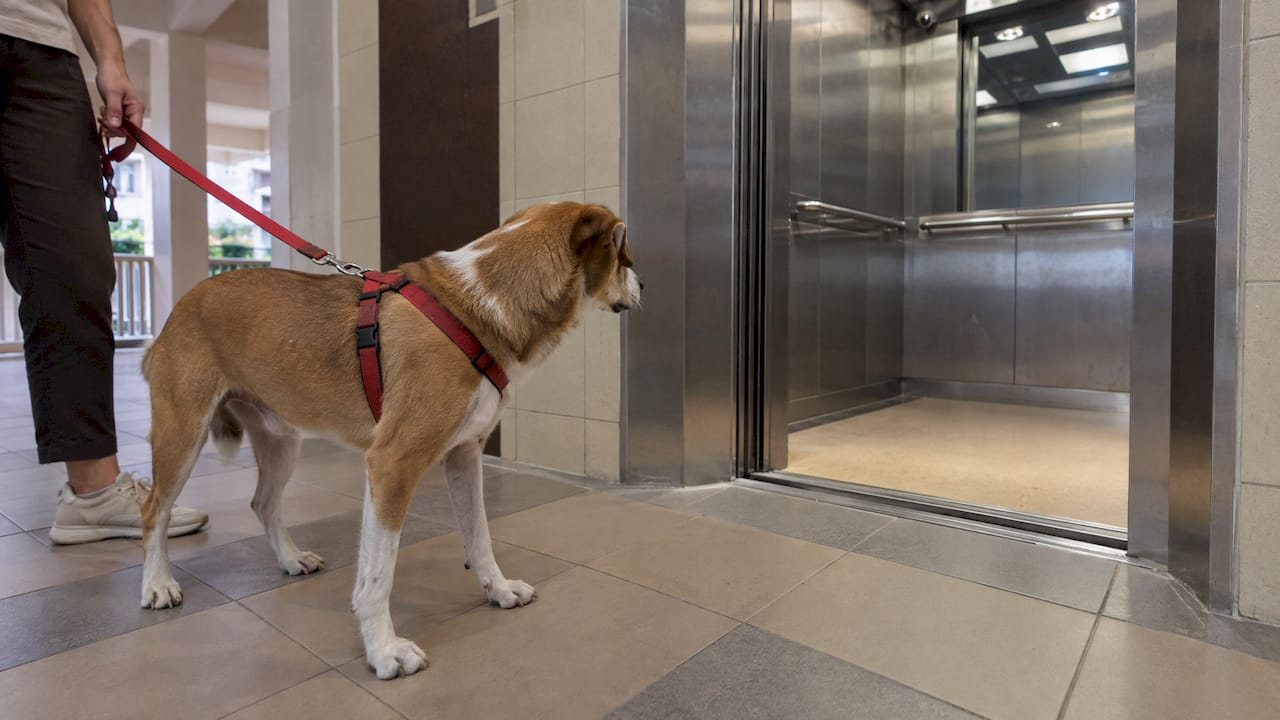
If your dog freezes at the lift lobby, pulls away when the doors open or panics halfway up to your floor, the fix is not more pushing. It is a slow, reward-based plan that teaches your dog the lift is safe, one small piece at a time. In Singapore, where most dogs ride a lift several times a day for life, getting this right matters. We train dogs at home, in the places where the fear actually happens, and we stay with you after the classes end with free lifetime support.
Below you will find why lifts unsettle dogs, the signs to look for, how to stay safe in the lift, a six-step practice ladder, and when to bring in a professional.
TL;DR
Lifts combine a moving floor, a closed metal box, odd noises and strangers appearing suddenly, so fear is common and understandable.
Work gradually, below the point where your dog gets worried, and pair every step with treats. Never force your dog in.
Keep the lead short and in your hand, and stand your dog in the back corner. A lead caught in the doors can cause serious injury.
Have a vet check for pain first, then get qualified behaviour help if your dog shakes, panics or lunges.
Puppies have a short window for easy learning, so start lift practice early and keep it happy.
Table of Contents
Why a lift can feel so frightening to a dog
To you the lift is a boring box. To your dog it is several strange things at once. The floor drops or rises without any visual clue, which can feel a bit like car sickness. The space is sealed, with no way to step out. The doors slide open and people appear suddenly, sometimes with another dog. Add the hum, the ping and the little judder when it stops, and you can see why many dogs struggle.
The fear is rarely one single thing. For one dog it is the gap at the threshold. For another it is the closing doors, and for another it is the stranger who steps in at the third floor. That is why a good plan begins by finding which piece bothers your dog most.
Sometimes it starts after one bad ride: a lurch, a loud neighbour, a door that nudged a paw. If the fear appeared suddenly, see your vet. AVS, Singapore’s Animal & Veterinary Service advises ruling out medical causes such as pain or illness before starting behaviour work, and a dog with a sore hip or stiff joints may simply dread the jolt of the lift.
Signs your dog is worried, before they refuse to go in
Most dogs say they are uncomfortable long before they plant their feet. Watch for these:
Lip licking or yawning when no food is around
A tucked tail, or ears pinned back
Leaning away from the doors, or stopping at the lobby
Trembling, rapid panting or whining
Frantic scrambling in or out, or slow recovery once you are back outside
Freezing, which is often mistaken for calm
A veterinary column in The Straits Times by Dr Colin Foo of AVS’s Centre for Animal Rehabilitation lists many of the same signs, including shaking, pacing, tail tucking, lip licking, excessive yawning and pinned-back ears.
One point trips up many owners: taking a treat does not prove your dog is relaxed. Look at the whole body. If your dog gobbles food but is stiff, leaning away and slow to recover, the step was too hard. Make it easier next time.
Keep everyone safe in the lift first
Training only works if nobody gets hurt, so settle the safety basics before anything else.
Mind the lead. Lift doors can trap a lead that dangles behind a dog, and a moving cab then tightens it. In Singapore, The Straits Times reported a lift accident in which a very thin dog leash was too narrow for the door sensors to detect and the owner was seriously injured. Lift engineers advise walking in with a firm grip on the lead, or picking up a small dog and its lead. They also suggest using a lead that unclips quickly, and pressing the door-open and emergency-alarm buttons straight away if a lead is caught. The Animal Medical Center in New York gives the same warning: never drop the lead while your dog enters or exits.
Pick your spot. Stand your dog in the back corner beside you, so two walls are behind them and your legs sit between your dog and anyone who boards. Keep paws and tail away from the door track. Avoid letting your dog ride facing the gap, where startles and lunges tend to happen.
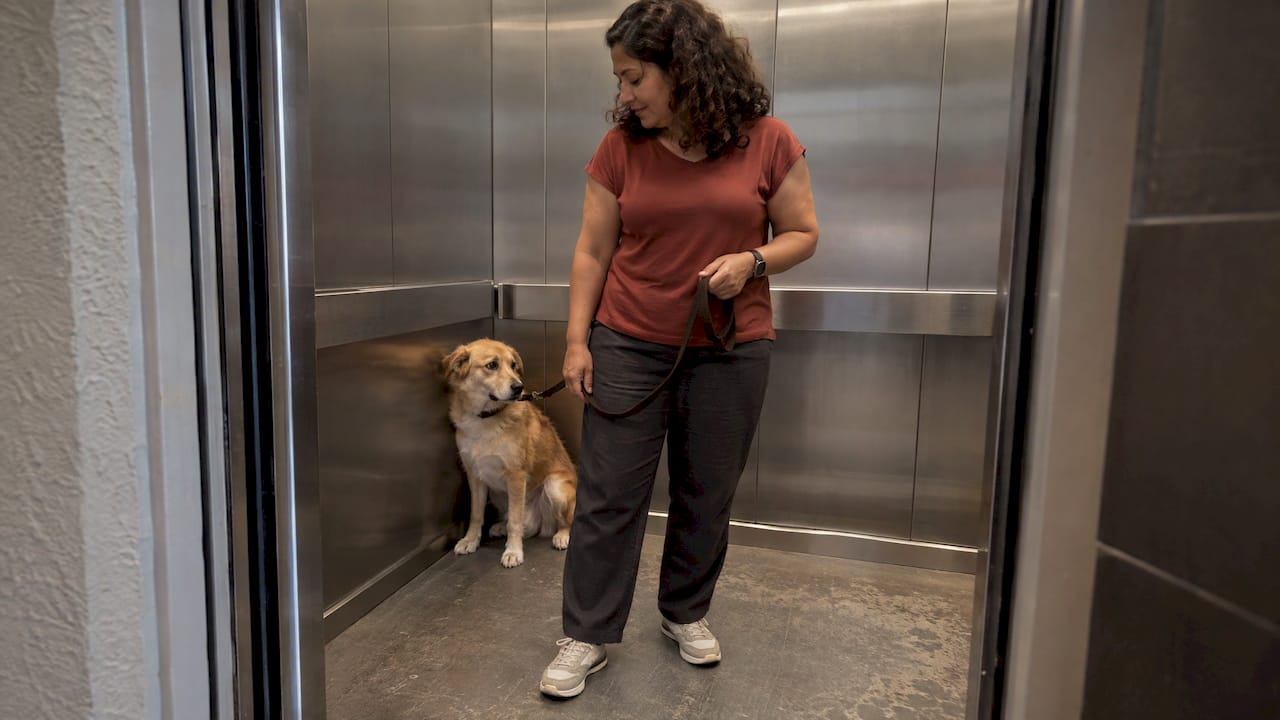
Know your lift. Find the alarm button before you need it, and avoid crowded cabs where a small dog can be stepped on.
Stay calm yourself. Dogs read your mood. Breathe out, keep the lead loose but controlled, and keep your voice low and cheerful.
A six-step practice ladder for a lift-shy dog
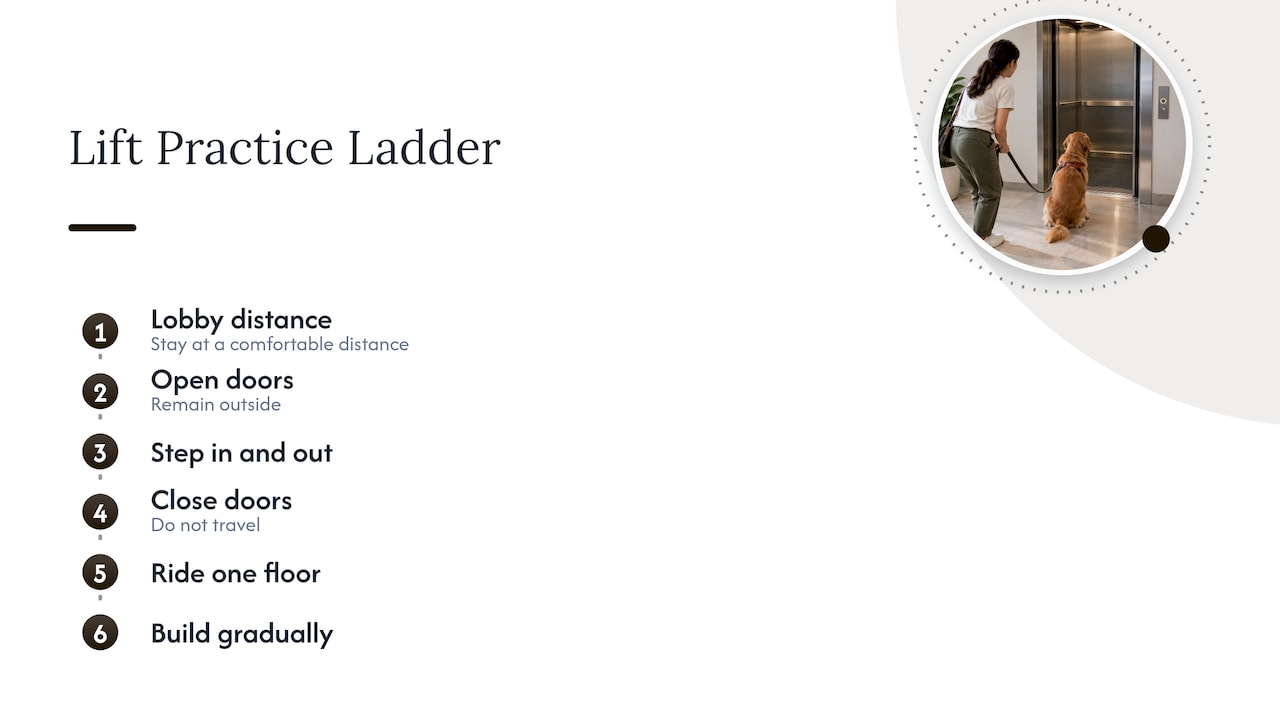
The method behind this is what AVS calls systematic desensitisation and counter-conditioning: you expose your dog to the trigger at a level they can handle, and pair it with something good. Obedience drills do not fix fear. Changing how your dog feels does.
The tools you need are small, soft treats your dog loves (something better than kibble), a short lead, and a quiet time of day. Early morning or mid-afternoon on a weekday usually means emptier lifts. If you use a marker word such as “yes”, teach it with treats at home first so it already means “food is coming”.
Step 1: The lobby
Sit or stand near the lift lobby at a distance where your dog is relaxed. Scatter a few treats on the floor and let your dog sniff them out. Do not go closer until your dog is loose and wagging. For some dogs this takes one session. For others it takes three. Layout matters here too: a busy lobby with several lifts, or a narrow corridor, can be harder to practise in, as this note on evaluating lift lobby accessibility suggests, so choose the quietest lobby you can reach.
Step 2: Doors open, you stay outside
Call the lift when it is likely to be empty. When the doors open, treat your dog outside the lift, then let the doors close and walk away. You are building the idea that open doors predict good things.
Step 3: Step in, step out
Walk in with your dog, scatter treats on the floor, and step straight out again. Keep the lead short and your grip firm. If your dog hesitates at the threshold, do not tug. Go back to step 2.
Step 4: Doors close, no travel
Step in, let the doors close, give a treat and a quiet word, then press open and leave. The closing sound is often the hardest part, so pairing it with a small treat is worth the patience.
Step 5: One-floor hops
Ride up or down a single floor, feeding treats throughout, then get out and give your dog a minute to sniff and settle. Repeat a few times. End each session on an easy rep, not a tough one.
Step 6: Build up
Stretch to your full floor, then to rides with one calm person, then to normal traffic. Each stage might take a session or three. If your dog stops eating, starts leaning away or tries to leave, drop back a step. That is not failure. It is the plan working as designed.
How to tell it is working
Your dog walks towards the lobby with a loose body
Treats are taken softly, and your dog looks back at you
Recovery after the ride gets faster
Your dog can sniff, shake off and move on after stepping out
Progress is rarely a straight line. A new neighbour, a noisy lift or a bad day can set you back a step. Stay kind, keep sessions short, and come back to it tomorrow.
If barking is the main problem once the doors close, our guide to a five-stage threshold plan for barking in elevators goes deeper.
Puppies and dogs that cannot take the stairs
In an HDB block, the lift is part of daily life from the first week home. AVS says puppies have a critical socialisation window from about 3 weeks to 14 to 16 weeks, when they are most open to new experiences, and that socialisation continues for life. It recommends positive exposure to different environments and sounds, watching body language and never forcing interactions.
For a puppy, that means:
Start far enough from the lift that the sound and movement of the doors do not bother them. Reward a brief look, then move closer over later sessions.
Pair the sound of the doors closing with a small treat and a quiet word.
If an unfamiliar dog is already inside, wait for the next lift.
When strangers board, position your puppy slightly behind you.
If your puppy cannot engage with you, they need less intensity, not one more repetition.
Puppies under roughly five months, giant breeds and dogs with joint trouble should not be asked to climb many flights as a workaround. Carry a small puppy in a carrier or sling for rides you cannot avoid, and plan toilet trips at quiet times so those rides happen in an empty lift. Never hold back water or toilet access to push a dog into the lift. And do not swap the lift for an escalator, which carries its own risks for paws.
If your dog also struggles with steps, see why dogs become afraid of stairs and how to help.
What not to do
Do not flood. Dragging a frightened dog in and riding it out teaches the dog that their worst fear is true. It can worsen the fear or cause a shutdown.
Do not punish. Dr Foo notes that punishment often worsens anxiety and fear. A predictable routine, on the other hand, gives a dog a sense of control.
Do not use harsh tools. AVS recommends the Least Intrusive, Minimally Aversive approach, which starts with health, then changing the environment, then positive reinforcement and teaching alternative behaviours. It lists shock collars, prong collars and physical corrections among the methods to avoid. Our guide on why humane training methods work better explains the reasons.
Do not rush on bad days. If your dog is tired, unwell or already stressed, skip the session.
When to bring in a professional
A gentle plan works for many dogs with mild lift worry. Get help sooner if you see any of these:
Your dog will not eat, or shakes or drools heavily near the lift
Your dog lunges, snaps or growls at people or dogs who step in
The fear is spreading to corridors, stairs, the car or going outdoors
Your dog has had a sudden change in behaviour, which calls for a vet visit first
AVS explains that trainers teach obedience and basic manners, while animal behaviourists hold advanced qualifications for fear, anxiety and aggression. Veterinary behaviourists can diagnose behavioural disorders, rule out medical causes and prescribe medication, and AVS points to them for serious aggression, severe anxiety or complex cases. If your vet suggests medication for severe anxiety, that is a decision for your vet to monitor. Training is then easier because your dog is calm enough to learn.
For the behaviour side, our behaviour modification plan for fearful dogs shows how a structured programme is built.
Help at home with Happy-Dog Training
Lift fear lives in your building, so the training works best there. Our certified, AVS-accredited trainer has over 20 years of experience and uses humane, science-based methods tailored to each dog. Our Fearful Dog Classes focus on building confidence step by step. If your dog reacts to people or dogs in the lift, our Reactive Dog Classes are $200 per class. If it goes further and your dog lunges or snaps, an Aggressive Behaviour Consult is $200 to $250 per session.
For a new puppy, our Puppy Play Socialisation Classes are $450 per dog. Every client also gets free lifetime support after training.
See all options and prices on our classes and prices page, or reach us through Happy-Dog Training.
Our view on lift fear
We see lift fear as a feelings problem, not a manners problem. A dog that refuses the lift is not being stubborn. They are telling you, clearly, that the box feels unsafe. That is why we begin with the dog’s emotions and work below the point of worry. Treats are not bribes here. They change what the lift predicts. When a dog learns that the doors opening means something lovely is coming, the whole picture changes, and the dog starts to walk in on their own. We also train in your home and your block, because a lift in a textbook is not the lift your dog rides. Your lobby, your neighbours and your timings are all part of the plan. And because families live with these buildings for years, we back our work with free lifetime support, so you are never left alone when a setback comes. Be patient, be kind and celebrate the small wins. A wagging tail at the lift door is a real milestone. Mark
FAQ
Why is my dog suddenly scared of the lift?
A single bad ride can be enough: a lurch, a loud stranger, a door that touched a paw. Pain can also make the jolt of a lift unpleasant, so book a vet check first. Once health is cleared, start the gradual plan above.
Is it normal for dogs to fear lifts?
Yes. A moving floor, a closed space, odd noises and surprise passengers are a lot to take in, and for many dogs lifts are outside their life experience. Early, positive practice helps, especially for puppies.
How long does it take a dog to get used to a lift?
It depends on the dog and how deep the fear runs. Each step of the ladder can take from one to three sessions, and the pace is set by your dog’s body language, not the calendar. If your dog stops eating or tries to leave, go back a step.
Can I just carry my dog in the lift?
Carrying a small dog is a sensible way to manage unavoidable rides while you train, and it keeps paws away from the door track. It does not build confidence by itself, so keep up the practice steps. Large dogs and dogs that panic when held need a trainer’s plan.
Sources
Recommended
Comments