Private Dog Training Benefits: What Singapore Owners Gain
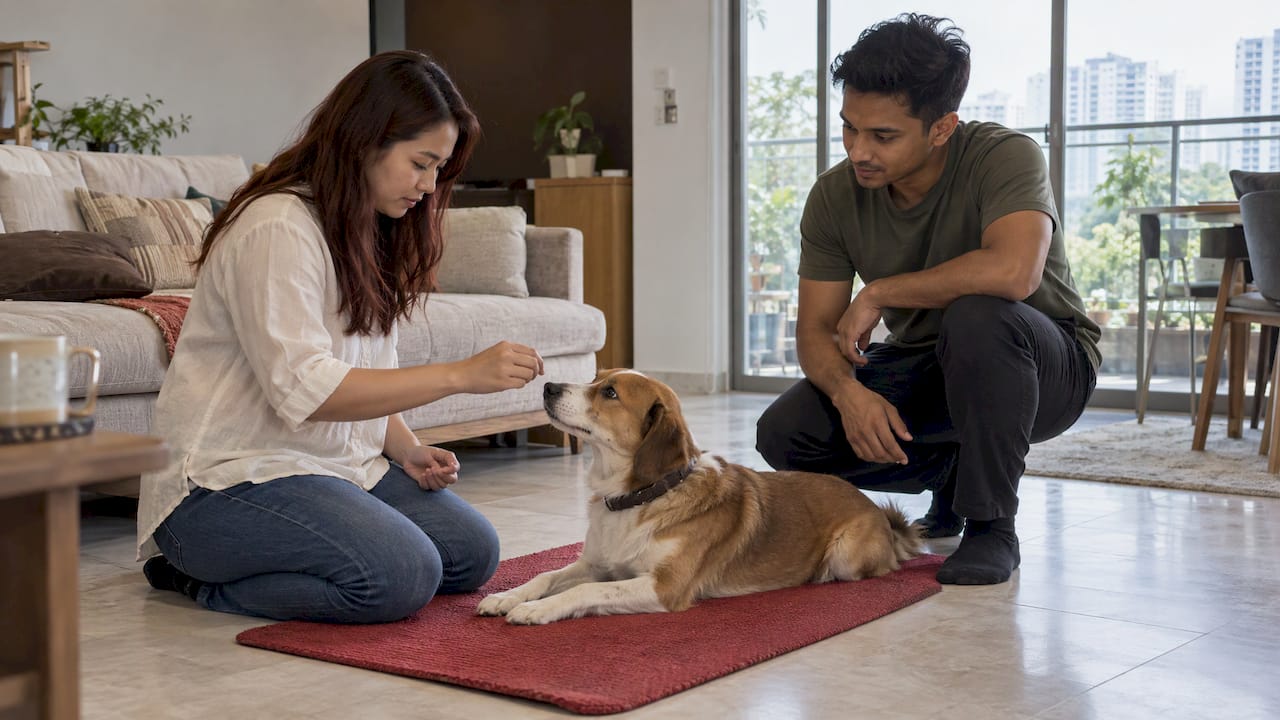
Private dog training is worth it when you want a plan built around your dog, your home and your daily routine, rather than a general lesson shared with other owners. You get the trainer’s full attention, practice in the places where the behaviour really happens, and coaching for you as well as your dog. At Happy-Dog Training Singapore, private obedience classes are $200 per class, and our trainer is certified and AVS-accredited, with over 20 years of experience.
This guide explains what private training involves, where it helps most, what it costs and how to judge whether a trainer is right for your family.
TL;DR
Private training is tailored: the plan fits your dog, your flat or house, your household rules and your schedule.
It works best for problems that show up in a particular context, such as lift stress, barking at neighbours, guarding or being left alone.
For fear, anxiety or aggression, start with a vet check, then work with a qualified behaviour professional using reward-based methods.
Owners learn the skills too, which is what keeps progress going after the sessions end.
Ask for a clear quote and choose a trainer who is humane, qualified and calm with your dog.
Table of Contents
What private dog training actually involves
In a private session, one trainer works with one dog and the people who live with it. There is no queue of other dogs, no fixed syllabus and no need to wait for the class to catch up. The session starts from your questions: why does she bark when the doorbell rings, why does he pull towards other dogs at the void deck, why does she panic when you pick up your keys?
A good first session usually covers four things:
History and goals. What has happened, when it started, what you have already tried and what you want life to look like.
Observation. The trainer watches how your dog reads the room, responds to you and recovers from a surprise.
A plan. Small, repeatable exercises, such as marker training (a short word or click that tells your dog the instant they got it right), rewards for calm choices and gradual practice around the trigger.
Homework you can manage. Short daily practice that fits into a working family’s day.
The difference from training alone is feedback. You can watch videos and read guides, but a trainer sees your timing, your leash handling and your dog’s body language, and fixes the small errors that quietly undo progress. Our approach to this is humane and science-based, and you can read more in our guide to types of humane dog training methods.
The main benefits of private training
1. A plan built around your dog
No two dogs learn the same way. A shy rescue, an excitable young Labrador and a senior dog with a strong guarding streak need different pacing, different rewards and different goals. Private training lets the trainer adjust within the session, slowing down when your dog is unsure and moving on when they are ready.
2. Practice where the problem happens
Many behaviours only appear in context. Lift rides in an HDB block, a neighbour’s dog passing the door, visitors arriving, a dog left alone in the living room: these are hard to recreate in a hall. When the session happens at home, the trainer works with the real layout, the real routine and the real triggers. Our best practices for home obedience training guide shows how this looks day to day.
3. Coaching for the people, not just the dog
Dogs do not live in a classroom. They live with you, so the owner needs the skills. Singapore’s SPCA notes that training can help owners get to know their dogs, and that problem behaviour may reflect unmet needs such as socialisation, exercise or interaction (see the SPCA’s position). A private trainer can help you spot those needs and meet them, and everyone in the household can learn the same cues and rules so the dog gets consistent answers.
4. A kind, low-stress learning environment
A dog that is anxious, over-excited or wary of strangers often cannot learn in a busy room. One-to-one sessions let the trainer keep your dog under the threshold where they can think, which makes reward-based training far more effective and keeps the experience positive.
5. Faster, more focused progress
Because every minute is spent on your goals, you do not spend time on exercises your dog does not need. Whether you want a reliable recall, calm greetings or a dog who settles while you work from home, the plan stays on target.
6. Ongoing support
Training does not end when the last session does. At Happy-Dog Training, all clients receive free lifetime support, so if a new situation comes up months later, you are not starting from scratch.
Puppies: a safe, confident start
The early months shape how a dog feels about the world. The Animal and Veterinary Service (AVS) describes socialisation as positive exposure to people, animals, environments and experiences, with a particularly receptive window for puppies from about 3 to 14 or 16 weeks, and says it should never be forced or overwhelming (AVS dog training guidance).
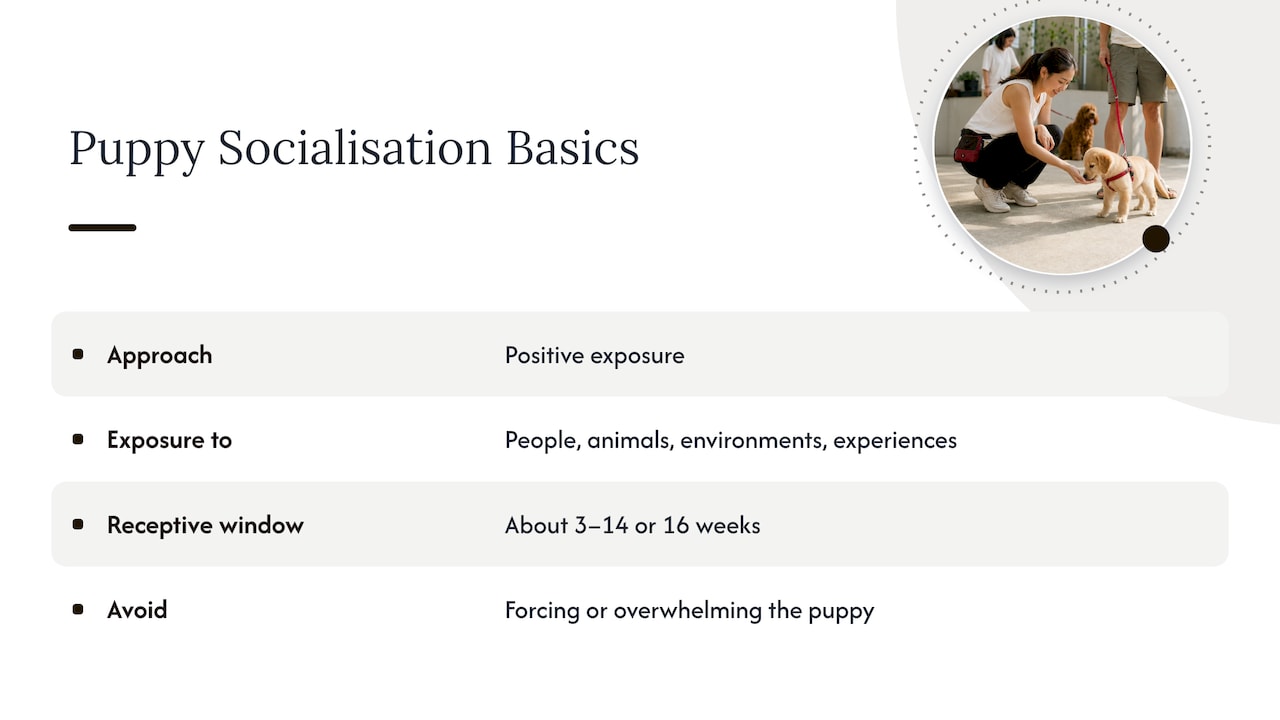
That last point is where one-to-one guidance helps. A trainer can show you how to let your puppy watch a busy corridor from a distance, meet one calm person at a time and walk away from anything too big. You can also prepare a familiar settling spot, for example a soft blanket such as this Labrador puppy throw blanket, so a new place smells and feels like home.
For families who want their puppy to meet others in a controlled way, our Puppy Play Socialisation Classes are $450 per dog. If your puppy has not finished vaccinations yet, read our guide on safe puppy socialisation in Singapore before full vaccination, and our puppy training essentials for the first steps at home.
Fear, aggression and separation anxiety
These are the problems where private help is most valuable, and where doing the right things in the right order matters.
Start with your vet. AVS advises consulting a veterinarian before addressing behaviour problems, because pain, illness and other health issues can cause or add to behaviour changes. A sore hip can look like grumpiness, and an upset stomach can look like restlessness.
Then work with a qualified professional. For fear, anxiety, aggression or separation-related distress, AVS describes behaviour modification built on assessing the triggers, gradual desensitisation (slowly building tolerance), counter-conditioning (changing how your dog feels about the trigger) and sensible management, and it advises appropriately qualified professional support for serious cases (AVS).
This is exactly what private sessions are designed for. Each problem needs its own plan, and the trainer can adapt it as your dog improves:
Aggression. Our Aggressive Behaviour Consult is $200 to $250 per session. It looks at what triggers your dog, how to keep everyone safe and how to build a calmer response.
Reactivity (barking and lunging at dogs, people or movement). Reactive Dog Classes are $200 per class.
Separation anxiety. Our Separation Anxiety classes are $200 per class, and our article on anxious dogs and daycare explains why behaviour-first care helps.
Fearfulness. Our Fearful Dog Classes help nervous dogs build confidence at their own pace.
The SPCA also points out that confining a dog can hide the visible problem without addressing its cause, and may create new problems when a dog lacks interaction or exercise (SPCA). That is why a plan that understands the reason behind the behaviour works better than simply stopping it.
Private lessons, home training or board and train?
Private training comes in a few forms. Which suits you depends on your dog and your schedule.
Option | Best for | Our price |
Private obedience classes at home | Manners, routines, problems that only happen in your own space | $200 per class |
Behaviour consults and classes | Aggression, reactivity, fear, separation anxiety | $200 to $250 per session |
Board & Train | Busy owners who want a head start, with owner handover afterwards | From $700 per week |
Intensive Obedience Plus | A structured, intensive obedience programme | $2,500 one-off |
Puppy Play Socialisation | Puppies learning to enjoy other dogs and new experiences | $450 per dog |
Home sessions suit dogs who behave well elsewhere but struggle in their own space, or who are too stressed to learn in a busy class. They also suit households where travelling with the dog is difficult.
Board & Train suits owners who want to give their dog an intensive start while they are at work or away. Because your dog stays with us, the handover matters: you learn what your dog has learned and how to keep it going, and our free lifetime support is there afterwards. For a more intensive programme, Intensive Obedience Plus is available at $2,500.
Whichever route you choose, the owner’s practice after training decides how long the results last. That is why every programme includes coaching for you, not just time with your dog.
Is private dog training worth it?
Worth is about what problem you are solving and how long you have been living with it. Consider these questions:
How much does the behaviour affect daily life? If you avoid visitors, dread walks or worry about leaving the flat, the value of a calm dog is large.
Is the problem tied to your home or routine? If so, training in that setting saves time.
Do you want one plan for the whole household? A single trainer can give everyone the same cues.
Does safety matter? With a dog that growls, snaps or lunges, a tailored plan and skilled handling are the sensible route.
On cost, a simple example helps. Four private classes at $200 each is $800, and you can plan the number of sessions around your goals. Simple manners often need only a few sessions, while fear, reactivity and separation issues usually take more because they are changing emotions as well as habits. Your trainer will tell you what to expect after seeing your dog.
Ask for the plan and the fees in writing before you start, covering the number of sessions, how long each lasts, what follow-up is included and what happens if you need to reschedule. A clear quote lets you budget with confidence.
How to choose a trainer in Singapore
The rules and expectations around dog training in Singapore are getting clearer. On 3 October 2026, Singapore launched its first Code of Animal Welfare for dog trainers, which promotes humane, evidence-based training and positive reinforcement, and says electric collars should not be used.
AVS says reward-based training uses positive reinforcement and recommends the least intrusive, minimally aversive approach, and it advises checking a trainer’s credentials and use of positive-reinforcement methods (AVS). The SPCA adds that you should choose a trainer who uses humane methods, and reconsider if you feel pressured or your dog seems afraid of the trainer (SPCA).
A short checklist:
Qualifications and accreditation you can verify.
Reward-based, humane methods explained in plain words.
A dog who looks relaxed and curious around the trainer.
A plan that includes you, with homework you can realistically do.
Support after the sessions finish.
Our longer guide on how to choose a dog trainer in Singapore goes through each point, and why humane training methods work better explains the thinking behind it.
Our perspective
After more than 20 years of working with dogs and families in Singapore, we believe the best training feels like a partnership. A dog who is learning with kindness is a dog who wants to work with you. That is why we build every plan around the individual dog. A nervous dog needs time and safety. A bold young dog needs clear structure and plenty of rewarded choices. A puppy needs gentle experiences, not pressure. Private sessions let us respond to all of that as it happens. We also train the people. When you understand what your dog is telling you and know exactly what to do next, you stop guessing, and the whole household relaxes. That is why free lifetime support is part of how we work: the real test of training is how your dog behaves in your own home months later, and we want you to have help for as long as you need it. Mark
Ready to start?
If you would like a plan for your own dog, we can begin with a private obedience class at home or a behaviour consult, depending on what you are facing. Our certified, AVS-accredited trainer works with puppies, rescues and dogs with fear, reactivity, aggression or separation anxiety, using humane, science-based methods.
You can see everything we offer, from obedience to K9 Nose Work, on the Happy-Dog Training Singapore site.
FAQ
Is private dog training worth it?
For most owners, yes, when the goal is specific: a calmer home, a confident puppy or a solution to a behaviour that affects daily life. You get a plan built for your dog, practice in the setting where the issue happens and coaching that helps the whole household stay consistent.
How many sessions will my dog need?
It depends on the dog and the goal. Basic manners can need only a few sessions, while fear, reactivity and separation problems usually take longer because they involve changing how a dog feels. Your trainer will outline a realistic plan after the first session and adjust as your dog progresses.
Should I see a vet before booking training for a behaviour problem?
Yes, especially for sudden changes, fear, anxiety or aggression. AVS advises consulting a veterinarian first because pain, illness and other health issues can cause or contribute to behaviour changes. Once your dog has the all-clear, a qualified trainer can build the behaviour plan.
When should I start training a puppy?
As early as you can bring your puppy home. AVS describes the puppy socialisation window as roughly 3 to 14 or 16 weeks, so early, gentle exposure to new people, sounds and places matters. Keep every experience positive and let your puppy move away if they feel unsure.
What should I look for in a dog trainer?
Look for verifiable credentials, humane reward-based methods and a calm, respectful approach with your dog. Singapore’s new Code of Animal Welfare for dog trainers supports positive reinforcement and says electric collars should not be used. Choose someone who also coaches you and offers support after training.
Sources
Recommended
Comments