Separation anxiety symptoms in dogs: owner's guide
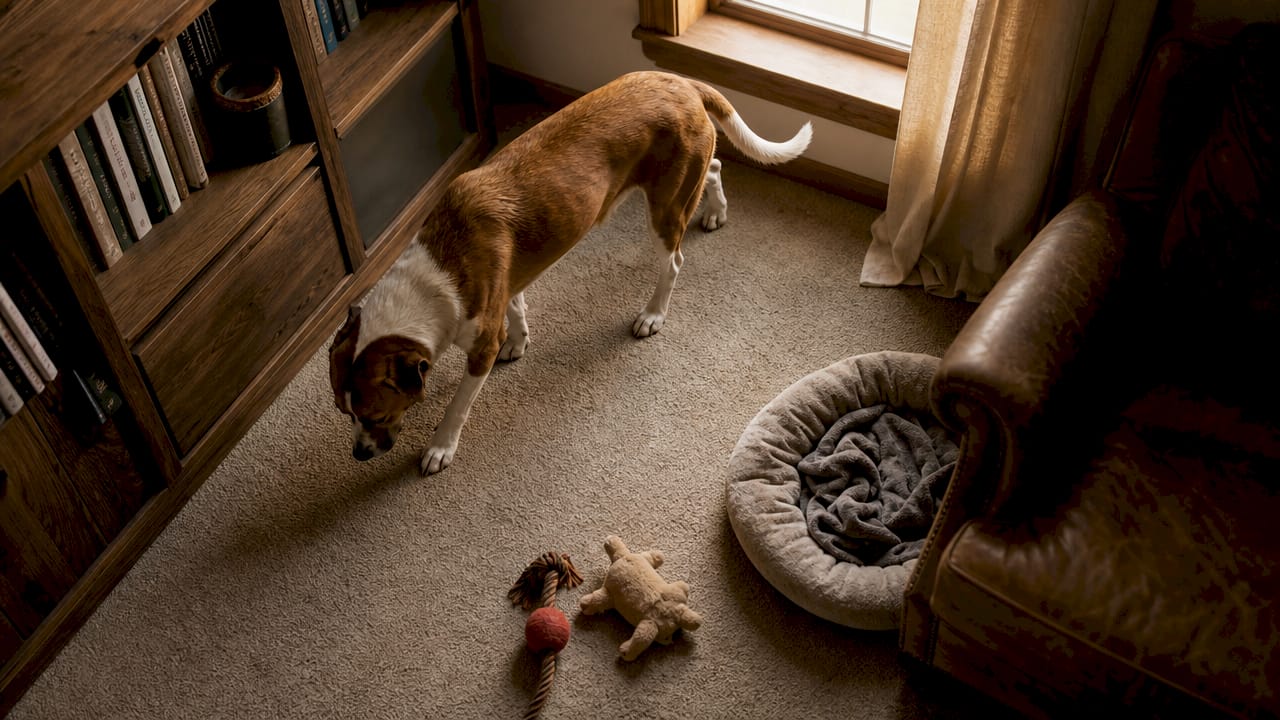
Separation anxiety in dogs is defined as a pattern of distress behaviours triggered specifically by owner absence, not by boredom, mischief, or general excitability. The clinical term used by veterinary behaviourists is canine separation anxiety, and recognising it accurately matters because the wrong diagnosis leads to the wrong response. Symptoms typically begin within 30 minutes of you leaving, covering vocalisation, destructive behaviour, pacing, and elimination. If your dog settles within 15 minutes, MSPCA-Angell considers that a non-clinical stress response rather than true anxiety. Knowing the difference shapes every decision you make next.
1. What are the key behavioural symptoms of separation anxiety in dogs?
The most recognisable separation anxiety symptoms in dogs are behavioural, and they follow a clear pattern tied directly to your departure. Cornell’s Riney Canine Health Center describes these as distress behaviours that begin before or shortly after the owner leaves, not hours into the absence.
Common behavioural signs include:
Vocalisation. Barking, howling, or whining that starts as you prepare to leave or within minutes of the door closing. Separation anxiety barking in dogs tends to be monotonal and repetitive, unlike attention-seeking barks that vary in pitch. Monotonal vocalisation is listed by dvm360 as a core clinical symptom.
Pacing. Fixed, repetitive routes around the home, often near the front door or windows. This is not casual wandering; it is a stress response.
Destructive behaviour at exit points. Chewing or scratching at doors, windows, and frames. Destruction at exit points signals panic-driven escape attempts, not random mischief.
Attempts to escape. Digging under fences, breaking through barriers, or damaging crates. The dog is not being naughty; it is in a panic state.
Clingy or shadowing behaviour. Following you from room to room as you prepare to leave, refusing to settle.
Inappropriate elimination. Toileting indoors despite being house-trained, specifically when alone.
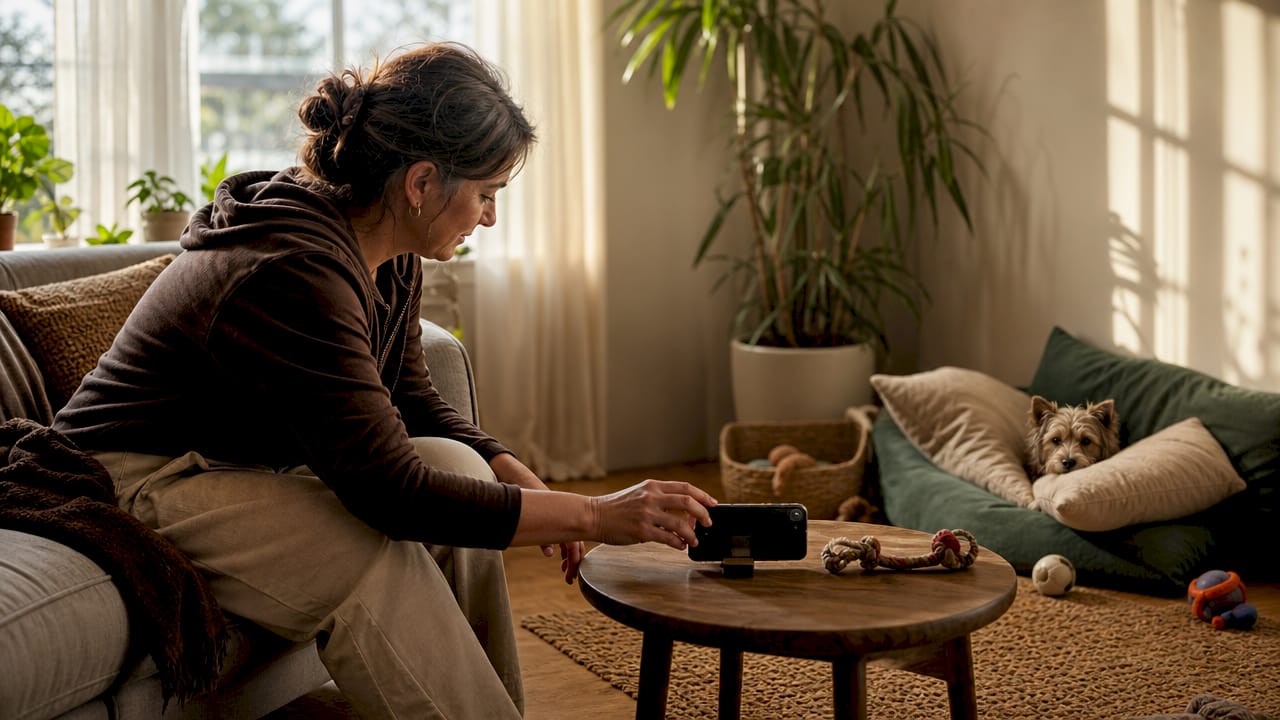
Pro Tip: Set up a phone or tablet to record your dog for the first 30 minutes after you leave. You will see the full picture of what happens, including silent distress you would otherwise miss entirely.
2. Which physical signs indicate separation anxiety in dogs?
Physical symptoms of canine separation distress are less obvious than barking or destruction, but they are just as telling. Many owners miss them because they only look for noise or damage.
Key physical signs to watch for:
Excessive drooling or hypersalivation. A wet patch on the floor or a soaked chest when you return is a strong indicator. Hypersalivation is flagged by dvm360 as one of the core clinical markers of separation anxiety.
Trembling or shaking. Some dogs shake visibly without making any sound. This silent distress is easy to overlook.
Panting without exertion. Heavy panting in a cool room, with no physical activity to explain it, points to anxiety rather than heat.
Refusal to eat. Persistent refusal to eat during your absence is a sign of panic, not a picky appetite. A dog in genuine distress cannot focus on food.
Self-directed behaviours. Excessive licking of paws, flanks, or legs when left alone can indicate anxiety rather than a skin condition.
Pro Tip: Leave a food puzzle or a filled Kong before you go. If your dog ignores it completely, that refusal is meaningful data pointing toward anxiety rather than boredom.
3. How can timing and context help you tell separation anxiety apart from other issues?
Timing is the single most reliable diagnostic tool for distinguishing separation anxiety from other dog behaviour changes. Symptoms peak just after departure, not hours into the absence. Boredom-related mischief, by contrast, tends to appear well into a long absence when the dog has exhausted other options.
Feature | Separation anxiety | Boredom or other cause |
When symptoms appear | Within 30 minutes of departure | Well into the absence, often after 1–2 hours |
Trigger | Owner leaving or pre-departure cues | Lack of stimulation, hunger, or external noise |
Location of destruction | Doors, windows, exit points | Random items, toys, furniture throughout the home |
Vocalisation type | Monotonal, continuous, distress-driven | Intermittent, reactive to external sounds |
Behaviour on return | Extreme, prolonged greeting | Normal or mildly excited greeting |
Departure cues such as picking up keys or putting on shoes can trigger anxiety before you even open the front door, according to Marin Humane. This means the panic timeline starts earlier than most owners realise. Video evidence is the most reliable way to confirm this, because neighbours’ reports can be misleading and do not capture the full behavioural picture.
4. What behaviours can falsely mimic separation anxiety symptoms?
Several conditions produce signs that look identical to separation anxiety but have entirely different causes. Misidentifying them leads to training approaches that do not work and can make things worse.
Watch out for these lookalike causes:
Boredom. A dog left alone for eight hours with no enrichment will chew, bark, and pace. The key difference is timing. Boredom behaviour appears hours into the absence, not within the first 30 minutes.
Fear or phobia unrelated to owner absence. A dog terrified of thunder or traffic noise may bark, tremble, and eliminate indoors. The trigger here is the sound, not your departure. Video footage will show the correlation clearly.
Medical conditions. Pain, urinary tract infections, and gastrointestinal issues all cause house-soiling and restlessness. Senior dogs may show cognitive decline that produces confusion and vocalisation at any time of day.
Incomplete house training. A young dog or a recently rehomed adult may simply not be fully house-trained yet. Elimination indoors is not always anxiety-driven.
Attention-seeking behaviour. Some dogs learn that barking or destruction brings the owner back. This is a trained behaviour, not a panic response, and it responds differently to management.
A veterinary check-up is the right first step before any behaviour programme begins. Physical causes must be ruled out before you can confidently address anxiety.
5. What are the early signs and anticipatory behaviours to watch before you leave?
Pre-departure anxiety in dogs is one of the most overlooked parts of the canine separation distress picture. Your dog often begins to suffer before you have even closed the front door.
Early warning signs during your departure routine include:
Pacing and restlessness as you move around the house getting ready.
Whining or soft vocalisation that starts when you pick up your bag or keys.
Lip licking and yawning as calming signals indicating rising stress.
Increased panting in a cool environment with no physical cause.
Shadowing. Following you from room to room, sitting directly in front of the door, or pressing against your legs.
Marin Humane notes that many dogs develop mounting stress during pre-departure rituals, effectively learning that certain actions predict abandonment. This is why desensitisation to departure cues must begin with the cues themselves, not just the absences. Picking up your keys and then sitting back down, repeatedly and without leaving, is one of the earliest and most effective interventions you can make.
Pro Tip: Vary your departure routine deliberately. Put on your shoes and then watch television for ten minutes. Pick up your keys and walk to the kitchen. This breaks the predictive chain your dog has built around your leaving.
6. How does puppy separation anxiety differ from adult dog anxiety?
Puppy separation anxiety barking and distress is common and does not always indicate a clinical problem. Puppies are naturally social and have not yet learnt that being alone is safe and temporary. The symptoms look similar to adult separation anxiety but the underlying cause is often developmental rather than pathological.
Young dogs under 12 months frequently show vocalisation, elimination, and mild destruction when left alone. This is normal adjustment behaviour in many cases. The concern arises when the symptoms are severe, persist beyond the first few weeks of settling in, or escalate rather than reduce over time.
The management approach for puppies focuses on building independence gradually through short, positive alone-time sessions. Gradual desensitisation starting with brief departures is the approach recommended by Cornell’s Riney Canine Health Center for anxious dogs of any age. For puppies, starting with absences of just one to two minutes and building slowly prevents the full panic response from ever taking hold.
7. How do you use a separation anxiety dog assessment to confirm your suspicions?
A structured separation anxiety dog assessment removes guesswork and gives you clear, usable information. The process does not require specialist equipment. It requires observation, timing, and honest recording.
Start by filming your dog for the first 30 minutes after every departure over three to five days. Review the footage and note the following: when distress begins, what form it takes, where in the home it occurs, and whether it escalates or settles. Settling within 15 minutes suggests a non-clinical stress response. Distress that continues or escalates beyond 30 minutes points toward clinical separation anxiety.
Share the footage with a qualified behaviourist or your vet before starting any training programme. Distinguishing separation anxiety from isolation distress or fear directly affects which management approach will work, including whether a pet sitter, confinement changes, or a structured desensitisation programme is the right fit. Short, controlled absence intervals are the foundation of any effective programme once the assessment is complete.
Key takeaways
Separation anxiety symptoms in dogs are defined by their timing, location, and direct link to owner absence, and accurate identification is the foundation of effective management.
Point | Details |
Symptoms begin within 30 minutes | Clinical separation anxiety peaks early after departure, not hours into the absence. |
Timing separates anxiety from boredom | Boredom-related destruction appears late in the absence; anxiety-related destruction targets exit points immediately. |
Physical signs are easy to miss | Hypersalivation, panting, and trembling without noise are genuine anxiety markers requiring video to detect. |
Pre-departure cues trigger distress | Keys, shoes, and bags can start the panic cycle before you leave; desensitisation must address these first. |
Assessment requires video evidence | Filming the first 30 minutes after departure gives accurate data that neighbour reports and guesswork cannot provide. |
Why the 30-minute window changed how I assess every dog
After working with dogs for over 20 years, the single biggest shift in how I approach separation anxiety came from taking the 30-minute window seriously. Most owners I meet have been told their dog “has separation anxiety” based on a neighbour’s complaint or a chewed skirting board. That is not a diagnosis. That is a guess.
What I have found consistently is that the dogs who genuinely suffer are distressed within minutes of the door closing. The ones who are bored or under-stimulated tend to be fine for the first hour and then find something to do. The difference matters enormously because the training response is completely different.
I also want to address the silence myth. Owners often tell me their dog must be fine because there is no barking. Silent distress, heavy panting, rigid posture, and refusal to eat are just as serious as howling. A quiet dog is not always a calm dog. Video evidence has changed more minds in my consultations than any amount of explanation.
My honest advice is this: do not punish, do not rush, and do not assume. Record your dog, review the footage calmly, and then seek qualified support. Reward-based training and gradual desensitisation work. Punishment makes anxiety worse every single time.
— Mark
Professional support for dogs showing signs of separation distress
If your dog’s symptoms are persistent, severe, or getting worse despite your efforts, professional guidance makes a real difference to outcomes.

Happy-dogtraining has over 20 years of experience working with dogs showing fear-based and anxiety-related behaviours in Singapore. The AVS-accredited programme uses science-based, reward-based training methods tailored to each dog’s individual needs, with free lifetime support included after training. Whether your dog needs a structured obedience programme or a dedicated behavioural consultation, the team at Happy-dogtraining can help you build a calmer, more confident dog. Early professional support consistently produces better outcomes than waiting for symptoms to worsen.
FAQ
What are the first signs of separation anxiety in dogs?
The earliest signs are pre-departure behaviours: pacing, whining, lip licking, and shadowing as you prepare to leave. Vocalisation and destructive behaviour typically begin within 30 minutes of the door closing.
Is separation anxiety barking in dogs different from normal barking?
Yes. Separation anxiety barking is monotonal, continuous, and distress-driven, unlike attention-seeking or reactive barking which varies in pitch and responds to stimuli. It begins at or shortly after departure and does not settle quickly.
Can a puppy have separation anxiety?
Puppies commonly show distress when left alone, but this is often developmental rather than clinical anxiety. Symptoms that escalate or persist beyond the first few weeks of settling in warrant a proper assessment and gradual alone-time training.
How do I tell the difference between separation anxiety and boredom?
Separation anxiety symptoms appear within the first 30 minutes and focus on exit points. Boredom-related behaviour appears hours into the absence and is not tied to departure cues or exit locations.
Should I see a vet before starting separation anxiety training?
Yes. A veterinary check-up rules out physical causes such as pain, urinary infections, or cognitive decline that can produce identical symptoms. Treating the wrong cause wastes time and can make genuine anxiety worse.
Recommended
Comments