How neuroplasticity applies to dog training
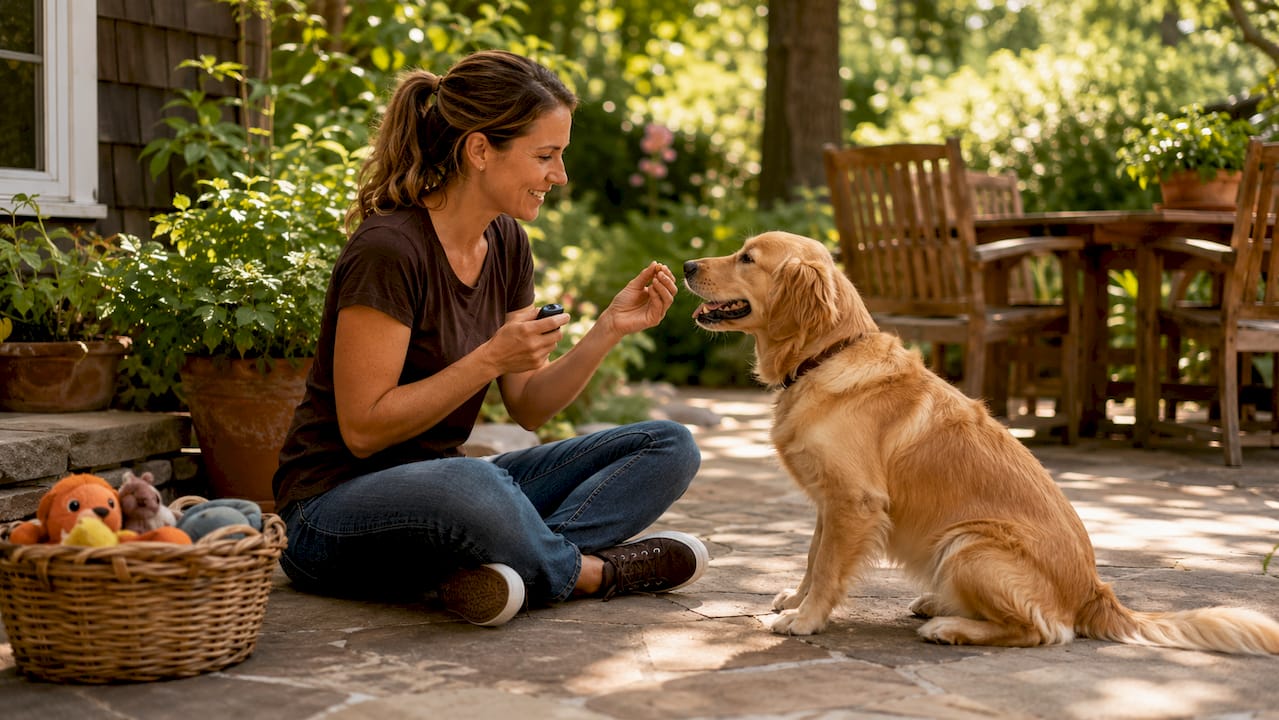
Neuroplasticity is the brain’s ability to rewire itself by forming and strengthening neural pathways through experience and repeated practice. Understanding how neuroplasticity applies to dog training changes everything about how you approach your dog’s behaviour. Rather than seeing a reactive or fearful dog as “broken,” you can see a brain that simply needs new pathways built through the right conditions. Evidence-based methods like marker training and reward-based training work precisely because they harness this biological capacity for change, making consistent, well-timed practice the most powerful tool you have.
How neuroplasticity works in dog brains during training
Neuroplasticity in pets operates on a simple principle: neural connections that fire together, wire together. Every time your dog performs a behaviour and receives a well-timed reward, the brain strengthens the pathway linking that action to a positive outcome. Repeat this enough times in the right conditions, and the behaviour becomes the dog’s default response.
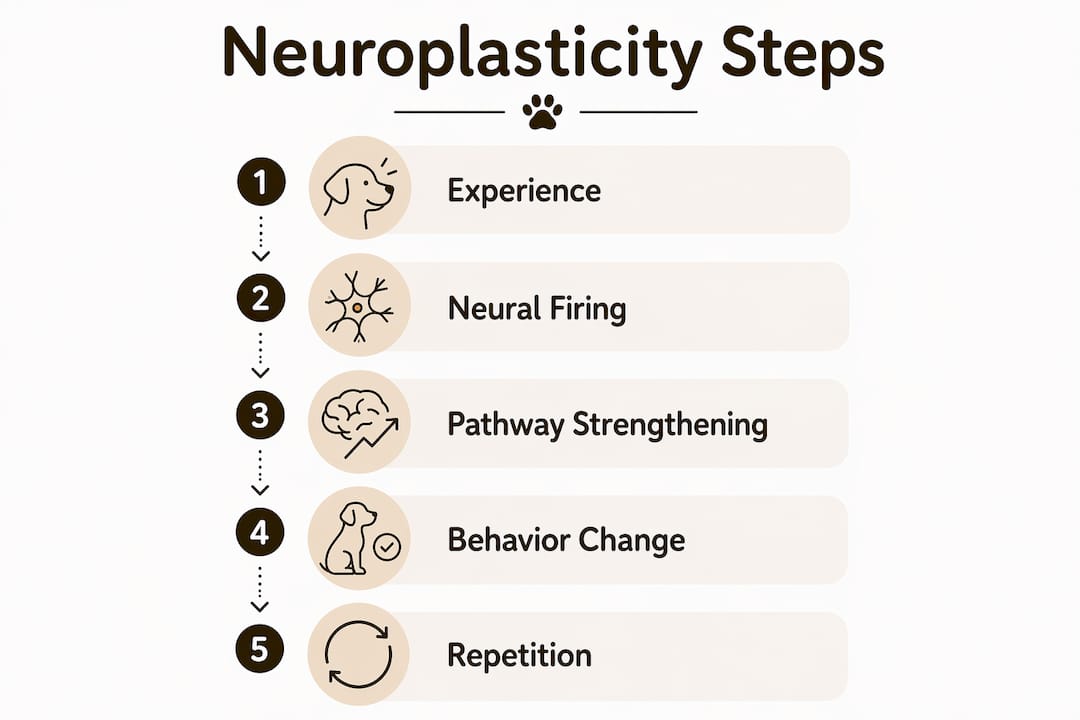
One of the most misunderstood aspects of canine behaviour modification is what happens when you try to stop an unwanted behaviour. Extinction is not erasure. Research shows that extinguished responses can return through renewal, spontaneous recovery, or reinstatement, because the hippocampus and prefrontal cortex gate extinction based on context. This means your dog has not forgotten the old behaviour. A new, inhibitory pathway now competes with it.
This is why training in only one location rarely holds. If your dog learns to sit calmly in your living room but has never practised that calm response at the park, the old reactive pathway can resurface the moment the context changes. Generalising training across multiple real-life settings is not optional. It is the mechanism by which new neural learning becomes durable.
Dopamine plays a central role here. Reward-based learning triggers dopamine release, which reinforces the neural pathway associated with the rewarded behaviour. This is the biological reason why reward-based training produces faster, more lasting results than punishment-based approaches.
Neural pathways strengthen with well-timed, repeated practice.
Extinction creates new inhibitory learning, not a clean deletion of old habits.
Generalising training across contexts prevents relapse.
Dopamine release during reward-based learning accelerates pathway formation.
Pro Tip: Keep early training sessions to five minutes or fewer. Short, focused repetitions build stronger neural associations than long, tiring sessions where your dog’s attention drifts.
Why stress is the biggest barrier to your dog’s learning
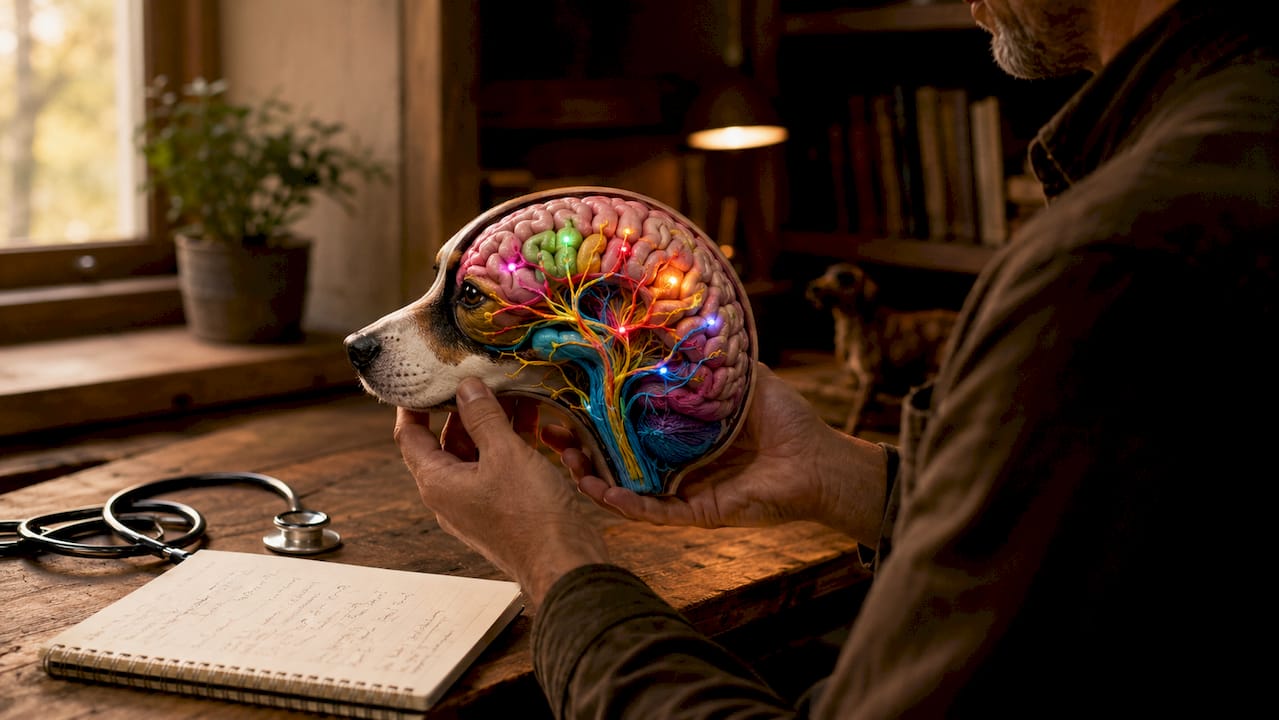
Chronic stress is the single greatest obstacle to effective neuroplastic learning in dogs. Sustained stress impairs neuroplasticity by disrupting the stress-response systems that regulate a dog’s capacity to form stable new associations. A dog in a chronic state of anxiety cannot learn efficiently, regardless of how skilled the trainer is.
The science is clear: when a dog’s physiological, safety, social, and cognitive needs go unmet, the result is maladaptive changes in behaviour and reduced learning capacity. This means stress management is not a soft add-on to training. It is a prerequisite for any neuroplastic rewiring to take place.
Here are four practical steps to reduce stress and create the conditions your dog’s brain needs to learn:
Identify and remove active stressors before training begins. If your dog is already over-threshold from a noisy environment or recent confrontation, that session will reinforce arousal, not calm.
Meet physical needs first. A dog that is hungry, under-exercised, or sleep-deprived cannot regulate its emotional state. Poor nutrition links to higher anxiety and reduced emotional stability, which directly impacts learning.
Start training in the lowest-distraction environment possible. Build confidence with easy wins before introducing complexity. Success itself is calming.
Watch for stress signals during sessions. Yawning, lip-licking, and turning away are not defiance. They are your dog’s brain signalling that it has reached its learning limit for that moment.
Pro Tip: If your dog stops responding to known cues mid-session, end on a simple success and take a break. Pushing through stress does not build resilience. It builds negative associations with training.
Understanding training fatigue in dogs is closely linked to stress management. Fatigue and stress share the same outcome: a brain that cannot form new, stable pathways.
Does timing really matter that much in dog training?
Timing is not just a detail. It is the mechanism by which neuroplasticity is directed. Reward delivery within 1–2 seconds of a behaviour is critical for the brain to form an accurate association between the action and the outcome. Miss that window, and you risk strengthening the wrong pathway entirely.
This is where marker training becomes indispensable. A marker, typically a short verbal cue like “yes,” bridges the gap between the behaviour and the treat. The marker fires at the exact moment of the correct behaviour, giving the brain a precise signal to lock onto. Understanding how marker training works is one of the most practical steps any dog owner can take to apply neuroplasticity principles directly.
Sensory cues also matter more than most owners realise. Dogs are primarily olfactory animals. Research shows that dogs follow olfactory cues above chance in learning tasks, confirming that smell is a meaningful communicative channel for dogs. Training that incorporates scent-based signals aligns with how dogs naturally perceive and process the world.
Training element | Why it matters for neuroplasticity |
Marker timing (within 1–2 seconds) | Directs the brain to strengthen the correct behaviour pathway |
Species-appropriate cues (olfactory) | Aligns with canine sensory processing for faster association |
Short, well-timed sessions | Prevents incorrect pathways from forming through fatigue |
Stepwise difficulty progression | Builds confidence and prevents failure from disrupting learning |
The training environment shapes which sensory cues your dog encounters. Introducing new distractions or distances too quickly overloads the brain before the new pathway is stable. Progress through duration, distance, and distraction one variable at a time.
Use a marker to capture the exact moment of correct behaviour.
Introduce olfactory cues alongside visual ones for richer learning signals.
Never increase difficulty on more than one variable at a time.
End every session before your dog’s focus drops.
Common misconceptions about neuroplasticity and dog training
The most damaging misconception in dog training is that more practice always means better learning. Repetition without correct timing risks reinforcing the wrong behaviours. Volume without precision builds the wrong pathways, not stronger ones.
A second major misunderstanding concerns extinction. Many owners believe that if they simply stop rewarding an unwanted behaviour, it will disappear. It will not. Extinction is new inhibitory learning that competes with the original pathway. The original trace remains. Under stress, in a new context, or after a period of time, the old behaviour can resurface. This is not failure. It is neuroscience.
Myth: More repetitions always improve learning. Reality: Poorly timed repetitions strengthen incorrect pathways.
Myth: Ignoring a behaviour makes it disappear. Reality: Extinction suppresses it through new learning; the original pathway remains.
Myth: Once trained in one place, a dog will behave everywhere. Reality: Behaviour is context-dependent until deliberately generalised.
Myth: Correcting bad behaviour is easier than preventing it. Reality: Prevention avoids building maladaptive circuits entirely; correction competes with already-established pathways.
The prevention principle is particularly worth taking seriously. Every time an unwanted behaviour occurs and goes unreinforced, the pathway weakens slightly. Every time it is practised, it strengthens. Managing your dog’s environment to prevent rehearsal of unwanted behaviours is not avoidance. It is active neuroplastic management.
Key takeaways
Neuroplasticity makes lasting behaviour change possible in dogs, but only when training combines precise timing, stress reduction, and consistent generalisation across real-life contexts.
Point | Details |
Timing is the mechanism | Marker training within 1–2 seconds directs the brain to strengthen the correct pathway. |
Stress blocks learning | Chronic stress impairs neuroplasticity; address stressors before training begins. |
Extinction is not erasure | Extinguished behaviours can return; generalise training across contexts to make change durable. |
Prevention beats correction | Stopping rehearsal of unwanted behaviours is more effective than training them out later. |
Sensory cues enhance learning | Olfactory signals align with canine perception and accelerate neural association formation. |
What 20 years of training has taught me about the brain
The science of neuroplasticity confirms what I have observed in practice for over two decades: the dog is rarely the problem. The conditions are.
I have worked with thousands of dogs labelled as “stubborn,” “aggressive,” or “untrainable.” In almost every case, the real issue was a brain operating under chronic stress, receiving poorly timed feedback, or never having been given the chance to generalise a new behaviour beyond one room. When you address those three factors, the change can be remarkable and relatively fast.
What I find most owners struggle to accept is the prevention principle. There is a strong instinct to wait until a behaviour is a problem before addressing it. But every repetition of an unwanted behaviour is a training session for that pathway. The dog practising lunging at other dogs on every walk is not just being difficult. It is building a stronger neural circuit with each repetition. Early intervention is not impatience. It is neuroscience.
The other thing I would encourage you to sit with is patience around extinction. When you stop rewarding a behaviour and it temporarily gets worse before it gets better, that is the extinction burst. The old pathway is firing hard before it weakens. Most owners give up at exactly this point and inadvertently reinforce the behaviour at its peak intensity. Understanding this one concept has saved more training programmes than any technique I know.
If I could give one piece of advice, it would be this: build the conditions for learning before you ask for the behaviour. A calm dog in a low-distraction environment with a well-timed marker and a clear reward is a dog whose brain is ready to rewire. Start there.
— Mark
Professional training that puts neuroplasticity to work
Understanding the science is one thing. Applying it consistently, with the right timing and the right stress management strategies, is where most owners need support.

Happy-dogtraining has spent over 20 years applying evidence-based, humane methods in Singapore, using marker training, species-appropriate cues, and structured stress reduction to create lasting behaviour change. Whether your dog struggles with reactivity, fearfulness, or general obedience, a personalised training programme built around your dog’s specific needs makes the difference between short-term compliance and genuine neural rewiring. Happy-dogtraining’s AVS-accredited trainer tailors every plan to the individual dog, with free lifetime support after training so progress holds long after the sessions end.
FAQ
What is neuroplasticity in dogs?
Neuroplasticity is the brain’s ability to form and strengthen neural pathways through experience and repeated practice. In dogs, this means behaviour can genuinely change when training creates the right conditions for new pathways to form.
How long does it take for new neural pathways to form in dogs?
There is no fixed timeline, as it depends on the dog’s stress levels, the consistency of training, and how well the new behaviour is generalised across contexts. Short, well-timed sessions repeated consistently over weeks produce the most durable results.
Why does my dog behave well at home but not outside?
Extinction and new learning are context-dependent, gated by hippocampal and prefrontal circuitry. A behaviour trained only in one environment has not yet been generalised, so the old pathway can resurface when the context changes.
Does stress really affect how well my dog learns?
Chronic stress directly impairs neuroplasticity by disrupting the stress-response systems dogs need to form stable new associations. Addressing stressors before and during training is a prerequisite for effective learning, not an optional extra.
Is marker training necessary for neuroplastic dog training?
Marker training is the most precise tool available for directing neuroplasticity during training. Delivering a marker within 1–2 seconds of the correct behaviour gives the brain an accurate signal to lock onto, reducing the risk of strengthening the wrong pathway.
Recommended
Comments