How to customise a training plan for your dog
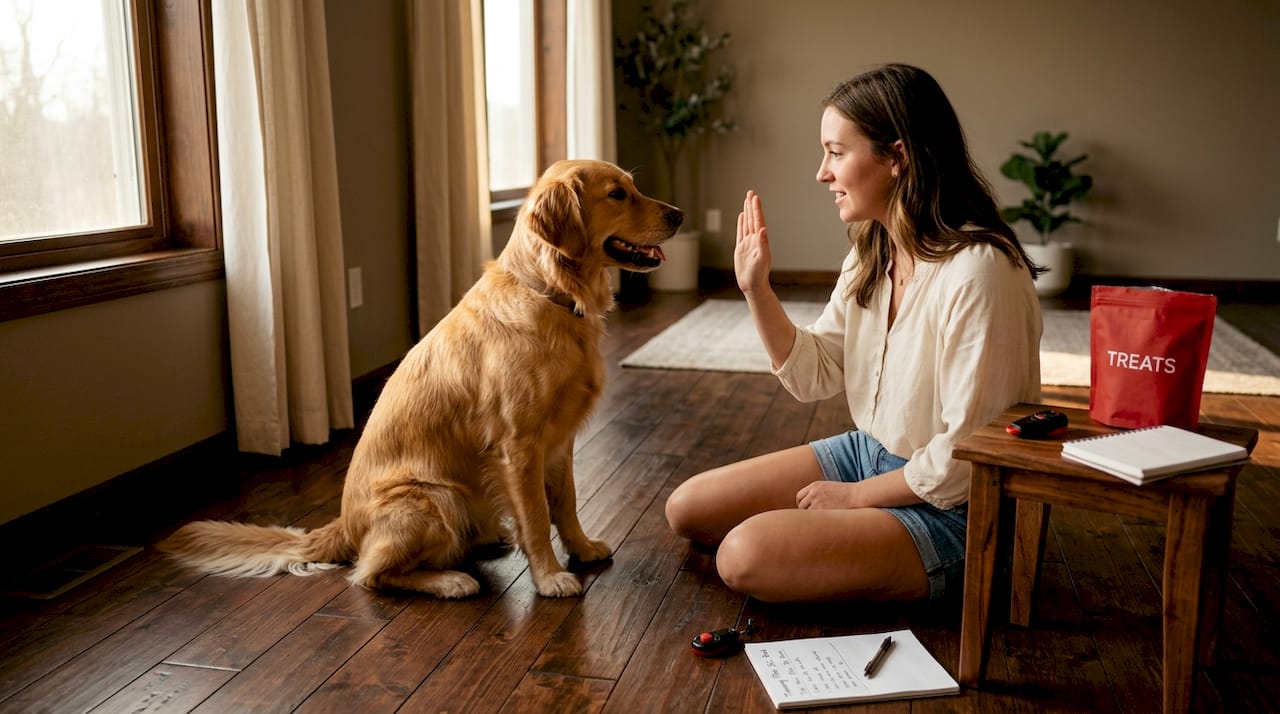
A customised training plan for your dog is a structured, personalised programme that matches your dog’s age, breed, behavioural history, and physical condition to specific training goals. Generic obedience classes treat every dog the same, which is why so many owners see limited progress. When you tailor the approach, you address the actual issues your dog faces, whether that is reactivity, fearfulness, or poor recall. The result is faster improvement, a stronger bond, and a dog who genuinely enjoys learning. This guide walks you through every step, from assessment to progression, so you can build a plan that truly fits your dog.
What do you need to customise a training plan for your dog?
Before you write a single training session, you need an honest picture of your dog. Assess four key areas: age, breed tendencies, current behavioural issues, and physical condition. A six-month-old Border Collie with herding instincts needs a very different starting point than a three-year-old Cavalier King Charles Spaniel with separation anxiety. Getting this baseline right saves weeks of wasted effort.
Essential tools and resources
Once you know your dog’s profile, gather the right tools. You do not need an expensive kit, but you do need the right one.
Training treats: Small, high-value rewards such as chicken, cheese, or commercial soft treats. Keep them pea-sized to avoid filling your dog up mid-session.
Clicker or marker word: A clicker or a consistent verbal marker like “yes” marks the exact moment your dog performs the correct behaviour. Marker training is one of the most precise reward-based training methods available.
Long line: A 5 to 10 metre lead for recall and distance work without removing safety.
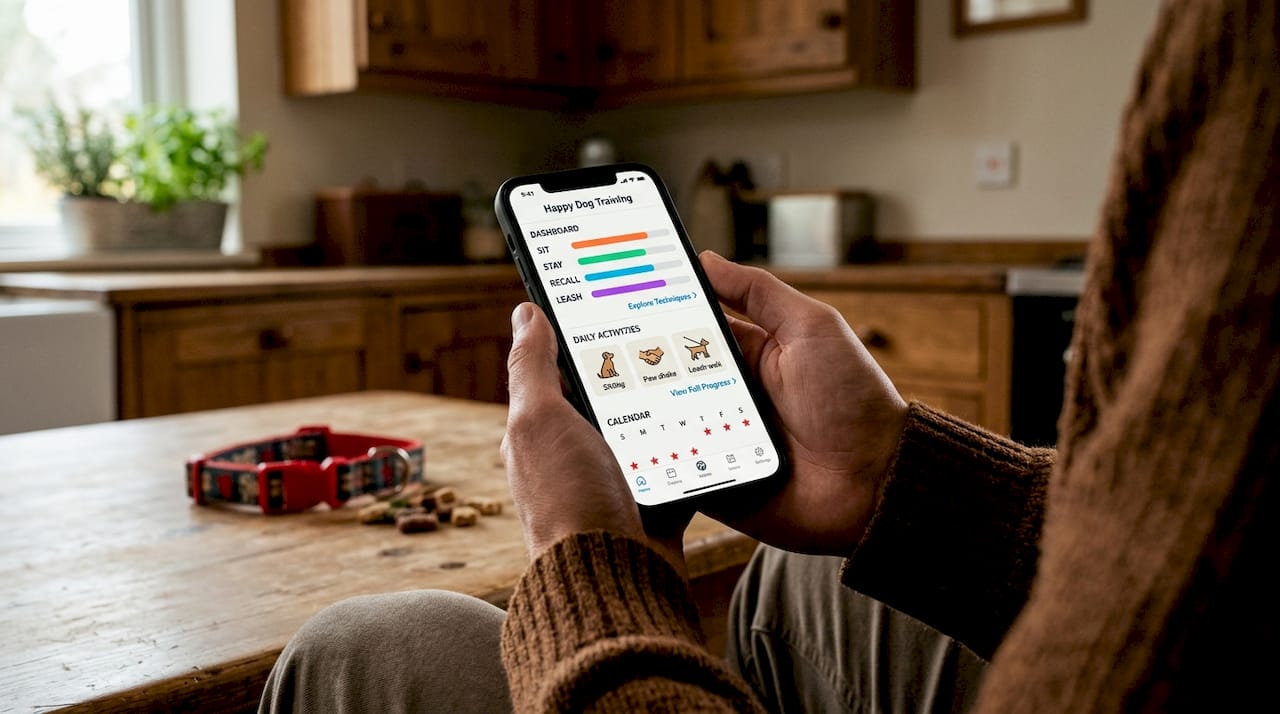
Progress journal or app: Tracking responses, session length, and distractions helps you spot patterns quickly.
AI-driven apps have changed how owners track progress. The PawChamp app personalises daily training plans, tracks progress, provides video lessons for common issues, and adapts to developmental stages of puppies and older dogs. This means your plan updates automatically as your dog improves, rather than staying static for weeks.
Tool | Primary use | Best for |
Clicker | Precise behaviour marking | All ages and breeds |
PawChamp app | Daily plan generation and progress tracking | Owners wanting structured guidance |
Long line | Recall and distance training | Dogs with poor recall or high prey drive |
Treat pouch | Quick reward delivery | Fast-paced training sessions |
Progress journal | Session logging and pattern spotting | Owners managing complex behavioural issues |
Pro Tip: Start each new tool introduction in a low-distraction environment. Your dog needs to understand the clicker or app-guided cue before you add the complexity of a busy park or street.
How to create a step-by-step personalised training plan
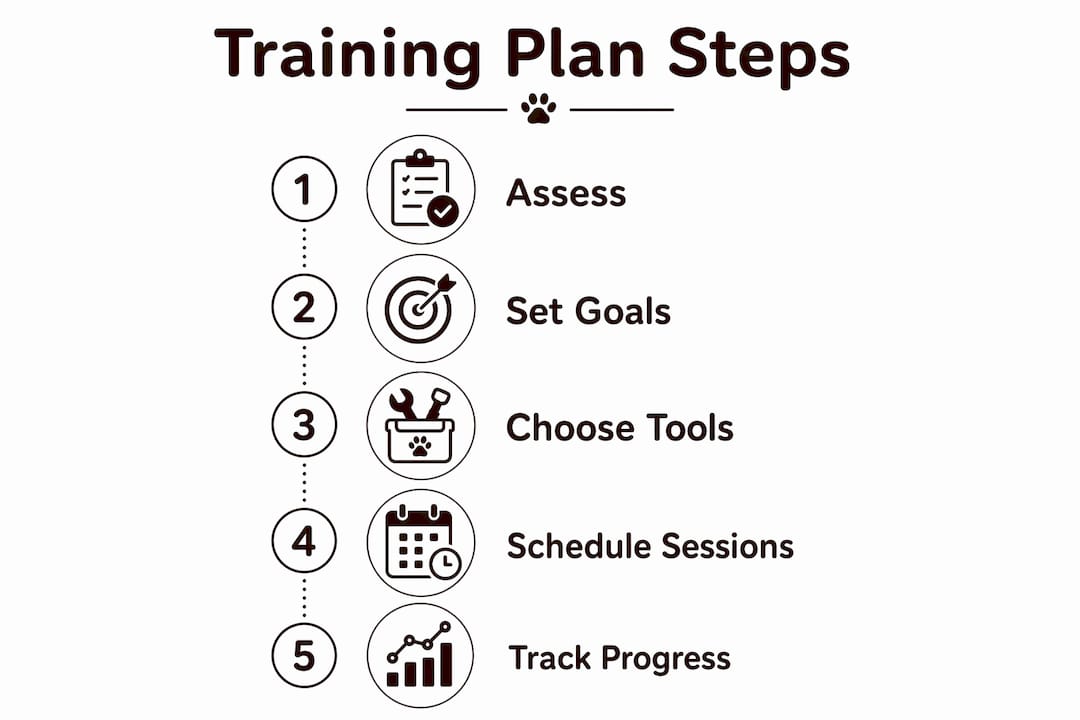
A well-built dog training programme follows a clear sequence. Skipping steps leads to confusion for your dog and frustration for you. Work through these five stages in order.
Identify your behavioural goals. Write down two or three specific outcomes you want. “Better behaved” is not a goal. “Sits calmly when guests arrive” is. Specific goals let you measure progress and know when to move forward.
Design your sessions around duration and frequency. Short, consistent daily sessions produce better obedience than infrequent long classes. Aim for two to three focused sessions of five to ten minutes each day. Your dog’s attention span is limited, and ending on a success keeps motivation high for the next session.
Select commands and socialisation activities based on your dog’s profile. A fearful dog needs gradual exposure to new environments before you add obedience commands in those settings. A high-energy adolescent dog benefits from impulse control exercises like “wait” and “leave it” before you work on loose-lead walking. Match the exercise to the dog in front of you, not the dog you wish you had.
Build progression into every week. Increase difficulty gradually by changing one variable at a time: add distance, then duration, then distraction. This approach, sometimes called the three Ds in professional dog training circles, prevents your dog from becoming overwhelmed and keeps learning moving forward.
Use technology to adjust the plan as you go. AI-driven apps build custom daily schedules that adjust as the dog progresses, based on inputs like age, breed, and specific challenges. This removes the guesswork from knowing when to advance or scale back.
Pro Tip: Review your progress journal at the end of each week. If your dog is succeeding at more than 80% of attempts, it is time to increase difficulty. If success drops below 60%, simplify the exercise and rebuild confidence before moving on.
For puppies specifically, the sequencing of socialisation and basic commands matters enormously. A solid foundation in the early months pays dividends for years. You can explore puppy training essentials to see how this sequencing works in practice.
Common challenges when following a tailored training plan
Even the best-designed dog behaviour modification plan hits obstacles. Knowing what to expect means you can solve problems quickly rather than abandoning the plan altogether.
Inconsistent practice: Missing sessions is the single biggest reason training stalls. Life gets busy, but even a five-minute session counts. Consistency matters more than perfection.
Over-reliance on treats: Treats are a starting point, not a permanent crutch. Owner mindset shifts from treat dependency to calm, confident leadership dramatically improve communication and training outcomes. Begin fading treats once a behaviour is reliable by rewarding intermittently rather than every single time.
Distraction and fear responses: If your dog shuts down or reacts in a new environment, you have moved too fast. Return to a quieter setting and rebuild the behaviour there before trying again outdoors. Positive reinforcement and gradual acclimation are the correct tools when introducing dogs to unfamiliar equipment or environments.
Training plateaus: Progress often stalls at the same point for weeks. Check your three Ds. You may be adding distance, duration, and distraction simultaneously without realising it.
“Training should teach owners to communicate clearly with dogs beyond treats. The goal is a dog who responds because the relationship is clear, not because a biscuit is always on offer.” — My Bark Avenue
Use your progress tracking data to identify where the breakdown occurs. If your dog performs perfectly at home but fails in the park, the issue is distraction, not understanding. That tells you exactly where to focus next.
How does physical fitness connect to your dog’s training plan?
Physical condition and behaviour are directly linked, and this connection is one of the most underused aspects of a personalised dog training plan. A dog who is under-exercised is harder to train. A dog who is over-exercised is too tired to learn. Getting the balance right is part of the plan.
Adjusting exercise intensity and timing around your dog’s peak alertness can dramatically improve training focus and behavioural outcomes. Most dogs are most alert and responsive in the cooler parts of the day, typically early morning or early evening. Scheduling your training sessions at these times gives you a more engaged learner.
Exercise needs also change significantly across a dog’s life. Puppies follow a five-minute per month of age rule, adult dogs have peak exercise capacity, and seniors need gentler sessions to maintain mobility. This means your tailored training for dogs must account for physical stage, not just behavioural goals.
Life stage | Recommended daily exercise | Training session timing |
Puppy (under 6 months) | 5 minutes per month of age, twice daily | After a short walk, when calm but alert |
Adolescent (6–18 months) | 45 to 90 minutes, depending on breed | After moderate exercise to reduce excess energy |
Adult (18 months to 7 years) | 30 to 120 minutes, breed dependent | At peak alertness, morning or early evening |
Senior (7 years and above) | 20 to 45 minutes, gentle pace | Short sessions after light movement |
For dogs with physical limitations or those recovering from injury, water treadmill sessions can start at five to eight minutes and progress safely to twenty minutes. This approach maintains fitness without placing stress on joints, and it is particularly useful for breeds prone to hip dysplasia or for post-operative recovery.
Pro Tip: Never train a dog immediately after a heavy meal or intense exercise. A ten to fifteen minute rest period after physical activity gives your dog time to settle into a focused, receptive state before you begin obedience work.
Combining tailored exercise regimens based on breed, age, and health with behavioural training produces better focus and obedience than either approach alone. Think of physical fitness as the foundation that makes your training sessions more productive.
Key takeaways
A customised dog training plan works because it matches exercises, session length, and progression to your dog’s specific age, breed, physical condition, and behavioural goals rather than applying a one-size-fits-all approach.
Point | Details |
Assess before you plan | Evaluate your dog’s age, breed, behaviour, and physical health before designing any training programme. |
Short sessions beat long ones | Daily five to ten minute sessions produce more consistent results than occasional hour-long classes. |
Progress tracking is non-negotiable | Use a journal or an app like PawChamp to identify what is working and when to advance difficulty. |
Physical fitness shapes behaviour | Schedule training at your dog’s peak alertness and match exercise to their life stage for better focus. |
Mindset matters as much as method | Shifting from treat dependency to calm, confident leadership produces lasting behavioural change. |
What I have learned from 20 years of personalised dog training
After two decades of working with dogs across Singapore, the pattern I see most often is this: owners arrive with a training problem, but the real issue is a communication gap. The dog is not being stubborn or difficult. The dog simply does not understand what is being asked, or the environment is making it impossible for them to succeed.
The owners who get the best results are not the ones with the most time or the most treats. They are the ones who stay consistent, stay calm, and trust the process even when progress feels slow. I have seen reactive dogs become confident companions and fearful dogs learn to greet strangers with a wagging tail, not because of any single technique, but because the owner committed to a plan and adapted it as their dog grew.
Technology like AI-driven training apps is genuinely useful, and I encourage owners to use it. But no app replaces the moment when you and your dog finally connect on a difficult exercise. That moment of understanding between you is what makes all the consistency worthwhile. If you are working through specific challenges like reactivity or aggression, professional guidance alongside your DIY plan makes a real difference. You can read more about effective training techniques to deepen your understanding of the methods that work best.
The one thing I would change if I could go back? I would tell every owner to start with their own mindset before they start with their dog. A calm, confident owner creates a calm, confident dog. That is not a cliché. It is the most consistent finding across every case I have worked on.
— Mark
How Happy-dogtraining can support your personalised plan
If you are ready to move beyond trial and error, Happy-dogtraining offers personalised obedience programmes designed around your dog’s specific needs. Every plan is built by a certified, AVS-accredited trainer with over 20 years of experience in behaviour modification, socialisation, and obedience.
Whether your dog struggles with reactivity, aggression, or basic obedience, Happy-dogtraining’s private obedience classes give you a structured, science-based plan with free lifetime support after training. For dogs with reactive behaviour, the dedicated reactive dog programme addresses the root cause of the issue rather than just managing symptoms. Every session is tailored, every plan is yours, and the results speak for themselves.
FAQ
What is a customised dog training plan?
A customised dog training plan is a personalised programme that tailors exercises, session length, and progression to your dog’s specific age, breed, behaviour, and physical condition. It differs from generic group classes by addressing your dog’s individual challenges directly.
How long should each training session be?
Daily sessions of five to ten minutes are more effective than infrequent long classes. Short, consistent daily practice yields better obedience and retention than occasional hour-long sessions.
Can I use an app to help customise my dog’s training?
Yes. Apps like PawChamp build custom daily schedules that adjust automatically as your dog progresses, based on inputs such as age, breed, and specific behavioural challenges. They also provide video lessons and 24/7 guidance.
How does exercise affect my dog’s training progress?
Physical fitness and behaviour are directly linked. Scheduling training at your dog’s peak alertness and matching exercise to their life stage, using the five-minute per month of age rule for puppies, improves focus and learning during sessions.
When should I seek professional help with my dog’s training plan?
Seek professional guidance when your dog shows aggression, severe fearfulness, or reactivity that does not respond to consistent home training. A certified trainer can assess the root cause and build a safe, effective behaviour modification plan.
Recommended
Comments