Types of board and train programs: your 2026 guide
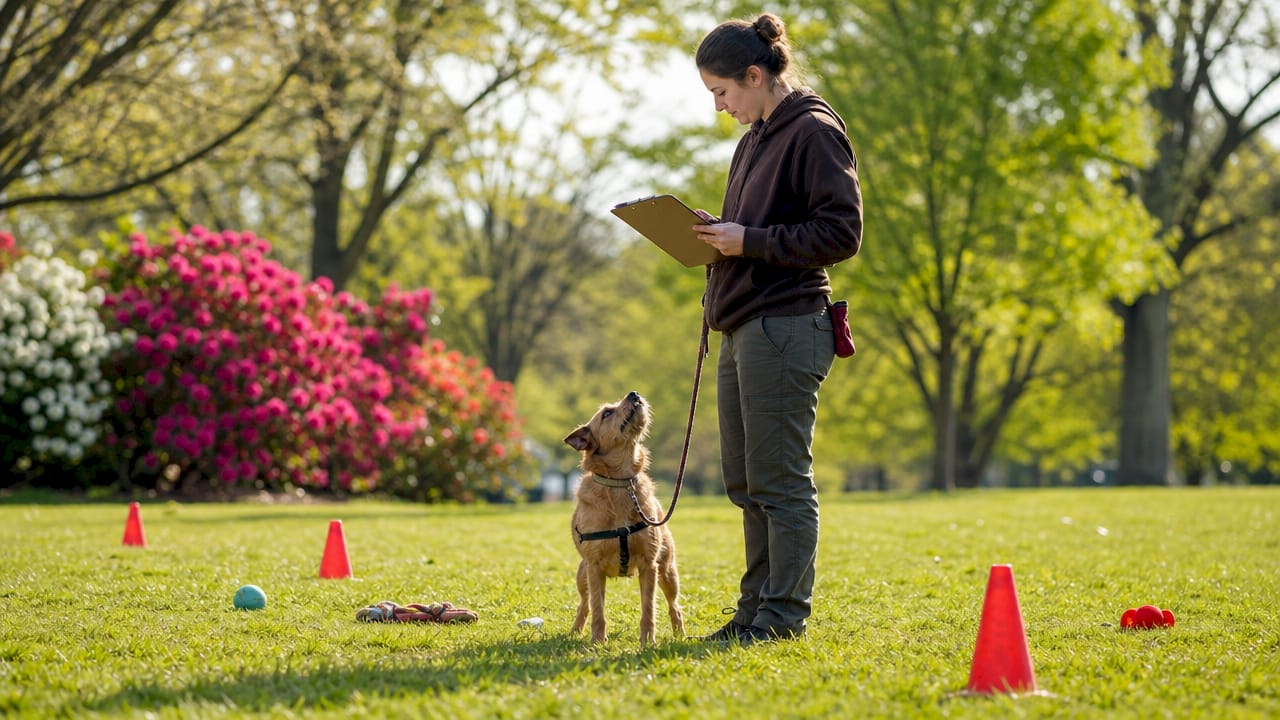
Board and train is defined as an immersive dog training format where your dog lives with a professional trainer for a set period, receiving structured daily sessions to address specific behavioural issues. Unlike weekly group classes, immersive daily training can achieve in two weeks what might take three months of private lessons. The types of board and train programs available today range from basic obedience stays to intensive aggression rehabilitation, and choosing the right format makes a significant difference to your dog’s progress. Happy-dogtraining uses science-based, reward-based methods to match each dog to the right programme structure from the outset.
1. What are the main types of board and train programs?
The three primary formats are Residential, In-Home, and Day Training. Each suits a different dog profile and owner situation.
Residential board and train places your dog in a professional kennel or training facility full-time. This format works well for intensive behaviour cases where consistent, controlled environments accelerate progress. Dogs with moderate to severe issues, such as leash reactivity or impulse control problems, tend to respond well here.
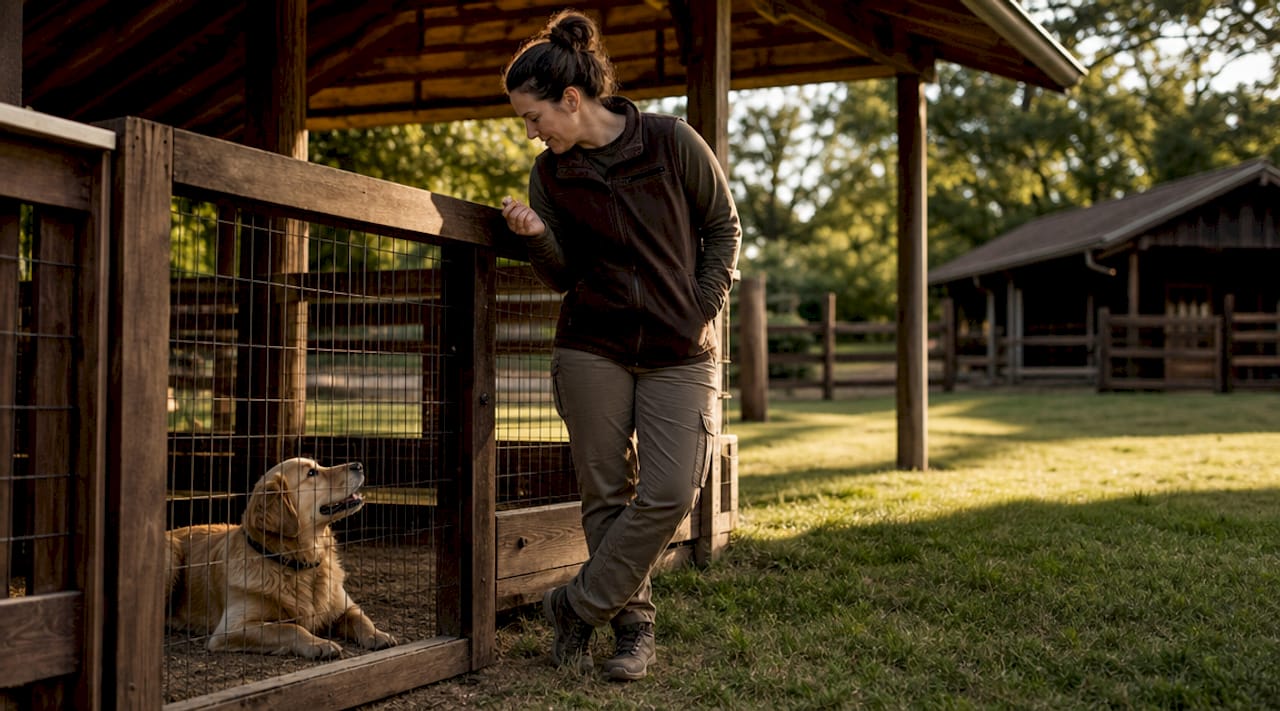
In-home board and train means your dog stays at the trainer’s private home rather than a kennel. This reduces stress significantly for dogs that find kennel environments overwhelming. It mirrors a normal household setting, which makes the skills your dog learns far more transferable to your own home. You can read more about how this works in this in-home training guide.
Day training keeps your dog at home each night while the trainer works with them during the day. This suits dogs with separation anxiety, as they never spend a night away from you. It also gives you daily touchpoints to see progress firsthand.
Here is a quick summary of each format:
Residential: Kennel or facility based; best for intensive cases; structured environment; suits confident dogs.
In-Home: Trainer’s private home; lower stress; ideal for anxious or kennel-sensitive dogs; strong home-skill transfer.
Day Training: Dog returns home nightly; suits separation anxiety; owner stays closely involved; slower intensity build.
Pro Tip: Assess your dog’s stress sensitivity before choosing a format. A dog that pants, refuses food, or shuts down in new environments will likely do better in an in-home setting than a busy kennel facility.
2. Program types by training focus and duration
Board and train options divide naturally into three intensity brackets, each targeting a different level of behavioural need.
Basic obedience programmes (1–2 weeks)
These programmes focus on foundation commands such as sit, stay, come, and loose-leash walking. They suit puppies, adolescent dogs, and adult dogs with no significant behavioural history. Costs for a 2-week basic programme typically range from £630 to £2,750 (approximately $800–$3,500). This bracket is the most accessible entry point for owners who want a well-mannered dog without complex issues.
Intermediate behaviour modification (2–3 weeks)
These programmes address leash reactivity, impulse control, resource guarding, and moderate fear responses. The longer duration allows trainers to work through triggers gradually and build reliable responses under distraction. Marker training and reward-based conditioning are the core techniques used at this level. Happy-dogtraining’s reactive dog class reflects this intermediate approach, combining structured sessions with owner education.
Advanced and specialised rehabilitation (4–6+ weeks)
These programmes handle aggression, severe fear, multi-dog conflict, and complex anxiety disorders. Intensive 4–6 week programmes typically cost between £3,800 and £5,100 (approximately $4,800–$6,500+). The extended timeline allows for careful desensitisation, counter-conditioning, and real-world generalisation that shorter programmes cannot achieve safely.
Programme type | Focus area | Typical duration | Approximate cost | Best candidates |
Basic obedience | Commands, leash manners | 1–2 weeks | £630–£2,750 | Puppies, untrained adults |
Intermediate modification | Reactivity, impulse control | 2–3 weeks | £2,750–£3,800 | Moderately reactive dogs |
Advanced rehabilitation | Aggression, severe fear | 4–6+ weeks | £3,800–£5,100+ | Complex behavioural cases |
Pro Tip: If budget is a concern, ask your chosen facility whether staged payment plans are available. Some programmes offer instalment options, which makes longer, more effective programmes accessible without compromising on quality.
3. What does a typical board and train programme structure look like?
Quality board and train programmes follow a phased structure that balances training intensity with welfare and consolidation. Skipping phases or rushing the timeline produces shallow results. Here is how a well-run programme typically unfolds:
Acclimation and assessment (Days 1–3). Your dog settles into the new environment. The trainer observes stress signals, food drive, and baseline responses. No formal training begins until the dog is eating, resting, and engaging normally.
Foundation skills (Days 4–10). Core behaviours are introduced using marker training and reward-based methods. Leash control, focus, and basic commands form the backbone of this phase.
Environmental generalisation (Days 11–17). Skills are practised in new locations with multiple handlers. This phase is critical because behaviours learned in one place do not automatically transfer elsewhere.
Real-world distractions and public outings. The dog practises in parks, streets, and busy areas. This tests reliability and exposes gaps before the programme ends.
Owner handover session. You attend a structured coaching session where the trainer teaches you to maintain every behaviour your dog has learned. This session is non-negotiable for lasting results.
Reputable programmes also limit structured training to no more than four hours daily to prevent mental fatigue. Overworking a dog causes shutdown rather than learning. Rest and consolidation are part of the training, not gaps in it.
Pro Tip: Attend the handover session with a notebook and ask for a written maintenance plan. Owner inconsistency after the programme ends is the leading cause of regression. The more clearly you understand your role, the longer the results last.
For a detailed look at what to expect before your dog’s stay begins, the board and train preparation guide from Happy-dogtraining covers the key steps.
4. How to choose the right board and train programme for your dog
Choosing the right programme starts with an honest assessment of your dog’s specific needs and your own lifestyle. The format, duration, and focus area all need to align for the programme to succeed.
Match the format to your dog’s temperament. A stress-prone dog that shuts down in new environments will not thrive in a busy kennel facility. An in-home placement or day training format will produce better results for that dog. A confident, sociable dog with a specific behaviour problem is often well-suited to a residential facility where training intensity is higher.
Be clear about your training goal. A dog that pulls on the lead needs a different programme from a dog that lunges at strangers or guards food. Vague goals produce vague results. Tell your trainer exactly what you need your dog to do differently, and ask how the programme addresses that specific behaviour.
Consider post-programme support. Access to follow-up classes, video libraries, or lifetime phone support distinguishes high-quality programmes from weaker ones. Happy-dogtraining provides free lifetime support after training, which means you are never left managing regression alone.
Questions to ask any trainer before committing:
What is the daily training schedule, and how many hours of structured work does my dog receive?
How do you handle stress or shutdown during the programme?
What does the handover session include, and how long does it last?
What post-programme support do you offer?
Can I see video updates of my dog’s progress during the stay?
Do you conduct an initial evaluation before accepting my dog?
Pro Tip: Request a pre-programme evaluation or trial session before committing to a full stay. Pre-programme evaluation improves outcome predictability, especially for dogs with complex or reactive behaviours. A trainer who skips this step is cutting a corner that matters.
For dogs with aggression concerns, Happy-dogtraining’s aggressive behaviour consult is a strong starting point before selecting a programme type.
Key takeaways
The most effective board and train programme combines the right format, appropriate duration, and committed owner follow-through to produce lasting behavioural change.
Point | Details |
Format determines fit | Match Residential, In-Home, or Day Training to your dog’s stress tolerance and temperament. |
Duration reflects complexity | Basic obedience suits 1–2 weeks; aggression rehabilitation requires 4–6+ weeks. |
Phased structure matters | Quality programmes build from acclimation through to real-world generalisation before handover. |
Owner role is non-negotiable | Skipping the handover session or ignoring maintenance leads to regression within weeks. |
Post-programme support counts | Programmes offering ongoing coaching or lifetime support produce more durable results. |
What I have learned from years of watching board and train programmes succeed and fail
The single biggest predictor of success is not the trainer. It is the owner’s commitment after the programme ends. I have seen dogs leave a programme with genuinely transformed behaviour, only to revert within a fortnight because their owner did not follow the maintenance plan. Behavioural gains fade without consistent reinforcement at home. That is not a failure of the training. It is a failure of the handover.
The second thing I have noticed is that owners often choose a programme based on price or convenience rather than fit. A two-week basic obedience stay will not resolve a dog with genuine aggression history. Choosing the wrong intensity bracket wastes money and, worse, can leave a dog more confused than before.
What actually works is treating the programme as a foundation, not a finish line. The trainer builds the structure. You maintain it. The residential training guide explains this well for owners considering a kennel-based stay. Go in with realistic expectations, attend every handover session, and commit to the daily practice your trainer recommends. That combination produces the wagging tails and confident dogs that make this work so rewarding.
— Mark
How Happy-dogtraining supports your board and train decision
Happy-dogtraining offers a range of structured programmes covering basic obedience, reactive dog behaviour, aggression rehabilitation, and fearful dog support. Every programme is built around science-based, reward-based methods developed over more than 20 years of hands-on experience in Singapore.
The AVS-accredited intensive obedience programme suits dogs needing a strong foundation, while specialist classes address reactivity, fear, and aggression at the appropriate depth. Every client receives free lifetime support after training, so your dog’s progress does not stop when the programme does. Visit Happy-dogtraining to find the right programme for your dog’s specific needs and your training goals.
FAQ
What is a board and train programme?
A board and train programme is an immersive training format where your dog lives with a professional trainer for a set period, receiving structured daily sessions. It addresses specific behavioural issues faster than weekly lessons by removing distractions and building consistent habits.
How long does a board and train programme last?
Programmes typically run from 1 to 6 weeks depending on the complexity of the behavioural issue. Basic obedience stays usually last 1–2 weeks, while aggression rehabilitation programmes run for 4–6 weeks or longer.
Is day training the same as board and train?
Day training is one format within the board and train category. Your dog trains with a professional during the day but returns home each night, making it well-suited for dogs with separation anxiety or owners who want daily involvement.
Why do some dogs regress after board and train?
Regression most commonly occurs when owners skip or underuse the handover coaching session. Behavioural patterns are built at the facility but must be maintained through consistent owner reinforcement at home.
How much does a board and train programme cost?
Costs vary by duration and intensity. Basic 2-week programmes typically cost the equivalent of £630–£2,750, while intensive 4–6 week rehabilitation programmes range from approximately £3,800 to £5,100 or more.
Recommended
Comments