Why lifetime support matters in dog training
Updated: Aug 6
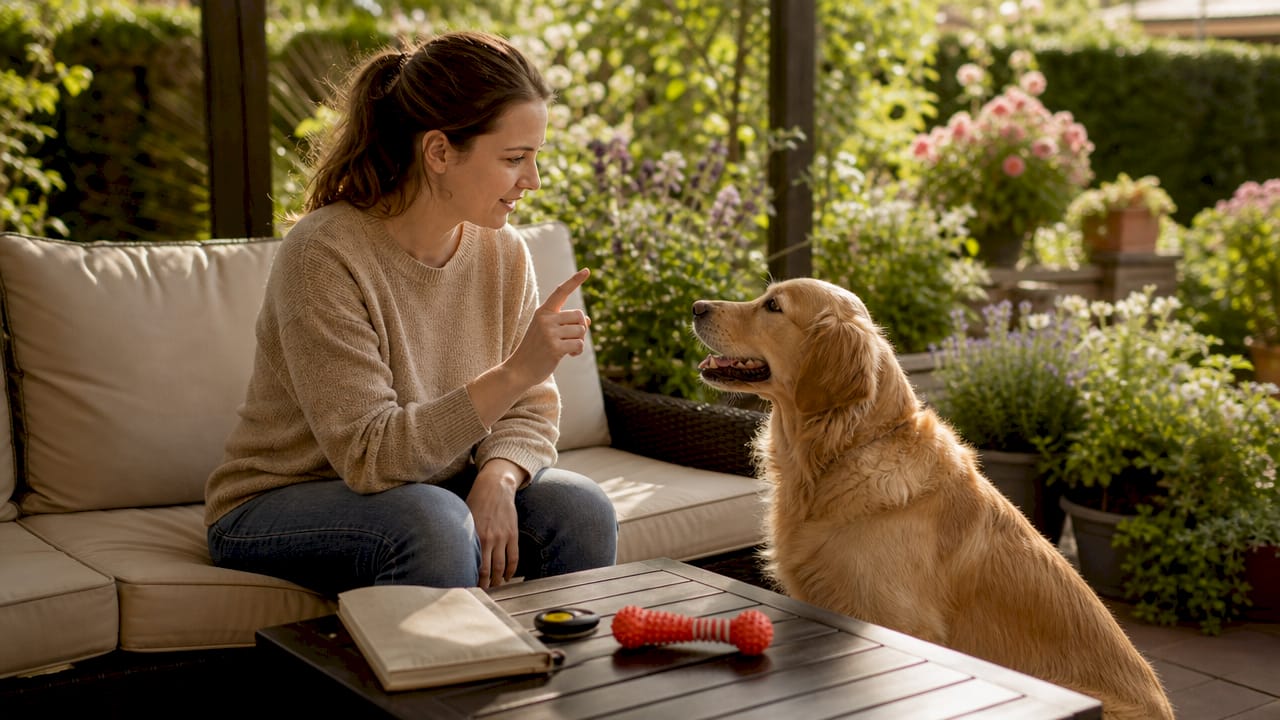
Lifetime support in dog training is the continuous professional assistance provided to dog owners throughout their dog’s life to maintain and adapt learned behaviours effectively. Most owners invest in an initial training programme and assume the work is done. It is not. Dogs are living, changing animals whose behaviour shifts with age, environment, and experience. Understanding why lifetime support matters in dog training is the difference between a dog who reliably responds to you at six months and one who ignores you at two years. Happy-dogtraining provides free lifetime support after every programme precisely because sustained guidance produces lasting results.
Why lifetime support matters in dog training
Lifetime support is defined as ongoing professional access that continues after formal training sessions end. High-quality programmes treat this as a standard, offering unlimited text, calls, or in-person guidance at no extra charge. Standard packages, by contrast, often cap support at 30 days or one year. That gap matters enormously.
Dogs do not maintain trained behaviours automatically. Without regular reinforcement, learned responses weaken through a process called extinction, where behaviours gradually fade because they are no longer rewarded or practised. Extinction is not a training failure. It is a biological reality. Every dog owner needs to understand this before they decide how much ongoing support they actually need.
The importance of ongoing dog training becomes clearest when you consider how much a dog’s life changes. A puppy trained in a quiet flat behaves differently after a house move, the arrival of a baby, or the introduction of a second pet. Those environmental shifts reset the context in which your dog has learned to behave. Without support to recalibrate, the trained behaviours erode.
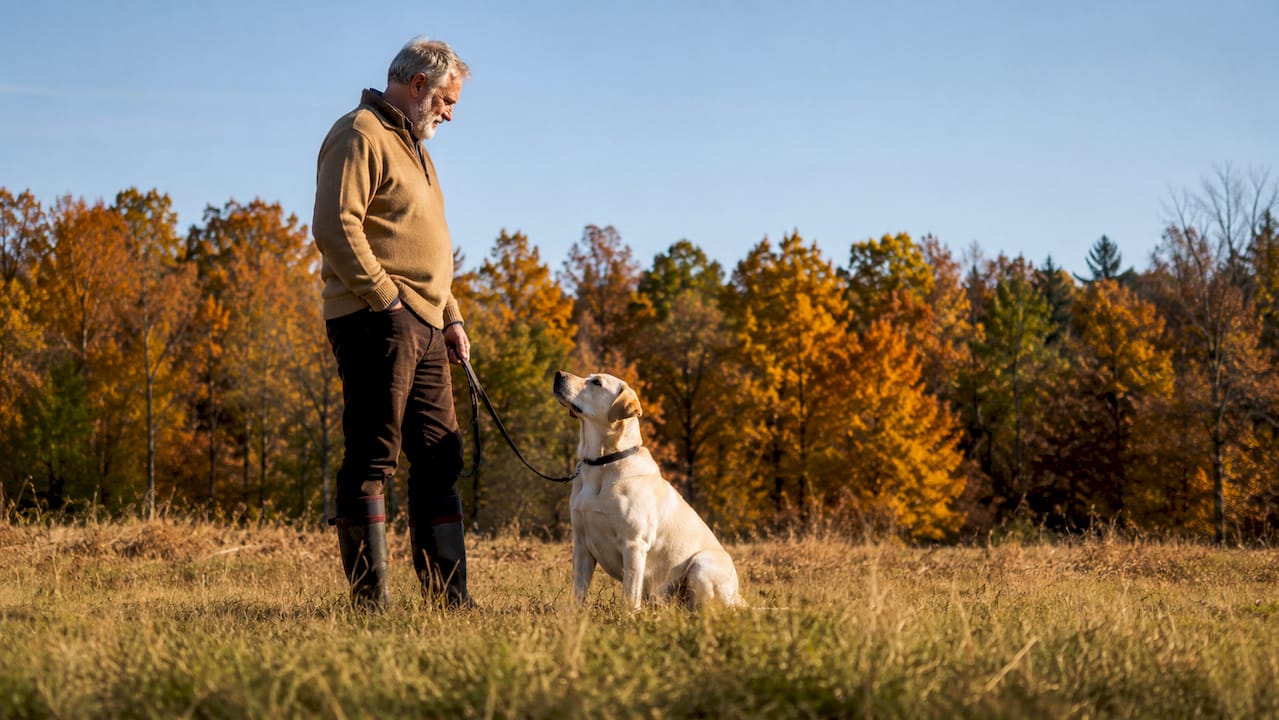
How dog behaviour changes over time
Behavioural drift is the gradual loosening of trained responses when practice and reinforcement become inconsistent. It happens to every dog, regardless of breed or initial training quality. Owners who treat training as a one-time event almost always encounter drift within months of completing a programme.
Several factors accelerate drift:
Life changes: Moving home, new family members, or changes in daily routine disrupt a dog’s established patterns.
Inconsistent practice: Skipping daily reinforcement allows responses to weaken faster than most owners expect.
Adolescence: Dogs between six and eighteen months often test boundaries as hormonal changes affect their responses.
Ageing: Older dogs may develop sensory changes or health issues that alter their behaviour and require training adjustments.
Just 5 to 15 minutes of focused daily training significantly improves behavioural reliability and emotional control. That is a small daily investment with a large return. The key is consistency, not duration.
Pro Tip: Set a fixed time each day for a short training session, such as before your dog’s morning meal. Pairing practice with a routine event makes it far easier to maintain consistency over months and years.
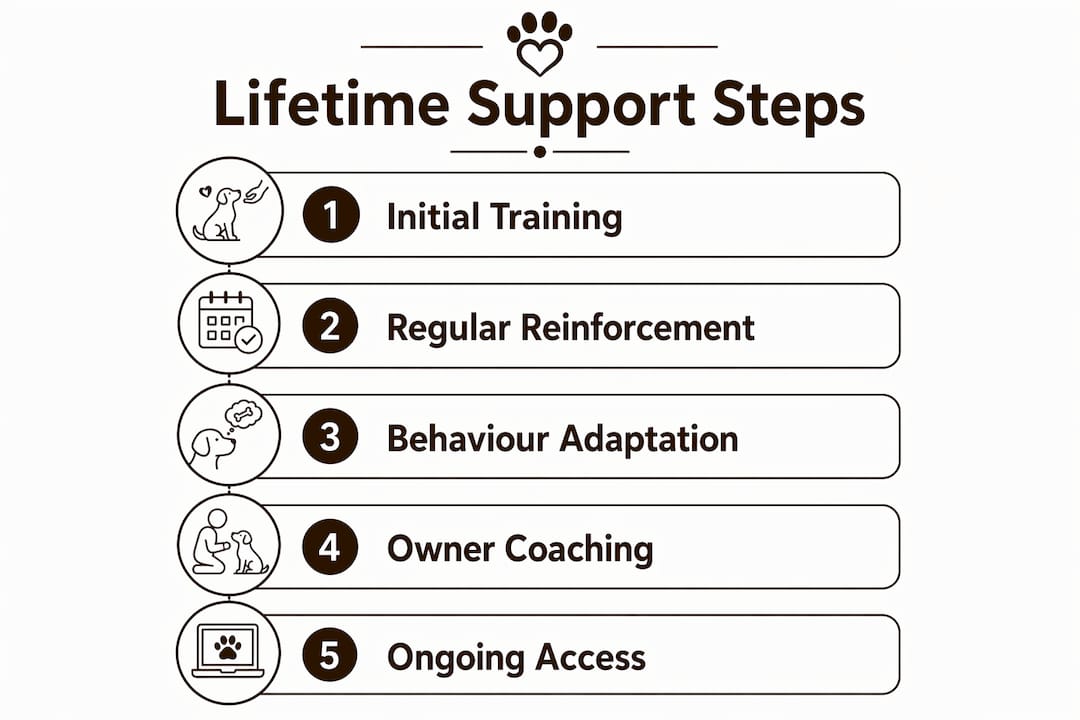
Dogs also do not generalise training automatically. A dog who sits reliably in your kitchen may not sit reliably in a busy park. Ongoing support helps you practise behaviours across varied environments, which is where real-world reliability is built.
What happens when ongoing support is neglected
The consequences of stopping support too early are predictable and costly. Delayed or abandoned training can cost families over £3,500 and result in losing more than two years of behavioural stability. That figure reflects retraining fees, damage to property, veterinary costs linked to stress-related issues, and the emotional toll of managing a dog whose behaviour has deteriorated.
Common problems that emerge after premature training withdrawal include:
Leash reactivity returning after months of calm walks
Recall failures in off-lead situations
Renewed resource guarding or food aggression
Separation anxiety resurfacing after a change in the owner’s work schedule
Jumping, barking, or destructive behaviour increasing without correction
“If training focuses only on the dog without owner education, results deteriorate once formal sessions end. The most effective programmes teach owners to maintain, reinforce, and troubleshoot behaviours, equipping them as lifelong students.”
This is the core problem with cheap, short-term training packages. They produce short-term results. When the trainer leaves and the support window closes, the owner is left without the tools to maintain what was built. You can troubleshoot training setbacks at home more effectively when you have had proper guidance on what to look for and how to respond.
What genuine lifetime support actually looks like
Not all lifetime support is equal. Programmes that cannot specify their support elements often use “lifetime support” as a marketing term only. Genuine support is concrete, accessible, and transparent.
Feature | What to look for |
Communication channels | Direct text, call, or video access to your trainer |
Video feedback | Ability to send clips of your dog’s behaviour for review |
Tune-up sessions | In-person or virtual refresher sessions at no extra cost |
Owner education | Training in reading your dog’s signals and adjusting your responses |
Response time | Clear expectation of how quickly your trainer replies |
Transparency distinguishes reliable trainers from marketing-focused programmes. Ask any prospective trainer to describe exactly what their lifetime support includes. If the answer is vague, treat that as a warning sign.
Owner education is as vital as the dog’s training itself. Programmes that neglect owner skills see reduced long-term success regardless of how well the dog performed during formal sessions. You are the constant in your dog’s life. Your ability to read, respond to, and reinforce your dog’s behaviour determines whether training holds.
Pro Tip: Before signing up with any trainer, ask them to describe three specific ways they would support you six months after your programme ends. Their answer tells you everything about the quality of their lifetime support.
Happy-dogtraining’s home obedience training standards reflect this principle, combining owner coaching with practical techniques that owners can apply confidently between sessions.
How to make the most of lifetime support
Engaging actively with lifetime support produces far better outcomes than using it only in a crisis. The value of continuous dog training compounds when you treat it as a regular practice rather than an emergency resource.
Build a daily routine. Use a structured home training routine to practise core behaviours every day. Short, positive sessions maintain reliability without exhausting your dog.
Contact your trainer at the first sign of drift. Do not wait until a behaviour has become entrenched. Early intervention is faster, cheaper, and kinder for your dog.
Practise in new environments. Take known behaviours to parks, cafes, and busy streets. Real-world generalisation is where training becomes genuinely useful.
Record your dog’s behaviour regularly. Short video clips give your trainer the context they need to give you specific, useful feedback rather than generic advice.
Revisit owner education materials. Reward-based training and marker training techniques require consistent application. Refreshing your understanding of these methods keeps your responses accurate.
Celebrate progress. Wagging tails and joyful moments of connection are the reward for consistent effort. Acknowledging your dog’s improvements keeps you motivated to maintain the work.
Training beyond puppyhood is critical to ensure adaptability and confidence across life changes. The owners who get the most from lifetime support are those who stay curious, stay consistent, and stay in contact with their trainer.
Key takeaways
Lifetime support is the single most important factor in determining whether dog training produces lasting results or fades within months.
Point | Details |
Behavioural drift is inevitable | Without regular reinforcement, trained behaviours weaken through extinction in every dog. |
Daily practice is the foundation | Just 5 to 15 minutes of focused training each day maintains reliability and emotional control. |
Neglect carries real costs | Abandoned support can cost owners over £3,500 and years of behavioural stability. |
Genuine support is specific | Authentic lifetime support names its channels, response times, and tune-up options clearly. |
Owner education is non-negotiable | Programmes that train only the dog, not the owner, see results deteriorate after sessions end. |
Why I believe lifetime support changes everything
I have worked with dog owners long enough to know where training most often breaks down. It is rarely during the programme itself. It breaks down in the weeks and months after, when life gets busy, practice slips, and the owner has no one to call when their dog starts ignoring the recall they worked so hard to build.
The owners who thrive are not always the ones whose dogs were easiest to train. They are the ones who stayed engaged, asked questions, and used their support access regularly. I have seen dogs with serious reactivity issues become calm, confident companions because their owners treated training as an ongoing relationship rather than a completed task.
The uncomfortable truth is that a cheap programme with no follow-up often costs more in the long run than a well-supported programme from the start. Retraining is expensive. Damaged property is expensive. Veterinary bills from stress-related conditions are expensive. The emotional cost of living with a dog whose behaviour feels out of control is harder to quantify but very real.
Lifetime support is not a luxury add-on. It is the structure that makes everything else work. If your trainer cannot tell you exactly what happens after your programme ends, that is the most important question you have not yet asked.
— Mark
Ongoing support from Happy-dogtraining
Happy-dogtraining has over 20 years of experience helping dog owners in Singapore build lasting, joyful relationships with their dogs. Every programme includes free lifetime support as standard, not as an upgrade. That means direct access to your trainer, video feedback on your dog’s behaviour, and in-person tune-up sessions whenever you need them.
Whether your dog is working through obedience, fearfulness, or reactivity, the support does not stop when the programme ends. Happy-dogtraining’s expert dog training services are built around the understanding that your dog’s behaviour will keep changing, and you deserve a trainer who stays with you through every stage. If you are dealing with specific challenges, the AVS-approved intensive programme offers structured support designed to produce reliable, lasting results.
FAQ
What is lifetime support in dog training?
Lifetime support is ongoing professional access to your trainer after your formal programme ends, including text, video feedback, and in-person tune-up sessions. It ensures you have guidance whenever your dog’s behaviour changes or new challenges arise.
Why do trained behaviours fade without ongoing support?
Dogs lose trained behaviours through a process called extinction, where responses weaken without regular reinforcement. Environmental changes, inconsistency, and life events all accelerate this process.
How much daily training does a dog need to maintain behaviour?
Just 5 to 15 minutes of focused daily training maintains behavioural reliability and emotional control. Consistency matters far more than session length.
How do I know if a trainer’s lifetime support is genuine?
Ask the trainer to name the specific communication channels, response times, and tune-up options included in their support. Vague or non-specific answers indicate the term is being used as a marketing claim rather than a real service.
Can lifetime support improve a dog’s behaviour after regression?
Yes. Early intervention through lifetime support corrects behaviour regressions before they become entrenched, making recovery faster and less stressful for both dog and owner.
Recommended
Comments